LE MUSÉE · FOUR MOTIVATIONAL PERSPECTIVES
What moves us
is never only one thing.
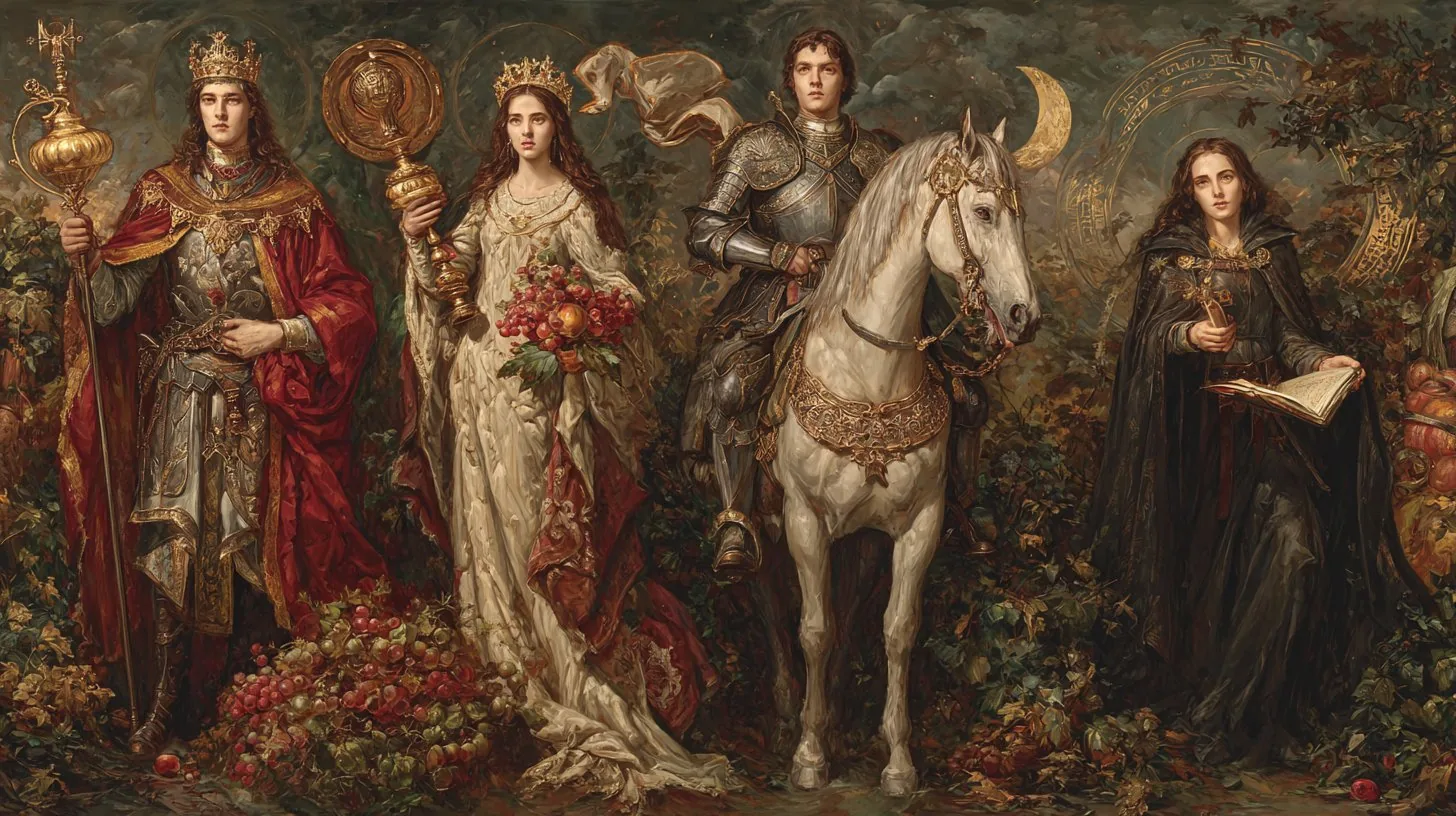
Faced with the same situation, one person may seek to shape the world, another to make life sustainable, another to open a new possibility, and another to find inner meaning. Motivation Groups offer four theoretical perspectives for reading these differences.
01 · PERSPECTIVES
Read through four perspectives
A way to notice what tends to set action in motion without reducing a person to one label.
Read the theoretical background and research notes
The following research notes examine the history of Stimulus Group theory and wording found in earlier sources. They include strong expressions specific to their time and authors; these are not current verdicts about people by the Association. Prioritise the cautions above and dialogue with the person.
Group "Motivation"
Communities of motive — eight types sharing the same direction of perception function (SE / SI / NE / NI)
1. What Is a Motivation (Stimulus Group)?
Definition
A Motivation Group (Stimulus Group) is one of the small-group classifications in Socionics. It refers to a group of eight types that share the same direction of perception function (SE / SI / NE / NI). The two-axis combination of perception function (Sensing S / Intuition N) × extraversion (E / I) yields four groups, each sharing its own motive, drive, and life-driver. In Model K, each Stimulus Group corresponds to 16 types (classical) → 32 types (extended via Q/D), with each group containing eight types.
Continuity with Jung's Theory of Motivation
The idea that "a person's leading function determines their motive" is already implicit in C.G. Jung's Psychological Types (1921), the source-stream of Socionics. Jung argued that the combination of dominant function and psychic attitude (extraversion / introversion) determines the nature of the world a person engages with — physical reality vs subjective inner world, sensing the present vs envisioning possibilities. Because the perception functions (S/N) define what a person "receives" from the world, they directly shape what the person "seeks." This stands alongside classical psychoanalysis (Freud's drive theory), Adler's striving for superiority, and Maslow's hierarchy of needs as one of the principal lineages of 20th-century motivation theory.
Position within Socionics
The founder of Socionics, Aušra Augustinavičiūtė (1970s), discussed how each type's central motive ("supplying need," the root necessity that drives behavior) follows from its function arrangement. Continuing this work, G. Reinin systematized fifteen dichotomy traits, showing among them that crossing Carefree / Farsighted with Merry / Serious yields four motivational dispositions. V.V. Gulenko in the 1990s gave them concrete names — Status, Well-being, Uniqueness, Self-Confidence — and symbolically associated each with a Tarot court rank (King, Dame, Knight, Page).
Stimulus Groups are therefore not the invention of any single researcher but a concept at the crossroads of a theoretical lineage — Jung, Augustinavičiūtė, Reinin, Gulenko — and gain structural reality through the convergence of multiple independent traits (Carefree / Farsighted, Merry / Serious, direction of perception function) onto the same fourfold classification.
The Four Stimulus Groups
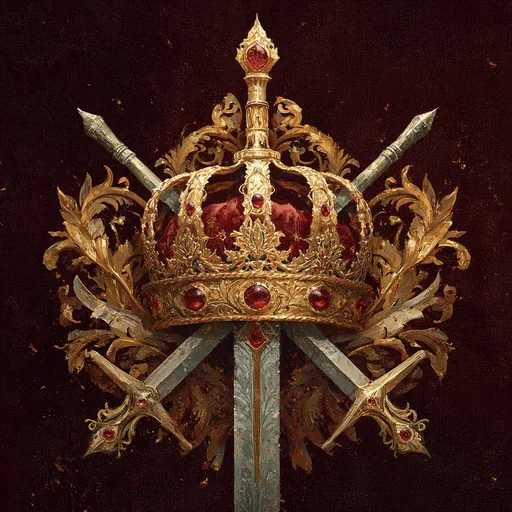
- Status — eight types sharing Sensing (S) × Extraversion (E). Drive for power, influence, and position.
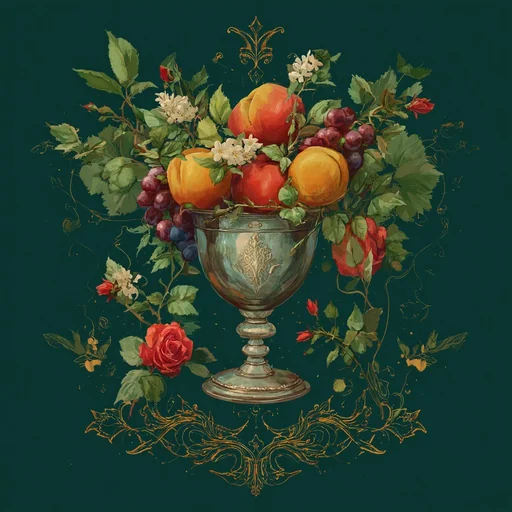
- Well-being — eight types sharing Sensing (S) × Introversion (I). Drive for material stability, comfort, and future security.
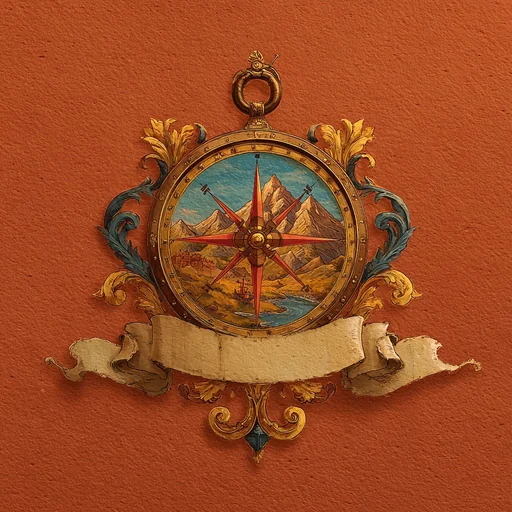
- Uniqueness — eight types sharing Intuition (N) × Extraversion (E). Drive for innovation, pioneering, and novelty.
- Self-Confidence — eight types sharing Intuition (N) × Introversion (I). Drive for inner interest and subjective value-judgment.
The Three-Axis Foundation
The four Stimulus Groups can be located at the crossing of three independent traits:
- Extraversion (E/I) — Jung's first axis: whether the motive flows toward the outer world or the self.
- Perception function (S/N) — engagement with physical reality (Sensing) or with abstract possibility (Intuition).
- Carefree / Farsighted (Reinin) — focus on the present (SI / NE: Carefree) or on the future (SE / NI: Farsighted).
The three axes give 2³ = 8 combinations, but because perception function and Carefree / Farsighted are correlated (SE↔Farsighted, SI↔Carefree, NE↔Carefree, NI↔Farsighted), they collapse to four. The fact that this fourfold scheme also corresponds to a Maslow-like motivational hierarchy (physiological/safety → social belonging → self-actualization → self-transcendence) underwrites the robustness of the Stimulus-Group theory.
Correspondence with Maslow's Hierarchy
Each Stimulus Group resonates with a different layer of Maslow's hierarchy:
- Well-being → physiological / safety needs (basic foundation of life)
- Status → belonging / esteem needs (social position)
- Uniqueness → self-actualization (the development of one's own possibilities)
- Self-Confidence → self-transcendence (essence-level insight, intellectual rigor)
This is not a static hierarchy: the four motives complement one another over a lifetime. The Stimulus Group indicates one's dominant motivational direction, not the negation of others. A healthy life and a healthy society require all four kinds of motive.
Social Stratification and Vertical Division of Labor
Gulenko argued that the Stimulus Groups produce both natural stratification and horizontal division of labor in society. "Sensing × Extraversion is driven by a powerful pull toward Status and presses to the top; Intuition × Introversion turns toward depth of reflection." This describes a competitive aspect of social life and is not a value judgment. A healthy society or organization needs all four groups operating in their proper places. Russian researchers such as Stratiyevskaya and Filatova have also pointed out that Stimulus Groups tend to generate intra-group competition (rivalry under the same motive), and argued that the relationship with the dual partner (the Stimulus Group whose perception-function pole is reversed) is essential for an individual's stability.
2. The Four Motivation Groups
The combination of perception function (S/N) and extraversion (E/I) forms four Stimulus Groups, each with its own motive, need, and behavioral principle. In Gulenko's framework these are positioned as the underlying forces shaping both the vertical hierarchy and the horizontal division of roles of society.
Status Stimulus Group
Power and influence — shared SE
Well-being Stimulus Group
Material stability — shared SI
Uniqueness Stimulus Group
Innovation and pioneering — shared NE

Self-Confidence Stimulus Group
Inner value — shared NI
3. The Internal Structure of a Stimulus Group
A Stimulus Group contains no Duality pairs. The internal relations of the eight types are arranged as a cubic structure on three axes (Merry/Serious × Democratic/Aristocratic × Q/D), with each edge, face-diagonal, and body-diagonal corresponding to a specific Model K relation. Concretely they consist of Business, Kindred, Adaptive, Transcendence, Quasi-Identity, Benefactor, Beneficiary, Tense Benefactor, Tense Beneficiary, Formal, and Duty relations.
Therefore, when people gather by Stimulus Group, natural understanding emerges around the shared motive, but as the relationship deepens and lengthens, value and rationality differences lead members to seek different directions. This does not mean Stimulus Groups are "shallow"; rather, they are groups bound by the root drive of motive — fundamentally different in principle from deep friendships built on shared values or interests.
4. Stimulus Groups and Complementary Relations
The Duality relation (the most complementary relation) arises only between different Stimulus Groups — specifically the pairs whose direction of perception function is fully reversed (Sensing × Extraversion ↔ Intuition × Introversion, Sensing × Introversion ↔ Intuition × Extraversion).
- Status (SE) ↔ Self-Confidence (NI) (all 8 pairs are Duality)
- Well-being (SI) ↔ Uniqueness (NE) (all 8 pairs are Duality)
Dual pairs have fully reversed perception poles (physical-sensory reality vs abstract essence-intuition; inner comfort vs outer possibility), so they supply each other's missing perception channel. SE (exercise of influence) and NI (insight into essence), SI (maintenance of comfort) and NE (exploration of possibility), each complete each other most deeply.
Within the same Stimulus Group, members resonate by acting under the same motive, but they may also fall into competition within the same vertical layer (e.g., Status types contesting position; Uniqueness types vying over originality).
In Model K, the eight types of each Stimulus Group can be visualized as a cubic structure along three axes — Merry/Serious, Democratic/Aristocratic, and Q/D. The cube's edges, face-diagonals, and body-diagonals each correspond to specific Model K relations.
5. How Motivation Differs from Quadras, Clubs, and Bouquets
| Group | Bonding Principle | Duality Pairs | Primary Function |
|---|---|---|---|
| Quadra | All values (value-perception + value-judgment) | 2 | Shared values and psychological recovery |
| Square | Value-perception + Prudent/Resolute + Democratic/Aristocratic | 2 | Rest and relaxation |
| Business Square | Value-judgment + Prudent/Resolute + Democratic/Aristocratic | 2 | Cooperation and goal-directed action |
| Motivation | Direction of perception function (SE/SI/NE/NI) | 0 | Shared motive and life-driver |
| Bouquet | Temperament (E/I × Rational/Irrational) | 0 | Shared life rhythm and energy level |
| Club | Combination of perception (N/S) and judgment (T/F) functions | 0 | Shared interests and topics |
The Quadra is bound by all shared values — the entirety of one's value system — and forms the deepest psychological cohesion. The Club, by contrast, is bound only by shared perception and judgment functions; values and behavioral principles do not coincide. Squares and Business Squares lie in between.
6. Full 32 Types × 4 Motivations Map
Each of the 32 types belongs to exactly one of the four Motivations (Stimulus Groups). Each group contains eight types, including Q (Question) and D (Declaration) subtypes.
| Quadra | Status Stimulus Group Sensing (S) × Extraversion (E) Kings | Well-being Stimulus Group Sensing (S) × Introversion (I) Dames | Uniqueness Stimulus Group Intuition (N) × Extraversion (E) Knights | Self-Confidence Stimulus Group Intuition (N) × Introversion (I) Pages |
|---|---|---|---|---|
| α Alpha | ESE-D Enthusiast | SEI-D Peacemaker | ILE-Q Seeker | LII-Q Analyst |
| β Beta | SLE-D Conqueror | LSI-D Enforcer | EIE-Q Mentor | IEI-Q Dreamer |
| γ Gamma | SEE-Q Orchestrator | ESI-Q Judge | LIE-D Pioneer | ILI-D Strategist |
| δ Delta | LSE-Q Administrator | SLI-Q Artist | IEE-D Promoter | EII-D Empath |
| Ω Omega | SEE-D Politician | ESI-D Guardian | LIE-Q Commander | ILI-Q Critic |
| Ψ Psi | LSE-D Executive | SLI-D Craftsman | IEE-Q Advisor | EII-Q Philosopher |
| Χ Chi | ESE-Q Harmonizer | SEI-Q Performer | ILE-D Visionary | LII-D Architect |
| Φ Phi | SLE-Q Reformer | LSI-Q Inspector | EIE-D Hero | IEI-D Prophet |
※ Cell background color indicates the Quadra to which each type belongs.
7. Characteristics as a Homogeneous Group, and Social Hierarchy
Because the Stimulus Group gathers by "the same motive," natural empathy arises easily about what matters and what is sought. At the same time, sharing the same motive readily produces competition for the same goal: in particular, members of Status compete for position, while Uniqueness members vie over originality.
Gulenko argued that the Stimulus Groups form a natural vertical hierarchy in society. Sensing × Extraversion (Status) ascends toward power and position; Intuition × Introversion (Self-Confidence) turns toward reflection and intellectual rigor and is reluctant to engage in external competition. This is not a ranking of value but a description of social structure: each group plays its proper role in its proper place.
A healthy society or organization needs all four Stimulus Groups in balance. Status drives enterprise; Well-being maintains the stable foundation; Uniqueness produces innovation; Self-Confidence offers depth of reflection — society cannot function fully if any one is missing.
8. Mutual Relations Matrix Among the Four Stimulus Groups
Relations among Stimulus Groups summarized from CSV verification (all 64 pairs across 6 combinations). Duality (8 pairs) is the most natural complementary pair, occurring where the direction of perception function is fully reversed (SE↔NI, SI↔NE). The Activation family (Relaxation, Activation, Ideal, Role at the core) occurs between pairs sharing extraversion-or-introversion but differing in perception function — 0 Duality pairs. The Mirror family (Mirror, Compass, Distance, Codependency at the core) occurs between pairs sharing the same perception function (SE↔SI, NE↔NI) but with E/I reversed — 0 Duality pairs.
| Status (SE) | Well-being (SI) | Uniqueness (NE) | Self-Confidence (NI) | |
|---|---|---|---|---|
| Status (SE) | — (homogeneous, contest for position) | Mirror family (shared Sensing, 0 Duality) | Activation family (shared Extraversion, 0 Duality) | Duality (SE↔NI · all 8 Duality) |
| Well-being (SI) | Mirror family (shared Sensing, 0 Duality) | — (homogeneous, conservatism chain) | Duality (SI↔NE · all 8 Duality) | Activation family (shared Introversion, 0 Duality) |
| Uniqueness (NE) | Activation family (shared Extraversion, 0 Duality) | Duality (NE↔SI · all 8 Duality) | — (homogeneous, originality contest) | Mirror family (shared Intuition, 0 Duality) |
| Self-Confidence (NI) | Duality (NI↔SE · all 8 Duality) | Activation family (shared Introversion, 0 Duality) | Mirror family (shared Intuition, 0 Duality) | — (homogeneous, introverted stagnation) |
Precise structure of Duality: Duality arises between pairs whose perception poles are fully reversed (S×E ⇔ N×I, S×I ⇔ N×E). Pairs sharing the same perception function (SE⇔SI, NE⇔NI) form the "Mirror family" relations (Mirror, Compass, Distance, Codependency); 0 Duality. Pairs sharing extraversion-or-introversion but differing in perception function (SE⇔NE, SI⇔NI) form the "Activation family" (Relaxation, Activation, Ideal, Role); 0 Duality.
※ This matrix aggregates all 64-pair verification results (8 types per Stimulus Group × 4 groups) under the Model K 32-relation system.
9. Stimulus Groups and Social Roles
Gulenko discussed the social roles of the four Stimulus Groups as a "vertical stratification and horizontal division of labor." Their typical positions and roles:
| Stimulus Group | Perception | Social Position | Typical Role |
|---|---|---|---|
| Status | Sensing × Extraversion | Top / front | Power, leadership, organizational management, exercise of social influence |
| Uniqueness | Intuition × Extraversion | Boundary / frontier | Innovation, discovery, pioneering, opening of new domains |
| Well-being | Sensing × Introversion | Foundation / core | Stability, life-base, day-to-day operation, continuity |
| Self-Confidence | Intuition × Introversion | Depth / periphery | Reflection, essence-level insight, criticism, intellectual rigor |
The combination of these four groups produces the dynamic balance of society. A healthy society is one in which all four groups function in their proper positions and roles; if any one becomes dominant or oppressive, society falls into dysfunction.
Understanding one's own Stimulus Group also matters at the level of personal life. A Self-Confidence person continually pulled into Status competition will be drained; a Status person who tries to spend life alone in introspection will lose vitality. Each person's flourishing — and society's — depends on operating in the place that fits one's motivational direction.
10. Detail Pages
Detailed pages for each Motivation (Stimulus Group) are available below.
- Status — Kings · Sensing (S) × Extraversion (E) · Seeks power and influence
- Well-being — Dames · Sensing (S) × Introversion (I) · Seeks comfort and security
- Uniqueness — Knights · Intuition (N) × Extraversion (E) · Seeks individuality and originality
- Self-Confidence — Pages · Intuition (N) × Introversion (I) · Seeks reflection and self-understanding