
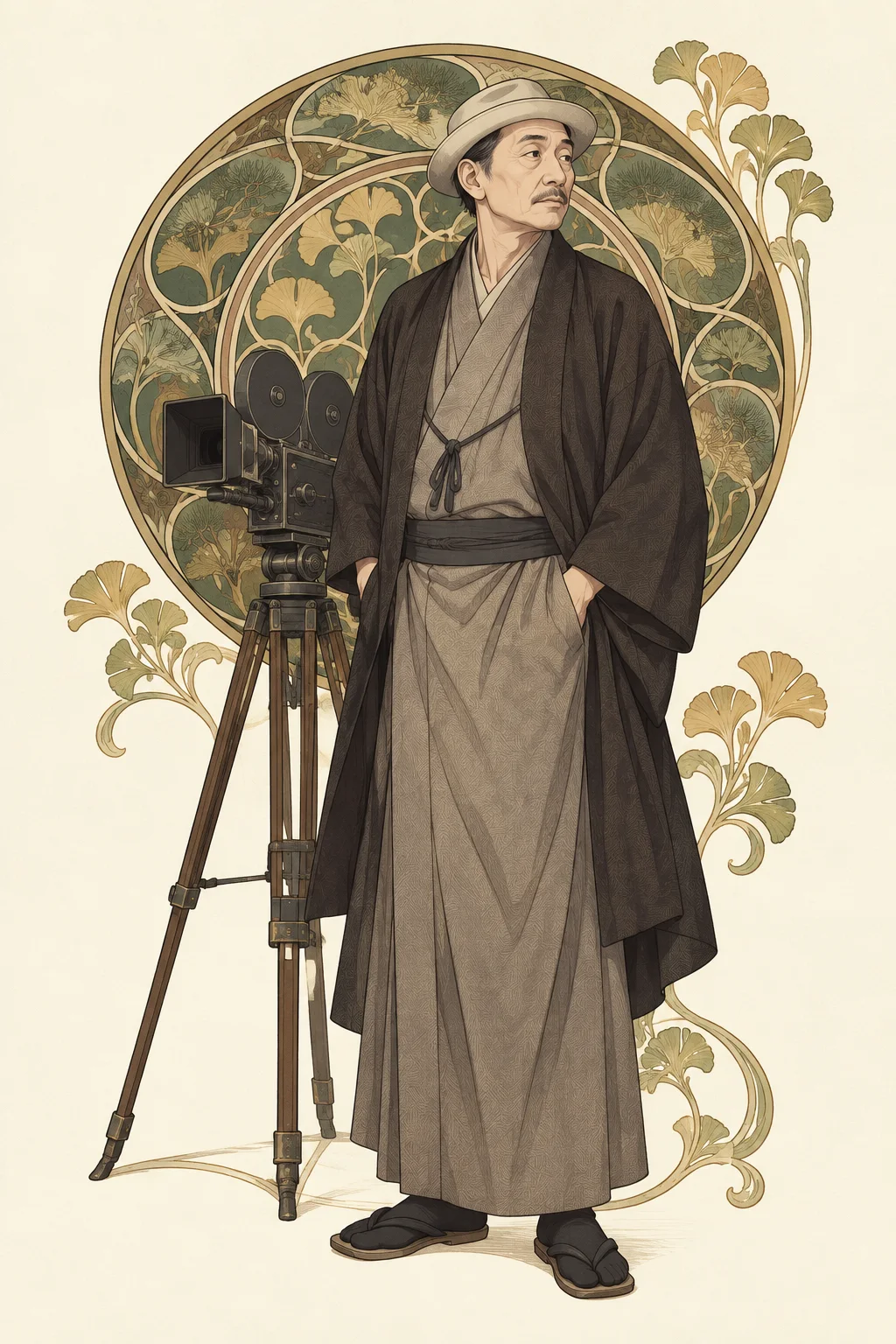
Yasujirō Ozu
SLI-Q "芸術家" Film Director · Japan · 20cJapanese film director (1903–1963). Depicted the daily life of the Japanese family in "Tokyo Story," "Late Spring," and "Early Summer" with a low camera angle and quiet direction. Recognised internationally as one of the greatest directors of world cinema.
主導機能-Si-p (Sensibility & Subtlety)
"I'm just making good tofu. If you want something else, go to a restaurant or department store" — precise observation of the texture and feel of everyday life as the core of -Si-p action.
創造機能+Te-c (Technology & Accumulation)
Fixed low-angle camera; no camera movement; no dissolves; no fade-ins. "Established a unique directing style in his head and didn't teach anyone else" — systematic mastery of an original technique as the core of +Te-c creative function.
脆弱機能1-Fe-p weak (Inspiration & Motivation)
Using the camera as "an uninvolved observer" — a style that neither explains nor comments on action — evidence of -Fe-p weak. No emotional appeal or inspirational messaging.
脆弱機能2+Ni-c weak (Future & Challenge)
Evidence of +Ni-c weak: records of weakness in long-term vision and future-oriented challenges. Concentration on current sensory completeness reduced future-focused thinking.
クアドラ・気質・クラブ
クアドラ: Delta Quadra (Tradition) — a lifetime devotion to the low-angle camera, the fixed frame, and the traditional subject of family: commitment to the Japanese traditional family community and craftsman observation as supreme values.
気質: Sensory introspection and quiet adaptation to external turmoil — the embodiment of the Receptive-Adaptive temperament. Rather than frontal confrontation, pursuing sensory completeness with the flow.
クラブ: Pragmatist Club expression: practical management of film production and precise practical control of camera positions. Long-term practical management within the Shochiku studio system.
世界観・変化への態度
The world is complex and inherently good (positivism). Deep trust in human possibility and social transformation as the premise of action. "Universal sadness and beauty exist in the Japanese everyday" — positivist aesthetics. Belief that the humble and the transient contained a timeless and universal truth.
変化への態度: Embodying the possibility of transformation and functioning as a symbol of people's hope. Low-angle cinematography as the direction of change — a cinematic style that transformed the global understanding of what film could do.
