
ILE-D – Visionary –
The architect of ideas who reinvents the world through paradox and theory
You are someone who stands on the far side of the premises everyone else takes for granted.
You strike at the weak point of a common sense no one questioned, and build it up into a precise theory.
When it comes to the texture of daily life, you are astonishingly defenseless.
- Quadra
- Chi Χ
- Bouquet
- Flexible-Maneuvering temperament
- Club
- Research
Portrait — the Visionary

Inside this person's mind, far-flung domains are constantly being re-linked. Once they see the principle hidden beneath a single phenomenon, they use it to light up an entirely different domain in one stroke. Their ideas may sound outlandish, but by the time they're spoken, the framework already runs through them. The Visionary is not someone who throws out a question and walks away; they're someone who forges the paradox they've seized all the way into a theory, and declares, "This is how it should be seen."
Their conduct is more practical than it looks. Easily amused and light on their feet, they move quickly when they spot an opportunity and change course without attachment. They set little store by fine procedure, yet they quietly possess a knack for making do with whatever is at hand, and the staying power to dig in for a long contest when it counts. They may respect authority and formality as such, but the moment a hollow authority is brandished, the blade of their paradox turns toward it.
And yet this sharp theorist is astonishingly defenseless when it comes to the texture of daily life. They put off meals and rest to sink into thought, and don't notice their own exhaustion. What they long for deep down is someone who gently sets that disordered life in order and loosens a stiff mind with comfort and laughter: someone who, from outside the realm of logic, brings this person back to human warmth.
Not the surface explanation, but the real mechanism.
Does this sound like you?
- Before an explanation is even half finished, you've caught the essence and are urging, "Got it — and?"
- When you find a promising seed, you test it, rework it, draw people in, and move all at once.
- You pull away from a project whose interest has run out, like a receding tide.
- You take no trouble over clothes or food, and sometimes, lost in thought, you forget to say hello.
- You express affection and appreciation indirectly, as information or an invitation rather than in plain words.
- You look at whether there's real substance, not at authority or titles.
- When pushed hard, you duck down to let it pass, then come back from a different angle.
- You value the hours when your mind is running more than deadlines.
- You let drop a tactless remark without meaning any harm, and only later notice the room has frozen.
- You find a reason even for failure, and bounce back fast.

How you move

The Visionary's conduct shows itself most clearly in the nimbleness with which they flip a premise over and the staying power with which they build it into a theory.
The first thing you notice is how quickly they grasp things. Before an explanation is even half finished, they have caught its essence and are urging you on with, “Got it — and?” What they find hardest of all is a lecture laid out slowly, shelf by shelf; when boredom drags on, their gaze is already drifting toward the next interesting thing. Their quickness of understanding is not arrogance — it is simply this person's very sense of time.
When they find a promising seed, they move fast. They test, recombine, draw people in, and launch one small contrivance after another. They are no mere thinker: they have an executor's habit of carrying an idea they have seized all the way to a concrete form, and for that they will deftly improvise the details from whatever is at hand. On the other hand, they pull away from a matter that has lost its interest like a receding tide — they will not stay on out of obligation once its possibilities are exhausted.
Their way of living is heedless. They take no trouble over clothes or food, and clutter gets cleared only once it starts getting in the way of work. They forget where they set things down, and, lost in thought, they may forget to say hello. This is not slovenliness — it is that the whole of their attention is poured into the idea inside their head.
Not appearances, but phenomena that have no name yet.
- Grasps the essence before an explanation is even half finished
- Finding a promising seed, tests it, reworks it, and draws people in
- Leaves a project whose interest has run out without lingering out of obligation
Observed Behavior

Their web of knowledge is uncommonly wide. Inside their field or out of it, they gather material on any domain they find interesting, take it in from its principles, and store it away in their head under a classification of their own. Even if they forget the answer on an exam, they will reinvent it on the spot from their own line of reasoning — they trust being able to derive something over being able to memorize it.
Within an organization, they stand on the side of innovation. When they find an outdated procedure or a rule that has become a dead letter, they cannot leave it alone and propose reworking it. Bound by orders and surveillance, they lose their power, but given a purpose and discretion, they launch new systems with astonishing drive. When they move people, they choose to entice with interest and tangible benefit rather than with punishment or nagging.
Their use of time follows inspiration. They prize the hours when their mind is running over any deadline; when they are on a roll they forget to eat or sleep, and when they are not, they pass the time staring at the ceiling. In those hours that look like idleness from the outside, the next idea is ripening — and because this person knows it, they feel no guilt.
They do not square off against pressure head-on. Pushed hard, they duck down for a moment to let it pass, then rally from a different angle. They are hard to break in adversity, and even when they fail they reason their way back on their feet quickly — that resilience is of a piece with this person's optimism.
Given a place where you have discretion, your ideas reach surprisingly far.
How you speak and listen

The Visionary's conversation begins with paradox, stands on theory, and rolls along on laughter.
This person's talk usually opens by catching you off guard. “Everyone says this, but in fact it's the reverse” — they knock the ground out from under their listener, then unfold their own map from there, in order and with confidence. They are not afraid to assert, and they declare with conviction, but behind that assertion lies a logical framework already fully assembled.
Their associations leap in every direction. Talk of philosophy leads to film, film to economics, economics to myth. Just as the listener is about to be left behind, this person duly builds a bridge and binds the whole into a single picture. They also have the knack of turning abstruse reasoning into laughter with unexpected metaphors and jokes, and their company takes on a magnetism all its own.
That said, the exchange of feeling is indirect. Affection and appreciation alike are offered obliquely, in the form of information or an invitation rather than in plain words. They are poor at reading the subtleties of another's feelings, and will let drop a tactless remark without meaning any harm, only to notice afterward that the mood has frozen — that kind of awkwardness follows this person around.
It begins with paradox and stands on theory.
What lies at the core — drive and tender spots
Seize it, then forge it. This single line.
The one powerful engine at the heart

At the Visionary's center are an eye that seizes the hidden paradox and a hand that forges it into theory.
At the Visionary's center is one powerful driving force: an eye that seizes the essence hidden behind things — the weak point everyone overlooks, the blind spot of common sense, the possibility no one has yet put into words. Not satisfied with surface explanations, they dive straight down toward “what the real mechanism is.” And the more what they seize turns out to be the inverse of common sense, the more this person's heart leaps.
This eye has a paired counterpart: a hand that forges the paradox it has seized into a theory coherent down to the last detail. Rather than spending a flash of insight as a mere flash, they lay down definitions, build structure, and carve it into a form that can withstand objection. However outlandish the idea, once it passes through this person's hands it rises up as a single, precisely formulated system — the eye of paradox and the hand of theory. When these two mesh, the Visionary sets about redrawing the world's map.
This is not confined to scholarship. In the workings of a job or the scheme of a game alike, the moment they find a hole in “a premise no one doubts,” the same engine kicks into motion. An inverted field of vision rises up as a precise theory, and people's way of seeing changes — that very moment is where the Visionary is most deeply fulfilled.
What they can do, yet do not prize

Surprisingly, the Visionary is quite well equipped with a practical knack for making do with whatever is at hand. The ingenuity to run things on scarce resources, a shrewd eye for costs, and the nerve to settle in and take on a long, decisive contest when the moment comes — when it is truly needed, this person can maneuver with astonishing realism.
The person themselves, however, places no weight on it. Efficiency and practical gain are tools for giving an idea concrete form, not something to be proud of. Rather than diligently honing everyday operations, they keep that power in reserve and bring it out only for an interesting contest — being able without making a show of it, that lightness is what supports this person's freedom.
What the heart secretly craves
What they secretly seek is the comfort of daily life and a brightness that loosens the mind.
The thing the Visionary — gifted with a sharp eye and a precise hand — finds hardest to produce for themselves, and yet craves more deeply than anyone, is the comfort of body and daily life, and a clear, sunny brightness that loosens a taut mind. The more they sink into thought, the more careless their meals become, the more their rest is cut short, and the more their body is left behind. That is exactly why they are deeply drawn to, and fulfilled by, someone who gently sets that disorder right and brings them back to a human warmth with a warm table and laughter.
This shows up as “the need to belong, secure attachment, and the fulfillment of a deep longing.” Beside a partner who treats care not as a duty but as a joy, this person lowers their guard for the first time and learns to relax — and it is precisely the Performer (SEI-Q), their dual, who is best at that very thing, who is their finest complement. They are a partner who, from outside the realm of logic, sets this person's life and heart comfortably in order.
The most fragile place
Where the Visionary is most fragile is the subtlety of interpersonal distance and the handling of worldly wisdom.
What is most fragile is gauging the emotional distance with each individual person. How far anyone has opened up, which single word will touch a person's tender spot — that invisible line is one this person can barely read. They will voice a blunt appraisal without ill intent and put an unexpected crack in a relationship that mattered. They are also slow to notice the imbalance of being lenient with themselves and harsh with others, and that can come across as selfish.
The other fragility is worldly wisdom — reading the power dynamics and the gains and losses of a situation and moving through it adroitly. The give-and-take of socializing, the etiquette of saving face, the subtleties of behind-the-scenes groundwork. Before such “unspoken rules,” this person is at a loss. They cannot understand why something logically correct fails to carry — and that bewilderment sometimes becomes friction with those around them.
And so the quality of the Visionary's life turns greatly on who supports this invisible domain. A partner who reads people's subtleties in advance to soften the mood and turns this person's harmless remark into laughter — beside such a partner, the Visionary can, with peace of mind, lose themselves in the paradox and theory they excel at.

- Core: seizing the hidden paradox and forging it into a coherent theory
- What drives you: the conviction that the world can be reassembled into something more interesting
- Where you're fragile: the subtleties of distance between people, handling worldly wisdom
Strengths, and where you stumble
Someone who makes your life and heart comfortable.
Strengths — flip it over, and build it up

The Visionary's strength lies in a two-stage structure: the speed with which they grasp the essence, and the staying power with which they forge it into a system. From a tangled phenomenon they extract the core in a few moves and name the weak point of a premise no one doubts. Then, rather than letting a flash of insight scatter as a mere flash, they give it definition and structure and build it into a theory that can withstand objection — this consistent “seize, then forge” is what pushes this person up from a mere idea-man into a theorist who redraws how we see. On top of that, a resilience that does not break in adversity, a knack for making do with scarce resources, and a conversational gift for turning the abstruse into laughter give this person's undertakings a drive all their own.
And beneath that provocative intellect runs a bright, easygoing lightness. The Visionary does not dwell on failure, does not cling, and turns on their heel without fuss when an opportunity comes. Because of that lightness that refuses to put on a grave air, this person's paradoxes never turn snide, and even their boldest ideas never turn tragic. To turn the world inside out and yet somehow seem to be enjoying it — that is why people are drawn into this person's talk.
Where they tend to stumble

Where they tend to stumble is the far side of where that sharpness is aimed and of their defenselessness toward people's subtleties.
Left unchecked, the eye that doubts premises tilts toward a habit of “finding a flaw in everything.” Only the holes in what is finished catch the eye, and honest praise and steady perseverance become hard for them. When the force of their assertions backfires, they leap to a conclusion without waiting for the listener to catch up, and let an air of “it's your fault for not getting it” settle in. Their interests shift quickly, too, and because they leave a place they feel they have exhausted without a shred of obligation, they can leave bewilderment in their wake.
They are markedly weak at people's subtleties and worldly wisdom. A harmless remark freezes the room, they misjudge emotional distance, and they trip over the invisible rules of groundwork and etiquette. They are also poor at admitting their own faults, and their first move after a failure is to hunt for an explanation. And the self-management of daily life — food, rest, the body's signals — is chronically put off, so that by the time they notice, the depletion runs deep. A sharp mind and a defenseless life: that gap is this person's Achilles' heel.
When you meet someone who tends the comfort of daily life, your ideas don't end as pie in the sky; they become something that truly reaches the world.
- Guard your life with systems, like meals at set times and keys in a fixed place
- Before asserting, think about "where should I start so this gets through?"
- It's fine to rely on a partner who can read subtleties
Where you thrive
You shine brightest in "places where the answer isn't fixed."
Environments Where They Thrive
The Visionary shines brightest in an environment where doubting premises is welcomed and discretion and freedom are given. Untrodden questions, old systems waiting to be reworked, phenomena that have no name yet — it is precisely in such “places where the answer is not fixed” that this person's eye and hand come into their own. Conversely, in a place where procedure is fixed, surveillance and reporting are minute, and obedience is prized over originality, this person's intellect rapidly loses its light. Purpose rather than orders, discretion rather than a timetable — those are the Visionary's conditions.
What this person needs first is a “listener.” With a partner who receives a newborn idea with delight and rolls it around, their thinking grows many times over. And then a companion who supports the temperature of their life and their surroundings — someone who sets right the meals and rest that tend to be left behind and turns the awkwardness caused by a harmless remark into laughter. With that support, the Visionary can, with peace of mind, immerse themselves in the reinvention they excel at.
As an architect of ideas
The speed of grasping the essence, the hand that builds theory, and the drive to launch new systems come alive in roles that open up the unknown and rework old frameworks. Research and theory-building, pioneering new fields, launching a venture or a system, unraveling the structure of complex problems, work in criticism and thought, a role that weaves a system while teaching — in every one, this person's eye for paradox, hand for design, and the conviction that “the world can be reassembled into something more interesting” become value directly.
On the other hand, the repetition of routine tasks, minute progress management, a coordinating role where formality and behind-the-scenes groundwork carry the day, and a caretaking role that handles the subtleties of feeling do not suit them. In such posts, the originality they excel at spins its wheels, and only the subtleties and worldly wisdom they are poor at are demanded of them. Entrust operation and coordination to a system or a companion, concentrate yourself on ideation and launching, and move on to the next once things are on track — that light-footed division of labor is what makes the most of this person.
Dialogue — ask Theo

One free dialogue · Le Salon members can explore several perspectives. Not a real person: a representative perspective based on the public profile.
Relationships and love
Can you be partners in debate? Can you expand possibilities together?
Love — a single-minded vision, offered by indirection
The Visionary's love is sparing in words and clumsy, yet more single-minded than one might expect.
The Visionary's romance begins as a romantic fantasy. They idealize the one who has captured their heart in their mind and picture a future with that person as if it were an idea to be worked out. Yet, face to face with the person, no polished words of love will come. Their affection is offered obliquely, in the form of information or an invitation — “I told my parents about you,” “There's an interesting place next month” — a courtship all its own that reaches only a perceptive partner.
[Women]She is lively, frank, and unconventional. She has no taste for romantic gamesmanship or coyness; when she finds someone interesting she strikes up the conversation herself and grows the relationship as an equal sparring partner in debate. She is clumsy at caretaking, but she believes in a partner's possibilities more than anyone and supports their endeavors with reasoning and action. Beside a calm, richly sensitive partner who sets the comfort of daily life in order, she finds deep repose.
[Men]He is prone to lose himself in thought, eccentric, and impossible to dislike. He is indifferent to grooming and manners, and you cannot count on him to arrange a date, but the speed with which he grasps the essence of what someone says and his power to sketch the two of you a grand future are the real thing. His courtship proceeds by hints, and his big lines stay clumsy to the end — beside a bright, attentive partner who takes in that clumsiness and all and laughs with him, he gradually opens his heart.
How You Love — Investing in the Future
The Visionary’s way of loving is made of the intuition of possibilities (Ne) and structural logic (Ti). So affection comes out not as “sweet words” but as “investing in the other person’s future.” To you, the one you love is not a target to woo but a partner with whom to expand possibilities together. For instance, when they voice a dream or a worry, before an empathetic nod you’ve already begun drawing the blueprint — “if you did it this way it’d get even more interesting.” That isn’t coldness; it’s proof you’re genuinely delighted by their life. “I told my parents about you,” “there’s an interesting place next month” — each of these bits of information and invitation is your all-out courtship, in your own way.
Compatibility — recommended partners
 Performer
 SEI-QA gentle conveyor who gives form to sensation and feelingDualityThe need to belong, secure attachment, a sense of fulfillment, and the fulfillment of a deep longing — the partner who complements them best, who comfortably sets right the life and body they have left behind and loosens a taut mind with laughter Artist
 SLI-QGiving form to the “just-rightness” of nature and daily lifeSemi-dualityNostalgia, a sense of belonging, and interdependence — a partner in whose quiet, sure handiwork they feel a fondly settling connection Dreamer
 IEI-QA teller of fantasies who colors the world with dreams and passionIllusionaryEmpathy, gratitude, a sense of trust, and the need for safety — a partner more indirect than the dual, yet in whose delicate feeling they find deep repose Harmonizer
 ESE-QTheir smile and their voice soften the space around themActivationActivation, elation, drive, and curiosity — the easiest partner to open up to, whose mere presence lights up the room and makes “I want to try that” well up Mentor
 EIE-QA passionate standard-bearer who speaks of ideals and binds hearts togetherBenefactorA relationship in which you can act for this person naturally — you support them as a benefactor, and receive their passion for ideals and their gratitude in return Administrator
 LSE-QThe hands-on command post that keeps the field running and moves people and workBeneficiaryFulfillment and trust — a relationship like a contented reassurance, received from a benefactor who supports you with steady work Architect
 LII-DThe architecture of logic, quietly built up piece by pieceMirrorA partner whose rhythm of ideas and systems is in tune with yours — one who draws out each other's intellectual strengths Enforcer
 LSI-DThe steel operator who carries out the mission through discipline and responsibilitySupervisor (mirror)A relationship that grants you the nerve to hold order to the end — as a master, they hand you the art of governing an organization Empath
 EII-DSensing what lies beneath feeling, and becoming someone's quiet supportSupervisee (mirror)A relationship in which you inherit a quiet eye for reading people's subtleties — as an apprentice, they answer you with depth of ethicsSee the other relationships (22 more types)
The upper bands are easier to be with; the lower bands tend to wear you down. Tap a relation name to read about the pair.
 Conqueror
 SLE-DA dependable field general who only burns brighter the harder things getBusinessA partner you can easily work alongside, adapting to the situation together. Promoter
 IEE-DMoving the world through fascination — an evangelist of ideasKindredA partner whose conversation flows easily, someone who likes to express things in the same direction as you. It can wear you out once it turns competitive. Seeker
 ILE-QAn intellectual adventurer who unravels the worldAdaptiveA partner you settle into by simply playing your roles, an easy, unremarkable relationship. Peacemaker
 SEI-DA bridge between sensation and compassionDetachedA partner who's hard to feel drawn to, leading to a rather flat, low-key relationship. Enthusiast
 ESE-DThe cheerful flame that sets the world ablaze with feelingRelaxationA partner who puts you at ease, though you tend to end up waiting on them with quiet expectation. Analyst
 LII-QFrom the quiet of the desk, reassembling the worldCodependencyA partner who wears you down little by little, caught in a cycle of bottling things up and overcompensating. Commander
 LIE-QBuild, prepare, hold the line — the command center of orderTranscendenceA partner who makes you want to surpass yourself when you're together, pushing each other to grow. Guardian
 ESI-DA silent shield that protects people, with rightness at its backCorrectionA partner whose feedback becomes a chance to take stock of yourself.
SEE-DA born leader who reads hearts and rallies the currentIdealA partner who naturally embodies what you aspire to be, easy to admire. Getting too close tires you out. Critic
 ILI-QThe insightful Critic who sees through contradictions in the depths of silenceCompassA partner who gives you a sense of being accepted, along with a hint of which direction to move in. Advisor
 IEE-QOne who quietly draws near and listens to the heartDutyA partner who leaves you understanding what to do yet unable to act on it, while your need to be recognized grows stronger. Craftsman
 SLI-DThe artisan who sets the world in order in the palm of his handDistrustA partner you can't quite bring yourself to trust, which makes it hard to show your own strength. Executive
 LSE-DSet it in order, get it moving, see it throughTense BeneficiaryA partner who leaves you worrying and overthinking, prone to closing your heart off. Philosopher
 EII-QOne who, in the stillness, keeps questioning the meaning of the worldPlayerA partner around whom you constantly feel watched, prone to leaving you burned out. Reformer
 SLE-QAn executor who breaks through by force and rewrites conventionFormalA relationship where formality and appearances pile up, and it's hard to ever fully relax. Prophet
 IEI-DAn eye that gazes upon a destiny no one has yet noticedTediumA partner who leaves you feeling sluggish, prone to putting things off and keeping your distance. Hero
Hero EIE-DIt is this conviction that changes the worldTense BenefactorA partner around whom you tend to try too hard, unable to shake off the tension. Inspector
 LSI-QThe logician who strips away pretense and sees through to the truthSupervisorA relationship where you tend to unsettle the other person without ever realizing it.
SEE-QA natural orchestrator who reads the room and guides people toward reconciliationRoleA relationship where "you should" comes first, making it hard to just be yourself. Strategist
 ILI-DThe contemplative Strategist who quietly reads ahead and lays the groundworkDistanceA partner who makes you want to keep your distance and close your heart off. Pioneer
 LIE-DCarving the way through results — the realist's frontierQuasi-IdentityA partner who looks similar to you yet never quite clicks, leaving you spinning your wheels and worn out. Judge
Judge ESI-QThe quiet arbiter who discerns right from wrongConflictThe partner most likely to strike your weakest point, the one relationship that drains you the most.Compatibility is not decided by type alone; maturity, subtype and circumstances all change it.
With someone you are connected to, you can read a personal Relationship Reading drawn from both of your answers ($8.99 per pair, unlimited for Le Salon members).
See compatibility with your connections →Explore Le Salon →
What You Truly Long For
But what you truly want at the bottom of your heart is neither theory nor stimulation. It's comfort that has been tended: a warm meal, a tidy room, the warmth of a hand that cares about your health…
In the Love Edition: What your heart longs for / What excites you / Where you clash and your landmines / Classic love scenarios / Chemistry by partner, all 32 types named / At home and as a parent / A practical playbook / Secrets to lasting love / A manual for your partner
Work and ways of working

Your Working Style — Possibility-Pioneering
You naturally excel in two main ways: coming up with new ideas and possibilities one after another, and reasoning things through to organize and analyze them properly.
Your interest turns to talking through ideas and theories. Day to day, you're an improviser who runs on mood and inspiration.
When you act, you build the logic and framework before moving. You question common sense and reassemble it into new forms.
An eye that seizes paradox, and a hand that forges it into theory.
- Cap your planning time before you start, and get moving once the design is 80% done
- Before offering objections or alternatives, acknowledge one strength of the current plan
- Once things are underway, don't make major design changes on your own

Careers That Fit
Your power to unravel the structure of complex problems and launch new systems becomes value directly.
Your power to seize the hidden essence and build it into a precise theory comes directly into play.
In a role that weaves a system while teaching, your eye for paradox and your hand for design come alive.
Your Strengths, and Work Better Avoided
Your weapon is a two-stage setup: the power to open one new possibility after another through reverse thinking, and the power to turn it into a well-reasoned system…
In the Business Edition: Natural strengths / work better avoided, Stress tolerance and socialization group, Work style, Motivation and recharging, How to work with and manage this person, Compatibility and team-building, Industry fit ◎○△ across 23 industries with rationale, Suitable roles
Blueprint of the mind
Your mind runs on eight blocks. Each block carries two functions — how you take in the world, and how you express yourself — and together they set both the range you're skilled in and how much you actually value using it. We've kept the technical notation small and explained everything in plain language.
Seize it, then forge it.
Leading Your centerI Reinvent
-Ne-pParadox & InsightIntuition of possibilities+Ti-cOrganization & UnificationStructural logicYou probe deep inward for the blind spot in a premise no one doubts, and for the mechanism beneath a phenomenon. You're never satisfied with a surface explanation.
What you've seized, you carve into a theory that stands up to objection, setting down definitions and building structure.
Seize it, then forge it. This single line is your power to redraw the map of the world.
Mirror — Picked up by watching
You take in the framework of existing rules and systems from first pri…
In the Full Portrait: all 8 blocks of the blueprint / 6 ways back / situational guide / the reasoning behind the exemplars
Going deeper — ways back and situational guide
On the flip side of that same core, these are the situations where you tend to stumble. After that, six ways to get back on your feet.
A remark you meant no harm by freezes the room, and you misjudge emotional distance.
Only the holes in finished work catch your eye, and honest praise and steady perseverance become hard for you.
Food, rest, and your body's signals are chronically put off, and by the time you notice, you're deeply depleted.
A partner who supports the warmth of daily life gives your ideas a real foothold.
Way to Recover 1 — Guard Your Life with Systems
Your body wears down outside your attention. Admit that staying careful by willpower is impossible, and leave it to systems…
In the Full Portrait: 6 ways back / situational guide (home, work, friends, under stress, shopping, days off)
People thought to share this type
Different fields, different eras — yet every one of them resonates on the same note: striking the weak point of common sense with paradox, and building it into a precise theory.
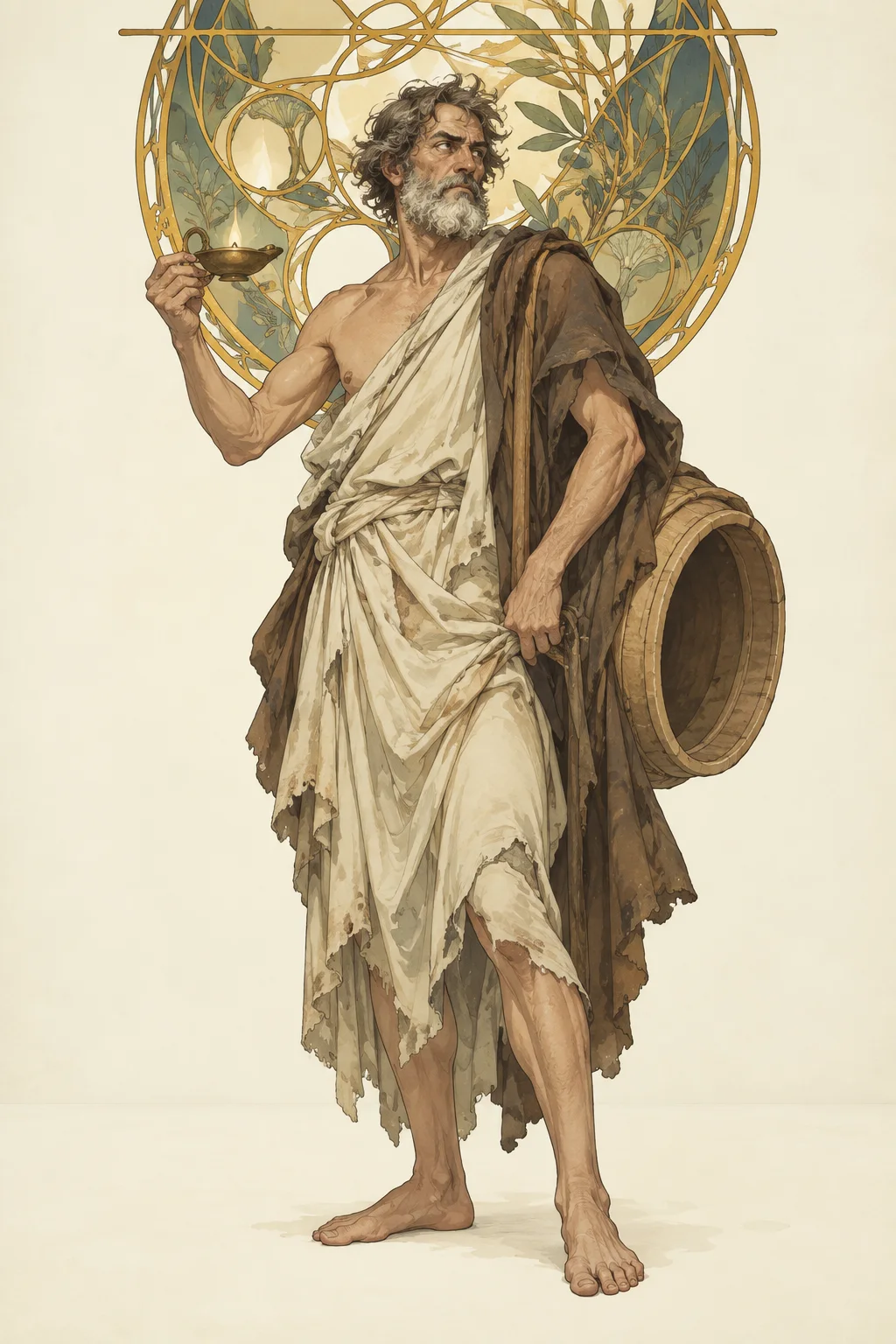 Greece · PhilosopherDiogenes of SinopeLiving in a barrel, he turned common sense and authority inside out through paradox.
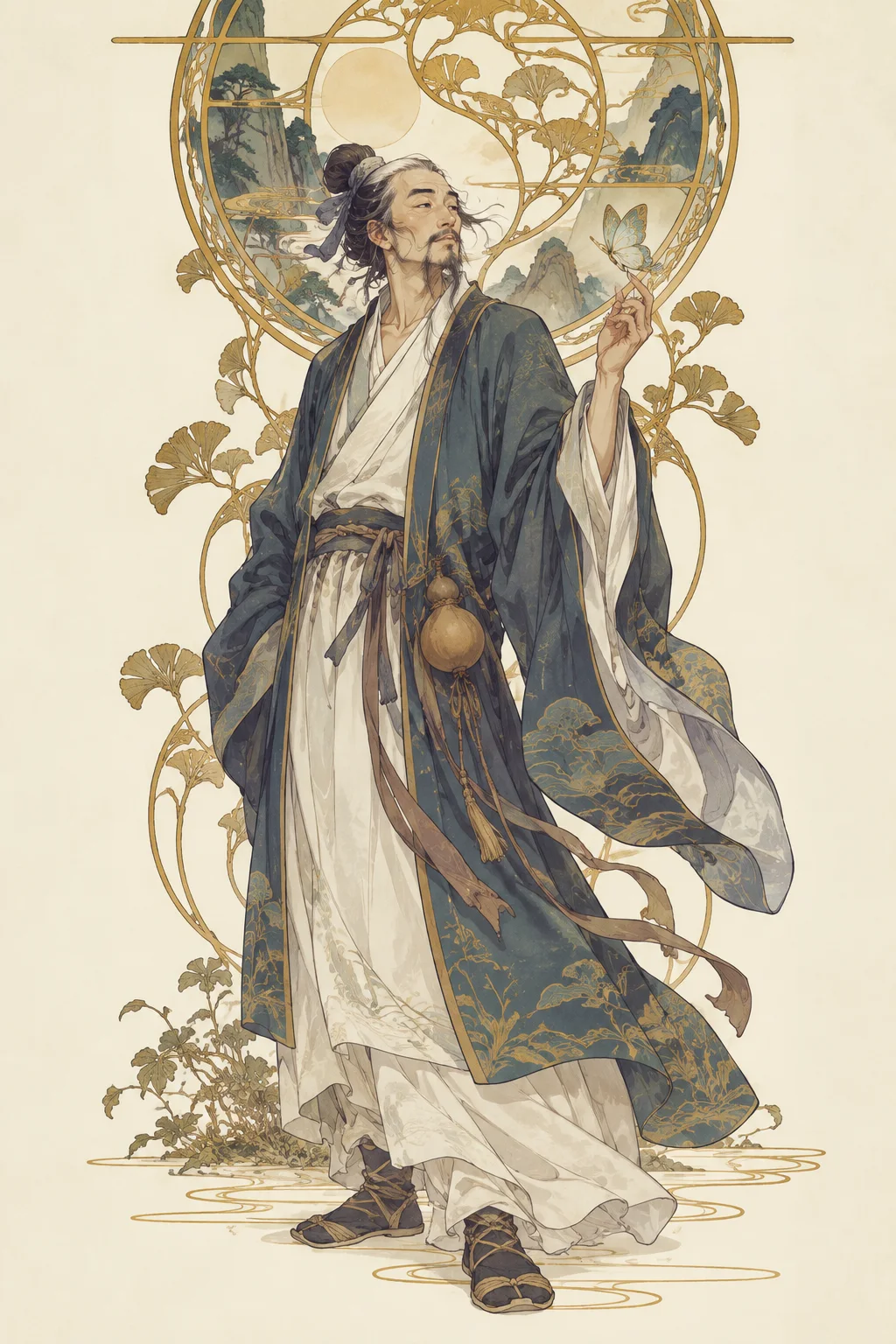 China · Daoist PhilosopherZhuangzi"The Butterfly Dream" — with a fable he rearranged how the world is seen.
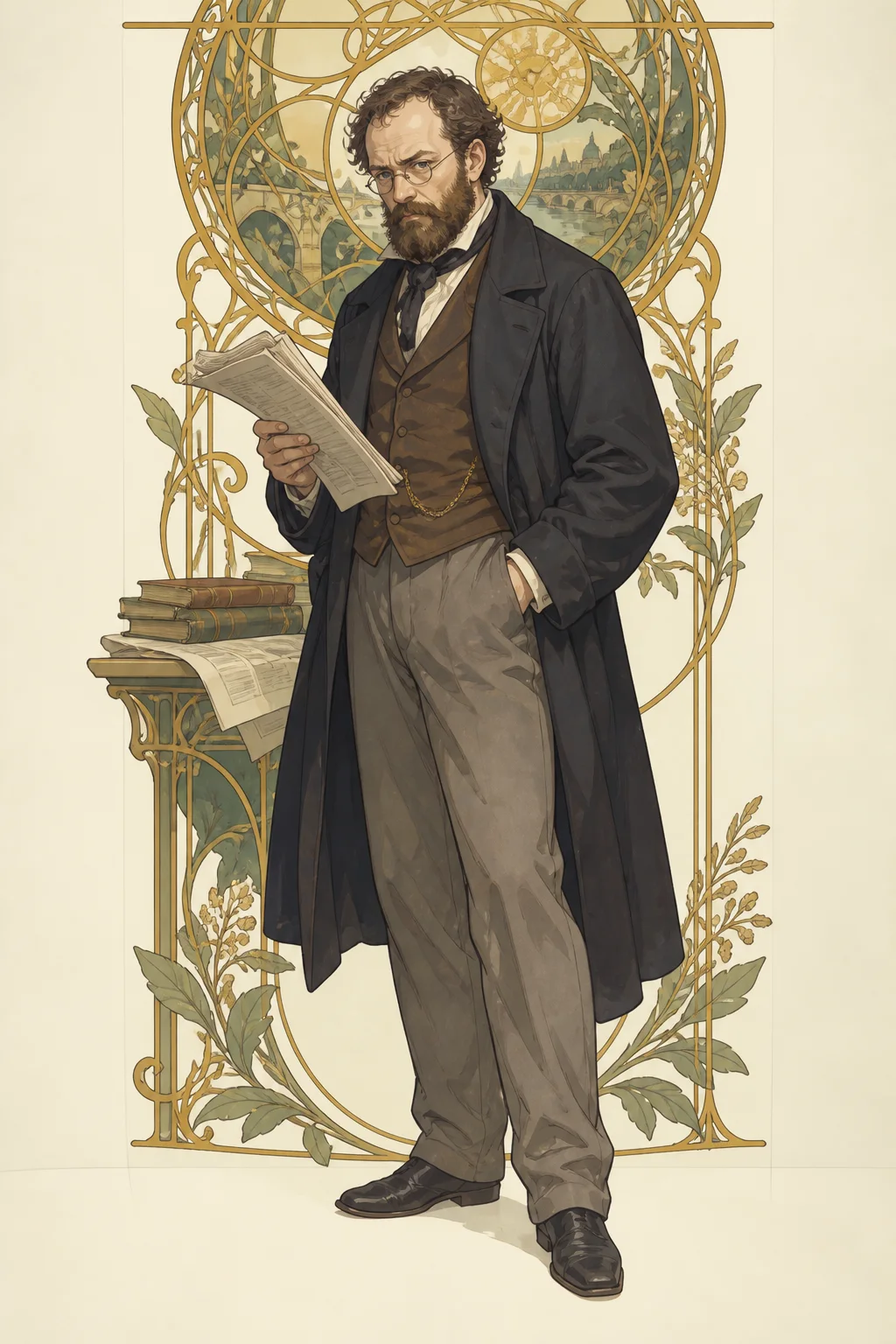 France · ThinkerProudhon"Property is theft" — with a single declaration he called order into question.
 France · Thinker and FilmmakerGuy DebordHe named consumer society "the Spectacle" and laid it bare with theory.
 Austria · Philosopher and TheologianIvan IllichHe doubted, from the very roots, the premises of school and hospital themselves.
 Martinique · ThinkerFrantz FanonHe dissected the psychology of the colony and built a theory of liberation.
 Slovenia · PhilosopherSlavoj ŽižekCrossing film and politics alike, he keeps provoking thought with paradox.
 UK · FilmmakerAdam CurtisHe depicts the hidden wiring of power and media through his own editing.
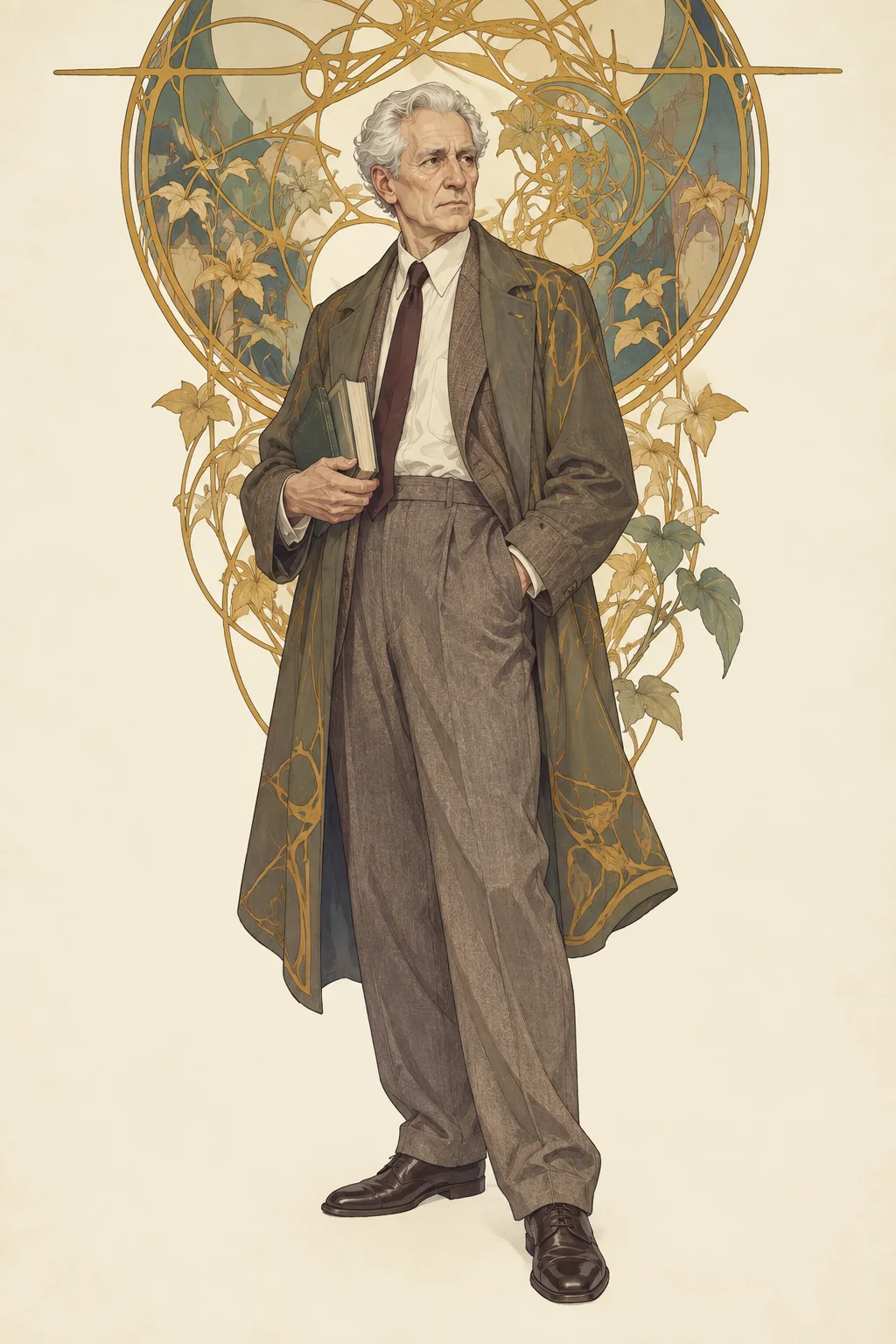 Germany · PhilosopherHerbert Marcuse"One-Dimensional Man" — he saw through the unfreedom within abundance.
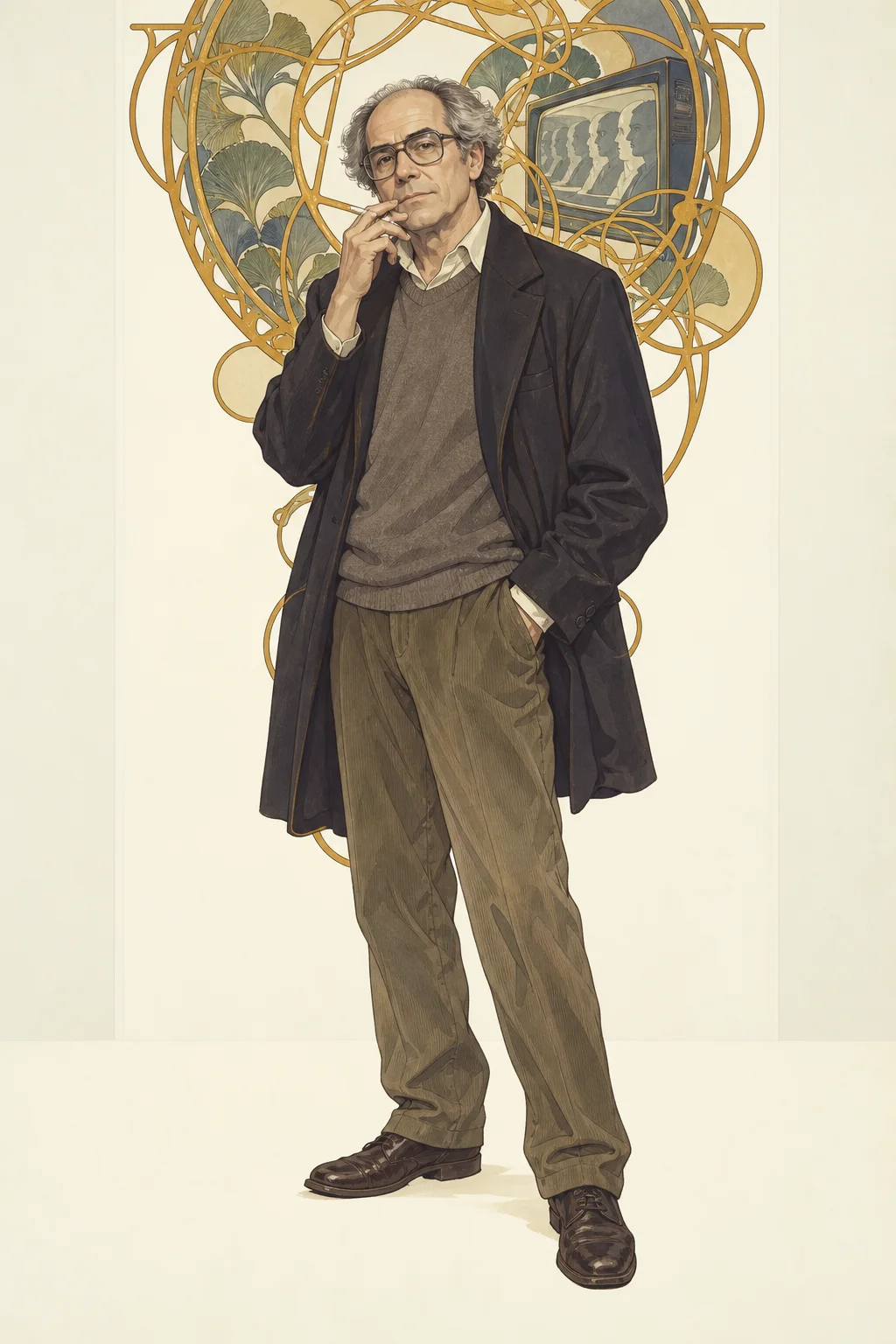 France · Philosopher and SociologistJean BaudrillardHe anticipated, with theory, an age in which reality is swallowed by the image.
Type attributions are informed speculation based on public information, not confirmed fact.
Map of group memberships
The Visionary is one of 32 types, and also belongs to several groups of kindred natures. Here are the four main ones first — open a card to step into its own gallery room.
 Quadra (Values)Chi Quadra (Χ)Utopia
 Bouquet (Temperament)Flexible-Maneuvering TemperamentSeizing opportunity and springing into motion
 Club (Interest)Research ClubSeekers of knowledge
 Motivation (Stimulus Group)Uniqueness Stimulus GroupSeeking novelty and pioneering spirit
See all groupings (25 more)
 Communication StyleBusiness-likeRelating through shared activity
 Behavioral StyleConceptualistOrdering the world through structure
 Argumentation StyleReconstructorDoubting premises and rearranging them
 Perception GroupAssociativenessGrasping the world through a web of associations
 Cognitive StyleHolographic-PanoramicReading the whole by grasping many facets at once
 Romance (View of Love)MentorQuietly guiding from beside you
 Stress ToleranceStrongCrouches low, then springs back
 Socialization GroupSubverterRearranging the mechanism
 Inflation RingEnergy AccumulatorStoring energy and putting it into practice
 Project GroupGeneral ResultGrasping the broad outline and growing it
 Implementation GroupTechnology IntroductionSending promising technology into production
 Square (Rest)AesthetesConnoisseurs of refinement
 Business Square (Collaboration)HierophantsExecutors of the Mysteries
 Octad (Cross-Value Group)HeraldProclaims values and delivers them to the world
 Reactor (Excitation Group)EruptionErupting excitation outward
 MobilizationEmulsionTemporarily emulsifies foreign matter
 Conditioning (Adjustment Group)AlignmentAligning things into order
 LabyrinthAlexandriaDesigning ideals and appraising their enactment
 Block Group (Extinguishing Group)StageSetting the scene to dazzle and reading the path to victory
 Social Progress Ring (SPR)ReflectionThe ring of moonlit contemplation
 Supervision Ring (SVR)TheoriaA vantage that sees the whole at once
 Social Order Ring (SOR)LeviathanA mechanism that embodies collective intelligence
 Succession Ring (SR)DynastyThe bloodline's reclaiming of the throne
 Benefit Ring (BR)KaiserLeader of the new dynasty
 Master Ring (MR)GrandeurThe dynasty's magnificent institutions
Open the full, love and business editions

- The blueprint of your mind (8 blocks)
- Six ways to recover from stumbles
- A situation-by-situation guide (6 situations)
- The reasoning behind the celebrity picks

- What your heart longs for / What excites you / Your landmines
- Classic love scenarios
- Chemistry by partner (all 32 types)
- At home and as a parent / A practical playbook

- Natural strengths / Work better avoided
- Work style / Management
- Industry fit ◎○△ (23 industries)
- Suitable roles

Save $24.98 compared with buying the three separately