
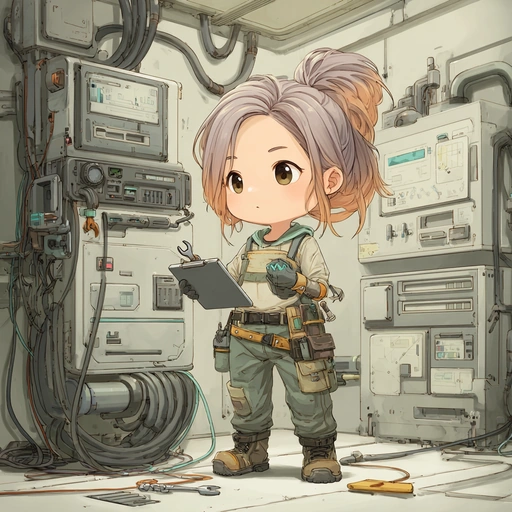

【Field Maintenance Engine (Maintainer)】
Discovers small issues, makes instant improvements, and continues comfortable operation
Fix small, run long
Instant hack and sustained care come together
【Operations Handyman】
Automated manual steps in a data pipeline with a single shell script
Reduced late-night responses to zero
Instant improvement and operational maintenance
【Lab Maintenance Crew】
Adjusts for a colleague suffering back pain from mismatched lab bench height
Built an improvised pedestal
Comfort maintenance
【Event Operations Officer】
Noticed crowding at a venue and rearranged the layout
Simultaneously optimized the air conditioning
Quick-fix hacking and continuous operation
【Implementer】
Gives shape to "notice -> immediate improvement" and keeps the field running
Non-stop improvement cycle
Fatigue-free work environment
【Energy Accumulator】
Stores daily small improvements and releases them all at once at critical moments
Practical know-how assets
Improvement logs become assets
【Instant Orientation】
"Just get it working," "instant PoC," "immediate hack"
Positive: Practical, speed / Negative: Lack of perfection, ad hoc
【Care Orientation】
"Comfort maintenance," "fatigue-free environment," "sustained care"
Positive: Consideration, coziness / Negative: Plain, inconspicuous
【Continuity Focus】
"Run long," "continuous operation," "preventive maintenance"
Positive: Sustainability, stability / Negative: Conservative, resistance to change
【Extraverted-Leaning】
"Rational / Extraverted-leaning / Dynamic"
Positive: Practical, action-oriented / Negative: Lack of introspection
【Mild】
Excessive hacking, "until everything is automated"
Excessive care, "until perfect comfort"
【Moderate】
Runaway perfectionism, "until I'm satisfied" never ends
Compulsive care, "until everyone is comfortable"
【Severe】
Burnout, health deterioration
Complete loss of emotions, collapse of relationships
【Path to Recovery】
Appropriate improvement standards, understanding that "80% is enough"
Rebuilding relationships, developing complementary functions (Fi/Ni)
【Early Stage: Individual Use Period (Childhood to Early Adolescence)】
Uses -Te-p and +Si-c sequentially, "first hack, then care"
Takes time, externalization needed
Strengthening: Diverse inputs (-Te-p), diverse outputs (+Si-c)
【Mid Stage: Easy Coordination Period (Late Adolescence to Early Adulthood)】
Coordination becomes easy, "hacking while caring" becomes possible
Instant hack -> immediate sustained care
Strengthening: Diverse thinking and reflection (Correlator)
【Late Stage: Integration Period (Late Adulthood to Middle Age)】
Gradually blending, formation of vortex synergy
Unified as "maintenance and continuity"
Improved intuitive accuracy through experience
【Mature Stage: Complete Integration Period (Middle Age to Old Age)】
Finally becomes one process
Instant hack immediately accompanied by sustained care
Grasps improvement points and care points just by looking
Years of experience and wisdom, mentoring younger people
【Vortex Synergy Cognition】
Continuous loop of improvement <-> care
Instant hack -> sustained care -> small improvement accumulation
Observe -> small experiment -> update with a brief declaration
【Result-Oriented, Continuous Operation】
Gives shape to "notice -> immediate improvement" and keeps the field running
Non-stop improvement cycle
Fatigue-free work environment
Fix small, run long
【Individualistic Implementation】
Declaration of "let's just go with this"
Immediate implementation based on own judgment
"Just get it working" is OK
【Valued Elements】
Resolving small setbacks, instant improvements
Comfort and safety levels, fatigue-free environment
Reproducibility, improvement logs
Continuous operation
【Undervalued Elements】
Perfect design, large-scale transformation
Temporary fixes, disposable solutions
【Decision Process】
Instant hack -> sustained care -> brief declaration -> log addition
Calm decisions over minutes to hours
Brief reports like "automated it with a 3-line script"
Confirmation through physical sensation
【Integrated Process】
Continuous observation: +Si-c scans for comfort and discomfort
Mini experiment: -Te-p hacks immediately with leftover materials
Brief declaration: "Let's just go with this" -- fixing the improvement
Log addition: Append to procedure manual -> ensure reproducibility
【Characteristics】
Automated manual steps in a data pipeline with a single shell script, reducing late-night responses to zero
Built an improvised pedestal for a colleague suffering back pain from mismatched lab bench height
Noticed crowding at a venue and rearranged the layout while simultaneously optimizing the air conditioning
【Integrated Attention Allocation】
Receptor (-Te-p): Setbacks (highest sensitivity), tedious routine tasks, inefficiency
Effector (+Si-c): Comfort level (highest sensitivity), temperature/lighting, fatigue signals
Correlator (Te-Si-De): Simultaneously tracks "hack and care"
Attention priority:
Sustained care (50%), Instant hack (40%), Log accumulation (10%)
【Easily Overlooked】
Big-picture perspective, large-scale transformation, long-term planning, flashiness
【Daily Life】
When finding small setbacks, makes "just get it working" improvements with simple scripts or jigs
For new tools, prioritizes "can it be used continuously without fatigue"
When there are tedious routine tasks, integrates shell scripts or macros in a short time
【Research & Work】
Operations Handyman: Automated manual steps in a data pipeline with a single shell script, reducing late-night responses to zero
Lab Maintenance Crew: Built an improvised pedestal for a colleague suffering back pain from mismatched lab bench height
Event Operations Officer: Noticed crowding at a venue and rearranged the layout while simultaneously optimizing the air conditioning
【Learning Style】
Prefers: Instant improvements, continuous operation, comfort maintenance
Dislikes: Perfectionism, large-scale transformation, temporary fixes
【Speaking Style】
Content: "Automated it with a 3-line script," "This made things easier, let's keep going," "Let's just go with this"
Style: Brief reports, calm, practical
Characteristics: Light declarations, improvement reports, care proposals
【Listening Style】
High sensitivity to setbacks, detection of comfort levels
"Tedious," "tiring"
【Discussion Style】
Role: Operations officer, operations handyman, implementer
Effect: Operations become easier, environment becomes comfortable, or tends to be plain and polarizing
【Healthy Range】
Stronger instant hacking, deepened sustained care, accelerated small improvements
【Moderate Stress】
Excessive hacking, "until everything is automated"
Excessive care, "until perfect comfort"
【High Stress (Runaway of inferior Fi)】
Complete loss of emotions, collapse of relationships, burnout
【Signs of Recovery】
Success of small improvements, confirmation of improved comfort, achievement of "an environment that doesn't cause fatigue"
【Waking Pattern】
Calmly, "what are today's setbacks?" "how's the comfort level?"
【Daytime Pattern】
Continuous comfort monitoring, instant hacking, brief declarations
【Evening Pattern】
Reviewing today's improvements, confirming "did things get easier?"
【Days Off】
Organizing improvement logs, preventive maintenance, planning the next small improvement
【Instant Hack -> Sustained Care Linkage Circuit】
-Te-p (Receptor: How the world is perceived)
Dorsolateral prefrontal cortex fires in a burst spike
↓
Weak stimulus triggers an instant PoC
↓
Implements "just get it working" improvements on the spot
↓
"Just fix it" hacker loop
↓
Finds small setbacks and hassles
↓
Runs an instant PoC with leftover materials or short scripts
↓
Exports unnecessary steps outward and streamlines the flow
【Integrated Process: Correlator】
Thought, reflection, planning, metacognition
↓
Leading-Creative coordination
↓
Observe -> small experiment -> update the flow with a brief declaration
↓
Improvement <-> Care Vortex Synergy
+Si-c (Effector: Means of realization)
Insular cortex maintains tonic activation
↓
Strong stimulus sustains long-term care mode
↓
Long-term monitoring of comfort and safety levels
↓
Maintains the environment in a comfortable and safe state
↓
Continuously monitors temperature, traffic flow, and supplies
↓
Restrains excessive service internally to prevent burnout
【Field Maintenance Circuit】
Continuous observation (sustained care)
↓
+Si-c scans for comfort and discomfort
↓
Detects discomfort in temperature or lighting
↓
Does not miss fatigue signals
↓
Instantly visualizes discomfort & inefficiency
↓
Mini experiment (instant hack)
↓
-Te-p hacks immediately with leftover materials
↓
Integrates a shell script or macro in a short time
↓
"Automate it with a 3-line script"
↓
Brief declaration (light declaration)
↓
"Let's just go with this"
↓
"This made things easier, let's keep going"
↓
Small improvement becomes established fact and is adopted by everyone
↓
Log addition (accumulation)
↓
Records changes in Git or notes
↓
Confirms comfort level changes through physical sensation
↓
Appends to procedure manual -> ensures reproducibility
↓
Improvement log becomes an asset leading to the next improvement
↓
Instant improvement x sustained care rapidly alternate, gradually evolving the field
【Dopamine (Low-Medium Level, Accumulation-Release Type)】
-Te-p component: Instant reward from "it works for now"
+Si-c component: Sustained reward from maintaining a comfortable environment
Integration (Te-Si-De): Neural basis of the Energy Accumulator
Stores daily small improvements -> releases all at once at critical moments
【Noradrenaline (Low-Medium Level, Selective)】
-Te-p component: Attention to setbacks
+Si-c component: Continuous vigilance for comfort and safety levels
Integration: Maintenance of hack -> care switching
【Serotonin (High Level, Sustained)】
Long-term maintenance of comfortable environment
"Can be used continuously without fatigue"
Ensuring safety levels
【Endorphin (Low-Medium Level, Intermittent)】
Pleasure from small improvements
Achievement of "it works for now"
Tangible sense of improved comfort
【Oxytocin (Medium Level, Selective)】
Team care
"This made things easier, right?"
Consideration for colleagues' ease of use
【Glutamate (Medium Activity)】
Promotion of synaptic plasticity
Strengthening of instant hack -> sustained care linkage
Leading-Creative coordination becomes easier with experience
Accumulation of improvement logs
【Integrated Excitation Conditions】
-Te-p (Receptor) activation:
Small setbacks, tedious routine tasks
Minor inefficiencies, "this flow only needs 3 steps"
Leftover materials, short scripts
+Si-c (Effector) activation:
Discomfort in temperature or lighting, inconvenient traffic flow
Fatigue signals, supply depletion
Monitoring comfort and safety levels
Integration pattern (Te-Si-De):
Instant hack -> sustained care -> brief declaration -> log addition
Vortex synergy, observe -> small experiment -> update the flow with a brief declaration
【Integrated Inhibition Conditions】
-Te-p component: Unnecessary steps (exported outward)
+Si-c component: Excessive service (restrained internally to prevent burnout)
Integration mechanism:
Balance between hack and care
Rhythm of "observe -> experiment -> declare -> accumulate"
Continuous improvement through result orientation
【Development of Linkage】
Early: Using -Te-p and +Si-c sequentially, "first hack, then care"
Mid: Coordination becomes easy, "hacking while caring" becomes possible
Late: Gradually blending, formation of vortex synergy
Mature: Finally becomes one process, instant hack immediately accompanied by sustained care
【Consumption Pattern】
-Te-p component: Medium (90-110 kcal/hr), intermittent
+Si-c component: Low-Medium (70-90 kcal/hr), sustained
Integration (Te-Si-De): Low-Medium (80-100 kcal/hr), sustained
【Duration】
Receptor (-Te-p): Minutes to hours of instant hacking (frequent)
Effector (+Si-c): Hours to days of sustained care
Correlator (Te-Si-De): Until operational continuity, daily accumulation
【Fatigue and Recovery】
Fatigue: Gradual depletion from repeated cycles of instant hacking and sustained care
Recovery: Success of small improvements, confirmation of improved comfort, achievement of "an environment that doesn't cause fatigue"
Characteristic: Energy Accumulator, stores daily small improvements -> releases all at once at critical moments



 Sign in with Google