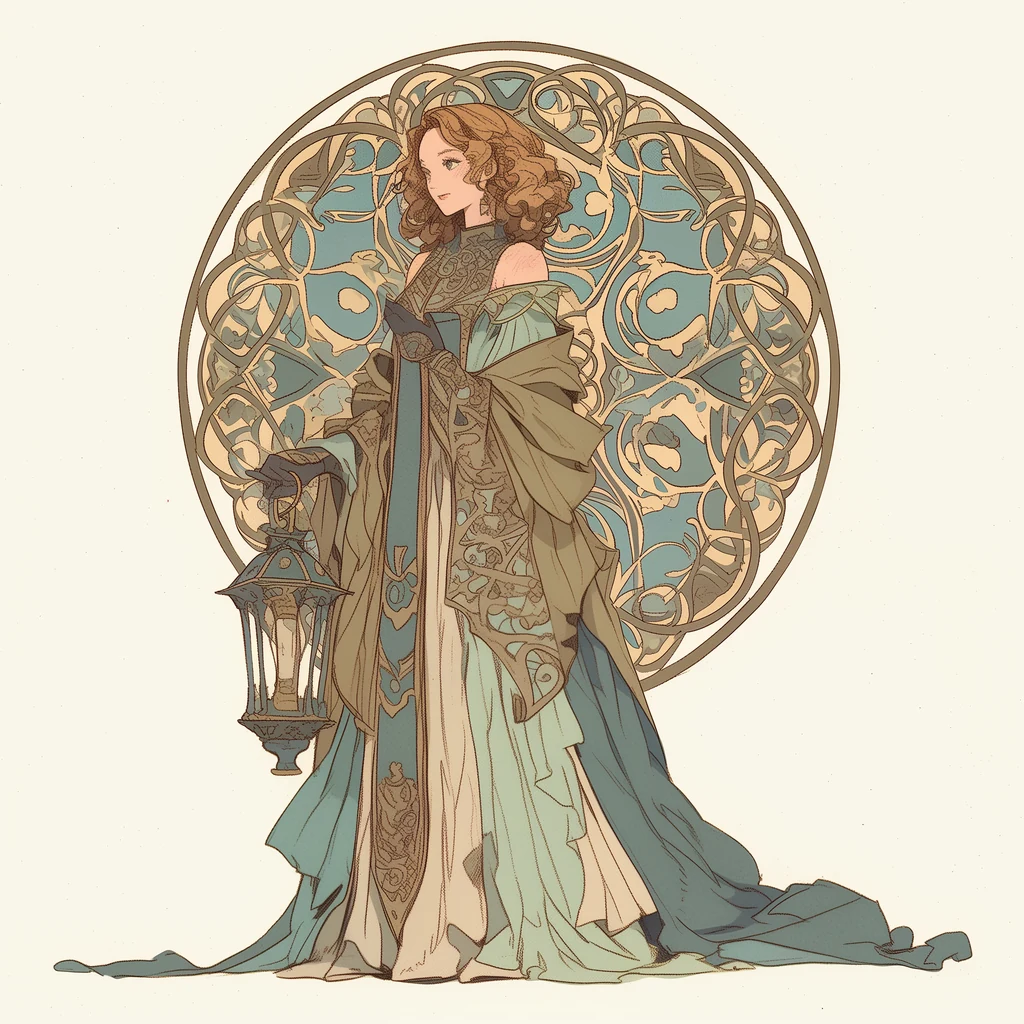
IEE-Q – Advisor –
One who quietly draws near and listens to the heart
You are someone who reads, by intuition, the possibilities sleeping within another person.
Rather than handing over an answer, you ask questions and help the other person arrive at it themselves.
You keep your distance from bureaucratic authority, and quietly go on giving advice in familiar settings.
- Quadra
- Psi Ψ
- Bouquet
- Flexible-Maneuvering temperament
- Club
- Humanitarian Arts
Portrait — the Advisor

The core of how this person engages lies not in "leading" but in "drawing out." "What do you think?" "Why did you feel that way?" "What else?" Rather than handing over an answer, they place a precise question, so the other person reaches, on their own two feet, the answer that had been sleeping inside them. Not manipulating directly, but prompting them to rethink. That stance is their true worth as someone to turn to.
Their gaze is always turned forward. Offering one future option and untried idea after another, they see reality with optimism and hope. They're skilled at finding "the way out that belongs to that person alone," beyond limits and pressures, and they quietly light a lamp for someone who has hit a wall.
They're rarely swept too far into the other person's emotions. Calmly, they try to see through to the motives and structure beneath true feelings and interpersonal friction. Though direct sympathy and shared emotion are restrained, they carefully read "why does this person feel this way?" and "what background lies behind it?" — and trust gathers around the sureness of that understanding.
They face the mismatches in others and their surroundings with patience. Without deciding things from above, and respecting each person's position, they support the other person's own growth and problem-solving through persistent dialogue. They keep their distance from bureaucratic, collective authority and take no interest in formal hierarchies. Equal and frank, yet avoiding relationships that stir emotion too violently, they choose the position of quietly continuing to advise in familiar settings.
Not leading, but drawing out.
Does this sound like you?
- You read a person's nature and habits at a glance.
- You hold back the urge to tell the answer, and find yourself asking, "what do you think?"
- Rather than standing out by being loud, you end up at the center of the conversation before you know it.
- Your interests often shift, and you grasp the whole picture through brief observation.
- You clearly keep your distance from bureaucratic procedures and formal hierarchies.
- You recommend a new health regimen to others before you've tried it yourself.
- Your expectations of someone you trust grow too high, and a small failure to understand you hurts deeply.
- You avoid confrontation, carry it alone, and blame yourself afterward.
- You're better at pulling the essence out of materials than drafting documents from scratch yourself.
- You're most naturally yourself in a comfortable place where you can relax.

How you move

The Advisor's conduct shows well in an unassuming presence that sits, without airs, at the center of the room, and in a quiet resolve that reveals a core the moment they are needed.
They don't gather attention by raising their voice; they finely adjust the pleasant atmosphere and the flow of conversation. Fixing on no one in particular, with a tolerance and flexibility that welcomes all sorts of personalities, they create a space where people can gather with peace of mind. Just as they are, they find themselves at the heart of the relationships before anyone notices — such is the quiet centrality they hold.
Ordinarily they are inconspicuous and go at their own pace. Yet when those around them fall into confusion and an ethical compass is called for, they suddenly speak words with a core and take on the role of setting the room right. Valuing "what is needed now" over their own will, they move into action with quiet resolve.
Not standing out, but setting the room in order.
- Doesn't draw attention by being loud; carefully tunes a comfortable atmosphere
- When an ethical compass is called for, suddenly speaks words with real backbone
- Interest tends to fade when it comes to managing discipline and records
Observed Behavior

Reading a person's nature and habits at a glance, noticing subtle shifts in attitude and relationship — such sharp psychological observation is often seen in this person. They engage as if naturally "tuning to the other's frequency," opening many people's hearts. For someone in a difficult situation, they lay out several paths side by side and search together for a solution that suits that person.
Their curiosity is abundant, but rather than emotional absorption, they turn their attention crisply to whatever they feel "is needed now." Their interests and fields often shift, and they grasp the whole picture through short bursts of observation and comparison. More than drafting documents from scratch themselves, they are good at extracting the essence from others' materials.
They are selective about contact. Rather than getting to know just anyone, they seek only thoughtful company and the conversations that matter. Poor at both solitude and large crowds, they prefer comfort and high-quality engagement with a small few. Belonging to no particular group, they are often seen relating to people's lives as an independent individual.
They clearly keep their distance from hierarchy and bureaucracy. Disliking strict rules and meticulous record- and document-work, they are better suited to moving by improvisation in the moment. On the other hand, they engage vividly with topics of culture, art, and health, sometimes recommending a new health regimen to others before they have tried it themselves. They tend to idealize people and relationships at first, but over time they redraw, on their own, black-and-white judgments into shades of gray.
Given a place where your discretion is respected, your power to listen supports people surprisingly deeply.
How you speak and listen

With a soft, sincere way of speaking, they arrange a setting where the other can look at their own problem more easily. Rather than loudly showing strong empathy, they put their weight on creating "an atmosphere in which one can speak." Though the temperature of their words is restrained, through probing questions and suggestive advice they gently widen the other's field of view.
Rather than telling someone "you should do this," they guide with questions and suppositions. "How were you feeling at that moment?" "What if there were another option?" — with such words they prompt the other to approach an answer of their own accord. They don't seize the initiative in the conversation; they listen to the other's words and never force emotion in a direction. They show curiosity toward interesting topics, yet they don't monopolize them, preferring, above all, a dialogue that nurtures mutual awareness.
Guiding the other person with questions and suppositions.
What lies at the core — drive and tender spots
At the Advisor's core is a quiet, unshakable conviction that "through questioning, I can draw out the possibilities and answers sleeping within the other."
What supports them from within is an intuition that reads the possibilities in people and the structure of relationships — and the ability to trust it. Seeing through to the true feeling behind words and the motive at the bottom of a tangle, they help, with a precise question, that person find the way out for themselves. What they hand over is not the answer itself, but the path toward the answer.
Onto this is layered a gaze that sees hope. In any situation they find a forward-looking possibility and a way out, and, believing in the other's growth, they light a lamp. Not carrying the burden themselves, but illuminating the one who carries it — as someone to turn to, this person is at their most alive.
Find the possibilities, open the true feelings.
What drives you

More than promotion or reward from outside, it is the felt sense of "can I touch new knowledge?" and "am I being of use to someone?" that moves this person from within. To a person or an ideal they have once trusted, they spare no quiet, continuous support.
What fulfills them most is a scene where, being called upon, they can shine a light on another's possibilities. They put their own discoveries and realizations gently into words and hand them over. Through resonance, both the other and themselves grow — that is this person's own form of joy.
Tender spots

Their greatest weakness is the domain of organization and discipline. Toward formal hierarchies, fixed procedures, and rigid systems that run on logic alone, they feel a visceral rejection. Planned execution on a deadline, logical judgment detached from feeling, precise record-keeping — such practical work is the core of what they struggle with.
And they tend to hold emotions inside. In their effort to keep a good relationship, their expectations of someone they trust grow too high, and a small failure of understanding wounds them deeply. Calm on the surface, they carry strong conflict within; avoiding confrontation, they shoulder it alone and blame themselves. When a partner who receives this burden and gives them a place of security is beside them, this person becomes far more at ease.

- Core: drawing out, through questions, the answer sleeping within the other person
- What drives you: the felt sense of touching new knowledge, and of being of use to people
- Where you're fragile: the domain of organization and discipline, fixed procedures
Strengths, and where you stumble
The Advisor's distinctive strengths lie in an intuition that sees through to a person's essence, a warm empathy, and the tenacity to keep quietly supporting someone they believe in. That same sharpness of sensitivity can, depending on what is being asked, become a source of difficulty in living.
Someone with sure, down-to-earth support.
Strengths

The power to engage people warmly and sincerely while seeing deeply through to their essence and motives. In conversation they pick up the other's worth and possibilities, and naturally gather trust. Sensitive to friction in relationships, they never forget the unobtrusive care that keeps harmony.
A strong empathy and staying power toward others' growth and possibilities. To a person or ideal they have once believed in, they spare no quiet, unbroken support. Though they don't show it outwardly, at the crucial moment they reveal a surprising strength of core and encourage those around them. Even when they sink, they hold an inner resilience that lets them question themselves and recover on their own.
Where you stumble

On the other hand, their interest in real-world clerical processing and repetitive tasks tends to fade. Prone to absorption in deep thought and imagination, they are swayed by the ups and downs of mood. In settings where they can move at their own pace they show their power, but under strong control or surveillance they find it hard to bring out their true ability.
And they hold emotions inside. Trying too hard to keep a good relationship, their expectations of someone they trust grow excessive, and a small failure of understanding wounds them deeply. Avoiding open confrontation, they ruminate alone and blame themselves. All of this is greatly eased when a partner who gives them a place of security and encouragement is there.
When you meet someone with a calm grip on reality, your ideas bear fruit in a down-to-earth form.
- Even when an ideal is betrayed, keep room to adjust the distance rather than deciding black or white
- Use a mind map or notes to put your thoughts outside your head
- Don't overfill your schedule; balance quiet with stimulation
Where you thrive
The Advisor performs at their freest and best when, in a space of trust and calm where individual discretion is respected, they can engage one-on-one with another's inner life.
What moves this person is inner curiosity and a drive toward growth. More than formal promotion or reward, it is the felt sense of "can I touch new knowledge?" and "am I being of use to someone?" A place where there is individual discretion and where, within a gentle atmosphere, they can calmly exercise their creativity is ideal. They are a superb match with an environment that has flexibility in its schedule and grants time for self-directed learning.
In a place where you feel safe, your power to listen grows.
The fields where they shine
Their power comes most alive in "one-on-one support" that draws on their intuition for people's inner lives and the structure of relationships. Counselors and clinical psychologists — carefully listening out worries and advising in a way that finds hope. Education and individual tutoring — guiding not by forcing a mold but by fitting each person's talents and character. Career advisors and HR consultation — grasping intuitively a suitable job and the workplace "fit." NPOs and welfare and community support — a quiet engagement with society grounded in altruistic motives. Each is work that shines a light on people's possibilities and supports their own growth.
Where they thrive
In an environment rich in intellectual and cultural stimulation, where individual discretion is respected and there is trust and calm, their power comes out. To depend on no particular group, and to relate to people's lives as an independent individual. Quiet freedom and psychological safety — these two set this person's creativity free.
A comfortable, beautiful workplace; an environment where feedback returns at once; short-term projects where emotion can be put to use. And a field where people's reactions are visible on the spot — these unleash this person's power. Frank, warm feedback, and a single word of "that helped," "thank you." That makes this person all the more positive.
Conversely, in places where noise, excessive competition, and strong pressure and tension swirl, they close inward and wear out. When a fixed way of doing things is imposed on them from the ground up, or when they are constantly managed and watched, they cannot bring out their true power. Yet if a place of security and a partner who supports their comfort are beside them, even in such places this person's power to listen comes fully alive.
Dialogue — ask Lydia

One free dialogue · Le Salon members can explore several perspectives. Not a real person: a representative perspective based on the public profile.
Relationships and love
Do hearts connect? Is there quiet trust?
How You Love — Love That Listens and Illuminates
The Advisor’s way of loving shows in “listening to the other’s heart and quietly lighting up the possibilities within them.” With intuition of possibilities you sense the feelings they haven’t yet put into words and the good in them that stays hidden, and with relational ethics you tell them, quietly but surely, “this part of you — I love it.” You don’t make showy confessions or stage grand gestures. Instead, you grasp astonishingly deeply what they’re truly troubled by and what they truly want, and stay close. Concretely, when they let slip a moment of weakness, rather than pushing a solution on them, you first receive it — “I get it, that you feel that way.” That very sense of safety is the greatest expression of love the Advisor offers. Above all, you treasure the felt sense of hearts truly connecting.
Compatibility — recommended partners
 Craftsman
 SLI-DThe artisan who sets the world in order in the palm of his handDualityThe most complementary partner of all, satisfying the need to belong, secure attachment, and deep longing. They give you peace of heart and a sure hand that supports the ground of the moment, both at once Peacemaker
 SEI-DA bridge between sensation and compassionSemi-dualityNostalgia, a sense of belonging, interdependence — a partner who makes you feel a fond, warm connection. Strategist
 ILI-DThe contemplative Strategist who quietly reads ahead and lays the groundworkIllusionaryEmpathy, gratitude, trust, reassurance — more indirect than the Dual, yet a partner with whom you can find deep ease. Executive
 LSE-DSet it in order, get it moving, see it throughActivationActivation, elation, drive, curiosity — just having them near makes "I want to do it" well up; the easiest partner to open up with. Pioneer
 LIE-DCarving the way through results — the realist's frontierBenefactorSomeone you can move for naturally — a relationship where you support them as their benefactor and are given back joy and gratitude. Enthusiast
 ESE-DThe cheerful flame that sets the world ablaze with feelingBeneficiaryFulfillment and trust — a relationship like a full, peak experience received from a benefactor Philosopher
 EII-QOne who, in the stillness, keeps questioning the meaning of the worldMirrorIntuition, insight, flow — a partner with whom you can draw out each other's unconscious intellectual strengths Judge
Judge ESI-QThe quiet arbiter who discerns right from wrongSupervisor (mirror)Integration and growth — a relationship where you can't help but give, handing over knowledge and support as a mentor Analyst
 LII-QFrom the quiet of the desk, reassembling the worldSupervisee (mirror)Learning and resilience — a relationship where you can't help but receive, inheriting knowledge as an apprenticeSee the other relationships (22 more types)
The upper bands are easier to be with; the lower bands tend to wear you down. Tap a relation name to read about the pair.
 Seeker
 ILE-QAn intellectual adventurer who unravels the worldKindredA partner whose conversation flows easily, someone who likes to express things in the same direction as you. It can wear you out once it turns competitive.
SEE-QA natural orchestrator who reads the room and guides people toward reconciliationBusinessA partner you can easily work alongside, adapting to the situation together. Administrator
 LSE-QThe hands-on command post that keeps the field running and moves people and workRelaxationA partner who puts you at ease, though you tend to end up waiting on them with quiet expectation. Empath
 EII-DSensing what lies beneath feeling, and becoming someone's quiet supportCodependencyA partner who wears you down little by little, caught in a cycle of bottling things up and overcompensating. Promoter
 IEE-DMoving the world through fascination — an evangelist of ideasAdaptiveA partner you settle into by simply playing your roles, an easy, unremarkable relationship. The Artist
 SLI-QGiving form to the “just-rightness” of nature and daily lifeDetachedA partner who's hard to feel drawn to, leading to a rather flat, low-key relationship. Reformer
 SLE-QAn executor who breaks through by force and rewrites conventionIdealA partner who naturally embodies what you aspire to be, easy to admire. Getting too close tires you out. Prophet
 IEI-DAn eye that gazes upon a destiny no one has yet noticedCompassA partner who gives you a sense of being accepted, along with a hint of which direction to move in. Hero
Hero EIE-DIt is this conviction that changes the worldTranscendenceA partner who makes you want to surpass yourself when you're together, pushing each other to grow. Inspector
 LSI-QThe logician who strips away pretense and sees through to the truthCorrectionA partner whose feedback becomes a chance to take stock of yourself. Commander
 LIE-QBuild, prepare, hold the line — the command center of orderTense BenefactorA partner around whom you tend to try too hard, unable to shake off the tension. Guardian
 ESI-DA silent shield that protects people, with rightness at its backSupervisorA relationship where you tend to unsettle the other person without ever realizing it.
SEE-DA born leader who reads hearts and rallies the currentFormalA relationship where formality and appearances pile up, and it's hard to ever fully relax. Critic
 ILI-QThe insightful Critic who sees through contradictions in the depths of silenceTediumA partner who leaves you feeling sluggish, prone to putting things off and keeping your distance. Harmonizer
 ESE-QTheir smile and their voice soften the space around themTense BeneficiaryA partner who leaves you worrying and overthinking, prone to closing your heart off. The Architect
 LII-DThe architecture of logic, quietly built up piece by piecePlayerA partner around whom you constantly feel watched, prone to leaving you burned out. Visionary
 ILE-DThe architect of ideas who reinvents the world through paradox and theoryDutyA partner who leaves you understanding what to do yet unable to act on it, while your need to be recognized grows stronger. Performer
 SEI-QA gentle conveyor who gives form to sensation and feelingDistrustA partner you can't quite bring yourself to trust, which makes it hard to show your own strength. Mentor
 EIE-QA passionate standard-bearer who speaks of ideals and binds hearts togetherQuasi-IdentityA partner who looks similar to you yet never quite clicks, leaving you spinning your wheels and worn out. Enforcer
 LSI-DThe steel operator who carries out the mission through discipline and responsibilityConflictThe partner most likely to strike your weakest point, the one relationship that drains you the most. Conqueror
 SLE-DA dependable field general who only burns brighter the harder things getRoleA relationship where "you should" comes first, making it hard to just be yourself. Dreamer
 IEI-QA teller of fantasies who colors the world with dreams and passionDistanceA partner who makes you want to keep your distance and close your heart off.Compatibility is not decided by type alone; maturity, subtype and circumstances all change it.
With someone you are connected to, you can read a personal Relationship Reading drawn from both of your answers ($8.99 per pair, unlimited for Le Salon members).
See compatibility with your connections →Explore Le Salon →
What You Truly Long For
What you truly long for, deep down, is a soothing comfort. Precisely because it's a realm you can't fully handle on your own…
In the Love Edition: What your heart longs for / What excites you / Where you clash and your landmines / Classic love scenarios / Chemistry by partner, all 32 types named / At home and as a parent / A practical playbook / Secrets to lasting love / A manual for your partner
Work and ways of working

Your Working Style — Possibility-Pioneering
You naturally excel in two main ways: coming up with new ideas and possibilities one after another, and staying close to each person and building trust.
Your interest turns to themes like ideals, art, and the human heart. Day to day, you're an improviser who runs on mood and inspiration.
Your habit of thought is logic first, thinking in ordered chains of "cause → effect." When you act, relationships and trust with people are your axis.
The imagination to find possibility, and the power to draw out true feelings.
- Move important decisions forward into quiet time, before you're cornered
- Build proposals in this order: the new picture → the cause and effect of making it real → what it means for the other person
- Don't brush off objections; record them as issues and take them up at the next meeting

Careers That Fit
You grasp by intuition a suitable job and the "fit" of a workplace, and support each person's own growth.
Your power to put inner realizations gently into words and hand them over comes directly into play.
Suited to a quiet engagement with society, grounded in altruistic motives.
Your Strengths, and Work Better Avoided
Your core is the combination of "the imagination to create new possibilities" and "the power to draw out people's true feelings and build relationships." Being able to launch a from-scratch vision together with people's empathy…
In the Business Edition: Natural strengths / work better avoided, Stress tolerance and socialization group, Work style, Motivation and recharging, How to work with and manage this person, Compatibility and team-building, Industry fit ◎○△ across 23 industries with rationale, Suitable roles
Blueprint of the mind
Your mind runs on eight blocks. Each block carries two functions — how you take in the world, and how you express yourself — and together they set both the range you're skilled in and how much you actually value using it. We've kept the technical notation small and explained everything in plain language.
Find the possibilities, open the true feelings.
Leading Your centerI Know
+Ne-pCreation & InnovationIntuition of possibilities-Fi-cSincerity & ReconciliationRelational ethicsYou first take in the world with an eye for "what possibilities might open up." Before you even think, any number of "possible futures" come to mind.
You give the possibility you've grasped shape with a hand that opens the other person's true feelings. You ask, "how did you feel at that moment?" and lead tangled feelings toward reconciliation.
Find the possibilities, open the true feelings. This single line becomes the power that helps the other person reach an answer on their own.
Mirror — Picked up by watching
At the entry point sits the work of reflectively picking up the subtle…
In the Full Portrait: all 8 blocks of the blueprint / 6 ways back / situational guide / the reasoning behind the exemplars
Going deeper — ways back and situational guide
On the flip side of that same core, these are the situations where you tend to stumble. After that, six ways to get back on your feet.
Carrying out a plan on a deadline and keeping precise records sit at the core of what you struggle with.
Your expectations of someone you trust grow excessive, and a small failure to understand you hurts deeply.
You may be calm on the surface, but inside the conflict is strong, and you end up blaming yourself.
Down-to-earth support gives your ideas a sure place to stand.
Way to Recover 1 — Avoid "All or Nothing," and Engage in the Gray Zone
When an ideal is betrayed, strong aversion and distance easily arise. Before cutting a relationship off, keeping room to adjust the distance, rather than deciding black or white…
In the Full Portrait: 6 ways back / situational guide (home, work, friends, under stress, shopping, days off)
People thought to share this type
Different fields, different eras — yet every one of them resonates on the same note: they asked, they listened, and they believed in the strength within people.
 USA · PsychologistCarl RogersThe father of “client-centered therapy,” who rejected authoritarian treatment and believed in the human capacity for self-healing
 Ireland · Writer & poetOscar WildeHe struck at hypocrisy with wit and paradox, and frankly drew out people's true feelings through dialogue
 USA · Poet & writerMaya AngelouShe reclaimed a voice from silence and raised human dignity into universal poetry
 USA · Human-rights activist & diplomatEleanor RooseveltShe listened to the voices of the world through dialogue and led the drafting of the Universal Declaration of Human Rights
 UK · EthologistJane GoodallShe calls living beings by name, rewrites the boundary between people and nature, and keeps speaking of hope
 USA · Musician & poetBob DylanHe released pent-up emotion through poetic lyrics and renewed the boundary between music and literature
 Germany · WriterMichael EndeIn “Momo” and “The Neverending Story,” he questioned the loss of time and imagination through fable
 USA · WriterToni MorrisonShe engraved the memory and dignity of Black women into world literature
 UK · AuthorCharles DickensThrough serialized novels he resonated with readers' emotions and shone a light on society's injustices
 USA · MusicianPaul SimonHe drew quietly near to feelings of loneliness and alienation, and opened the horizon of world music
Type attributions are informed speculation based on public information, not confirmed fact.
Map of group memberships
The Advisor is one of 32 types, and also belongs to several groups of kindred natures. Here are the four main ones first — open a card to step into its own gallery room.
 Quadra (Values)Psi Quadra (Ψ)Civil Society
 Bouquet (Temperament)Flexible-Maneuvering TemperamentMoving softly, adapting to the situation
 Club (Interest)Humanitarian Arts ClubEngaging with people and their possibilities
 Motivation (Stimulus Group)UniquenessSeeking individuality and novelty
See all groupings (25 more)
 Communication StylePassionRelating warmly, with heart and fervor
 Behavioral StyleHarmonizerKeeping the room's harmony and bridging
 Argumentation StyleDiplomatRespecting each stance, persuading through dialogue
 Perception GroupAssociativenessConnecting by association, finding meaning
 Cognitive StyleCausal-DeterministicReading the logic from causes
 Romance (View of Love)WandererWalking in search of a resonance of the heart
 Stress ToleranceFrozenUnder pressure, freezing, withdrawing, and regrouping
 Socialization GroupDevoteeBelieving in ideals and going out ahead
 Inflation RingEnergy GeneratorGenerating vitality in the room
 Project GroupIdeational processContinually refining the conception
 Implementation GroupSocial EntrenchmentRooting new values into society
 Square (Rest)NomadWandering beyond all boundaries
 Business Square (Collaboration)MaverickThe lone heretic who won't flock
 Octad (Cross-Value Group)QuestExploring the unknown, opening questions
 Reactor (Excitation Group)RadianceRadiating excitation outward
 MobilizationCorrosionEroding and dissolving old frames
 Conditioning (Adjustment Group)Warm-upWarming the room and setting it in motion
 LabyrinthThebesA city that holds mystery and fate
 Block Group (Extinguishing Group)BazaarA bazaar where free exchange is born
 Social Progress Ring (SPR)Avant-GardePioneering the way ahead
 Supervision Ring (SVR)BlueprintDrawing the blueprint of a new age
 Social Order Ring (SOR)FirebrandIgniting people with passion
 Succession Ring (SR)RenaissanceReviving and carrying on old wisdom
 Benefit Ring (BR)IgnisHanding on the flame
 Master Ring (MR)PharosA lighthouse that lights the way
Open the full, love and business editions

- The blueprint of your mind (8 blocks)
- Six ways to recover from stumbles
- A situation-by-situation guide (6 situations)
- The reasoning behind the celebrity picks

- What your heart longs for / What excites you / Your landmines
- Classic love scenarios
- Chemistry by partner (all 32 types)
- At home and as a parent / A practical playbook

- Natural strengths / Work better avoided
- Work style / Management
- Industry fit ◎○△ (23 industries)
- Suitable roles
Save $24.98 compared with buying the three separately