Quadra Classification
| Item | Category | Details |
|---|
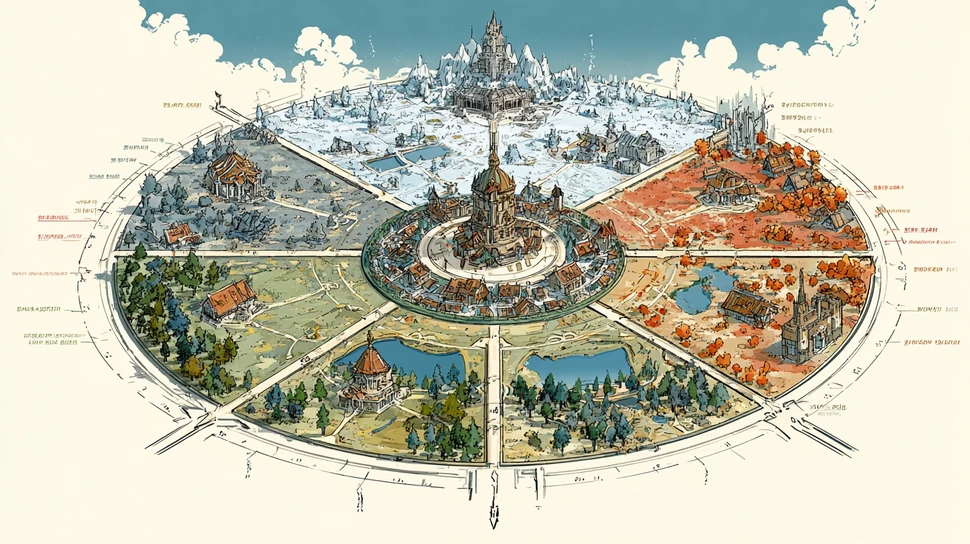
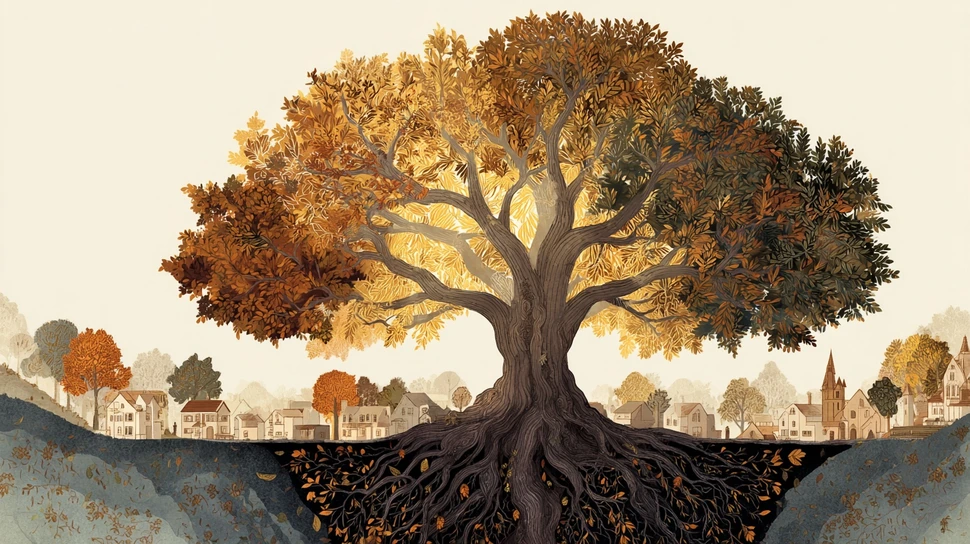
| Season | Autumn | The season of maturity, harvest, and calm |
| Temperature | -Serious (Autumn · Introspective) | Gentle thoughtfulness, quiet maturity |
| Position | +Judicious (Emergent) | Small-scale orientation, dispersed order |
| Regime | Democratic (Individualism) | Horizontal relationships, equal worth |
| Regional Type | Small-nation federations, local governments | Decentralized communities |
| Typical Scale | Tens of thousands to several million | Scale at which local self-governance functions |
Functional Composition
*Valued Functions: +Ne, +Si, -Te, -Fi
Intuition Functions (Ne family):
- +Ne-p (Creation & Innovation): Leading creative force that perceives individual potential and presents new options one after another
- +Ne-c (Hypothesis & Imagination): Creative thinking that quietly constructs hypotheses and imagines exits beyond limitations
- Integration: Discovering each person's potential, presenting diverse paths
Sensing Functions (Si family):
- +Si-p (Comfort & Well-being): Leading sensation that gives top priority to physical comfort and everyday happiness
- +Si-c (Diligence & Care): Carefully arranging the living environment with attentive care and consideration
- Integration: Improving citizens' quality of life, creating a calm and comfortable social environment
Logic Functions (Te family):
- -Te-p (Optimization & Ingenuity): Practical ingenuity that selects the method producing the best results on the ground
- -Te-c (Application & Experimentation): Improvement through flexible application and experimental approaches
- Integration: Grassroots-level efficiency rather than giant systems, field-driven problem solving
Ethics Functions (Fi family):
- -Fi-p (Compassion & Prudence): Quiet insight into others' inner lives with thoughtful consideration
- -Fi-c (Sincerity & Reconciliation): Reading the other person's true feelings and guiding conflict toward reconciliation
- Integration: Horizontal trust maintained at appropriate distance, respect for individual autonomy
Ignored Functions: +Fe, +Ti, -Se, -Ni
Ethics Functions (Fe family):
- +Fe-p (Mission & Prestige): Little interest in grand missions or the prestige of power
- +Fe-c (Elation & Revelation): Reluctant to generate collective enthusiasm or emotional uplift
- Reason: Valuing quiet engagement with each individual over exciting the crowd
Logic Functions (Ti family):
- +Ti-p (Organization & Law): Little attachment to elaborate bureaucratic machinery or a rigid legal system
- +Ti-c (Precision & Thoroughness): Prefers flexible, situation-based operation over constructing a perfect logical system
- Reason: Prioritizes practical ingenuity over formal systems
Sensing Functions (Se family):
- -Se-p (Victory & Domination): Low interest in domination by force or conquest
- -Se-c (Discipline & Order): Resistance to strict discipline or coercive order
- Reason: Rejects violence and compulsion; seeks order through dialogue and consensus
Intuition Functions (Ni family):
- -Ni-p (Crisis & Fantasy): Dismisses apocalyptic crisis awareness and a sense of grand historical mission
- -Ni-c (Warning & Branching): Indifferent to past glories or fateful visions
- Reason: Values fulfillment of the present everyday over a distant future destiny
Functional Characteristics of This Quadra
Gentle Exploration of Possibilities:
- +Ne (Creation · Hypothesis) × -Fi (Compassion · Sincerity)
- A culture that accompanies each person's potential and draws it out through dialogue
- The cycle of "discovery of potential → insight into the inner self → support for self-resolution"
Cultivating a Comfortable Daily Life:
- +Si (Comfort · Diligence) × -Te (Optimization · Application)
- Steadily raising the quality of life through on-the-ground ingenuity
- Careful daily improvement rather than grand plans
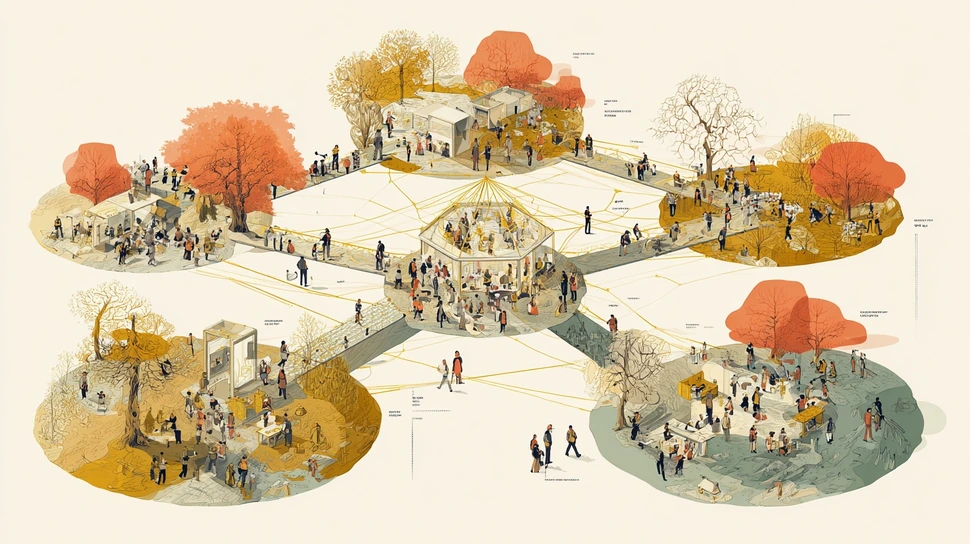
The Necessity of a Decentralized Society:
- Ignored functions (+Fe, +Ti) make large-scale integration and elaborate bureaucracy difficult
- That is precisely why power is dispersed and local self-governance is trusted
- Small-nation federations and local government scale is optimal






 Sign in with Google