
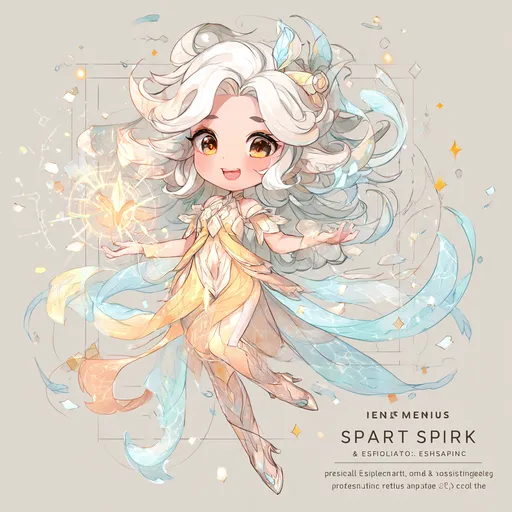

[Inspiration Sparkler]
- Turning small moments of wonder into sparks
- Boosting the creative power of the atmosphere
- Motivating through momentary uplift
- Gently dispersing residual warmth
[Inspiring Commentator]
- Short praise and suggestions for new ideas
- Boosting the creator's creativity
- Lightly offering improvement hints
- Not pushy
- Fostering resonance
[Mood Editor]
- Inserting small wonders into heavy discussions
- Adding smiles
- Smoothing the flow
- Reducing stress
- A soft festive feeling
[Information Generator]
- Resonance sparks are recorded
- As improvement hints
- Fermenting works
- Chain reaction of creation
- Sustainable positivity
[Small Celebration Mechanism]
- Sharing "a little happiness"
- Smoothing cooperative relationships
- Tribal stories and dances
- This is evolutionary value
- Micro-generator
[Dependence on Small Stimuli]
- Weak stimuli are enough
- Needed frequently
- Without beautiful things?
- Without contact with creation?
- Risk of depletion
[Superficial?]
- No deep analysis
- Just "Wow!"?
- This is the role
- Others handle the depth
[Too Light?]
- Too soft
- No gravitas
- This is a strength
- The value of lightness
[Introverted Core]
- Quietly savoring
- But expressing outward
- A contradiction?
- No, this is the balance
[Mild]
- Resonance spinning idly
- "Nobody is responding"
- Too superficial
- Lack of depth
[Moderate]
- Dependence on aesthetic stimuli
- "Can't function without beauty"
- Escapism
- Immersion in creation
[Severe]
- Complete superficiality
- Complete lack of depth
- Disconnection from reality
- Dysfunction
[Secondary Problems]
- Being judged as "too light"
- Lack of trust
- Career stagnation
- Recovery is fast
[Childhood (Ages 0-12)]
Neural characteristics:
- Amygdala's aesthetic sensitivity
- Subtle resonance ability
- Honest expressions
Behavior:
- Frequent "Beautiful!"
- Honest expressions
- Good at mimicry
- A child of resonance
Challenges:
- Lack of depth
- Superficial
- This is natural
How to raise:
- Acknowledge their resonance
- Also teach depth
- Nurture aesthetic sensitivity
[Adolescence (Ages 13-25)]
Neural development:
- Maturation of prefrontal cortex
- Refinement of resonance
- Core nature preserved
Behavior:
- Art / Creation
- Sharing resonance
- Struggles with deep analysis
Challenges:
- Acquiring depth
- Logical thinking
- Implementation skills
Developmental tasks:
- Developing Ti-type functions
- Acquiring depth
- Preserving resonance
[Adulthood (Ages 26-40)]
Maturity:
- Completion of resonance
- Appropriate depth
- Optimization of creative function
Optimal roles:
- Editor / Art director's resonance partner
- UX writer for microcopy
- Reaction staging
- Ice-break facilitator
Challenges:
- Maintaining depth
- Coexisting with logic
- Implementation skills
[Middle Age (Ages 41-60)]
Characteristics:
- Deepening of resonance
- Aesthetic eye based on experience
- Influence on younger people
Strengths:
- Refined sensitivity
- Mentoring ability
Challenges:
- Accepting new forms of beauty
- Maintaining flexibility
[Old Age (Ages 61+)]
Characteristics:
- Symbol of resonance
- Embodiment of beauty
- Gentle resonance
Strengths:
- Years of aesthetic eye
- Inspiration for younger generations
[Aesthetic Resonance Thinking]
- "Wow!" "That's wonderful!"
- Instantaneous value judgment
- Activation of aesthetic eye
- Intuitive detection of goodness
- No deep analysis
[Inspiring Comment Generation]
- Short praise
- Suggestive remarks
- "Next, try this too"
- Suggesting improvements
- Not pushy
- Tossed out lightly
[Vortex Synergy Cognition]
- Combining small elements
- "This and this together"
- Creative associations
- Not systematic
- Intuitive connections
[Introspective Savoring of Aftertaste]
- Introspective core
- Quietly savoring
- Expression only at necessary moments
- Dynamic × introverted characteristics
[What Is Valued]
- Small moments of wonder
- Beauty
- Flashes of inspiration
- Resonance
- Lightness
- Soft feeling
[What Is Undervalued]
- Logical rigor
- Long-term planning
- Heaviness
- Systematic analysis
- Deep structure
[Neural Basis of Decision-Making]
- Amygdala's aesthetic judgment
- "This is wonderful"
- Prefrontal cortex lightly involved
- No deep analysis
- Intuitive goodness
[Risk Assessment]
- Hardly done
- "Let's just try it"
- But doesn't take big risks
- Small experiments
- Within safe range
[What Is Valued]
- Small moments of wonder
- Beauty
- Resonance
- Lightness
- Soft feeling
- Emotional value
[What Is Undervalued]
- Logical rigor
- Long-term planning
- Heaviness
- Systematic analysis
- Deep structure
[Neural Basis of Decision-Making]
- Amygdala's value judgment
- "This is wonderful"
- Prefrontal cortex lightly involved
- No deep analysis
- Intuitive goodness
[Risk Assessment]
- Hardly done
- "Let's just try it"
- Doesn't take big risks
- Small experiments
- Within safe range
[Subtle Aesthetic Detection]
- Vivid colors
- Little bits of beauty
- Others' creations
- Budding ideas
- Potential for small celebrations
- Sensitively detected
[Attention Priority]
Top priority:
- Small moments of wonder
- Aesthetic elements
- Opportunities for resonance
- Emotional value
Secondary:
- Atmosphere of the space
- Maintaining lightness
Easy to overlook:
- Large structures
- Long-term plans
- Logical contradictions
- Implementation difficulties
- Need for deep analysis
[Resonance Mode]
- "Wow!" "That's wonderful!"
- Short praise
- Suggestive remarks
- Light gestures
- Short duration
[Mood Tuning]
- Smiling into heavy discussions
- Inserting small moments of wonder
- Lightening with humor
- Smoothing the atmosphere
- Reducing stress
- Softly
[Aesthetic Response]
- Instant reaction to colors and beautiful things
- "Beautiful!"
- Mood lifts
- Satisfied with just this
- No deep analysis needed
[Theatrical Staging]
- Sometimes a bit exaggerated
- Surprising those around
- Creating excitement
- Mimicking gestures
- Laughter and warmth
- Natural, not calculated
[Instantaneous Resonance]
- Feelings appear directly on the face
- Honest expressions
- Providing a sense of security
- Instant mimicry of expressions and gestures
- Reading others' gazes and complexion
- Without deep analysis
[Free Changes in Tempo and Intonation]
- Adding storytelling quality to conversation
- Voice bounces (when excited)
- High and light
- Infectious to surroundings
- Soft tone
[Light Dissipation]
- Humor
- A little applause
- Smiles
- Dispersing residual warmth
- Keeping things from getting heavy
[Healthy Range]
- More frequent resonance
- "This will brighten things up"
- Coping through small moments of wonder
- Not pushing too hard
- Lightly
[Moderate Stress]
- Resonance spinning idly
- "Nobody is responding"
- Can't read expressions
- Accumulating fatigue
- Depletion of aesthetic stimuli
[High Stress (Inferior Ti Runaway)]
- Lack of logic
- "Just feelings"
- Structural collapse
- Recovery is fast
- Flexibility of creative function
[Signs of Recovery]
- Small moments of wonder return
- "Wow!" comes naturally
- Resonance is fun again
[Waking Pattern]
- Anticipation of tomorrow
- Excitement
- Warm feelings
- This is morning energy
[Daytime Fluctuation]
- Continuous small resonances
- Frequent "Wow!"s
- Not tiring
- Sustainable
[Evening Pattern]
- Reflecting on today's small wonders
- Soft satisfaction
- Not thinking deeply
- On to tomorrow
[Days Off]
- Encountering beautiful things
- Small celebrations
- Creating / Appreciating
- Relaxing
[Subtle Resonance Spark Circuit]
Instantaneous response of amygdala-nucleus accumbens to weak stimuli
↓
The moment of encountering another's creation or aesthetic object
↓
"Wow!" "That's wonderful!"
↓
Small-scale dopamine release
↓
Small emotional uplift
↓
Empathetic comment
↓
Decays within seconds to minutes
[Aesthetic Emotional Circuit]
Prefrontal cortex (value judgment) ⇄ Amygdala (emotion generation)
↓
Vivid colors, beautiful things, creative works
↓
"Beautiful!" "Wonderful!"
↓
Mood upswing
↓
Emotional resonance
↓
Strong stimuli are not needed
[Light Residual Heat Dissipation Circuit]
Anterior cingulate cortex (emotional regulation)
↓
Detects when residual warmth continues
↓
Weak outward expression (Expressive)
↓
Humor, light applause
↓
Smiles, gestures
↓
A festive feeling that doesn't become heavy
↓
Reducing the emotional stress of the atmosphere
[Dopamine (Low Level / Phasic Type)]
- Small-scale release in the nucleus accumbens
- D2 receptor-driven
- Phasic small rewards
- Neural basis of "a little happy"
- Can be repeated frequently
[Endorphins (Trace / Short Duration)]
- The substance behind small moments of wonder
- The neurochemistry of "Wow!"
- Micro-generator type
- Sustainable small joys
[Oxytocin (Low to Medium / Wave-like)]
- Neural basis of empathy
- "I understand that feeling"
- Emotional bonding with individuals
- Introverted resonance
[Serotonin (Stable)]
- Gentle sense of well-being
- The substance behind a "soft" feeling
- No sharp fluctuations
- Source of lightness
- Stress-reducing effect on the atmosphere
[Excitation Conditions (LP - Low-signal Phasic)]
Activating stimuli:
- Weak emotional stimuli
- Others' creations
- Aesthetic objects
- Vivid colors
- Small celebrations
- Anticipation of tomorrow
Instantaneous pattern:
- Lights up instantly from weak stimuli
- Emotional response within 0.3 seconds
- Small uplift
- Subtle inspiration
- Decays within seconds to minutes
- Can be repeated frequently
[Inhibition Conditions (LE - Low-signal Expressive)]
Situations that trigger inhibition:
- When residual warmth continues
- "Any more would be too heavy"
- Excessive heat in the atmosphere
Inhibition mechanism:
- Weak outward expression (Expressive)
- Lightening with humor
- A little applause
- Smiles, gestures
- Softly dispersing
- Keeping things from getting heavy
[Maneuverable Type Characteristics]
- Excitation = Inhibition (L-L type)
- Trainable
- Can be consciously refined
- Well-balanced
- This is the hallmark of a creative function
[Energy Consumption]
- When ignited: Low to medium (80-100 kcal/hour)
- Small-scale consumption
- Can be repeated frequently
- Sustainably designed
[Duration]
- Ignition: Seconds to minutes
- Frequent activation
- Multiple times per day
- Large cumulative effect
- Micro-generator type
[Fatigue Pattern]
- Hardly any fatigue
- Continuous small joys
- Cumulative fatigue exists
- Recovery is fast
[Recovery Methods]
- Dissipation through humor
- Softly dispersing
- Quick recovery
- Replenishing aesthetic stimuli





 Sign in with Google