Continuity
continuous development
Maintain a connection with the previous effort and treat it as a continuation.
- Intuitive name
- Continuity
- Mechanism name
- Maintain continuity
MODEL K · 31 TRAITS
Continuity preserves the connection to what came before and treats what follows as a continuation. Segmentation divides a flow into distinct units.
There is no difference between emphasizing effort and emphasizing results.
continuous development
Maintain a connection with the previous effort and treat it as a continuation.
delimited units
Divide efforts into sections and treat them as one unit.
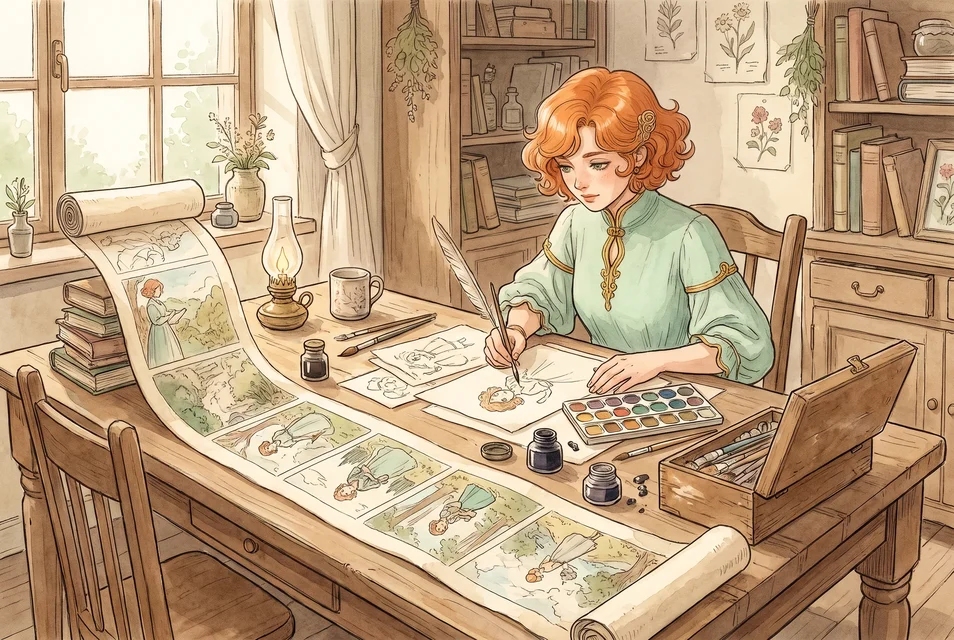
Maintain a connection with the previous scene and draw it as a continuation.
Seeker ILE-Q
Separate scenes and finish them as one unit.
Enthusiast ESE-DTreat a single story or initiative in the context of previous connections. Even after crossing boundaries, it appears as a form that maintains the history and connection to the next.
If you think about it as a continuation of what has happened so far, it will look like this.
If you focus too much on maintaining connections, it may be difficult to convey how much work has been completed.
Place breaks in the flow and treat each item as a unit. It manifests itself as setting a scope for talk or work and organizing it within that unit.
Let's treat this as one whole.
If you are too biased towards dividing things into units, you may lose the impact of the preceding and succeeding events and across divisions.