
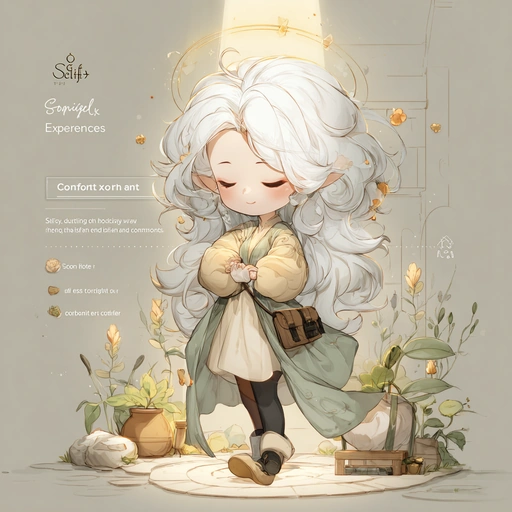

【Master of Self-Care】
- Health maintenance
- Stress management
- Relaxation ability
- Well-being
- Pursuit of happiness
【Soothing Presence】
- Relaxes others
- Calm atmosphere
- Gentleness
- Sense of security
- Healing
【Sense of Balance】
- Work-life balance
- Appropriate rest
- Don't overdo it
- Health first
- Sustainable lifestyle
【Spreading Happiness】
- Sharing happiness
- Positive atmosphere
- "Let's enjoy"
- Treasuring joy
- Enjoying life
【Physical Wisdom】
- Can listen to the body's voice
- Health consciousness
- Self-understanding
- Appropriate care
- Longevity
【Comfort-Oriented】
- Always seeking pleasantness
- "This is good"
- Relaxation-focused
- Own pace
- But self-centered?
【Calm】
- Relaxed
- No rush
- Leisurely
- Own pace
- But slow?
【Self-Care Priority】
- Values oneself
- Health first
- "Don't overdo it"
- Prioritizes comfort
- But responsibility?
【Pleasure-Seeking】
- Enjoys life
- Pursues happiness
- "Life is for enjoying"
- Positive
- But too easy-going?
【Mild】
- Avoidance of responsibility
- Procrastination of duties
- Excessive attachment to comfort
- Too many "I can't"
- Self-centered
【Moderate】
- Complete abandonment of responsibility
- Withdrawal
- Disregard for others
- "Only about me"
- Social adaptation difficulties
【Severe】
- Addiction (to pleasure)
- Complete idleness
- Social isolation
- Health collapse (paradoxically)
- Life stagnation
【Secondary Problems】
- Career stagnation
- Relationship breakdowns
- Financial difficulties
- Decline in social standing
- Isolation
【Childhood (Ages 0-12)】
Characteristics:
- A calm child
- "That feels good"
- Relaxed
- Own pace
- Seeks comfort
Challenges:
- Avoidance of duties
- Too many "I can't"
- Lack of responsibility
- Too pampered
Parenting approach:
- Acknowledge their comfort-seeking
- But also teach responsibility
- Teach balance
- Effort is also necessary
【Adolescence (Ages 13-25)】
Characteristics:
- Relaxed
- "Enjoy life"
- Own pace
- Comfort-oriented
- Self-care
Challenges:
- Avoidance of responsibility
- Career delay
- Excessive "don't overdo it"
- Over-indulgence
Developmental tasks:
- Developing responsibility
- Necessity of effort
- Sense of balance
- But maintain comfort
【Adulthood (Ages 26-40)】
Characteristics:
- Balanced lifestyle
- Healthy
- Stress management
- Work-life balance
- Happy
Challenges:
- Career stagnation
- Undervaluing responsibility
- "Don't overdo it"
- Difficult to be recognized
Signs of maturity:
- Balance with responsibility
- Appropriate effort
- Consideration for others
- Sustainable happiness
【Middle Age (Ages 41-60)】
Characteristics:
- Healthy lifestyle
- Master of balance
- Stress management
- Well-being
- Happy life
Strengths:
- Years of self-care
- Health maintenance
- Youthfulness
- Happy atmosphere
Challenges:
- Maintaining responsibility
- Contributing
- Balance
【Later Years (Ages 61+)】
Characteristics:
- Healthy
- Happy later years
- Relaxation
- Enjoying life
- Serenity
Strengths:
- Longevity
- Health
- Happiness
- Youthfulness
- Life satisfaction
【Comfort Orientation】
- "Is this pleasant?"
- Pursuit of happiness
- "Can be improved further"
- Optimization of comfort
- Well-being
【Physical Understanding】
- Listening to the body's voice
- "The body is asking for this"
- Sensitive to bodily sensations
- Health consciousness
- Self-care
【Happiness Optimization】
- Long-term comfort
- Sustainable happiness
- "Stay pleasant always"
- Balanced lifestyle
- Pursuit of well-being
【Calm Judgment】
- Relaxed
- "Take it easy"
- No rush
- Leisurely
- Own pace
【Present Comfort】
- Pleasantness of the here and now
- "The present matters"
- Current happiness
- Momentary comfort
- But also long-term perspective
【What Is Valued】
- Comfort
- Happiness
- Health
- Relaxation
- Well-being
【What Is Undervalued】
- Discomfort
- Stress
- Tension
- Excessive effort
- Self-sacrifice
【Decision-Making Style】
- "Choose the more comfortable option"
- Listen to the body's voice
- Relaxed
- No rush
- Own pace
【Evaluation Criteria】
- "Is it comfortable?"
- "Does it bring happiness?"
- "Is it healthy?"
- "Does it feel pleasant?"
【Typical Process】
1. Recognize discomfort
2. Envision a comfortable state
3. Listen to the body's voice
4. Slowly address it
5. Restore comfort
6. Maintain happiness
【Characteristic Phrases】
- "This feels pleasant"
- "Let's relax more"
- "The body is asking for this"
- "Take your time, it's fine"
- "Happiness is what matters"
【Strengths】
- Master of self-care
- Health maintenance
- Stress management
- Relaxation ability
- Pursuit of happiness
【Weaknesses】
- Hypersensitivity to discomfort
- Procrastination of duties
- Excessive attachment to comfort
- Avoidance of effort
- Self-centered (when undeveloped)
【What Gets Noticed】
- Comfort
- Pleasantness
- Relaxation
- Happiness
- Health
- Body's voice
- "This is good"
【What Gets Overlooked】
- Discomfort (intentionally)
- Stress (avoidance)
- Others' discomfort
- Need for effort
- Responsibility (sometimes)
- Tension
- Difficulty
【Attention Characteristics】
- Radar for comfort
- Focus on bodily sensations
- Continuous monitoring
- Attention to happiness
- Avoidance of discomfort
【Daily Life】
- Creating comfortable environments
- Relaxation
- Self-care
- "Make it pleasant"
- Leisurely
- Own pace
- Pursuit of happiness
【Work】
- Comfortable workplace environment
- Stress management
- Appropriate breaks
- Work-life balance
- "Don't overdo it"
- Health first
- But also responsibility (when developed)
【Learning】
- Comfortable pace
- "Don't overdo it"
- Relaxed
- Own pace
- Taking care of the body
- Healthy learning
【Speaking Style】
- Calm
- Relaxed
- "Take your time, it's fine"
- Gentle
- Own pace
- Composed
- Soothing
【Listening Style】
- Listens well
- Empathetic
- "That must have been tough"
- Relaxed
- Doesn't rush
- Gentle
【Meetings & Discussions】
- Calm
- No rush
- "Let's take a break"
- Stress reduction
- Relaxed atmosphere
- But also assertive (when developed)
【Writing】
- Calm
- Relaxed
- Gentle
- Own pace
- Conveys comfort
- Soothing
【Healthy Stress Response】
- Stronger comfort pursuit
- Enhanced relaxation
- Self-care
- "Let's rest"
- Restoring happiness
【Moderate Stress】
- Hypersensitivity to discomfort
- Increased avoidance behavior
- Abandoning responsibility
- "I can't"
- Withdrawal
【Severe Stress (Inferior Te Takeover)】
- Compulsion toward efficiency
- "I have to do this"
- Self-sacrifice
- Overwork
- Physical collapse (atypical)
【Signs of Recovery】
- Restoration of comfort
- Relaxation
- "Happy again"
- Balance restored
【Morning Pattern】
- Slow wake-up
- "Don't overdo it"
- Comfortable morning
- Relaxation
- Own pace
【Daytime Pattern】
- Appropriate breaks
- Comfortable environment
- Stress management
- Relaxation
- Own pace
【Evening Pattern】
- Relaxation time
- Self-care
- Preparing for comfortable sleep
- "A happy day"
- Leisurely
【Days Off】
- Relaxation
- Pleasant time
- Self-care
- Hobbies
- "Happiness"
【Comfort Sensing Circuit】
Sustained activation of Somatosensory Cortex + Insula
↓
Continuous monitoring of bodily comfort and discomfort
↓
Well-being assessment in the Prefrontal Cortex
↓
Sustained recognition: "This feels pleasant"
【Well-Being Pursuit Circuit】
Prefrontal Cortex ⇄ Limbic System (reward system)
Sustained motivation toward comfort
"Make it even more pleasant"
Optimization of happiness
Long-term well-being
【Powerful Inhibition Circuit】
Prefrontal Cortex → Amygdala / Limbic System
Powerfully suppresses discomfort internally
"I'll endure this"
For long-term comfort
Processing present discomfort
【Endorphins (Dominant)】
- Generating comfort
- Sense of happiness
- Relaxation
- "This feels pleasant"
- Sustained satisfaction
【Serotonin】
- Stable sense of happiness
- Sustained satisfaction
- Stress resistance
- Calmness
- Balanced mood
【Oxytocin】
- Comfort from love and bonds
- Sense of security
- Relaxation
- Social happiness
- Warmth
【Dopamine (Low Level, Sustained)】
- D2 receptors
- Tonic (sustained) low-level release
- Sustained motivation toward comfort
- Reward from "pleasantness"
- No need for flashy stimulation
【GABA】
- Relaxation
- Anxiety suppression
- Tension relief
- Calmness
- Maintaining comfort
【Excitation Conditions (LT - Low-signal Tonic)】
Activating stimuli:
- Pleasant sensations
- Relaxation
- Comfortable environment
- Happy state
- "This is good"
- Bodily satisfaction
Sustained pattern:
- Continuous pursuit of comfort
- 6-8+ hours of sustainability
- Long-term happiness orientation
- Comfort resistant to fatigue
- Always running in the background
- "Make it even more pleasant"
【Inhibition Conditions (HR - High-signal Repressive)】
Inhibiting situations:
- Unpleasant stimuli
- Stress
- Tension
- Pain
- Discomfort
Inhibition mechanism:
- Powerfully suppresses inward (Repressive)
- "I'll endure this"
- For long-term comfort
- Processing present discomfort
- But pursuit of comfort never stops
- Tenacity toward happiness
【Inert Type Characteristics】
- Excitation ≠ Inhibition
- Difficult to stop
- Comfort pursuit never stops
- Attachment to happiness
- But in healthy range, a master of self-care
【Energy Consumption】
- Low level: 50-70 kcal/hour
- Extremely efficient
- Sustainable
- Relaxed state
【Duration】
- Continuous activation: all day
- Always pursuing comfort
- Resistant to fatigue
- Long-term happiness orientation
【Fatigue Pattern】
- Extremely gradual fatigue
- Comfort reduces fatigue
- Depleted when discomfort persists
- But quick recovery
【Recovery Methods】
- Comfortable environment
- Relaxation
- Good sleep
- Delicious food
- Pleasant time
- Body care



 Sign in with Google