
LIE-D – Pioneer –
Carving the way through results — the realist's frontier
You are someone who dives in without hesitation the moment you sense an opportunity, and carves out a path through trial and error.
You judge not by authority or precedent, but by whether something actually works.
You look for someone who can delight in the future with you, and the freedom to keep taking on challenges.
- Quadra
- Gamma γ
- Bouquet
- Linear-Assertive temperament
- Club
- Research
Portrait — the Pioneer

The Pioneer is someone who, the moment they sense right before them that "this is interesting" or "there's a winning chance here," simply cannot hold back and springs into motion. Rather than guarding a finished mold, they find possibility precisely in the unfinished fields that no one has touched yet. Once they take the first step, they test things on the ground, learn from stumbles, and discover the optimal approach while running. Unafraid of failure — indeed, feeding on the trial and error itself — they press forward. That driving force is something they were born with.
Their touchstone is not authority or precedent. It is one thing alone: does it actually work, and will it grow from here? If wasted effort looks like it won't pay off, they let it go without fuss; if they sense an opportunity, they plunge in boldly. They act not "because I was told to" but "because it's worth it" and "because it's interesting." Even when leading others, they don't command by decree. Instead they invite with enthusiasm — "how about we try this?", "let's do it together" — counting on others' strengths and drawing them in as equal companions. Around that lightness and drive, people naturally gather.
What they seek is not a stable framework but someone who can delight in the future together, and the freedom to keep taking on challenges. It is beside a partner who unfolds the same map and thrills at new challenges that the Pioneer steps out most lightly — and farther than anyone.
Not authority or precedent, but whether it will grow from here.
Does this sound like you?
- The instant something feels "interesting," you're already in motion.
- A blank schedule makes you restless. You want to feel that something is moving forward.
- Traffic jams, lines, and rambling talk that goes nowhere genuinely irritate you.
- Somehow, the more trouble breaks out, the calmer you get and the better you move.
- You're good at inviting people with "how about this?", but you don't take well to being ordered around.
- You try to liven things up with a joke, and now and then it falls flat.
- You earn big and spend big. Rather than pinching pennies, you bet at the decisive moment.
- You don't cling to one way of doing things. When the situation changes, you switch without a second thought.
- When someone hits you with tears or heavy emotion, you suddenly freeze and can't move.
- When you're absorbed, you don't notice your own fatigue or hunger.

How you move

The Pioneer's conduct is run through with a light, curiosity-led swiftness.
The first thing that catches the eye in a Pioneer's behavior is speed. The instant something feels "interesting," they are already in motion, and a small curiosity spreads in no time into an unknown field. The more complex a challenge that makes others shrink back, the more it fires up their drive. Though it may look unplanned at first glance, inside there is a destination — "this is where I want to arrive" — and every on-the-spot decision converges toward it. They have no patience for daily stagnation or the repetition of the same things. When the schedule is packed tight and something is moving forward again today — with that sense of progress, the Pioneer is at their most alive. Conversely, delays that are not their own fault (traffic jams, queues, rambling talk that goes nowhere) irritate them to the core. Speed and density are this person's lifeline. And the more it comes down to a critical moment, the more dependable they are. Outdoors, in an unforeseen turn on a trip, in a sudden crisis — it is precisely when thrown into danger that the Pioneer stays calm and shows nerve and judgment. Though they usually seem rather free-spirited, when it counts they move faster than anyone, calculating timing and force precisely to pull through. Never giving up before difficulty, wringing out every ounce of strength to overcome it — that is the Pioneer's true underlying strength.
Not a plan, but trying it first.
- Already in motion the instant something feels "interesting"
- Calmer and stronger the bigger the crisis or trouble
- No patience for repeating the same thing
Given a place without precedent, your drive reaches farther than anyone's.
How you speak and listen

The Pioneer's dialogue is a co-creative one, drawing people in with enthusiasm and warmth.
Their way of speaking is energetic, casual, and magnetic. They pull people in with intriguing themes and stories, and paint the possibilities of the future so vividly that others "want to try it too." Not by command but by proposal — "how about this?", "let's do it together" — they draw out others' motivation and naturally sweep them into taking part. They genuinely enjoy the very act of showing off their own ingenious touches and ideas. Their humor is soft — a lubricant that brightens the room while closing the distance. Now and then a slightly risqué joke slips out, but that is the flip side of affection and trust. By laughing together, they raise the team's sense of solidarity all at once. That said, when the enthusiasm runs too hot, explanations can get ahead of themselves, or a quip may fail to land as a joke — and at the root of it all lies an ever-present desire to collaborate: "I want to create something fun together." They are sensitive to talk that does not add up. They will not go along with switched facts or arguments pushed on atmosphere alone, and they spot holes in logic at once. But it is not to interrogate — they simply want things to make sense. If convinced, they take it in readily no matter who said it; if something seems off, they frankly raise their objection no matter who they face. More than anything, they delight in a partner they can engage on substance rather than on title or position.
Not orders, but "let's do it together." Drawing people in with enthusiasm.
What lies at the core — drive and tender spots
Not theory, but whether it actually works.
The one unstoppable engine within the heart

At the Pioneer's center lie the power to optimize reality and the intuition to read opportunity.
At the Pioneer's center is a single engine that never stops: the power to devise and optimize reality into a "form that actually works" (-Te-p) — though not to hoard and protect, but to run it better and faster. They trim away waste, coolly prune risk by "is it worth it?", and channel their limited strength and time toward the single most effective point. Testing as they work with their hands, learning the next move from each stumble — rather than waiting for a finished blueprint, they are the type to refine while running. Onto this overlaps a second power: the intuition to read time and opportunity (+Ni-c) — a sense that sniffs out "when to move to make it grow" and "which wave to ride to go the farthest." So the Pioneer does not simply charge blindly; when they sense an opportunity they plunge in all at once, and when the time is not ripe they wait lightly. The moment they step out the door, this person turns into a "hunter of success" guided by intuition — the devising hand and the nose for opportunity, those two always run together. This is not limited to work. In a hobby, a journey, or a small challenge, the same engine starts turning the moment they think "let's give it a go." When the goal is clearly in view and there's a sense that it will grow from here — it is in such moments that the Pioneer steps out the farthest and the fastest.
What they can do, yet do not prize

Surprisingly, the Pioneer can in fact handle quite well the work of meticulously building up a system, or of designing institutions and order down to every corner and defending them to the end. To settle in, firm up a structure, and make it last — that latent power is, in truth, considerable. It is just that they themselves place no weight on it. Rather than carefully guarding and consolidating, their attention turns to plunging into new opportunities and optimizing by testing on the ground. Though capable, they naturally let it go — "this isn't the place for me to settle in" — and this is one of the keys to understanding the Pioneer. The role of ordering and guarding is better entrusted to someone who excels at it, so that the Pioneer, too, can move forward freely.
What the heart secretly craves
What they secretly seek is unwavering trust and a sure compass for the heart.
What the Pioneer — blessed with drive and a nose for opportunity — finds hard to generate on their own, and yet longs for more deeply than anyone, is unwavering trust and intimacy, and a compass for the heart that tells them "whom to believe and what to protect." However sharply they can produce results, when it comes to discerning the subtleties of the human heart or the good and bad of a relationship, their confidence suddenly falters. That is exactly why they are deeply drawn to someone who watches over their motives and character from behind and vouches for their soundness. This appears as "the fulfillment of the need to belong, of secure attachment, and of deep yearning." Wary toward those at a distance, yet once they trust someone they trust them utterly — and they long for someone who answers that trust with quiet loyalty. It is beside the dual Judge (ESI-Q), who excels at this very power, that the Pioneer can put out their full strength with peace of mind. Absorbed in challenges and prone to forgetting their own footing, the Pioneer finds in them the finest complement — one who gently supports them with unchanging devotion.
The most fragile place
The Pioneer is most fragile at attending to their own and others' comfort, and at heightening the emotions of a group.
The most fragile point is attending to the "comfort" of oneself and those around (-Si-p). When absorbed in a challenge, the Pioneer notices neither their own fatigue, nor hunger, nor ill health. The strength to run on inexhaustibly is, flipped over, the weakness of missing the "time to rest now" signal. And this extends not only to themselves but to those around them — they may fail to notice that a companion running alongside is tired, and end up demanding the same pace. The other is warming and lifting the emotions of a group (+Fe-c). A joke meant to liven things up spins its wheels, or a risqué remark misreads the mood of the room. Even when they mean it as friendliness, they may unexpectedly leave the other person cold — there is no ill intent; the enthusiasm has simply run ahead. These weaknesses are not faults to be blamed. They are places that soften little by little when one pauses now and then to care for oneself and others, and keeps beside them someone who reads the room's breathing. Precisely because the Pioneer is absorbed in challenge and optimization, a presence that shores up their footing is what carries this person far.

- Core: the power to devise and optimize reality, and the intuition to read opportunity
- What drives you: the feel of taking on uncharted challenges, and the assurance of answering with results
- Where you're fragile: attending to comfort, lifting the emotions of a group
Strengths, and where you stumble
Someone who gives you unwavering trust and a compass for the heart.
Strengths — Test, seize, break through

The Pioneer's strength is a supple capacity to act — one that comes alive precisely in uncertain situations. Without waiting for a perfect plan to fall into place, they first test, and find the optimal approach while running. Coolly pruning risk by "is it worth it?", they plunge in boldly and without hesitation the moment they sense an opportunity. Turning confusion and the absence of precedent into a tailwind is another of their hallmarks. Unafraid of failure, they rack up attempts and grow by learning from painful lessons — a resilience that takes the blows. When the situation changes they do not cling; they shift direction lightly and turn even unexpected developments into chances — that flexibility, and the drive to carve the way with their own hands, are this person's foundation.
Where they tend to stumble

What they tend to stumble over is the flip side of that inexhaustible drive.
What they tend to stumble over is the flip side of that inexhaustible drive. Because they can dive into one new thing after another, their interests may spread too wide, and they let go of each one before it bears fruit. When absorbed, they overlook their own fatigue and the "nearing the limit" signals from those around them, piling on more than they should. Also, while they are good at inviting people with enthusiasm, they are poor at finely reading the mood of the room to lift everyone's spirits. A friendly quip lands off-color, or a too-frank remark chills the room — and because there is no ill intent, it is all the more frustrating. Their attention to small logistics and to steady, ongoing work also tends to run out. Still, these are less flaws than the flip side of being deeply drawn to opportunity and challenge. There is no need to shoulder all the fine-grained care and mood-making alone. Entrusting such parts to someone dependable and placing themselves where their judgment and pioneering can shine — choosing, in this way, "something they can find interesting" and a partner who supports them with unwavering trust — is the key to the Pioneer exercising their strength freely.
The peace of mind that someone you trust brings moves you deeply, and you can answer it with everything you have. That's where your room to grow lies.
- When you notice you're tired, first stop and tell yourself to rest
- When someone hits you with heavy emotion, don't freeze — say "let me think for a moment"
- Before a joke, take a breath to read the other person
Where you thrive
Given the discretion of "the success or failure of this venture is yours," your strength wells up.
Environments Where They Thrive
The Pioneer performs best in a high-freedom environment where the aim and goal are clear but the way of getting there is left to them. Rather than having their procedures micromanaged, it is under the discretion of "the success or failure of this venture is yours" that they start moving on their own initiative. They adapt all the more vividly to uncharted domains and to the uncertain ground of a start-up phase. What motivates them is the feel of taking on uncharted challenges and the assurance of being able to answer with results. Disliking baseless pep-talk spiritualism and rigid systems that refuse change, they idealize a setup that, grounded in data and practical gain, can test fast and fix fast. Always keeping an eye on changes in the external environment and prizing access to new technology and opportunity — investment there returns, over the long run, as a great reward.
As a field commander
Concretely, pioneering roles that draw on vision and on-the-ground judgment suit them. An entrepreneur or new-business leader launching a new venture or market, a contract-style producer who gets a project on track — in start-up management and business development, venture investment, new-product launches, overseas expansion and the opening of untapped markets, bridging technology into practical use, and other arenas where you take risks and prove yourself by results, their power stands out. The conditions for them to shine: a clear goal worth taking on, the discretion and freedom of action to be entrusted with the how, and a workplace that allows trial and error and can iterate fast. To carve unprecedented ventures and challenges, with their own hands, into solid results — that, for the Pioneer, is the greatest form of self-expression.
Dialogue — ask Nikolai

One free dialogue · Le Salon members can explore several perspectives. Not a real person: a representative perspective based on the public profile.
Relationships and love
Can you delight in the future together? Is there freedom to keep taking on challenges?
Love — Honoring freedom, opening the future together
The Pioneer's love is an equal partnership that shares curiosity and the future.
The Pioneer's romance is brisk and action-driven. They approach someone who interests them directly, closing the distance with conversation full of sparks. More than looks, they are drawn to curiosity, drive, and the potential to grow from here. Rather than a mutually binding relationship, they seek a partner who respects each other's freedom and can step into new challenges together — being able to delight in the future together lies at the root of the Pioneer's love.
〔Women〕Full of bright, positive energy, she sees a relationship as "a place to grow together." She values the balance between steadiness and freedom, the type to hide deep values beneath light conversation. Envisioning the future together, she idealizes a supple relationship that can keep adapting to change, and grows healthily beside an independent partner with whom she can share challenges.
〔Men〕Rather than a frivolous romance, he seeks a meaningful relationship in which they can take on challenges together. Though the first step may be swift, behind it he is quietly assessing the other's sincerity and maturity. Disliking confinement, respecting each other's freedom, he is strongly drawn to someone with whom he can share the joy of action and the thrill of the future — he bonds deeply with a partner who does not interfere but quietly supports him from behind.
How You Love — Love in Motion
The Pioneer's way of loving comes through in what you do more than in what you say. With Practical Logic (Te) in the lead, you naturally set about being useful to the person you love: arranging the logistics, clearing problems before they land, lending a hand so their goals move forward — that is what affection looks like for a Pioneer. If your partner is stuck at work or in their studies, you'll likely hand them a concrete fix — “then how about this?” — before any words of comfort. Add Temporal Intuition (Ni), and your suggestions reach past the immediate moment to where the relationship will stand in six months or a year. It may look short on romance, but it is proof that you are genuinely committed to this person's life.
Compatibility — recommended partners
 Judge
Judge ESI-QThe quiet arbiter who discerns right from wrongDualityThe partner who gives an unshakable foundation through intimate trust and grounded strength — the one with whom you can be most fully yourself Inspector
 LSI-QThe logician who strips away pretense and sees through to the truthIllusionaryTheir support and sense of reality are close to yours — an ease resembling Duality. A touch indirect, but warm Philosopher
 EII-QOne who, in the stillness, keeps questioning the meaning of the worldSemi-dualityA place where, wrapped in gentle acceptance, the tension in your shoulders quietly melts away Orchestrator
 SEE-QA natural orchestrator who reads the room and guides people toward reconciliationActivationTheir company brings momentum and vitality. Best enjoyed at a slight distance Reformer
 SLE-QAn executor who breaks through by force and rewrites conventionBenefactorA relationship where you naturally find strength "for this person's sake" — the nurturing side Advisor
 IEE-QOne who quietly draws near and listens to the heartBeneficiaryA relationship where your possibilities are opened up and you are drawn out — the receiving side Strategist
 ILI-DThe contemplative Strategist who quietly reads ahead and lays the groundworkMirrorSame direction, different method. An intellectual partner with whom analysis and foresight sharpen each other Prophet
 IEI-DAn eye that gazes upon a destiny no one has yet noticedSupervisor (mirror)A learning in which you are gently guided toward sensibility and the subtleties of story Craftsman
 SLI-DThe artisan who sets the world in order in the palm of his handSupervisee (mirror)The side that naturally teaches and guides on practical matters and logisticsSee the other relationships (22 more types)
The upper bands are easier to be with; the lower bands tend to wear you down. Tap a relation name to read about the pair.
 Executive
 LSE-DSet it in order, get it moving, see it throughKindredA partner whose conversation flows easily, someone who likes to express things in the same direction as you. It can wear you out once it turns competitive. Hero
Hero EIE-DIt is this conviction that changes the worldBusinessA partner you can easily work alongside, adapting to the situation together. Seeker
 ILE-QAn intellectual adventurer who unravels the worldTranscendenceA partner who makes you want to surpass yourself when you're together, pushing each other to grow. Peacemaker
 SEI-DA bridge between sensation and compassionCorrectionA partner whose feedback becomes a chance to take stock of yourself. Enthusiast
 ESE-DThe cheerful flame that sets the world ablaze with feelingIdealA partner who naturally embodies what you aspire to be, easy to admire. Getting too close tires you out. Analyst
 LII-QFrom the quiet of the desk, reassembling the worldCompassA partner who gives you a sense of being accepted, along with a hint of which direction to move in. Commander
 LIE-QBuild, prepare, hold the line — the command center of orderAdaptiveA partner you settle into by simply playing your roles, an easy, unremarkable relationship. Guardian
 ESI-DA silent shield that protects people, with rightness at its backDetachedA partner who's hard to feel drawn to, leading to a rather flat, low-key relationship.
SEE-DA born leader who reads hearts and rallies the currentRelaxationA partner who puts you at ease, though you tend to end up waiting on them with quiet expectation. Critic
 ILI-QThe insightful Critic who sees through contradictions in the depths of silenceCodependencyA partner who wears you down little by little, caught in a cycle of bottling things up and overcompensating. Mentor
 EIE-QA passionate standard-bearer who speaks of ideals and binds hearts togetherFormalA relationship where formality and appearances pile up, and it's hard to ever fully relax. Enforcer
 LSI-DThe steel operator who carries out the mission through discipline and responsibilityTediumA partner who leaves you feeling sluggish, prone to putting things off and keeping your distance. Conqueror
 SLE-DA dependable field general who only burns brighter the harder things getTense BenefactorA partner around whom you tend to try too hard, unable to shake off the tension. Dreamer
 IEI-QA teller of fantasies who colors the world with dreams and passionSupervisorA relationship where you tend to unsettle the other person without ever realizing it. Administrator
 LSE-QThe hands-on command post that keeps the field running and moves people and workDutyA partner who leaves you understanding what to do yet unable to act on it, while your need to be recognized grows stronger. Empath
 EII-DSensing what lies beneath feeling, and becoming someone's quiet supportDistrustA partner you can't quite bring yourself to trust, which makes it hard to show your own strength. Promoter
 IEE-DMoving the world through fascination — an evangelist of ideasTense BeneficiaryA partner who leaves you worrying and overthinking, prone to closing your heart off. The Artist
 SLI-QGiving form to the “just-rightness” of nature and daily lifePlayerA partner around whom you constantly feel watched, prone to leaving you burned out. Harmonizer
 ESE-QTheir smile and their voice soften the space around themRoleA relationship where "you should" comes first, making it hard to just be yourself. The Architect
 LII-DThe architecture of logic, quietly built up piece by pieceDistanceA partner who makes you want to keep your distance and close your heart off. Visionary
 ILE-DThe architect of ideas who reinvents the world through paradox and theoryQuasi-IdentityA partner who looks similar to you yet never quite clicks, leaving you spinning your wheels and worn out. Performer
 SEI-QA gentle conveyor who gives form to sensation and feelingConflictThe partner most likely to strike your weakest point, the one relationship that drains you the most.Compatibility is not decided by type alone; maturity, subtype and circumstances all change it.
With someone you are connected to, you can read a personal Relationship Reading drawn from both of your answers ($8.99 per pair, unlimited for Le Salon members).
See compatibility with your connections →Explore Le Salon →
What You Truly Long For
What you truly long for, deep down, is someone with the power to quietly read the emotional distance between people. The more capable and dependable you are, the more you secretly hunger for a relationship that says "you are fine exactly as you are"…
In the Love Edition: What your heart longs for / What excites you / Where you clash and your landmines / Classic love scenarios / Chemistry by partner, all 32 types named / At home and as a parent / A practical playbook / Secrets to lasting love / A manual for your partner
Work and ways of working

Your Working Style — Practical Efficiency
You naturally excel in two main ways: running systems efficiently and delivering results, and reading ahead to grasp the essence and flow of things.
Your interest gravitates toward talking through ideas and theories. Day to day, you are a person of action who drives toward the goal without pausing, and you're fired up by doing something new and different from everyone else.
With people, you take a matter-of-fact approach, connecting through work. Before acting, you think through efficiency and method first, and when you pull ideas together, you build them into a system.
The power to devise and optimize, and the intuition to read opportunity.
- Before you start moving, share one line on "where we're aiming"
- Before you step in, decide one thing: how far you'll go before pulling back
- Even when the interest is only halfway, see the one that feels "this is it" through until it takes shape

Careers That Fit
You adapt vividly to uncharted domains and the ground of a start-up phase, and your vision and on-the-ground judgment stand out.
In launching new products, your ability to test fast and fix fast, grounded in data and practical gain, comes into play.
In a contract-style role that gets projects on track, you can show the assurance of answering with results.
Your Strengths, and Work Better Avoided
Your core is the combination of "Optimization" and "Investing in the Future." You streamline the workflow in front of you and deliver reliably — and rather than leaving that improvement as a one-off patch, you can design it as a stepping stone toward changes years down the road…
In the Business Edition: Natural strengths / work better avoided, Stress tolerance and socialization group, Work style, Motivation and recharging, How to work with and manage this person, Compatibility and team-building, Industry fit ◎○△ across 23 industries with rationale, Suitable roles
Blueprint of the mind
Your mind runs on eight blocks. Each block carries two functions — how you take in the world, and how you express yourself — and together they set both the range you're skilled in and how much you actually value using it. We've kept the technical notation small and explained everything in plain language.
Devise and optimize, then read the opportunity and step in.
Leading Your centerI Pioneer
-Te-pOptimization & IngenuityPractical logic+Ni-cFuture & ChallengeTemporal intuitionAt your center is the power to contrive things and polish them into the most effective form. You pare away waste, spin prototypes and improvements at high speed, and unearth the best way while running.
Onto this overlaps the power to sniff out opportunity and step into the untrodden. You read "where things will grow from here" and take a step onto a road no one has yet traveled.
The testing hand and the eye that catches opportunity. These two always work together, and they have become your conviction: "I can find the way and seize the opportunity."
Mirror — Picked up by watching
At the entry point sits Prediction & Evolution — quietly seeing where …
In the Full Portrait: all 8 blocks of the blueprint / 6 ways back / situational guide / the reasoning behind the exemplars
Going deeper — ways back and situational guide
On the flip side of that same core, these are the situations where you tend to stumble. After that, six ways to get back on your feet.
You miss the signs of fatigue and ill health and keep pushing too hard. It also becomes hard to notice when the people around you are reaching their limit.
A friendly quip can land off-color, or a too-frank remark can chill the room.
Your interests can spread too wide, and your attention moves on before each thing takes shape.
Someone who gives you unwavering trust sustains your drive.
Way to Recover 1 — That Drive Is Your Greatest Weapon
Test the moment you get an idea, fix it while running — that drive, and your bright, forward-looking attitude, give energy to those around you. Only, because you move fast, the people around you may not keep up…
In the Full Portrait: 6 ways back / situational guide (home, work, friends, under stress, shopping, days off)
People thought to share this type
Their fields differ, yet every one of them resonates on the same note: they broke open a real-world frontier.
 Entrepreneurship · Space/EVElon MuskPlunged one after another into the enormous risks of electric vehicles and space development, breaking open untrodden business domains
 Entrepreneurship · E-commerceJeff BezosStarting from online book sales, layered testing and expansion to open up a vast e-commerce and cloud market
 Management · SemiconductorsAndy GroveLed Intel, boldly pivoting the business at every crisis to chart the course of the semiconductor industry
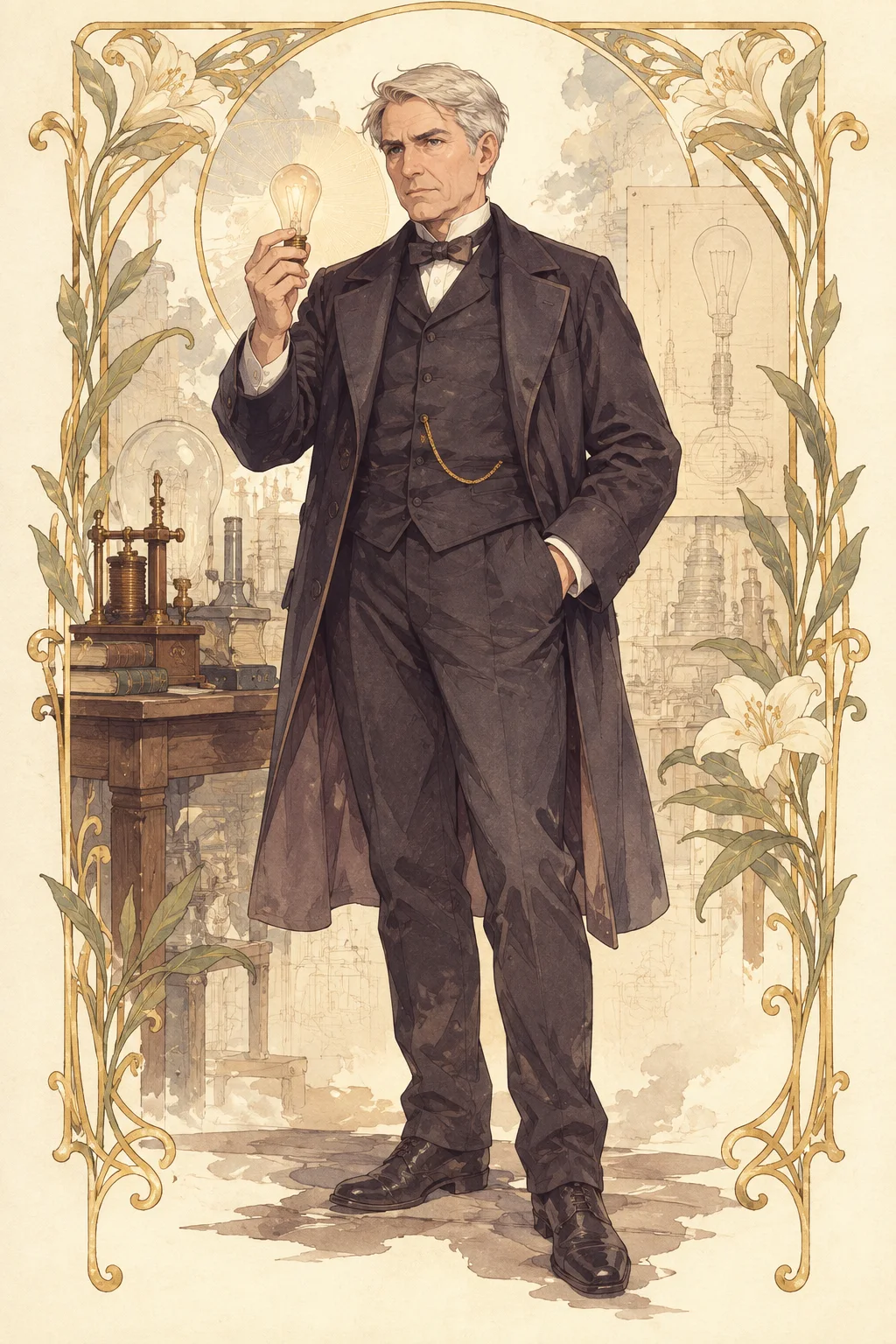 Invention · EnterpriseThomas EdisonAfter countless trial and error, mass-produced practical inventions and spread them to the world as a business
 Entrepreneurship · GPUJensen HuangKept betting on the new domain of the GPU, breaking open the market that became the computing foundation of the AI era
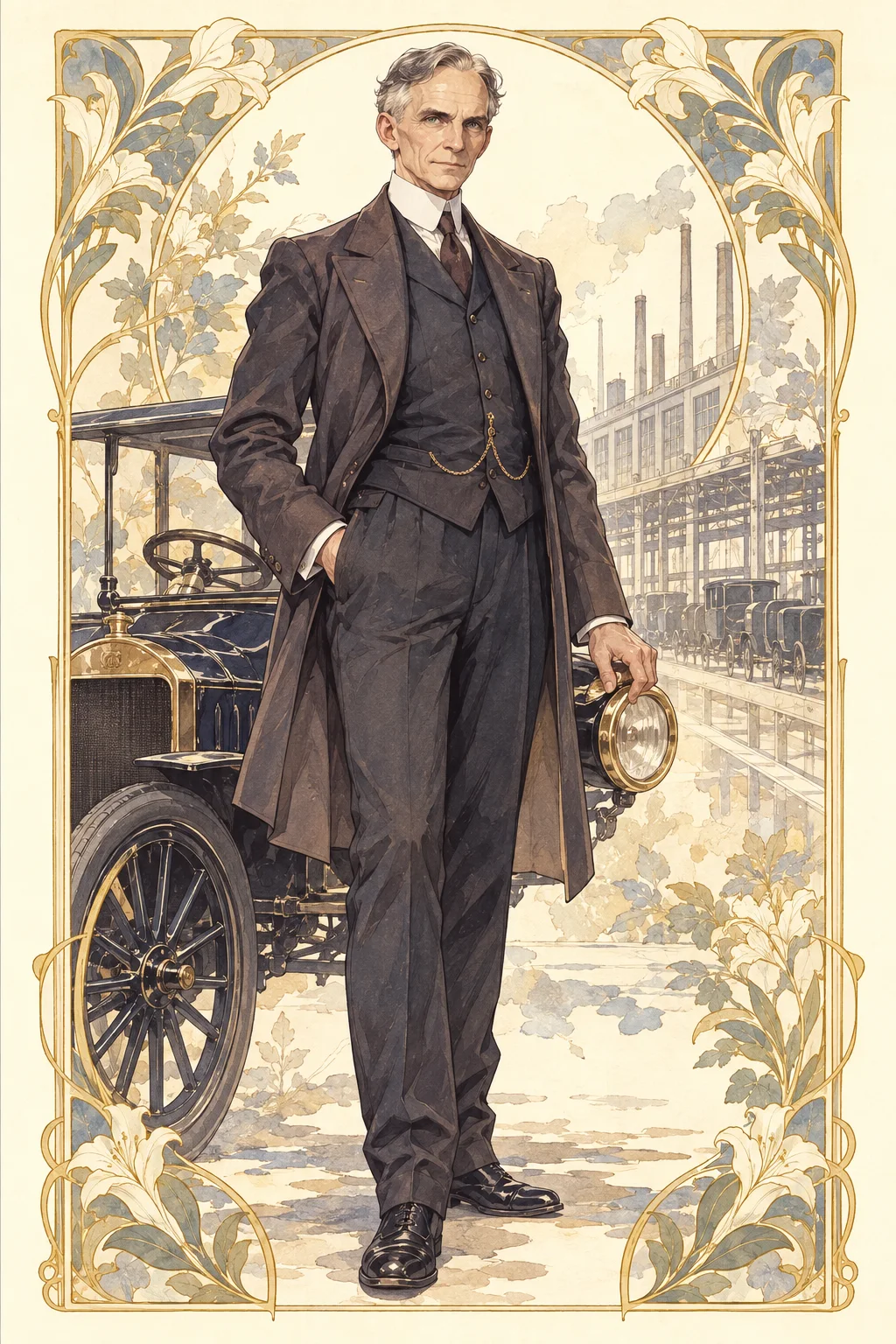 Manufacturing · AutomobilesHenry FordPolished mass production on the ground, turning the automobile into a reality within reach of the masses
 Management · StreamingReed HastingsBoldly remade the business from DVD-by-mail to streaming, opening up a new entertainment market
 Management · GEJack WelchRestructured a giant corporation on hard-nosed real-gain terms, embodying a management that moves the organization by results
 Entrepreneurship · Food serviceRay KrocSaw the possibility in a single hamburger stand and expanded it into a worldwide enterprise
 Entrepreneurship · MediaTed TurnerBet on the unprecedented concept of 24-hour news, breaking open a new market in broadcasting
Type attributions are informed speculation based on public information, not confirmed fact.
Map of group memberships
The Pioneer is one of 32 types, and also belongs to several groups of kindred natures. Here are the four main ones first — open a card to step into its own gallery room.
 Quadra (Values)Gamma Quadra (γ)Market
 Bouquet (Temperament)Linear-Assertive TemperamentMoves the world toward how it ought to be
 Club (Interest)Research ClubSeekers of knowledge
 Motivation (Stimulus Group)Uniqueness Stimulus GroupSeeking novelty and pioneering spirit
See all groupings (25 more)
 Communication StyleBusiness-likeRelating through shared activity
 Behavioral StyleMethodologistLands results through efficiency
 Argumentation StyleArchitectBuilds through argument and consistency
 Perception GroupReductionismBreaking down into prototypes and reconstructing through concepts
 Cognitive StyleVortical-SynergeticDiscovers the essence through trial and error
 Romance (View of Love)IronistLightly teasing heavy fate
 Stress ToleranceTrainedTurning blows into nourishment while keeping one’s frame
 Socialization GroupIdealistBelieving, and letting the vision lead
 Inflation RingEnergy AccumulatorStoring energy and putting it into practice
 Project GroupGeneral ResultGrasping the broad outline and growing it
 Implementation GroupTechnology IntroductionSending promising technology into production
 Square (Rest)GuildsmanThe artisan folk
 Business Square (Collaboration)VikingVoyagers who keep on challenging
 Octad (Cross-Value Group)ForgeBuilding structure from zero
 Reactor (Excitation Group)RadianceRadiating excitation outward
 MobilizationCatalysisMoving others as a catalyst
 Conditioning (Adjustment Group)AspirationInspires toward great ambition
 LabyrinthEmporiumCommercial adventure and the warmth of community
 Block Group (Extinguishing Group)EnterpriseBinding people together and shaping them into form
 Social Progress Ring (SPR)BreakthroughThe ring of emergent lightning
 Supervision Ring (SVR)NovaA new star bursting from the vortex
 Social Order Ring (SOR)JuggernautA colossus that keeps pressing forward
 Succession Ring (SR)RenaissanceThe return of the forgotten
 Benefit Ring (BR)IgnisRekindling the embers
 Master Ring (MR)HearthA homecoming to the hearth
Open the full, love and business editions

- The blueprint of your mind (8 blocks)
- Six ways to recover from stumbles
- A situation-by-situation guide (6 situations)
- The reasoning behind the celebrity picks

- What your heart longs for / What excites you / Your landmines
- Classic love scenarios
- Chemistry by partner (all 32 types)
- At home and as a parent / A practical playbook

- Natural strengths / Work better avoided
- Work style / Management
- Industry fit ◎○△ (23 industries)
- Suitable roles

Save $24.98 compared with buying the three separately