
LII-D – The Architect –
The architecture of logic, quietly built up piece by piece
You are someone who quietly builds up systems that everyone can stand on with peace of mind.
At your center is a conviction that good rules protect people.
What you long for most is a warmth that loosens what has been strained tight.
- Quadra
- Chi Χ
- Bouquet
- Balanced-Stable temperament
- Club
- Research
Portrait — the The Architect

The Architect is not a loud person. Yet wherever this person has stayed for long, something is always left behind. Well-ordered rules, procedures anyone can follow and act on the same way, systems in which disputes rarely arise — an invisible architecture for people to coexist in peace. The Architect builds it not in a single night's flash of inspiration, but one step at a time, quietly.
At this person's center is a conviction that good rules protect people. A world that moves ad hoc, on whims and power dynamics, wounds those in the weakest positions first — and so they prepare a coherent framework in advance. That framework is not a cold cage but something like a floor everyone can stand on with peace of mind. The Architect's logic is always accompanied by a gentle good sense; it is used not to cut people down with sharpness, but to guide matters toward a landing point where everyone can live in agreement.
Their manner is calm and reserved, but when asked for an opinion they do not waver. They state a well-considered conclusion outright, with quiet conviction. A skeleton they have once fixed as "the way it should be" they build all the way to the end without abandoning it midway, and they keep tending it even after it is finished. They prefer, over flashy turns, the steady walk of completing what they began, maintaining it, and improving it little by little — and that tenacity gives this person's work a strength that endures over time.
And, surprisingly, this quiet architect is at root a bright person. They believe in human beings and picture, without guile, a simple and kind world. Yet that kindness cannot easily step outside the system. Drawn into a contest of brute force, or a clash of raw, bared emotion, this person suddenly loses their footing. What the Architect craves most deeply is a warmth that loosens that stiffness — a presence who raises a mission to warm the room and softens a strained heart.
Not force or momentum, but whether it holds together.
Does this sound like you?
- Your documents are sorted, your schedule is drawn up, and your promises are properly kept.
- Even with a new undertaking, you start by sketching the overall skeleton.
- Work you've begun, you carry to completion — and after it's finished, you quietly keep maintaining it.
- You avoid vague turns of phrase and confirm definitions before you speak.
- In a shouting match or under brute-force pressure, you lose your words and stiffen.
- Putting "I'm happy" or "that was a big help" into words is a little hard for you.
- You gather knowledge and materials, and share them ungrudgingly with anyone who asks.
- You're sensitive to the order of things: who stands first, and by which manners things proceed.
- You rebuild yourself with quiet time spent alone.
- When a premise collapses, you sink more deeply than can be seen from outside.

How you move

The Architect's conduct shows itself well in a quiet devotion to order and a gentle sureness.
The first thing you notice is the "orderliness" of this person's surroundings. Documents are sorted, schedules are drawn up, promises are kept. What has been decided is done as decided, without issuing exceptions left and right. This is not a display of fastidiousness but the daily practice of a belief: it is precisely where rules are honored that people can feel secure. When starting a new undertaking, too, they first sketch the overall skeleton and set it in place from the foundation up.
Their action is careful; they do not overreach. They do not go in for risky bets or momentum-driven expansion, but stack up verified things one at a time. It takes time, but what this person assembles is hard to topple later. At the same time, toward what they acknowledge as their own province they are astonishingly persistent, and they hate to throw a task aside partway. Work they have begun they carry to completion, and even after it is finished, they quietly go on maintaining it.
In a group, rather than stepping forward to take charge, they support the setting from the side of rules and arrangements. The division of roles, the criteria for judgment, the path to follow when a dispute arises — they prepare such framework ahead of time so that everyone can work comfortably at their own station. While staying in an inconspicuous position, they are, more often than not, the effective pillar of that setting's order.
Not a passing notion, but the overall skeleton first.
- Documents sorted, schedules drawn up, promises kept
- Carries work to completion, and keeps maintaining it afterward
- At the first sign of conflict, loses words and withdraws
Observed Behavior

Their dress is neat and understated. Over trend or ornament, they choose a proper bearing suited to the occasion. Their belongings and workspace are arranged functionally, with what is needed where it is needed. They do not make a fuss over small disarray, but what falls under their jurisdiction they quietly return to its set place.
They set store by promises and deadlines. What they take on they do not forget, and the schedule they have declared they keep. Because they expect the same sincerity of others, toward someone who repeatedly breaks promises they will, before reproaching them openly, quietly draw down the balance of their trust.
They love learning and accumulation. A field that interests them they investigate systematically, gathering materials and building an ordering of their own. The knowledge they gain they do not hoard; to those who seek it they share it ungrudgingly, in order. This is a person who feels a deep sense of worth in quietly guiding the young and those coming after, from beside them.
At the first sign of conflict, they withdraw. Shouting matches, brute-force pressure, hurling emotions at one another — placed in such a scene, this person loses their words and stiffens. Rather than subduing a disordered setting by force, they are naturally drawn toward arranging a system in which disorder is unlikely to arise in the first place.
Given a place where you can settle in to think, your architecture gains a strength that endures over time.
How you speak and listen

The Architect's dialogue is precise, gentle, and warmer than you might expect.
They speak quietly, and their words are chosen. They avoid vague turns of phrase, confirm definitions, and speak in an orderly line of reasoning. Yet that precision is not meant to corner the other person. The Architect values, over winning an argument, everyone standing on the same understanding. Explaining an intricate matter in order, carefully, until it truly sinks in for the other person — this person is genuinely good at teaching.
When stating an opinion, they do not fear assertion. "This is how I see it," "This should be done this way" — they say it outright, quietly but clearly. That conviction is backed not by a passing notion but by the sheer amount of consideration they have piled up. They rarely raise their voice, however, and even when opposed they try to answer with reasoning rather than emotion.
In dialogue with someone close, this person's brightness peeks through. Gentle jokes, a slightly cerebral humor, and a plainly affirmative gaze toward people and the world. This is not someone who expounds logic with a stern face, but someone who believes good things are good and wants to share them. Only, putting emotion itself into words is not their strength, and the more their heart is moved, the fewer their words become.
Definitions and reasoning over emotion. And still, bright at root.
What lies at the core — drive and tender spots
Not force or momentum, but a landing point everyone can accept.
The one powerful engine at the heart

At the Architect's center lie a power to build coherent frameworks and a power to soften them with good sense.
At the Architect's center is one strong driving force: the power to give things names and order, to build rules and systems that hold for anyone, and to keep them intact for a long time. Faced with a cluttered reality, in this person's mind the skeleton that ought to be quietly rises up — what is the foundation, and what are the pillars? Where must a beam be laid so the whole will not collapse? And once the blueprint is fixed, they stack it up without hesitation, one step at a time.
This driving force has a paired counterpart: the power to temper the system they have built with a gentle good sense. A rule that is correct in theory yet corners people is not a good rule — the Architect senses this, and rounds off the edges into a moderate form everyone can accept. Rigor and discretion, the power to build and the eye to soften. Only when these two mesh does the Architect's architecture become one that people can actually live in.
This is not confined to work. Whether it is a household's rules or an arrangement among friends, the moment they feel "if there were a sure skeleton here, everyone would have it easier," the same engine starts up. Disorder turns into order, and people begin to move within it with peace of mind — that sight is the very moment the Architect is most deeply fulfilled.
What they can do, yet do not prize

Surprisingly, the Architect holds considerable power when it comes to reading how things will turn out. How the present move will roll forward, where this current will bear fruit and where it will hit a wall — while sitting quietly, they can see quite far ahead. Their skill at experimenting, at moving something on a trial basis to check it, is in fact solid too.
Yet they themselves place no great weight on it. They keep their foresight within their chest and do not speak like a prophet. For this person the future is not something to guess right but something to prepare for — their reading is quietly woven into the blueprint and takes effect later, in the form of the system's durability. Not flaunting a strength is itself what supports this person's composure.
What the heart secretly craves
What they secretly long for is a warmth that lights the heart and an ease that loosens what has been strained tight.
The thing that the Architect, blessed with order and discretion, finds hard to generate on their own and yet craves more deeply than anyone — is a bright fire of feeling that warms the room, and a care that loosens the tension. Skilled as they are at assembling systems, when it comes to brightening the mood of a room, encouraging people's hearts, and gently soothing their fatigue, their hands suddenly stop. That is exactly why they are deeply drawn to, and fulfilled by, a presence who raises warmth to bind people together and softens what has been strained tight.
This shows up as "the need to belong, secure attachment, and the fulfillment of a deep craving." A partner who kindles a fire in this person's easily-hardening heart and provides a warmth they can lean on with peace of mind — right beside the dual Harmonizer (ESE-Q), who is the very best at that power, the Architect can let the tension out of their shoulders and devote themselves to the architecture they excel at. This is the finest complement, warming the places that reasoning cannot reach.
The most fragile place
Where the Architect is most fragile is a shoving-match of force, and a clash of raw, bared emotion.
The most fragile scene is one where will pushes head-on against will. Commanding the room by sheer volume, forcing compliance by brute strength, standing on the protecting side by flaunting power — such behavior the Architect can barely draw out of themselves. Pushed in on, they cannot push back; try to answer with reasoning, and it fails to land before the logic of force. Kept for long under unreasonable pressure, this person visibly wears down.
Another fragility is the direct exchange of emotion. Baring one's inmost feelings to one another, weeping, clashing, and then reconciling — in such raw scenes this person no longer knows what to say. It is not that they have no feelings. If anything, they run deep. It is only that they have no words to handle them raw, outside the system.
And so the Architect's foundation stands on the premise that reasoning gets through. In a place where that very premise is broken — where force decides everything and emotion whirls — this person's strength does not work. This is not a flaw to be blamed, but a place to be protected, by choosing a partner who will take on such scenes and, from the outset, an environment where trials of force are unlikely to arise.

- Core: the power to build coherent frameworks, and the power to soften them with good sense
- What drives you: the felt sense that with a sure skeleton in place, everyone has it easier
- Where you're fragile: a shoving-match of force, a clash of raw, bared emotion
Strengths, and where you stumble
A warmth that lights the heart, and an ease that loosens what has been strained tight.
Strengths — build it, and bind it

The Architect's strength lies in a twofold sureness: the power to build systems, and the good sense to draw them toward the human side. They give cluttered things names and order and assemble them into a skeleton that works no matter who takes it over. The work is not fast, but it is tenacious, precise, and does not collapse later. The staying power to carry what they began to completion, and to keep tending it after it is done, is this person's own. Add to this their skill at teaching intricate matters in order, their sincerity in keeping promises and deadlines, and the magnanimity with which they share knowledge ungrudgingly, and this person becomes quietly indispensable to those around them.
And beneath that rigor runs a bright core. The Architect is, at root, a person who believes in people and the world. Good rules set people free, and a sure foundation makes people kind — because they hold that plain conviction, this person's logic never turns cold. Not a system for its own sake, but architecture for everyone to live in peace. That quiet optimism is exactly what lifts the Architect from a mere logician into a builder people hold dear.
Where they tend to stumble
Where they tend to stumble is the flip side of that strong conviction and of the thinness of their emotional and force-related domains.
Because their conviction in a system once assembled is strong, letting go of it is hard. Even when the premises have changed they may cling to the blueprint, and "because it's the rule" can overtake the purpose. When their insistence on formality, propriety, and the proper order of things comes out too strongly, they can look like an inflexible stickler and raise an invisible wall between themselves and those around them. Sinking into the refinement of details and never being able to declare it finished is another of this person's habits.
To a shoving-match of force and a direct clash of emotion, they are markedly weak. Pushed in on by a forceful counterpart, they cannot push back, and in a whirl of theatrical emotion they lose their words. And when a premise they had made their foundation — the mechanism of the workplace, a plan of many years, a framework they had believed in — collapses, this person breaks more deeply than one would expect. Rebuilding takes time, and during it they wear down quietly, so quietly that those around them can hardly tell.
Someone who raises warmth to bind people together moves you deeply, and beside them you can devote yourself, at ease, to the architecture you do best. That's where your room to grow lies.
- When you're rushed, first ask the other person whether you can secure some time
- For a shoving-match of force, consider whether a stand-in can take it on
- Say "that made me happy," even if it comes out clumsy
Where you thrive
A culture in which "making a good system" is itself acknowledged as value.
Environments Where They Thrive
The Architect shines most in an environment where one can settle in to think and where what has been built up is respected. A clear role and discretion, uninterrupted time to concentrate, and a culture in which "making a good system" is itself acknowledged as value — it is at such a post that this person's architecture advances. Frequent shifts in policy, a dynamic in which the loudest voice decides, a workplace that gets by on ad-hoc improvisation — these nullify this person's strength root and branch. Quiet, coherent, long-term work. That is the Architect's soil.
What this person needs, first, is "stability of the foundation": that the premises do not keep changing, that what they have stacked up is still there tomorrow. And then a partner who raises the temperature of the room — a presence who encourages people's hearts, loosens a stiffened atmosphere, and lights a fire of "thank you" over this person's work. With that warmth, the Architect can immerse themselves, at ease, in the skeleton-work they excel at.
As a quiet builder
The power to build systems, the skill to teach in order, and the quiet eye that sees over the long term come alive in roles that make, guard, and hand over the skeleton of knowledge. Research and analysis, the design of institutions and regulations, education and systematic instruction, the compilation of materials and knowledge, a post entrusted with quality or standards, a profession requiring patience over long-term planning — in every one, this person's precision and staying power, and the wish to "lay a floor everyone can stand on with peace of mind," become value directly.
On the other hand, force-driven negotiation and contests, a role that mobilizes emotion to spur people on, a workplace run ad hoc by snap decisions — these do not suit them. At such posts their forte of meticulousness spins its wheels, and only the pressure-battle they are weak at comes to the fore. Entrusting the room's temperature and interpersonal maneuvering to a partner, so that they themselves can concentrate on designing the skeleton and passing on knowledge — that form makes the most of this person.
Dialogue — ask Chloe

One free dialogue · Le Salon members can explore several perspectives. Not a real person: a representative perspective based on the public profile.
Relationships and love
Can you guide quietly from beside them, and support them for the long haul?
How You Love — Love by Design
Your love begins with drawing, in your head, a blueprint made just for the other person. What troubles this person, and what would let them stand at ease — you read it carefully with logic, and you show love by putting the very mechanics of their life in order. If you notice, say, that your partner is swamped at work, you'll quietly rework the sequence of the housework, or take a tedious procedure off their hands. Reducing one of their burdens feels more sincere to you than saying “I love you” a hundred times. That quiet way of setting things right is a language of love only you can speak.
Compatibility — recommended partners
 Harmonizer
 ESE-QTheir smile and their voice soften the space around themDualityThe need to belong, secure attachment, a sense of fulfillment, the satisfaction of a deep craving — the most complementary partner, who kindles a fire of warmth in an easily-hardening heart and loosens what has been strained tight Mentor
 EIE-QA passionate standard-bearer who speaks of ideals and binds hearts togetherSemi-dualityNostalgia, a sense of belonging, mutual dependence — a partner who lends to a passion that holds up an ideal the feeling of a fond, sure connection Administrator
 LSE-QThe hands-on command post that keeps the field running and moves people and workIllusionaryEmpathy, gratitude, a sense of trust, the need for safety — a partner more indirect than the dual, yet in whose steady way of working one can feel deeply at ease Performer
 SEI-QA gentle conveyor who gives form to sensation and feelingActivationActivation, elation, drive, curiosity — the partner easiest to open up with, whose mere presence loosens the senses and makes a "let's give it a try" well up Artist
 SLI-QGiving form to the “just-rightness” of nature and daily lifeBenefactorFor this person one can move without effort — a relationship in which you support them as a benefactor and are repaid with respect and gratitude for your quiet handiwork Dreamer
 IEI-QA teller of fantasies who colors the world with dreams and passionBeneficiaryFulfillment and trust — a relationship like a brimming reassurance, received from a benefactor filled with delicate feeling Visionary
 ILE-DThe architect of ideas who reinvents the world through paradox and theoryMirrorA partner whose rhythm of ideas and systems is in tune with yours — one who draws out each other's intellectual strengths Promoter
 IEE-DMoving the world through fascination — an evangelist of ideasSupervisor (mirror)They grant you an eye for people and possibilities — a relationship in which, as a master, they quietly hand over a feel for seizing opportunity Conqueror
 SLE-DA dependable field general who only burns brighter the harder things getSupervisee (mirror)They inherit the system you have assembled and test it in reality — a relationship in which, as an apprentice, they answer with unshakable executionSee the other relationships (22 more types)
The upper bands are easier to be with; the lower bands tend to wear you down. Tap a relation name to read about the pair.
 Enforcer
 LSI-DThe steel operator who carries out the mission through discipline and responsibilityKindredA partner whose conversation flows easily, someone who likes to express things in the same direction as you. It can wear you out once it turns competitive. Empath
 EII-DSensing what lies beneath feeling, and becoming someone's quiet supportBusinessA partner you can easily work alongside, adapting to the situation together. Seeker
 ILE-QAn intellectual adventurer who unravels the worldCodependencyA partner who wears you down little by little, caught in a cycle of bottling things up and overcompensating. Peacemaker
 SEI-DA bridge between sensation and compassionRelaxationA partner who puts you at ease, though you tend to end up waiting on them with quiet expectation. Enthusiast
 ESE-DThe cheerful flame that sets the world ablaze with feelingDetachedA partner who's hard to feel drawn to, leading to a rather flat, low-key relationship. Analyst
 LII-QFrom the quiet of the desk, reassembling the worldAdaptiveA partner you settle into by simply playing your roles, an easy, unremarkable relationship. Commander
 LIE-QBuild, prepare, hold the line — the command center of orderCompassA partner who gives you a sense of being accepted, along with a hint of which direction to move in. Guardian
 ESI-DA silent shield that protects people, with rightness at its backIdealA partner who naturally embodies what you aspire to be, easy to admire. Getting too close tires you out.
SEE-DA born leader who reads hearts and rallies the currentCorrectionA partner whose feedback becomes a chance to take stock of yourself. Critic
 ILI-QThe insightful Critic who sees through contradictions in the depths of silenceTranscendenceA partner who makes you want to surpass yourself when you're together, pushing each other to grow. Advisor
 IEE-QOne who quietly draws near and listens to the heartSupervisorA relationship where you tend to unsettle the other person without ever realizing it. Craftsman
 SLI-DThe artisan who sets the world in order in the palm of his handTense BenefactorA partner around whom you tend to try too hard, unable to shake off the tension. Executive
 LSE-DSet it in order, get it moving, see it throughTediumA partner who leaves you feeling sluggish, prone to putting things off and keeping your distance. Philosopher
 EII-QOne who, in the stillness, keeps questioning the meaning of the worldFormalA relationship where formality and appearances pile up, and it's hard to ever fully relax. Reformer
 SLE-QAn executor who breaks through by force and rewrites conventionPlayerA partner around whom you constantly feel watched, prone to leaving you burned out. Prophet
 IEI-DAn eye that gazes upon a destiny no one has yet noticedTense BeneficiaryA partner who leaves you worrying and overthinking, prone to closing your heart off. Hero
Hero EIE-DIt is this conviction that changes the worldDistrustA partner you can't quite bring yourself to trust, which makes it hard to show your own strength. Inspector
 LSI-QThe logician who strips away pretense and sees through to the truthDutyA partner who leaves you understanding what to do yet unable to act on it, while your need to be recognized grows stronger.
SEE-QA natural orchestrator who reads the room and guides people toward reconciliationConflictThe partner most likely to strike your weakest point, the one relationship that drains you the most. Strategist
 ILI-DThe contemplative Strategist who quietly reads ahead and lays the groundworkQuasi-IdentityA partner who looks similar to you yet never quite clicks, leaving you spinning your wheels and worn out. Pioneer
 LIE-DCarving the way through results — the realist's frontierDistanceA partner who makes you want to keep your distance and close your heart off. Judge
Judge ESI-QThe quiet arbiter who discerns right from wrongRoleA relationship where "you should" comes first, making it hard to just be yourself.Compatibility is not decided by type alone; maturity, subtype and circumstances all change it.
With someone you are connected to, you can read a personal Relationship Reading drawn from both of your answers ($8.99 per pair, unlimited for Le Salon members).
See compatibility with your connections →Explore Le Salon →
What You Truly Long For
What you truly crave, deep down, is the warmth of feeling that brightens a room in an instant. For you, who build the world out of reasoning, the thing you can't make well yourself is exactly that — laughter, plainly offered affection, and…
In the Love Edition: What your heart longs for / What excites you / Where you clash and your landmines / Classic love scenarios / Chemistry by partner, all 32 types named / At home and as a parent / A practical playbook / Secrets to lasting love / A manual for your partner
Work and ways of working
Your Working Style — System-Building
You naturally excel in two main ways: laying out a clear line of reasoning and properly organizing and analyzing things, and conceiving gentle change from a long-term view.
Your interest gravitates toward talking through ideas and theories. Day to day, you are calm and unshaken and keep a steady pace. Being recognized is what sustains your motivation.
With people, you keep your emotions restrained and hold your distance by following rules and procedures. Your thinking puts logic first, working through ordered chains of "cause → effect."
The power to build coherent frameworks, and the power to soften them with good sense.
- When you feel "because it's the rule," return to the purpose and rethink it
- Decide at the start on the day you'll declare it finished
- Write rest time into your planner in advance, as an appointment

Careers That Fit
Your skill at teaching in order and the magnanimity to share knowledge ungrudgingly come into direct play.
You can show your power to raise a framework out of a cluttered reality and assemble systems that last.
Your power to build coherent frameworks and guide matters to a landing point everyone can accept comes into play.
Your Strengths, and Work Better Avoided
Your two pillars are "the power to reason things through, organize, and analyze (Organization & Law)" and "the power to conceive gentle change from a long-term view (Good Sense & Peace)." At work, make your main arena the work of designing order — regulations, quality, governance — while…
In the Business Edition: Natural strengths / work better avoided, Stress tolerance and socialization group, Work style, Motivation and recharging, How to work with and manage this person, Compatibility and team-building, Industry fit ◎○△ across 23 industries with rationale, Suitable roles
Blueprint of the mind
Your mind runs on eight blocks. Each block carries two functions — how you take in the world, and how you express yourself — and together they set both the range you're skilled in and how much you actually value using it. We've kept the technical notation small and explained everything in plain language.
Build the skeleton, then soften it with good sense.
Leading Your centerI Build
+Ti-pOrganization & LawStructural logic-Ne-cGood Sense & PeaceIntuition of possibilitiesAt your center is the power to give things names and order, and to keep norms and procedures stable over the long term.
You raise a framework out of a cluttered reality, build rules and systems that hold for anyone, and keep them intact.
The good sense that rounds that system into a form everyone can accept and live with is always at work alongside it.
Mirror — Picked up by watching
At the entry point sits the working that grasps the underside of thing…
In the Full Portrait: all 8 blocks of the blueprint / 6 ways back / situational guide / the reasoning behind the exemplars
Going deeper — ways back and situational guide
On the flip side of that same core, these are the situations where you tend to stumble. After that, six ways to get back on your feet.
Even when the premises have changed, you may cling to the blueprint, and "because it's the rule" can overtake the purpose.
Pushed in on by a forceful counterpart, you can't push back, and even when you try to answer with reasoning, it doesn't land.
When a framework you believed in collapses, you sink more deeply than can be seen from outside, and quietly wear down.
Someone who holds up warmth loosens your stiffness.
Way to Recover 1 — Try Seeing the System as Temporary Scaffolding
The framework you assemble is sound. But when the premises change, even a blueprint that was correct grows old. The very moment you feel "because it's the rule," try returning to the purpose: "what is this rule protecting right now?"…
In the Full Portrait: 6 ways back / situational guide (home, work, friends, under stress, shopping, days off)
People thought to share this type
Different fields, different eras — yet every one of them resonates on the same note: they laid down a floor everyone could stand on with peace of mind.
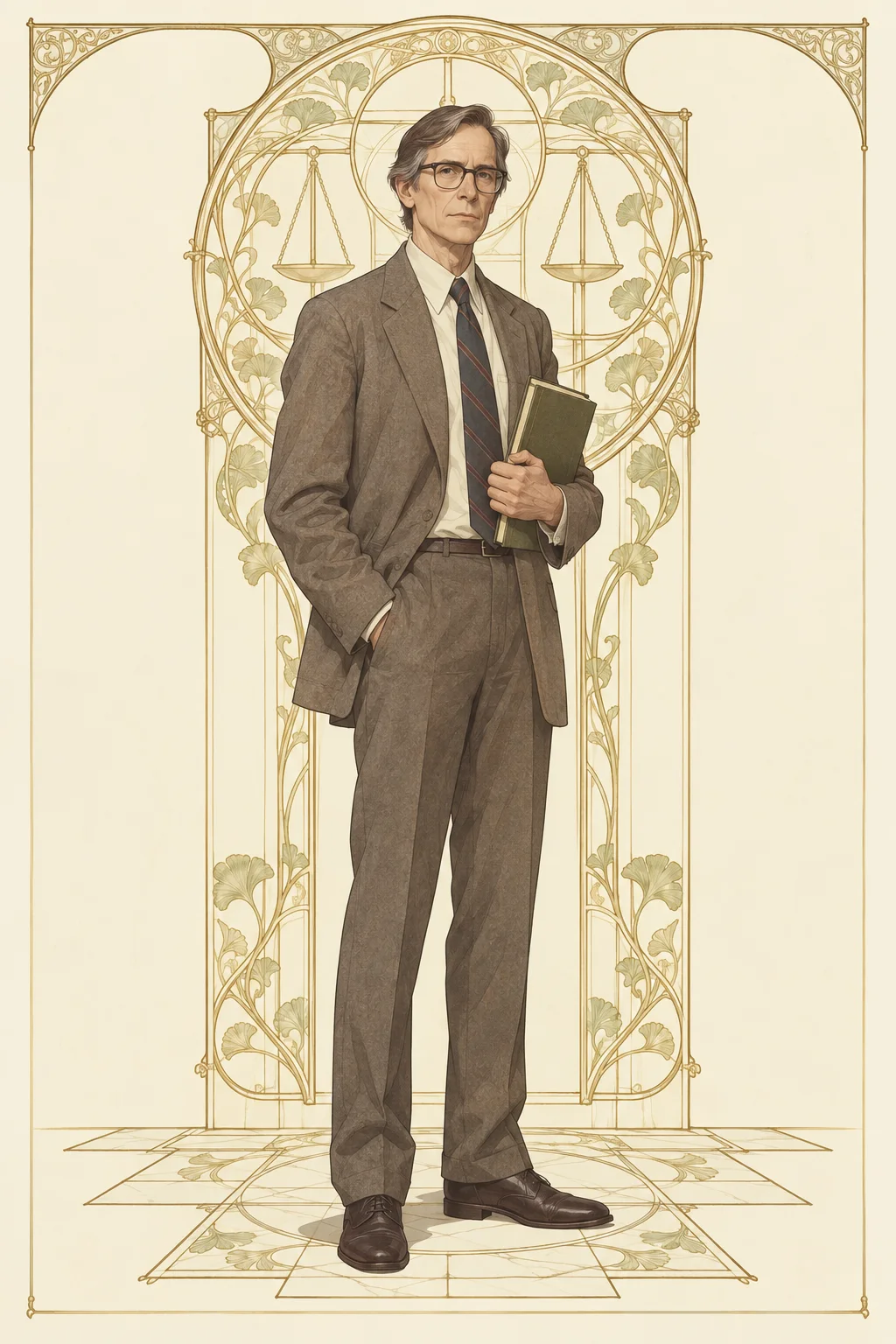 USA · Political PhilosopherJohn RawlsDesigned the principles of a just society from behind the “veil of ignorance.”
 UK · Jurist & ThinkerThomas MoreDepicted the ideal community “Utopia,” and became a martyr to his conscience.
 Italy · Monk & SaintSaint Benedict“Pray and work” — established the Rule of monastic life.
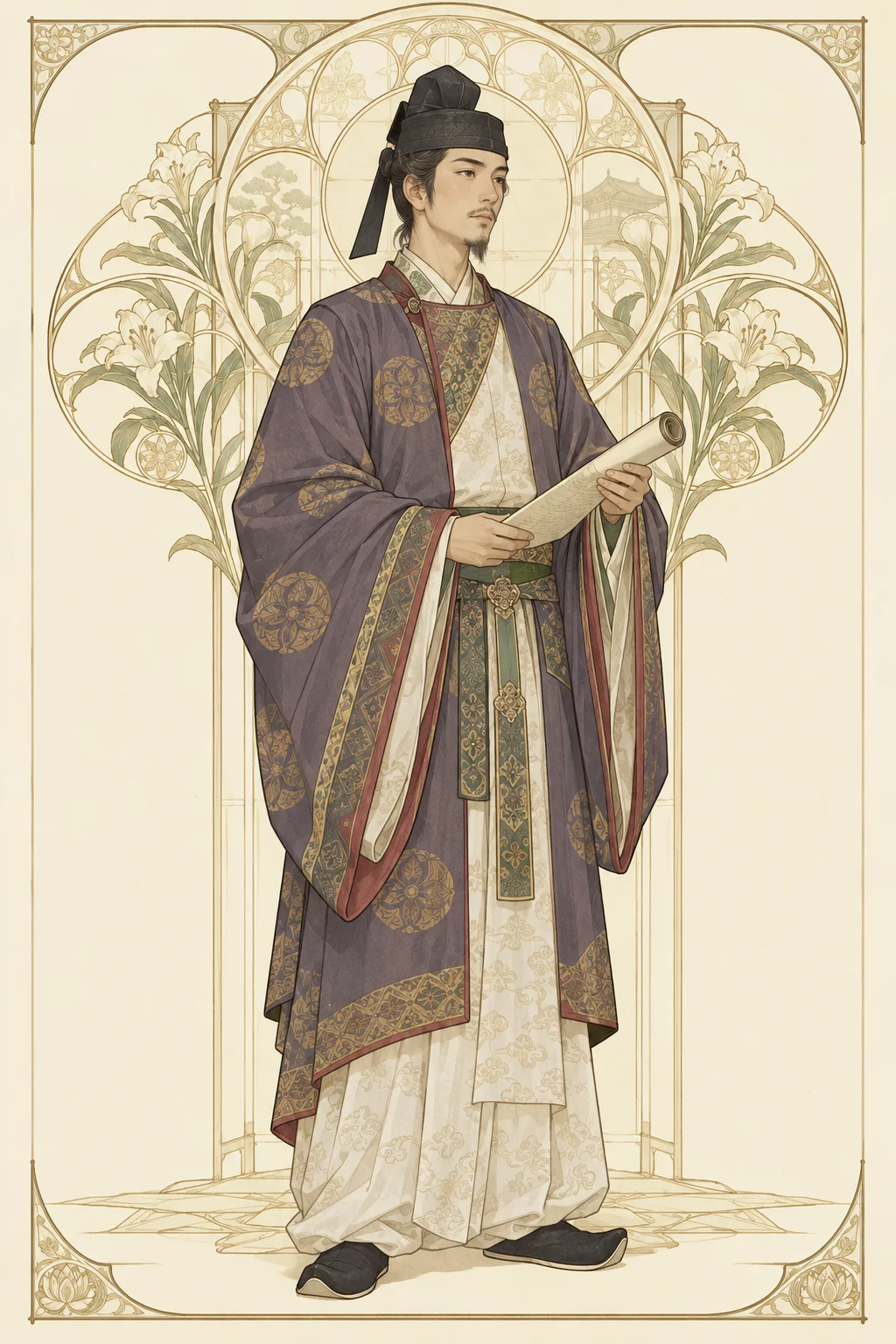 Japan · StatesmanPrince ShōtokuDesigned a governance of harmony through the Seventeen-Article Constitution and the Twelve Level Cap and Rank System.
 USA · AI Researcher & EntrepreneurDario AmodeiHolds AI safety as the top priority and is building the norms of its development.
 China · Confucian ScholarZhu Xi (Zhuzi)Compiled the Four Books and wove the philosophy of li (principle) into a single system.
 Spain · Cleric & JuristLas CasasDefended the rights of indigenous peoples with law and words throughout his life.
 Netherlands · JuristHugo GrotiusLaid the cornerstone of international law with “On the Law of War and Peace.”
 India · Mauryan EmperorAshoka the GreatRepented of the ravages of war and turned to governance by Dharma (law).
 Czech · EducatorComenius“Everything to everyone” — systematized universal education.
Type attributions are informed speculation based on public information, not confirmed fact.
Map of group memberships
The Architect is one of 32 types, and also belongs to several groups of kindred natures. Here are the four main ones first — open a card to step into its own gallery room.
 Quadra (Values)Chi Quadra (Χ)Utopia
 Bouquet (Temperament)Balanced-Stable temperamentBuilding a sure foundation
 Club (Interest)Research ClubSeekers of knowledge
 Motivation (Stimulus Group)Self-esteem stimulus groupSeeking inner worth
See all groupings (25 more)
 Communication StyleCold-BloodedExchanges information coolly
 Behavioral StyleConceptualistOrdering the world through structure
 Argumentation StyleArchitectBuilds through argument and consistency
 Perception GroupReductionismBreaking down into prototypes and reconstructing through concepts
 Cognitive StyleCausal-DeterministicMechanistically from cause to effect
 Romance (View of Love)MentorQuietly guiding from beside you
 Stress ToleranceWeakBreaks when the foundation is lost
 Socialization GroupConstructorFinding a mission in long-term construction
 Inflation RingInformation AccumulatorStoring information and leaving experience behind
 Project GroupIdeational processIntegrating observation into theory
 Implementation GroupTechnical InventionInventing, and implementing technology widely
 Square (Rest)IdeologueSchool of Thought
 Business Square (Collaboration)FounderBuilders of good sense
 Octad (Cross-Value Group)ForgeBuilding structure from zero
 Reactor (Excitation Group)ReserveStoring up excitation inward
 MobilizationPolymerizationPolymerizing into long-term macromolecular structures
 Conditioning (Adjustment Group)ElevationElevating and sublimating emotion
 LabyrinthAlexandriaDesigning ideals and appraising their enactment
 Block Group (Extinguishing Group)EnterpriseBinding people together and shaping them into form
 Social Progress Ring (SPR)Avant-GardeThe undercurrent ring of reform
 Supervision Ring (SVR)BlueprintA blueprint that dismantles order
 Social Order Ring (SOR)VestalA priestess who guards the sacred flame
 Succession Ring (SR)CanonThe deep succession of command
 Benefit Ring (BR)ObeliskThe enduring norms of stone
 Master Ring (MR)SentinelA warden who guards the norms
Open the full, love and business editions

- The blueprint of your mind (8 blocks)
- Six ways to recover from stumbles
- A situation-by-situation guide (6 situations)
- The reasoning behind the celebrity picks

- What your heart longs for / What excites you / Your landmines
- Classic love scenarios
- Chemistry by partner (all 32 types)
- At home and as a parent / A practical playbook

- Natural strengths / Work better avoided
- Work style / Management
- Industry fit ◎○△ (23 industries)
- Suitable roles
Save $24.98 compared with buying the three separately