
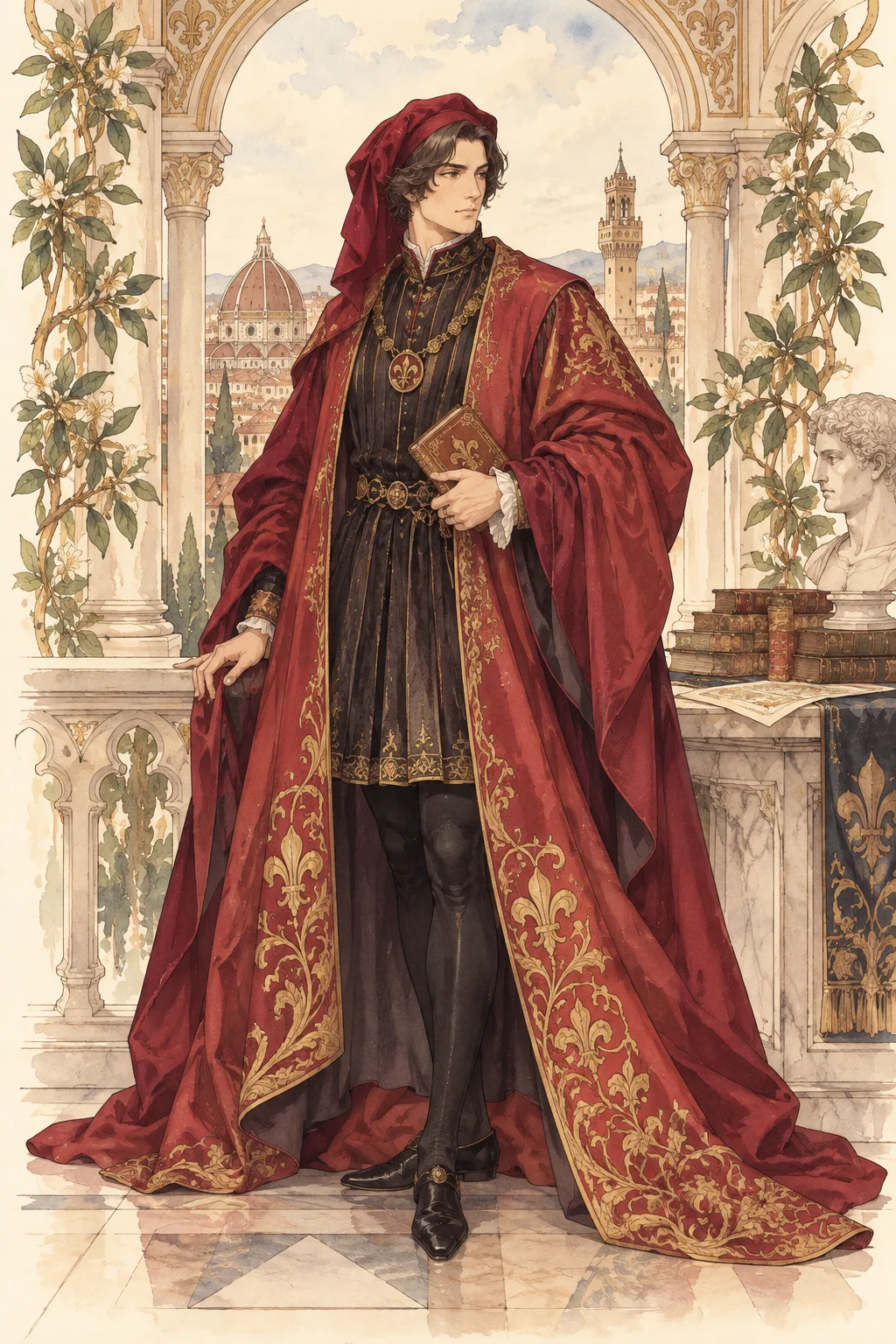
Celebrity Index SEE-D "Politician" Lorenzo de' Medici ("the Magnificent")

Lorenzo de' Medici ("the Magnificent")

SEE-D "Politician" Statesman / Patron · Florentine · 15th c.

De facto ruler of Florence and cultural patron (1449–1492). Called "the Magnificent," he patronised Botticelli, Michelangelo, and others and produced the cultural golden age of the Renaissance. At the same time he maintained the balance of Italian political power as "the needle of the Italian balance." A supreme model of statesman-as-patron, his sudden death at 43 plunged Florence into crisis.

Leading Function-Se-p (Victory & Dominance)

"The needle of the Italian balance" — the equilibrium maintainer controlling the balance of the Italian Peninsula. Riding alone to Naples and winning over the Neapolitan king through personal charisma — personal-charm-based power control. Crisis management after the Pazzi Conspiracy.

Creative Function+Fi-c (Influence & Motivation)

Precisely reading the true emotions of supporters and allies to maintain relationships — the core of +Fi-c creative function. Power maintenance through personal emotional connections; reading complex political motivations.

Vulnerable Function 1-Ti-p weak (Structure & Truth)

Weak -Ti-p (Structure & Truth): Lorenzo himself admitted "I don't understand banking" (recorded in Medici Bank sources) — the Medici Bank declined under Lorenzo. Financial logic subordinated to diplomatic feel.

Vulnerable Function 2+Ne-c weak (Hypothesis & Imagination)

Weak +Ne-c (Hypothesis & Imagination): consistently prioritising the maintenance of the "Florentine equilibrium" as the primary goal — choosing micro-adjustment of existing power balance over fundamental political innovation.

Quadra / Temperament / Club

Quadra: Anti-Alpha Quadra (Meritocracy) — the maintenance of Florentine order as the authority-based guiding principle.

Temperament: Flexible-Maneuvering temperament: switching entirely different roles — never fixing on a single identity, always naturally adapting to the present situation.

Club: Socialite Club: the patron relationships with Botticelli, Leonardo, and Poliziano as the foundation of political influence — the Platonic Academy as organised intellectual sociability.

Worldview & Attitude

"History is made through power and the patronage of culture" — a complex political realism. Acutely aware of structural dangers and trusting in relational cultural power.

Attitude toward Change: Executing the Renaissance as a realistic plan — arts patronage and political equilibrium as simultaneous investments.