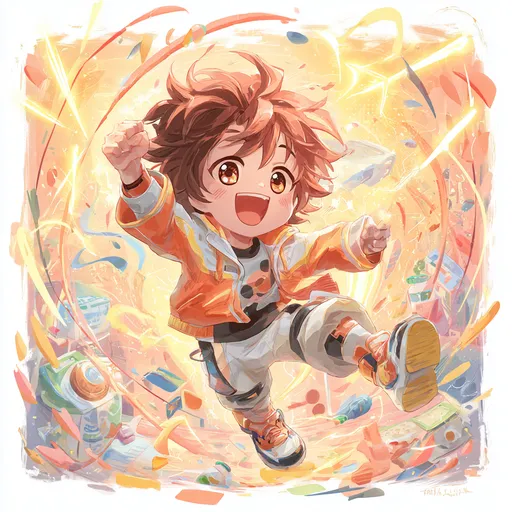

【Enthusiasm Spark Maker (Enthusiast)】
Brings the atmosphere to a boil, handles the logistics, and keeps things running
Ignites enthusiasm, supports with care, and keeps the scene rolling with short declarations
A combination of instantaneous elation and sustained care
【Mood Booster & Care Captain】
Explosively boosting morale at company kickoffs → Taking care of everything from refreshments to cleanup during breaks
Instantly generating 100% motivation × 100% comfort
Explosive motivation
【Live Floor Moderator】
Rallying the audience into a standing ovation while immediately adjusting for falls and overcrowding
High tension is maintained for a long time with no accidents
Sustained comfort
【Implementer】
Converting enthusiasm into "immediately usable action"
Immediate implementation
Gliding into the next phase with only pleasant afterglow remaining
【Energy Accumulator】
Stores excitement and releases it all at once at the decisive moment
Morale pulse
Simultaneous mass ignition
【Elation-Oriented】
"Emotional explosion," "Morale explosion," "All at once"
Positive: Energy / Motivation — Negative: Exhausting / Loud
【Caretaking】
"Care mode," "Distributing drinks," "Cleanup"
Positive: Attentiveness / Support — Negative: Excessive / Meddlesome
【Tempo-Oriented】
"Short declarations," "Immediately," "Well-paced"
Positive: Sense of rhythm / Speed — Negative: Hasty / Restless
【Extraverted】
"Irrational / Extraverted-leaning / Dynamic"
Positive: Sociability / Energy — Negative: Restless / Overwhelming
【Mild】
Excessive elation — "getting too hyped up"
Excessive care — "overdoing it"
【Moderate】
Runaway elation, ignoring exhaustion
Intensified meddling, boundary violations
【Severe】
Burnout, health deterioration
Complete loss of logic, collapse of planning ability
【Path to Recovery】
Adequate rest, developing a long-term perspective
Rebuilding relationships, developing complementary functions (Ti/Ni)
【Early Stage: Individual Use Period (Childhood – Early Adolescence)】
Using -Fe-p and +Si-c sequentially — "first ignite, then care"
Takes time, externalization is needed
Strengthening: Diverse inputs (-Fe-p), diverse outputs (+Si-c)
【Middle Stage: Easy Coordination Period (Late Adolescence – Early Adulthood)】
Coordination becomes easier — "igniting while caring" becomes possible
Instantaneous ignition → Immediate sustained care
Strengthening: Diverse thinking and contemplation (Correlator)
【Late Stage: Integration Period (Late Adulthood – Middle Age)】
Gradual blending — formation of Vortical Synergy
Unification as "enthusiasm and ignition"
Improved intuitive accuracy through experience
【Mature Stage: Complete Integration Period (Middle Age – Old Age)】
Finally becomes a single process
Instantaneous ignition is immediately accompanied by sustained care
Grasping the scene and igniting just by looking
Years of experience and wisdom, mentoring younger generations
【Vortical Synergy Cognition】
Continuous loop of elation ↔ care
Cycle of ignition → care → declaration → residual heat processing
Observing while switching the flow with well-timed short declarations
【Result-Oriented / Immediate Implementation】
Converting enthusiasm into "immediately usable action"
Instantly generating 100% motivation × 100% comfort
"Let's go!" rallying, immediate reset
【Individualistic Detonation】
"3 minutes left! Let's hear you!" — short rallying calls
Well-timed declarations
Switching the flow at one's own timing
【Valued Elements】
Instantaneous elation, explosive morale
Sustained care, comfort and safety levels
Good tempo, pleasant afterglow
【Undervalued Elements】
Long-term planning, careful analysis
Quiet deliberation, restrained responses
【Decision-Making Process】
Observing the scene → "Let's go!" ignition → Immediate care → Short declaration
Ultra-fast decision-making in seconds to minutes
Timing judgment of "3 minutes left!"
Switching the flow with good tempo
【Integrated Process】
Instantaneous Elation: "This is amazing! We can keep going!" — igniting momentum with an emotional spike
Sustained Care: Frequently adjusting comfort and safety levels to maintain the enthusiastic state for a long time
Segmenting with short declarations: Switching the flow at each timing point with "OK, short break!" to prevent exhaustion and confusion
【Characteristics】
Boosting morale explosively at company kickoffs → Taking care of everything from refreshments to cleanup during breaks
Rallying the audience into a standing ovation while immediately adjusting for falls and overcrowding
Re-igniting tired participants during late-night sessions with emotional BGM and snacks, supporting them until submission
【Integrated Attention Allocation】
Receptor (-Fe-p): Opportunities for elation (highest sensitivity), emotionally moving scenes, morale decline
Effector (+Si-c): Comfort and safety levels (highest sensitivity), equipment, temperature, stamina
Correlator (Fe-Si-De): Simultaneously tracking "elation and care"
Attention priority:
Instantaneous elation (40%), Sustained care (40%), Timing judgment (20%)
【Easily Overlooked】
Long-term planning, detailed analysis, quiet consideration, personal privacy
【Daily Life】
In scenes you want to enliven, first raise the tension all at once with a loud rallying call
Even in the midst of enthusiasm, immediately follow up on environmental aspects such as drink replenishment and temperature adjustment
After events, take the lead in cleanup including wiping tables and collecting trash while leaving a pleasant afterglow
【Research / Work】
Mood Booster & Care Captain: Explosively boosting morale at company kickoffs → Taking care of everything from refreshments to cleanup during breaks
Live Floor Moderator: Rallying the audience into a standing ovation while immediately adjusting for falls and overcrowding
Hackathon "Hype Leader": Re-igniting tired participants during late-night sessions with emotional BGM and snacks, supporting them until submission
【Learning Style】
Preferred: High-energy environments, hands-on learning, interaction with people
Disliked: Quiet lectures, long-term planning, restrained responses
【Speaking Style】
Content: "Let's go!", "3 minutes left!", "You're fine! Let's move on!"
Style: Loud, well-paced, short phrases
Characteristics: Light declarations, rallying calls, short segments
【Listening Style】
High sensitivity to morale decline, detection of comfort levels
"Motivation seems to be dropping," "They're getting tired"
【Discussion Style】
Role: Enthusiasm Spark Maker, Mood Booster, Care Captain
Effect: The atmosphere boils over, morale rises — or people get exhausted; tendency toward polarization
【Healthy Range】
Stronger instantaneous elation, acceleration of sustained care, improved tempo
【Moderate Stress】
Excessive elation — "getting too hyped up"
Excessive care — "overdoing it"
【High Stress (Inferior Ti runaway)】
Complete loss of logic, collapse of planning ability, burnout
【Signs of Recovery】
Confirmation of enthusiastic success, confirming pleasant afterglow, completion of cleanup
【Waking Pattern】
Energetic — "What's today's event?", "Who am I going to hype up?"
【Daytime Pattern】
High-speed instantaneous ignition, sustained care, well-paced declarations
【Evening Pattern】
Reflecting on today's enthusiasm — "Did we get hyped up?" confirmation
【Days Off】
Event participation, interaction with people, preparing for the next ignition
【Instantaneous Elation → Sustained Care Linkage Circuit】
-Fe-p (Receptor: How the world is perceived)
Amygdala + Nucleus Accumbens spike
↓
Instantaneous ignition from strong emotional stimuli
↓
Rapid dopamine surge
↓
Explosive morale boost all at once
↓
Instant emotional explosion from success scenes or music
↓
"Let's go!" — rallying the crowd
↓
When the heat subsides, excess warmth is released outward for cooldown
【Integration Process: Correlator】
Thinking, contemplation, planning, metacognition
↓
Leading-Creative coordination
↓
Observing while switching the flow with well-timed short declarations
↓
Elation ↔ Care Vortical Synergy
+Si-c (Effector: Means of realization)
Insular cortex – Prefrontal cortex tonic activation
↓
"Care mode" sustained for long periods under strong stimulation
↓
Continuous monitoring of comfort and safety levels
↓
Immediate reset of venue chairs, equipment, and temperature
↓
Distributing drinks and towels to support stamina
↓
Excessive service is internally restrained to maintain the safe zone
【Hybrid Circuit】
Ignition (Instantaneous Elation)
↓
"This is amazing! We can keep going!" — igniting momentum with an emotional spike
↓
Immediate venue reset
↓
Instantly generating 100% motivation × 100% comfort
↓
Light declaration (short rallying calls)
↓
"3 minutes left! Let's hear you!" — stirring the heat with short rallying calls
↓
Sustained Care
↓
Distributing drinks and towels to support stamina
↓
High tension is maintained for a long time with no accidents
↓
Residual heat processing
↓
Dissipating excess emotions outward through applause and high-fives
↓
Continuing cleanup silently to minimize fatigue
↓
Gliding into the next phase with only pleasant afterglow remaining
↓
Simultaneously supplying the group with elation energy + long-duration operational stability
【Dopamine (High Level / Accumulation-Release Type)】
-Fe-p component: Rapid surge during emotional spikes
+Si-c component: Sustained release maintaining care mode
Integration (Fe-Si-De): Neural basis of the Energy Accumulator
Stores excitement → Releases it all at once at the decisive moment
【Noradrenaline (High Level / Fluctuating Type)】
-Fe-p component: Arousal for instantaneous ignition
+Si-c component: Continuous monitoring of comfort and safety levels
Integration: Switching between elation and sustained care
【Testosterone (Medium-High Level / Intermittent)】
"Let's go!" rallying
"This is amazing!" energy
Simultaneous mass ignition
【Serotonin (Medium Level / Fluctuating Type)】
During ignition: Low (excitement)
During care: High (stability)
Residual heat processing: Medium (calm)
【Oxytocin (Medium-High Level / Frequent)】
Applause and high-fives
Distributing drinks and towels
"You're fine! Let's move on!"
【Glutamate (High Activity)】
Promotion of synaptic plasticity
Strengthening the linkage of instantaneous elation → sustained care
The more experience accumulated, the easier Leading-Creative coordination becomes
【Integrated Excitation Conditions】
-Fe-p (Receptor) activation:
Scenes you want to enliven, success scenes, music
When motivation is about to drop
Failures and troubles
+Si-c (Effector) activation:
Drink replenishment, temperature adjustment, environmental aspects
Equipment lists, timetables
Cleanup, trash collection
Integration pattern (Fe-Si-De):
Instantaneous ignition → Sustained care → Short declaration → Residual heat processing
Vortical Synergy, observing while switching the flow with well-timed short declarations
【Integrated Inhibition Conditions】
-Fe-p component: Excessive elation (getting too hyped up)
+Si-c component: Excessive service (internally restrained)
Integration mechanism:
Balance between elation and care
Rhythm of "Ignition → Care → Declaration → Residual heat"
Implementation through result-orientation
【Development of Linkage】
Early: Using -Fe-p and +Si-c sequentially — "first ignite, then care"
Middle: Coordination becomes easier — "igniting while caring" becomes possible
Late: Gradual blending — formation of Vortical Synergy
Mature: Finally becomes a single process — instantaneous ignition is immediately accompanied by sustained care
【Consumption Pattern】
-Fe-p component: Extremely high (180–220 kcal/hour), intermittent
+Si-c component: High (130–160 kcal/hour), sustained
Integration (Fe-Si-De): Extremely high (155–190 kcal/hour), sustained
【Duration】
Receptor (-Fe-p): Seconds to minutes of instantaneous ignition (frequent)
Effector (+Si-c): Hours of sustained care
Correlator (Fe-Si-De): Until event completion, continuously accumulating excitement
【Fatigue and Recovery】
Fatigue: Extreme exhaustion from repeated instantaneous ignition and sustained care
Recovery: Confirmation of enthusiastic success, confirming pleasant afterglow, completion of cleanup
Characteristics: Energy Accumulator — stores excitement → releases it all at once at the decisive moment

 Sign in with Google