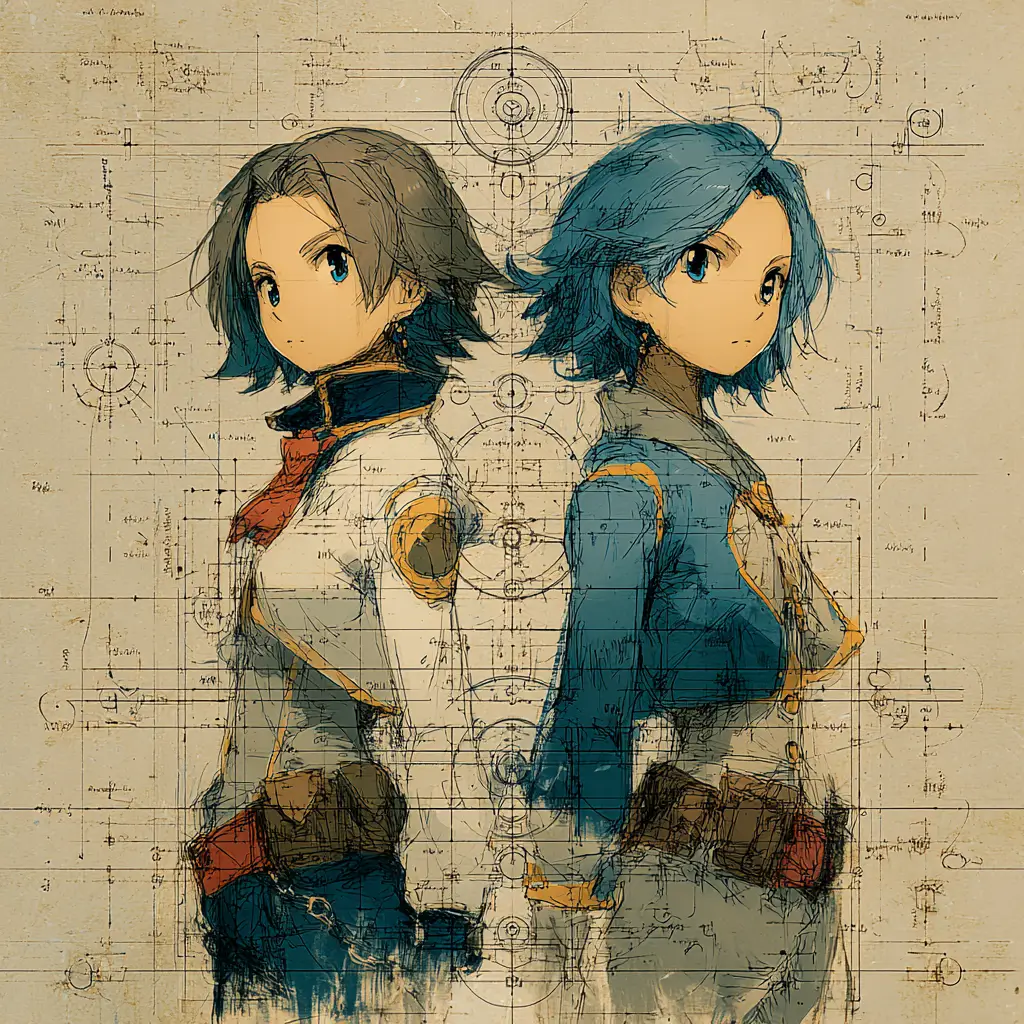
Tedium
Tedium relationship
Strengths
Lightness of contact in short-term, surface-level social exchange
Weaknesses
Wheel-spinning on deepening · Tedium · Loss of joy · Chronic exhaustion from output mismatch
In the Tedium relationship, the partner's presence induces the psychological state of "tedium, avoidant procrastination, maintenance of distance".
The state of the Ignoring block with the generative switch on — receiving avoidantly, yet output is transformed toward the needful direction (1D) — appears as the experience "we seem to be engaging but something is spinning its wheels".It looks like a match at first, but the deeper it goes the less it matches — this is the signature experience of this relationship.
As a mechanism of dual coupling, stimulation of Ignoring · Assimilation (Value 0.25) co-activates its dual counterpart, Role · Assimilation (Value 0.25, reaction formation, rationalization).Tedium/avoidant behavior (Ignoring · Assimilation) and obligatory output/reaction formation (Role · Assimilation) belong to the same defense cluster — the state "moving while feeling I should but don't want to" arises coupled (Prout et al.
2022).As a mechanism of conflict function, activation of Ignoring · Assimilation suppresses Activation · Assimilation (joy, gratitude, activation as benefactor, Value 0.75).
Flow (activation direction) and tedium (ignoring direction) are mutually exclusive experiential axes — joy and tedium do not coexist (Csikszentmihalyi).
Key Points
- 01 The partner's presence induces tedium, avoidant procrastination, and maintenance of distance — seems to fit at first but drifts the deeper it goes
- 02 Dual coupling: tedium/avoidance (Ignoring · Assimilation) and reaction formation/rationalization (Role · Assimilation) couple as the same defense cluster (Prout et al. 2022)
- 03 Suppression of the conflict function (Activation · Assimilation): tedium and joy/providing activation to others are mutually exclusive (Csikszentmihalyi)
- 04 Distinct from Distrust (conflict): this is mismatch on the output side — receiving avoidantly while outputting needfully
- 05 In contexts where joy and gratitude arise, tedium may temporarily ease
⚠️ Cautions for Good Relationships
The Tedium relationship leaves a good impression in short-term, surface-level social contexts — large groups, parties, chance encounters — producing a "somehow fits" sensation; the first contact isn't bad. But as it deepens, the mismatch of "receiving avoidantly while outputting needfully" comes to the fore, and chronification of wheel-spinning is unavoidable in long-term friendship, romance, or collaboration. When the other begins to demand deep emotional engagement, joy and activation are suppressed and exhaustion accelerates.
🔧 Improvements for Bad Relationships
When tedium and wheel-spinning have become chronic, it is effective to create contexts that structurally embed immediate joy, clear outcome, and shared elation — competitions, sports, cooking, improvisational joint work. Placing the pair in settings where receiving itself becomes joy and output naturally leads to fulfillment changes the quality of the relationship. Rather than deep emotional engagement, focusing on "the shared experience of this very moment" lightens the relationship.
🔄 Reversal Conditions
Good → Bad
Shift to long-term close contact · the other begins to demand deep emotional engagement · continuous collaboration in the same environment · accumulated expectation from the initial "seems to fit" impression
Bad → Good
When contexts of immediate joy and elation are structurally embedded · when venues of shared achievement arise naturally · when a context that doesn't demand deep engagement is explicitly established
✅ Conscious Improvement
- Recognize the disappointment of "it seemed to fit at first" as structural; avoid self-blame and blame of the other
- Set up joint activities yielding immediate joy and achievement — sports, cooking, games
- Choose engagement focused on "the shared experience of this moment" rather than emotional depth
- Deliberately secure joy, activation, and creative expression in other relationships and contexts
Early
Early: Contact begins with the impression "we seem to fit somehow"
Middle
Middle: As it deepens, the sense of wheel-spinning accumulates
Long-term
Long-term: Tedium and wheel-spinning fix and joy disappears completely
Long-term Risks
- Fixation of tedium through chronic wheel-spinning
- Accumulated disappointment of "it seemed to fit at first"
- Structural loss of joy and activation
⚠️ Warning Signs
- Meeting this person brings a "somehow tiring" feeling
- The "seems to fit" feeling you had at first has vanished
- Conversation aligns yet something is spinning its wheels
Dialogue Style Characteristics
- Topics bounce at first, but as it deepens the conversation spins its wheels
- Many vague resonances like "sort of get it" or "something like that"
- The more you try to go into specifics, the less it fits
⚠️ Typical Misunderstandings
- Initial conversational bounce is misread as "someone who fits"
- The wheel-spinning is misread as a "way-of-talking issue" and mutual improvement efforts begin, but the underlying structure doesn't change
👥 Role in the Team
Functions lightly in short-term social scenes, but deep collaboration has the structural problem of wheel-spinning.
📋 Project Suitability
Functions only in short-term, surface-level collaboration. Placement in long-term close-collaboration projects tends to produce tedium and exhaustion.
🏢 Hiring / HR Considerations
Avoid placement in long-term close collaboration. Limited placement in short-term projects or social roles is appropriate.
Impact on Mental Health
Chronic tedium lowers long-term vitality and joy. Accumulated disappointment of "it seemed to fit at first" carries a risk of negative impact on self- and other-trust.
Growth Potential
Growth directly from this relationship is low — only secondary growth of self-understanding from disappointment.
Qualitative Exhaustion Level
Medium to high (grows with long-term deepening)
What is a Third Party Type?
Third party types are those who, by intervening as a "third presence" in this two-type relationship, can ease tension or elicit psychological fulfillment. This section shows which third party types are particularly effective for this pairing, based on how they relate to A and B respectively.
Support 1
Deeply fulfills ILE-Q and eases tedium and wheel-spinning.
Support 2
Deeply fulfills IEI-Q and eases tedium and distance.
※ The following description is written from the perspective of the base type "ILE-Q (Seeker)"
In a Tedium pair (ILE-Q + IEI-Q), there is no common third party that structurally benefits both at the same time. Each partner's dual type functions as an individual secure base. ILE-Q's cravings are deeply fulfilled by SEI-D, and in the fulfilled state the wheel-spinning pattern of "receiving avoidantly while outputting needfully" fades naturally. IEI-Q is deeply fulfilled by SLE-D, and in the fulfilled state tedium and procrastination ease and openness to the relationship arises. Note: SEI-D and SLE-D are themselves in a Tedium relationship — this is the same structure as ILE-Q and IEI-Q being in Tedium, showing that two dual pairs share the same relationship pattern.
Function-Block Analysis (Model K)
Maps each type's leading-core (pos 1) program+creative pair to the block and position where it lives in the other type, based on the Model K layout used on the blocks page.
Tedium — Actual Combinations
Type pairs that fall under this relationship (total 16 pairs). Click to reflect in the checker.































Check this relationship in practice
Select two types to see which relationship type applies
Psychological Foundations
Related Psychological Theories
Theories related to the psychological states likely to arise in this relationship. Learn more on each theory's explanation page.
This Pair
Read the compatibility of just the two of you
The general picture ends here. A one-to-one reading with a real person draws on both of your answer data to show which functions resonate and where friction tends to arise.
※ Compatibility data is described using ILE-Q (Seeker) as the base type