
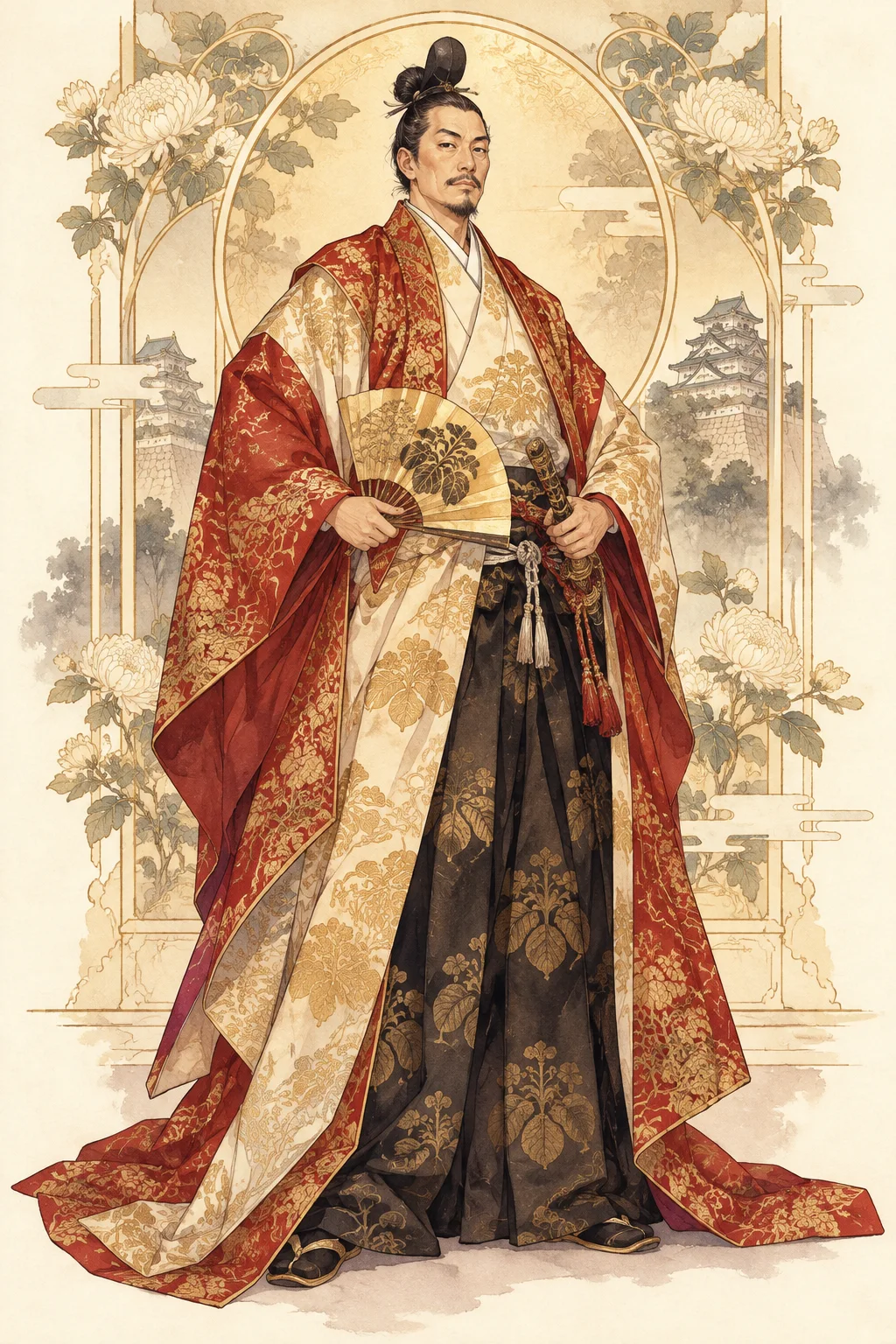
Toyotomi Hideyoshi
SEE-D "政治家" Ruler · Japanese · 16th c.Japanese ruler of the 16th century (1537–1598). Rising from humble origins as Oda Nobunaga's retainer, he unified Japan after the Honnōji Incident. The Taikō Land Survey, Sword Hunt, and Korean invasions demonstrated enormous ambition. A legendary figure whose life embodied the ultimate Japanese meritocratic rise — from peasant to ruler of all Japan.
主導機能-Se-p (Victory & Dominance)
Exercising dominating influence in political and social settings — a direct appeal to those who hold power — is the consistent -Se-p action throughout his life. The pattern of commanding the power structure as the basic rhythm.
創造機能+Fi-c (Influence & Motivation)
Skillfully reading and manipulating the true emotions of vassals, soldiers, and farmers — the core of +Fi-c creative function. The Sword Hunt and the Taikō Land Survey also functioned as designs to elicit the emotional submission of farmers.
脆弱機能1-Ti-p weak (Structure & Truth)
Weak -Ti-p (Structure & Truth): the Korea invasion in his later years was a forced decision based on emotional grandiosity without systematic verification of "reasons why it can work."
脆弱機能2+Ne-c weak (Hypothesis & Imagination)
Weak +Ne-c (Hypothesis & Imagination): "Invasion of Tang (continental conquest)" as a revolutionary vision — but impulsive momentum rather than staged hypothesis-testing.
クアドラ・気質・クラブ
クアドラ: Anti-Alpha Quadra (Meritocracy) — constructing and maintaining the supreme authority position of Tenkabito (ruler of the realm) as the order-oriented guiding principle.
気質: Flexible-Maneuvering temperament: flexibly changing roles from foot-soldier origins to Nobunaga's retainer to ruler — instantly adapting to court nobles, daimyo, and commoners alike.
クラブ: Socialite Club: using tea ceremony, Noh theatre, and castle construction as political network maintenance — the Great Kitano Tea Gathering as an unprecedented large-scale social event.
世界観・変化への態度
"The world moves through power and human relationships" — a pragmatic realism. Acutely aware of structural dangers and operating through relational power.
変化への態度: Executing the unification of Japan as a realistic, staged plan — while leaving the deeper institutional design to successors.
