
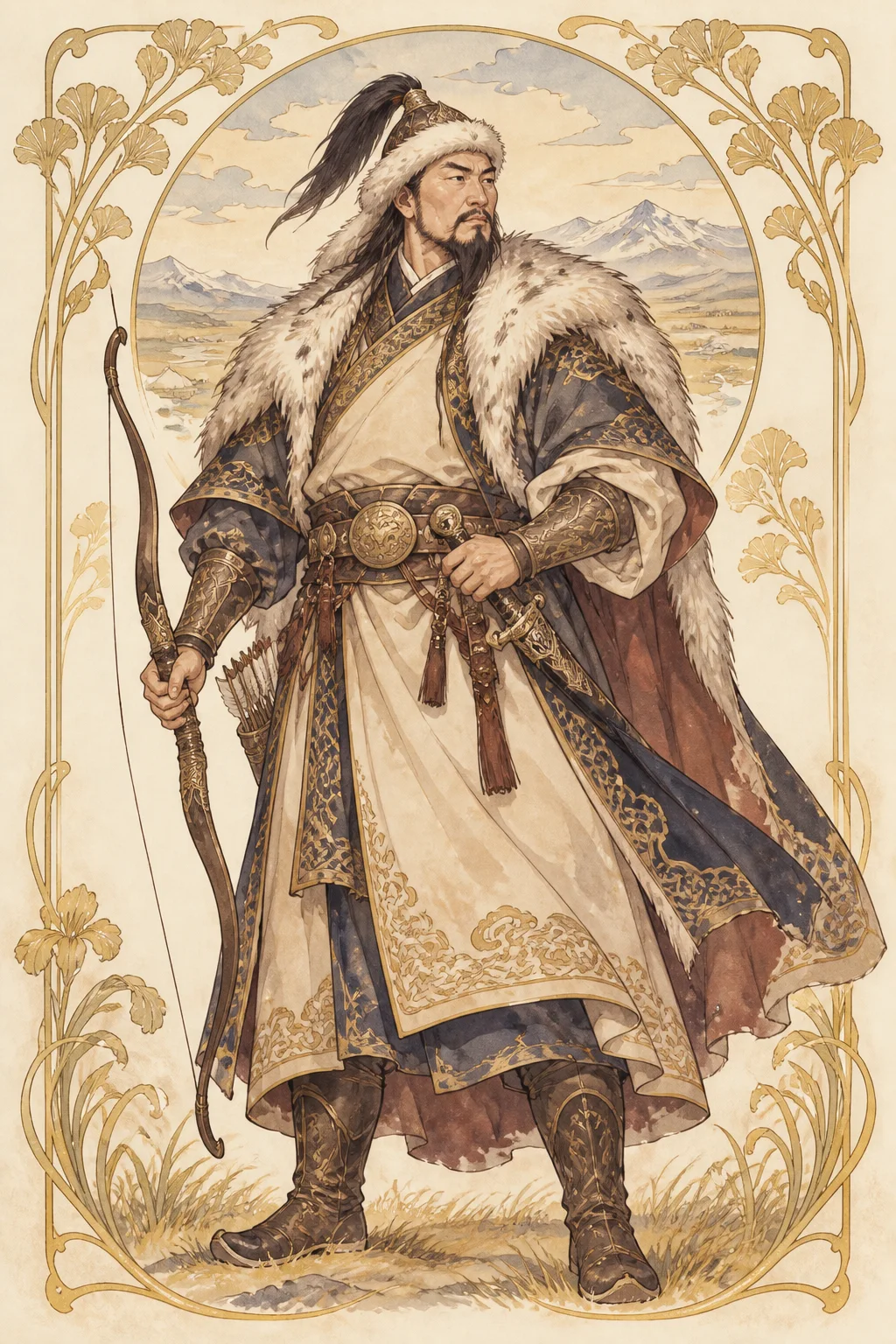
有名人一覧 SLE-D "征服者" Genghis Khan

Genghis Khan

SLE-D "征服者" Conqueror · Mongolian · 12th–13th c.

Founder of the Mongol Empire (1162–1227). He unified the fragmented Mongol tribes and built the largest contiguous land empire in history. His cavalry-based mobility combined with intelligence and psychological warfare revolutionised military strategy. Responsible for massive destruction and population loss across Eurasia — yet also credited with the Pax Mongolica that reconnected the Silk Road and enabled cultural exchange across the continent.

主導機能-Se-p (Victory & Dominance)

"The world is not wide enough for two kings" — conquest itself as the meaning of existence. Treating surrendering cities with generosity; systematically massacring resistant ones — institutionalising "the use of force for dominance."

創造機能+Ti-c (Precision & Thoroughness)

Immediately absorbing and integrating the technology, administration, and personnel of conquered peoples — a meritocracy of "use whatever is most effective for victory." Decimal military system and Yasa legal code as institutional designs.

脆弱機能1-Fi-p weak (Compassion & Consideration)

Weak -Fi-p: "low emotional sensitivity; judging based on logic, survival, and empire-building" (Britannica). Complete indifference to the personal suffering of conquered peoples. "If useful, spare them; if not, kill them" as the pure logic of utility.

脆弱機能2+Ne-c weak (Hypothesis & Imagination)

Weak +Ne-c: failure to solve the succession problem — the empire fragmenting almost immediately after his death. "Conquering" is possible but designing "what to do after conquest" is weak.

クアドラ・気質・クラブ

クアドラ: Beta Quadra (Empire) — "I came as the scourge of God" as the yearning for historical mission. Binary "enemy or ally" worldview, ability-based aristocratic selection, and violent maintenance of imperial order all align.

気質: Flexible-Maneuvering temperament: flexibly using religion, language, and culture as "tools of power." Using encirclement, surprise attack, and feigned retreat according to the situation. "He has no fixed tactics — always changing according to the situation."

クラブ: Pragmatist Club — using faith, culture, and art as "tools of victory" while personally concentrating on "organisation, military system, and supply" as practical management.

世界観・変化への態度

"The strong survive and the weak submit or are eliminated" — a nomadic worldview of structural danger where only military strength matters.

変化への態度: Executing the Mongol Empire as a realistic plan — the greatest territorial expansion in history achieved through staged military genius.