
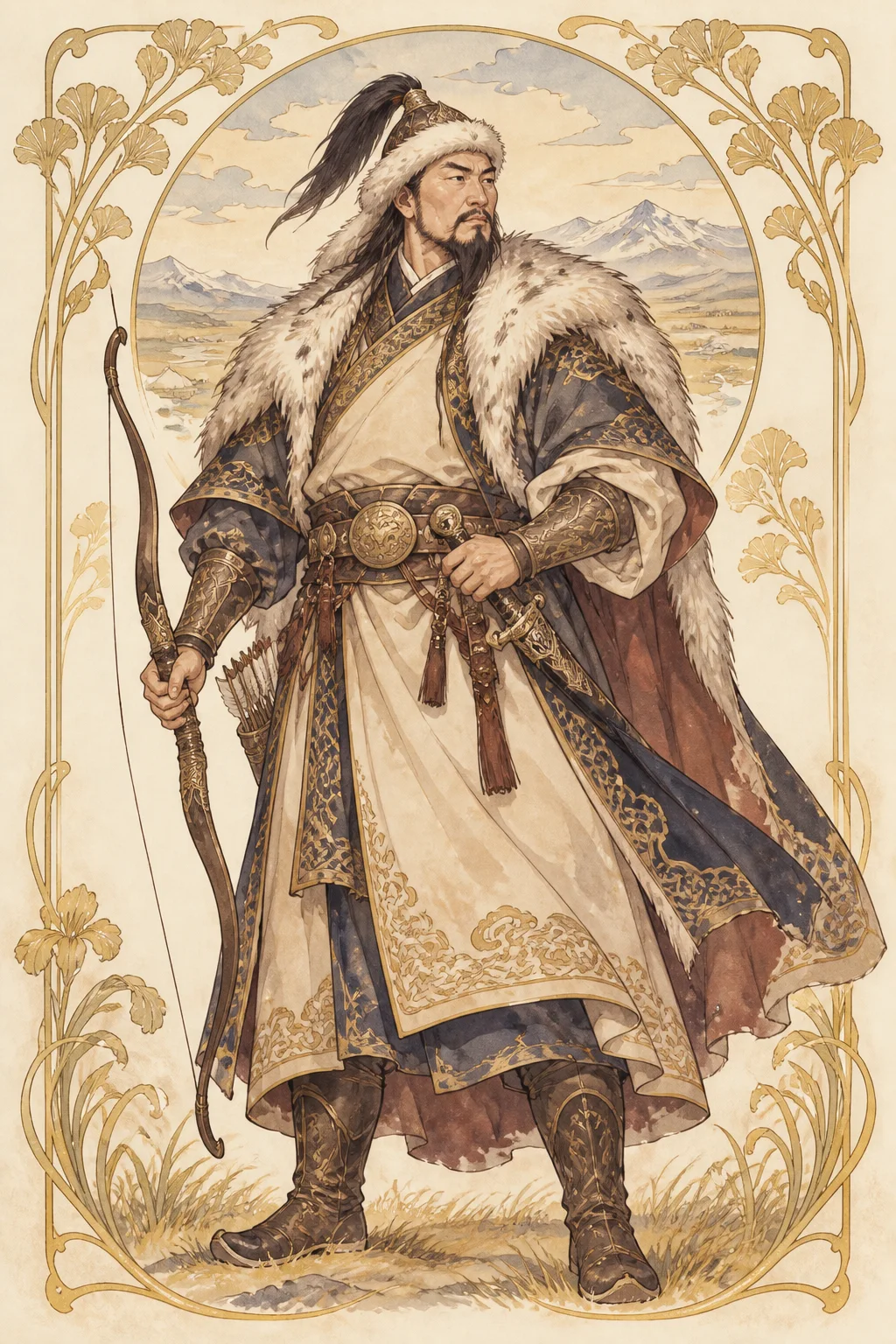
Celebrity Index SLE-D "Conqueror" Genghis Khan

Genghis Khan

SLE-D "Conqueror" Conqueror · Mongolian · 12th–13th c.

Founder of the Mongol Empire (1162–1227). He unified the fragmented Mongol tribes and built the largest contiguous land empire in history. His cavalry-based mobility combined with intelligence and psychological warfare revolutionised military strategy. Responsible for massive destruction and population loss across Eurasia — yet also credited with the Pax Mongolica that reconnected the Silk Road and enabled cultural exchange across the continent.

Leading Function-Se-p (Victory & Dominance)

"The world is not wide enough for two kings" — conquest itself as the meaning of existence. Treating surrendering cities with generosity; systematically massacring resistant ones — institutionalising "the use of force for dominance."

Creative Function+Ti-c (Precision & Thoroughness)

Immediately absorbing and integrating the technology, administration, and personnel of conquered peoples — a meritocracy of "use whatever is most effective for victory." Decimal military system and Yasa legal code as institutional designs.

Vulnerable Function 1-Fi-p weak (Compassion & Consideration)

Weak -Fi-p: "low emotional sensitivity; judging based on logic, survival, and empire-building" (Britannica). Complete indifference to the personal suffering of conquered peoples. "If useful, spare them; if not, kill them" as the pure logic of utility.

Vulnerable Function 2+Ne-c weak (Hypothesis & Imagination)

Weak +Ne-c: failure to solve the succession problem — the empire fragmenting almost immediately after his death. "Conquering" is possible but designing "what to do after conquest" is weak.

Quadra / Temperament / Club

Quadra: Beta Quadra (Empire) — "I came as the scourge of God" as the yearning for historical mission. Binary "enemy or ally" worldview, ability-based aristocratic selection, and violent maintenance of imperial order all align.

Temperament: Flexible-Maneuvering temperament: flexibly using religion, language, and culture as "tools of power." Using encirclement, surprise attack, and feigned retreat according to the situation. "He has no fixed tactics — always changing according to the situation."

Club: Pragmatist Club — using faith, culture, and art as "tools of victory" while personally concentrating on "organisation, military system, and supply" as practical management.

Worldview & Attitude

"The strong survive and the weak submit or are eliminated" — a nomadic worldview of structural danger where only military strength matters.

Attitude toward Change: Executing the Mongol Empire as a realistic plan — the greatest territorial expansion in history achieved through staged military genius.