
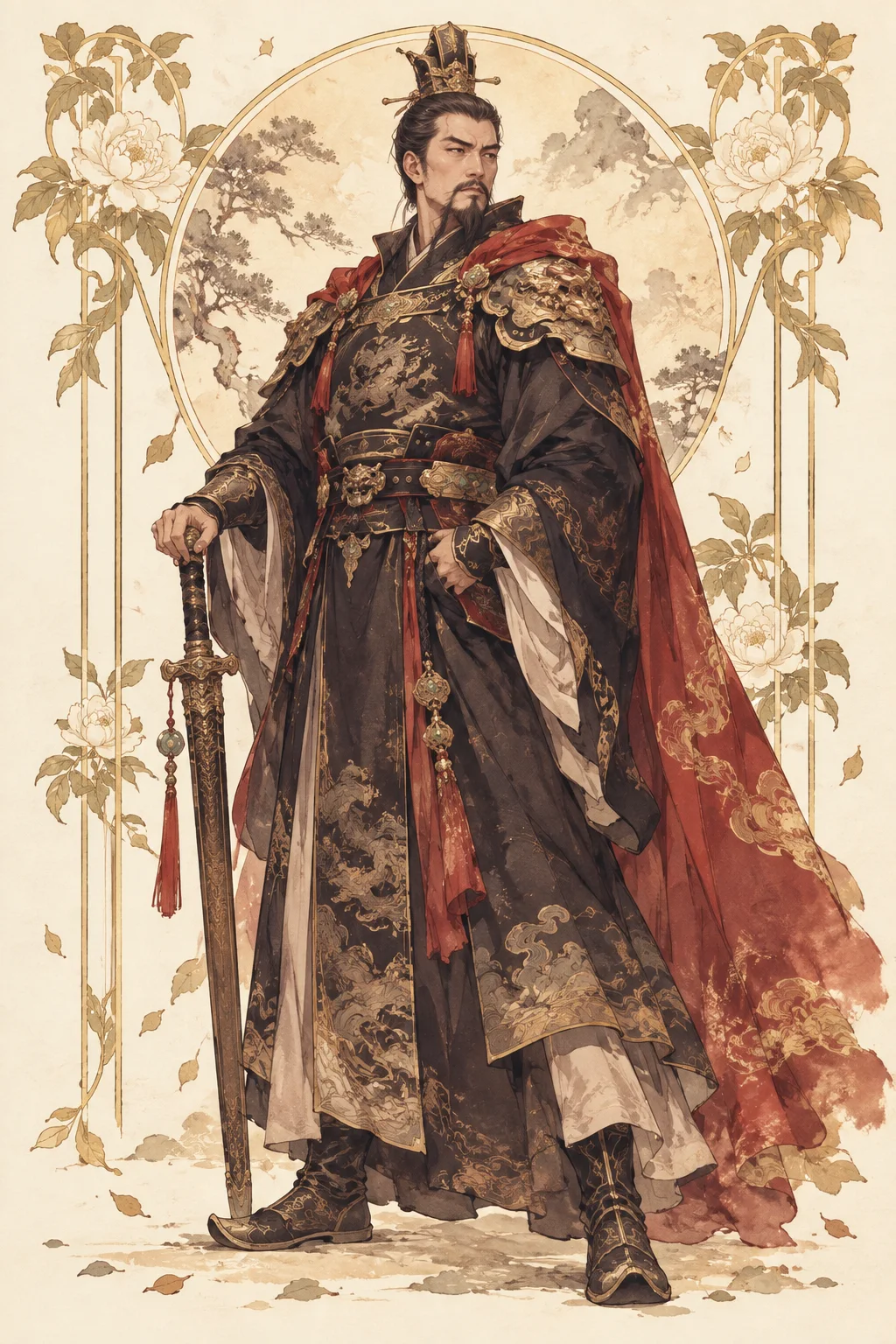
Cao Cao
SLE-D "Conqueror" Warlord / King · Chinese · 2nd–3rd c.Warlord and King of Wei, late Han/Three Kingdoms period China (155–220). He unified northern China during the era of competing warlords. His brilliant reversal of a 10-to-1 disadvantage against Yuan Shao at Guandu is a classic of military history. Equally skilled in poetry and politics, he is celebrated as both military genius and cultural figure — the most complex and fascinating personality of the Three Kingdoms era.
Leading Function-Se-p (Victory & Dominance)
"Hold the emperor in order to command the feudal lords" — maintaining the Han emperor as a puppet while seizing real power. Immediately recovering after the great defeat at Red Cliffs; reversing a 10-to-1 troop disadvantage against Yuan Shao at Guandu through unconventional tactics.
Creative Function+Ti-c (Precision & Thoroughness)
"Promote talent only by ability (weicai shiju)" — immediately absorbing capable personnel regardless of origin, morality, or past opposition. The logical personnel strategy pushed to its extreme. Precise design of the military system, tuntian (military farming), and bureaucracy.
Vulnerable Function 1-Fi-p weak (Compassion & Consideration)
Weak -Fi-p: the moment he judged loyal minister Xun Yu as "an obstacle to the imperial title," he abandoned him and drove him to suicide. "After executing Chen Gong, he treated Chen Gong's mother with generosity" — action based on "benefit calculation" rather than deep personal empathy.
Vulnerable Function 2+Ne-c weak (Hypothesis & Imagination)
Weak +Ne-c: the failure at Red Cliffs — the optimistic long-term vision that "controlling Jing will deliver the realm naturally" collapsed. Late-life paranoia and succession problems — weak design of long-term dynastic vision.
Quadra / Temperament / Club
Quadra: Beta Quadra (Empire) — reading "the flow of power" and using the Han authority structure as an instrument. Binary "enemy or ally" worldview, ability-based aristocratic selection, and maintaining imperial order through force all align.
Temperament: Flexible-Maneuvering temperament: repeatedly alternating alliances and conflicts with Yuan Shu, Yuan Shao, and Liu Biao according to the situation. "Weicai shiju" as the extreme example of ideological flexibility.
Club: Pragmatist Club — personally loving poetry and music while governing the state consistently through practical management of military force, agriculture, and personnel.
Worldview & Attitude
"Read the flow of power and use existing authority as an instrument" — a worldview of structural danger where only pragmatic power management survives.
Attitude toward Change: Executing the Wei kingdom as a realistic plan — staged power seizure. The Wei dynasty founded by his son, not himself.
