
LIE-Q – Commander –
Build, prepare, hold the line — the command center of order
You are someone who can't overlook waste or unfairness, and who sees through to the end whatever you set out to do.
You judge things not by appearances or the mood of the room, but by coherence and real effectiveness.
You look for someone to support each other with steadfast good faith and unshakable calm.
- Quadra
- Omega Ω
- Bouquet
- Linear-Assertive temperament
- Club
- Research
Portrait — the Commander

Whenever the Commander senses room to make something "run more efficiently," they cannot leave it alone. Rules that have become hollow, waste, cheating and unfairness — anything that doesn't add up is what they dislike most, and whether at home or among friends, they cannot help reshaping their surroundings into a more rational form. When they find a rule that has lost its meaning, they set about remaking it without hesitation. And it never ends with a single command. Once they have judged something to "have meaning," they keep working at it, long and doggedly — carrying within them a quiet but unbroken drive that keeps on burning.
What they base their judgments on is not appearances or the mood of the room, but coherence and real effectiveness. They measure things not by sentiment but by "whether it actually works," and if something doesn't hold up they will say so plainly, no matter who they are speaking to. That gaze turns on themselves as well: they try to trim every wasteful habit and detail from their own way of living. And yet this rationality is not the same as coldness. Toward those they trust they are warm-hearted, they value their obligations, and when it truly matters they are the first to move. They also have a side that lightens the room with wry, ironic humor.
What they long for is not sweet words but steadfast good faith and unshakable calm. It is precisely beside a partner who looks in the same direction and can support them in genuinely useful ways that the Commander can let down their guard and be at their most dependable.
Not appearances, but whether it holds together.
Does this sound like you?
- Once you decide "I'll do this," you get moving regardless of your mood.
- When talk gets vague, you can't help wanting to sort it out: "so what does it come down to?"
- When trouble strikes, you regain your composure before anyone around you.
- Being watched or finely managed makes you feel strong resistance.
- Rather than talking big, you promise modestly and show it with results.
- Rather than replacing cheap things, you choose to use good things for a long time.
- You quietly lighten the room with wry, ironic humor.
- When someone hurls tears or emotion at you, you don't know how to respond.
- You turn a sterner eye on your own failures than anyone does.
- So focused on results, you put the things around you off until later.

How you move

The Commander's conduct is defined by focus on the mission and a responsible drive to push things forward.
The first thing you notice in how the Commander behaves is their concentration on what they have decided to do. Once they have set "I will do this," they put both the noise around them and their own mood aside and head straight for the goal. They don't act because they feel like it; they act because they decided to — and that is where this person's core lies. When people gather, they naturally end up taking the helm. If the plans for a trip are vague, they decide the lodging and transport on the spot and set a clear route. If a discussion sprawls, they pull it back to the point — "so what are we actually choosing?" To someone who is hesitating, they don't beat around the bush but state plainly, "here's what I would do" — and even if it lands a little harshly, underneath it is the wish for things to go well. And they are never more dependable than when trouble strikes. While those around them grow flustered, they take a step back, calmly work out "what should be done first," and act on it without fuss. This is not limited to work. Whether it's an unexpected mishap on a trip or a sudden problem at home, they come into their own at the decisive moment — that is the Commander's underlying strength.
Not mood, but focus on what you've decided.
- Once "I'll do this" is set, heads straight for it
- Calmer and stronger the moment trouble strikes
- Feels strong resistance to being watched or finely managed
Given a place where you're entrusted with discretion, your capacity to execute becomes results surer than anyone's.
How you speak and listen

The Commander's way of talking is persuasive, grounded in reason and responsibility.
Their manner of speaking is direct, with no circling around. They dislike vague phrasing or talk that leans on atmosphere alone, and they want to pin down the point — "what does it come down to?", "so, what do we do?" Faced with a rambling, unfocused monologue, they may find themselves stepping in to direct the traffic. Another trait is how instantly they catch the contradictions hidden in what someone says. They aren't poking at it out of malice — they simply want things to hold together — and that single remark often tightens up a loose argument. Their humor carries a wry edge and intellectual sharpness. They slip a second meaning into a casual remark and catch you off guard into laughter. Even when they disagree they don't shut you down outright; they unravel "why that won't hold up," half-enjoying the puzzle as they go — they are someone with that kind of intellectual playfulness.
Not vagueness, but "so what are we actually doing?"
What lies at the core — drive and tender spots
Not sentiment, but whether it actually works.
The one powerful engine at the heart

At the Commander's center lie the power to optimize reality and the power to read coming crises and forks in the road.
At the Commander's center is a single powerful driving force: the ability to shape things into a "genuinely useful form" and carry them all the way to a result. When they see waste or something that doesn't add up, they cannot help but step in and set it right. They are not satisfied by working things out only in their head; it is when they have concretely improved reality that this person feels deeply fulfilled. The Commander also has an intuition that spots early on "where this will break down" and "where the road will fork." That is why they don't just charge ahead blindly, but can carry what they've decided through to the end while keeping their eye on what holds together. This is not just about work. Whether organizing a hobby or devising small daily improvements, the same driving force kicks in the moment they decide "I'll do it." A setting with a clear aim and a tangible sense of progress — that is where the Commander shines brightest.
What they can do, yet do not prize

Surprisingly, the Commander is also skilled at spinning out one new idea after another and at rebuilding an entire system from the ground up. Mass-producing unprecedented ideas, boldly reworking old frameworks — their latent gift for conception is, in truth, considerable. But they themselves place little weight on it. Rather than fanning out possibilities or reworking a theory from scratch, their attention goes to results that work right now and to the improvement in front of them. Even though they can, they naturally let it go, feeling "that's not the area where I should spend my time" — and this is one of the keys to understanding the Commander.
What the heart secretly craves
What they secretly seek is unwavering loyalty and the power to govern a situation without hesitation.
Blessed with reason and will, the Commander finds one thing hard to generate on their own and yet longs for more deeply than anyone — unwavering loyalty and moral principle, and a sure power to govern a situation without hesitation. They can produce sharp results, but when it comes to the core question of "whom to trust and what to protect," or to building order in their private life, they suddenly grow unsure. That is exactly why they are deeply drawn to, and fulfilled by, someone who supports them with steadfast good faith and quietly shores up their footing. This shows up as "the need to belong, secure attachment, and the fulfillment of a deep longing." Beside a partner who supports their rationality from behind and guarantees their steadiness as a person — the dual Guardian (ESI-D), who is the very best at exactly this — the Commander can give their all with peace of mind. This is the one complement who, with unwavering loyalty, loosens a heart that tends to run cold and taut.
The most fragile place
The Commander is most fragile at keeping themselves comfortable and at softening the mood of a room.
What they are most fragile at is comfort, and keeping the emotional atmosphere of a room soft. But in the Commander's case this runs deeper than simply "being a little poor at consideration" — they tend to regard the very feeling of wanting "to take it easy" or "to be comfortable" as a kind of weakness, and to treat it as if it weren't there at all. That severity is aimed not only at themselves but at those around them. Toward laziness, or people who put ease first, they can become unsparing. Here their sharp foresight can come out as a coldness that "cuts off anyone who slacks," and it can create a taut atmosphere of "of course you'll get it done." And gently attuning themselves to another person's feelings is not their strong suit either. So a blunt assessment can wound someone far more deeply than they intended — with no ill will, even when they think they are simply stating the facts. This is not a flaw to be blamed but a place that eases, little by little, when they pause now and then to look back and keep beside them someone who supplies the softness they lack.

- Core: the power to optimize reality, and the power to read coming crises
- What drives you: contributing to the goal, and the tangible sense of being entrusted with responsibility
- Where you're fragile: keeping yourself comfortable, softening the room
Strengths, and where you stumble
Someone who gives you unwavering loyalty and the power to govern a situation without hesitation.
Strengths — foresee, decide, and see it through

The Commander's strength is a calm capacity to execute that you can rely on when it counts. They value time and their commitments, and even as a deadline or an obligation bears down they don't panic — they decide quickly and move things forward. Surveying the whole, they can focus without wavering on "what needs to be done right now." They have a sharp eye for what is essential and what is not, and can offer a coherent choice without being swept away by sentiment. Rather than rushing off on a whim, they do their homework and arrange the logistics first to reduce stumbles — that thoroughness, and the trust that they finish what they say they will, form this person's foundation. And above all, they keep their composure amid pressure and chaos, and can stay standing to the end even when everyone around them is thrown off balance. Behind their quiet bearing, they carry an inner fighting spirit and the strength to see through whatever they have taken on.
Where they tend to stumble

Where they tend to stumble is the flip side of that strong sense of mission.
Where they tend to stumble is the flip side of that strong sense of responsibility. They can take on too much, feeling "I'm the one who has to do it," or pack the schedule one-sidedly and take others' circumstances for granted. Fixated on their own standards of "correctness" and "efficiency," they may grow thin on consideration for opposing views, or focus so hard on what's in front of them that their field of vision narrows. They may also let sarcasm or strong words out just as they are, without reading the other person's feelings or the mood of the room. Precisely because they mean no harm, they end up being taken for "a scary person" — and that is the frustrating part. Their attention to small chores and to patient, steady tasks also tends to run out. But these are less flaws than the reverse side of caring so deeply about coherence and tangible results. They don't have to shoulder all of the soothing of a room's mood, or all of the fine-grained caretaking, alone. Entrust those parts to people they can rely on, and place themselves where their judgment and drive can come alive — choosing "work that feels meaningful" and a partner who supports them with steadfast good faith is the key to the Commander exercising their powers freely.
Someone who supports you with steadfast good faith moves you deeply, and beside them you can give your all with peace of mind. That's where your room to grow lies.
- When you're blaming yourself too much, first count what you did see through
- When someone hurls emotion at you, don't freeze — say "I need a little time"
- Before a sharp remark, take a breath to read the other person
Where you thrive
Given the discretion of "the success or failure of this whole job is yours," your strength wells up.
Environments Where They Thrive
The Commander performs at their best in an environment where roles and aims are clearly defined and a certain amount of discretion is granted. Rather than fine-grained task management, it is an appointment that says "the success or failure of this whole project is yours to own" that gets them moving on their own initiative. They adapt smoothly to a workplace where direction and priorities are set down in writing and decisions can be made on the basis of data and practical benefit. What motivates them is contributing to the goal and the tangible sense of being entrusted with responsibility. They dislike poorly grounded strategy and decisions swayed by emotion, and they idealize a system in which the outlook for budget, personnel, and time is designed in detail and progress can be shared. They keep a constant eye on shifts in the external environment and prize access to new systems and technologies — investment in learning that ties directly to the work pays back a high return over the long run.
As a field commander
Concretely, leadership roles that draw on their power to build and to decide suit them well. A field commander who marshals resources and drives an organization into execution mode — corporate management or an executive-officer post, strategy consulting, heading risk management or IR, public-private partnerships involving institutional design, on-the-ground command of infrastructure, logistics, or international operations, managing overseas subsidiaries, and the like: it is in domains that demand practical judgment and responsibility that their power stands out. The conditions for them to flourish are a clearly defined mission and outcome, decision-making authority and freedom of leadership within their domain, and data-based rationality supported by a well-ordered operation. Driving a large-scale business or social project through to a sure result — that, for the Commander, is the fullest expression of themselves.
Dialogue — ask Ekaterina

One free dialogue · Le Salon members can explore several perspectives. Not a real person: a representative perspective based on the public profile.
Relationships and love
Can you support each other with steadfast good faith and unshakable calm?
How You Love — Love as Responsibility
The Commander loves by taking responsibility. With Practical Logic (Te) in the lead, you spare no effort for the person you love and try to clear real problems together. It's a “manager's” kind of affection — arranging the plan and offering exactly the support needed exactly when it's needed. When a partner is carrying a problem, for instance, you'll lay out a route — “okay, let's move like this” — before you draw close to the feeling. With Temporal Intuition (Ni) added in, the choices aren't stopgaps but look toward the future. It may look cool and practical, but it's the sign of a resolve to carry the other person's life for the long haul — for the Commander, bearing responsibility is itself love.
Compatibility — recommended partners
 Guardian
 ESI-DA silent shield that protects people, with rightness at its backDualityThe partner who gives you an unshakable foundation of loyalty and order, with whom you can be most fully yourself Enforcer
 LSI-DThe steel operator who carries out the mission through discipline and responsibilityIllusionaryA similar sense of order, and a reassurance close to that of your dual. A little more indirect, but warm Empath
 EII-DSensing what lies beneath feeling, and becoming someone's quiet supportSemi-dualityA place where, wrapped in gentle acceptance, the tension in your shoulders quietly melts away Politician
 SEE-DA born leader who reads hearts and rallies the currentActivationTheir company brings momentum and vitality. Best enjoyed at a slight distance Conqueror
 SLE-DA dependable field general who only burns brighter the harder things getBenefactorA relationship where you naturally find strength "for this person's sake" — the nurturing side Promoter
 IEE-DMoving the world through fascination — an evangelist of ideasBeneficiaryA relationship where your possibilities are opened up and you are drawn out — the receiving side Critic
 ILI-QThe insightful Critic who sees through contradictions in the depths of silenceMirrorSame direction, different method. An intellectual partner with whom analysis and foresight sharpen each other Dreamer
 IEI-QA teller of fantasies who colors the world with dreams and passionSupervisor (mirror)A learning in which you are gently guided toward sensibility and the subtleties of story Artist
 SLI-QGiving form to the “just-rightness” of nature and daily lifeSupervisee (mirror)The side that naturally teaches and guides on practical matters and logisticsSee the other relationships (22 more types)
The upper bands are easier to be with; the lower bands tend to wear you down. Tap a relation name to read about the pair.
 Mentor
 EIE-QA passionate standard-bearer who speaks of ideals and binds hearts togetherBusinessA partner you can easily work alongside, adapting to the situation together. Administrator
 LSE-QThe hands-on command post that keeps the field running and moves people and workKindredA partner whose conversation flows easily, someone who likes to express things in the same direction as you. It can wear you out once it turns competitive.
SEE-QA natural orchestrator who reads the room and guides people toward reconciliationRelaxationA partner who puts you at ease, though you tend to end up waiting on them with quiet expectation. Strategist
 ILI-DThe contemplative Strategist who quietly reads ahead and lays the groundworkCodependencyA partner who wears you down little by little, caught in a cycle of bottling things up and overcompensating. Pioneer
 LIE-DCarving the way through results — the realist's frontierAdaptiveA partner you settle into by simply playing your roles, an easy, unremarkable relationship. Judge
Judge ESI-QThe quiet arbiter who discerns right from wrongDetachedA partner who's hard to feel drawn to, leading to a rather flat, low-key relationship. Harmonizer
 ESE-QTheir smile and their voice soften the space around themIdealA partner who naturally embodies what you aspire to be, easy to admire. Getting too close tires you out. The Architect
 LII-DThe architecture of logic, quietly built up piece by pieceCompassA partner who gives you a sense of being accepted, along with a hint of which direction to move in. Visionary
 ILE-DThe architect of ideas who reinvents the world through paradox and theoryTranscendenceA partner who makes you want to surpass yourself when you're together, pushing each other to grow. Performer
 SEI-QA gentle conveyor who gives form to sensation and feelingCorrectionA partner whose feedback becomes a chance to take stock of yourself. Advisor
 IEE-QOne who quietly draws near and listens to the heartTense BeneficiaryA partner who leaves you worrying and overthinking, prone to closing your heart off. Craftsman
 SLI-DThe artisan who sets the world in order in the palm of his handPlayerA partner around whom you constantly feel watched, prone to leaving you burned out. Executive
 LSE-DSet it in order, get it moving, see it throughDutyA partner who leaves you understanding what to do yet unable to act on it, while your need to be recognized grows stronger. Philosopher
 EII-QOne who, in the stillness, keeps questioning the meaning of the worldDistrustA partner you can't quite bring yourself to trust, which makes it hard to show your own strength. Reformer
 SLE-QAn executor who breaks through by force and rewrites conventionTense BenefactorA partner around whom you tend to try too hard, unable to shake off the tension. Prophet
 IEI-DAn eye that gazes upon a destiny no one has yet noticedSupervisorA relationship where you tend to unsettle the other person without ever realizing it. Hero
Hero EIE-DIt is this conviction that changes the worldFormalA relationship where formality and appearances pile up, and it's hard to ever fully relax. Inspector
 LSI-QThe logician who strips away pretense and sees through to the truthTediumA partner who leaves you feeling sluggish, prone to putting things off and keeping your distance. Seeker
 ILE-QAn intellectual adventurer who unravels the worldQuasi-IdentityA partner who looks similar to you yet never quite clicks, leaving you spinning your wheels and worn out. Peacemaker
 SEI-DA bridge between sensation and compassionConflictThe partner most likely to strike your weakest point, the one relationship that drains you the most. Enthusiast
 ESE-DThe cheerful flame that sets the world ablaze with feelingRoleA relationship where "you should" comes first, making it hard to just be yourself. Analyst
 LII-QFrom the quiet of the desk, reassembling the worldDistanceA partner who makes you want to keep your distance and close your heart off.Compatibility is not decided by type alone; maturity, subtype and circumstances all change it.
With someone you are connected to, you can read a personal Relationship Reading drawn from both of your answers ($8.99 per pair, unlimited for Le Salon members).
See compatibility with your connections →Explore Le Salon →
What You Truly Long For
What you truly long for, deep down, is the power to quietly measure the emotional distance between people. The cooler and more commanding the leader of the pack, the more strongly they actually long for a relationship that receives "just you, stripped of role and results"…
In the Love Edition: What your heart longs for / What excites you / Where you clash and your landmines / Classic love scenarios / Chemistry by partner, all 32 types named / At home and as a parent / A practical playbook / Secrets to lasting love / A manual for your partner
Work and ways of working
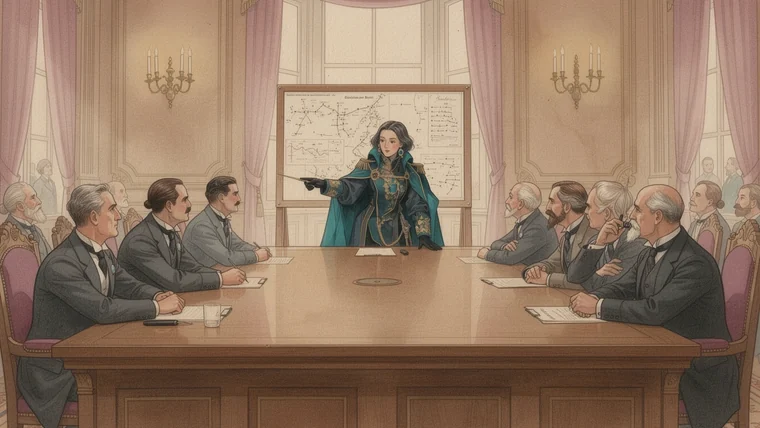
Your Working Style — Practical Efficiency
You naturally excel in two main ways: running systems efficiently and delivering results, and reading ahead to grasp the essence and flow of things.
Your interest gravitates toward talking through ideas and theories. Day to day, you are a person of action who drives toward the goal without pausing, and you're fired up by doing something new and different from everyone else.
With people, you take a matter-of-fact approach, connecting through work. Your thinking habit is to clash opposing ideas and draw the answer out of the contradiction.
The power to shape things into a genuinely useful form, and the power to spot coming crises.
- Before a decision, add a word of empathetic explanation
- Don't be too certain of a single method — compare it with other viewpoints
- Build rest time into your plans as something just as important as results

Careers That Fit
Your power to estimate profitability and read dangerous forks ahead comes into direct play.
Your power to build coherent institutions and see them through responsibly comes into play.
You can show your power to spot crises early and choose the coherent move.
Your Strengths, and Work Better Avoided
Your core is the combination of "economic calculation" and "crisis aversion." Coolly sizing up which move pays off best while catching the branches and dangers ahead early enough to correct course before things go bad — that's your…
In the Business Edition: Natural strengths / work better avoided, Stress tolerance and socialization group, Work style, Motivation and recharging, How to work with and manage this person, Compatibility and team-building, Industry fit ◎○△ across 23 industries with rationale, Suitable roles
Blueprint of the mind
Your mind runs on eight blocks. Each block carries two functions — how you take in the world, and how you express yourself — and together they set both the range you're skilled in and how much you actually value using it. We've kept the technical notation small and explained everything in plain language.
Shape it into something genuinely useful, see the forks ahead, and move forward.
Leading Your centerI Make it Work
+Te-pUtility & EconomyPractical logic-Ni-cWarning & DivergenceTemporal intuitionAt your center is the power to shape things into a genuinely useful form. You lay out waste-free plans, put your hands to work, and carry things through to a result.
Onto this overlaps the power to see through to coming crises and forks in the road. You read "what will happen next" and choose the coherent move.
A hand that gives things form, and an eye that reads ahead. These two always work together, and they have become your conviction: "I can give things proper form and see them through to the end."
Mirror — Picked up by watching
At the entry point sits Crisis & Fantasy — quietly seeing where things…
In the Full Portrait: all 8 blocks of the blueprint / 6 ways back / situational guide / the reasoning behind the exemplars
Going deeper — ways back and situational guide
On the flip side of that same core, these are the situations where you tend to stumble. After that, six ways to get back on your feet.
You can take on too much, feeling "I'm the one who has to do it," and take others' circumstances for granted.
Fixated on your standards of "correctness" and "efficiency," you may grow thin on consideration for opposing views.
Attuning yourself to others' feelings isn't your strong suit, and a blunt assessment can wound someone.
Someone who gives you unwavering loyalty sustains your core.
Way to Recover 1 — Rationality Is Your Greatest Weapon
Your strength is a realistic, goal-oriented approach. Keeping the result clearly in mind, you are a practitioner who can move things into execution step by step and surely, grounded in numerical evidence and rules of thumb. Being able to move things with a sense of speed is a rare power. But…
In the Full Portrait: 6 ways back / situational guide (home, work, friends, under stress, shopping, days off)
People thought to share this type
They resonate on a single note: those who govern — who built order and assembled institutions and wealth.
 Business · WealthJohn D. RockefellerSingle-handedly systematized the modern oil industry and built a vast corporate order and a philanthropic foundation
 Finance · GovernanceCosimo de' MediciMade his fortune in banking and laid the foundation that supported Florence's real power and cultural flourishing
 Institutional designAlexander HamiltonDesigned the fiscal and financial system of the United States and laid the cornerstone of the nation's economic order
 Statecraft · ChancellorGuan ZhongAs chancellor of Qi, put law and the economy in order and built the institutions of a rich state and a strong army
 Reform · LegalismShang YangPushed through legal reforms in Qin, unified law and the system of weights and measures, and remade the foundations of the state
 GovernanceAugustusEnded civil war and built Rome's apparatus of government and the order of a long peace (the Pax Romana)
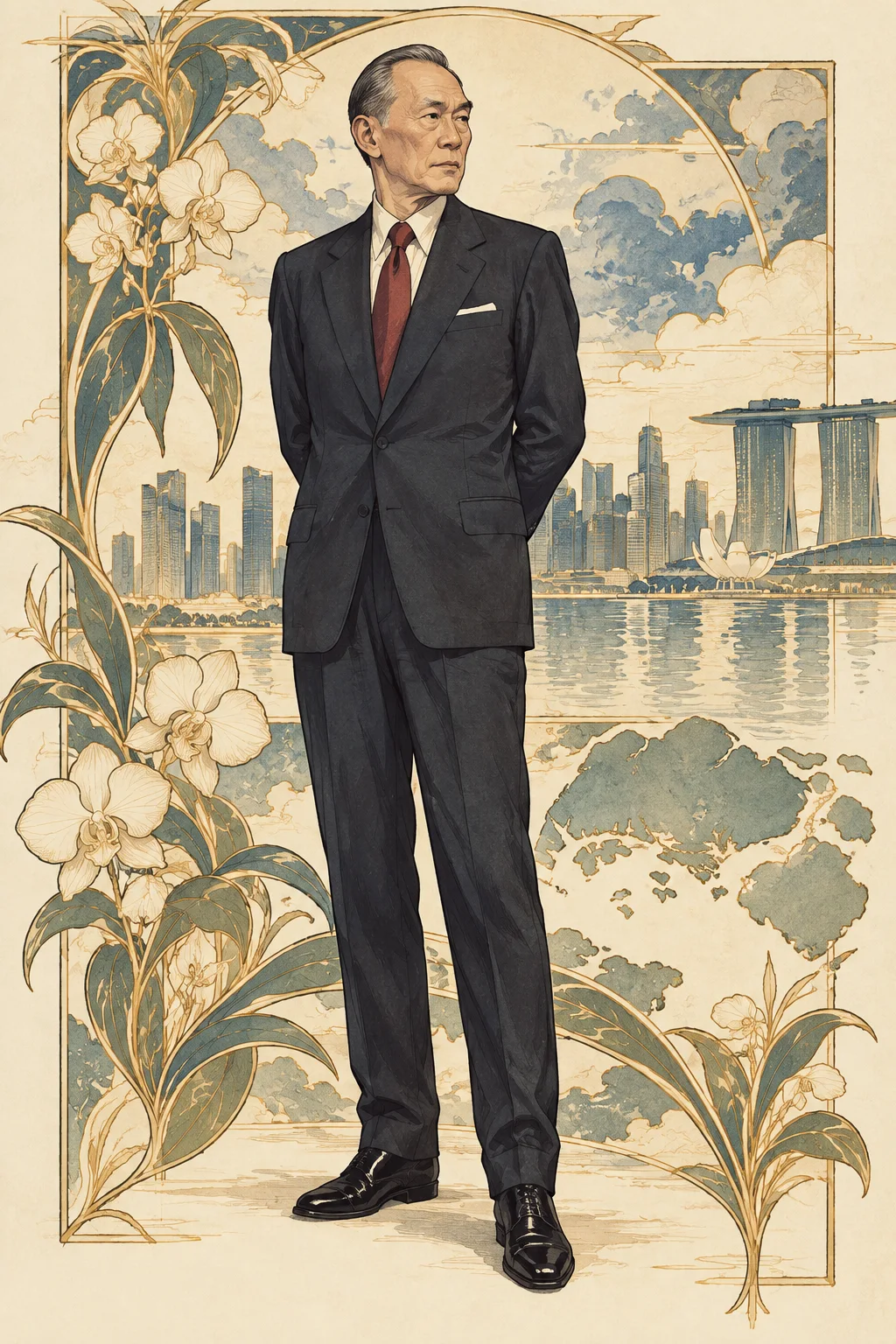 Nation-buildingLee Kuan YewRuled Singapore and, in a single generation, built a clean system and a prosperous national order
 PoliticsMargaret ThatcherThe "Iron Lady" who rebuilt the economy and institutions through conviction and decision
 DiplomacyKlemens von MetternichBuilt the Vienna system and long preserved Europe's balance and order
Type attributions are informed speculation based on public information, not confirmed fact.
Map of group memberships
The Commander is one of 32 types, and also belongs to several groups of kindred natures. Here are the four main ones first — open a card to step into its own gallery room.
 Quadra (Values)Omega Quadra (Ω)Elitism
 Bouquet (Temperament)Linear-Assertive TemperamentMoves the world toward how it ought to be
 Club (Interest)Research ClubSeekers of knowledge
 Motivation (Stimulus Group)Uniqueness Stimulus GroupSeeking novelty and pioneering spirit
See all groupings (25 more)
 Communication StyleBusiness-likeRelating through shared activity
 Behavioral StyleMethodologistLands results through efficiency
 Argumentation StyleArchitectBuilds through argument and consistency
 Perception GroupReductionismBreaking down into prototypes and reconstructing through concepts
 Cognitive StyleDialectical-AlgorithmicBranching and integrating opposites
 Romance (View of Love)DreamerLaying a dreamed-of love over destiny
 Stress ToleranceWeakBreaks when the foundation is lost
 Socialization GroupSubverterRearranging the mechanism
 Inflation RingEnergy GeneratorIgniting information and stirring the field
 Project GroupIdeational processIntegrating observation into theory
 Implementation GroupTechnical InventionInventing, and implementing technology widely
 Square (Rest)PatronResponsible ladies and gentlemen
 Business Square (Collaboration)KnightAn order of knights for a great cause
 Octad (Cross-Value Group)JudgeVerifying and polishing results
 Reactor (Excitation Group)EruptionErupting excitation outward
 MobilizationEmulsionTemporarily emulsifies foreign matter
 Conditioning (Adjustment Group)ElevationElevating and sublimating emotion
 LabyrinthEleusisFestive passion and cool critique
 Block Group (Extinguishing Group)CouncilDebates policy and establishes order
 Social Progress Ring (SPR)Avant-GardeThe undercurrent ring of reform
 Supervision Ring (SVR)OracleA voice born of contradiction
 Social Order Ring (SOR)FirebrandA revolutionary who reforges order
 Succession Ring (SR)CanonThe deep succession of command
 Benefit Ring (BR)ClarionAn authoritative voice resounding in public
 Master Ring (MR)VeritasThe establishment of orthodox truth
Open the full, love and business editions

- The blueprint of your mind (8 blocks)
- Six ways to recover from stumbles
- A situation-by-situation guide (6 situations)
- The reasoning behind the celebrity picks

- What your heart longs for / What excites you / Your landmines
- Classic love scenarios
- Chemistry by partner (all 32 types)
- At home and as a parent / A practical playbook

- Natural strengths / Work better avoided
- Work style / Management
- Industry fit ◎○△ (23 industries)
- Suitable roles
Save $24.98 compared with buying the three separately