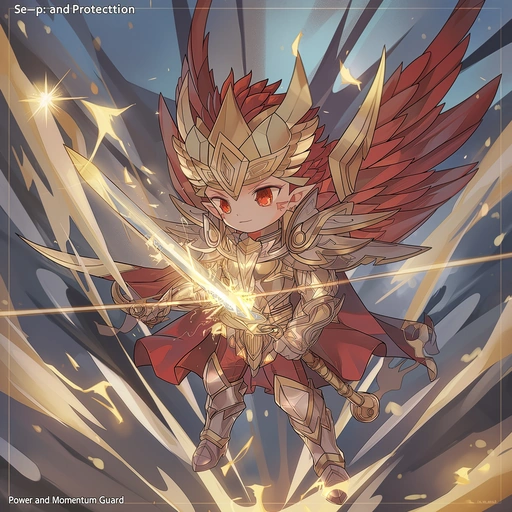
【Heroic Leadership】
- Guides teams
- Leads by example
- Confronts difficulties
- "Leave it to me"
- Achieving great feats
【Protector】
- Protects the weak
- Treasures companions
- Sense of responsibility
- Chivalric spirit
- "I'll show you I can protect"
【Powerful Execution】
- Immediate action
- Breaking through difficulty
- Sees things through
- Removes obstacles
- Building achievements
【Courage】
- Fearless
- Takes risks
- Challenges
- "I'll get it done"
- Indomitable spirit
【Physical Strength】
- Stamina
- Muscle power
- Endurance
- High energy
- Toughness
【Dominant】
- Leader-type
- Commands
- "I decide"
- Strong presence
- Can be intimidating
【Competitive】
- Always competing
- "Who is stronger?"
- Ranking-conscious
- Hates losing
- "I'm the best"
【Direct】
- Dislikes roundabout ways
- Straightforward
- "Do it or don't"
- Concise
- Dislikes theory
【Active】
- Can't sit still
- Always moving
- "Never rests"
- Energetic
- Uncomfortable with quiet
【Mild】
- Lack of planning
- Going too far
- Insufficient consideration for others
- "Solving with force"
- Intimidating
【Moderate】
- Aggression
- Desire for dominance
- Intimidating others
- Isolation
- "Eliminate obstacles"
【Severe】
- Violence
- Destructive
- Disregarding others' dignity
- Forcing dominance
- Antisocial behavior
【Secondary Problems】
- Legal issues
- Relationship breakdowns
- Isolation
- Physical injury
- Social sanctions
【Childhood (Ages 0-12)】
Characteristics:
- Active child
- Leader-type
- Loves sports
- "I'm the best"
- Competitive
Challenges:
- Going too far
- Aggression
- Ignoring rules
- Intimidating other children
Parenting approach:
- Acknowledge their strength
- But also teach rules
- Guide toward protector role
- Channel through sports
- Teach balance
【Adolescence (Ages 13-25)】
Characteristics:
- Leadership
- Sports / martial arts
- Challenging
- "I'll get it done"
- Hero orientation
Challenges:
- Violence risk
- Legal issues
- Going too far
- Lack of planning
Developmental tasks:
- Constructive strength
- Role as protector
- Leadership skills
- Respect for rules
【Adulthood (Ages 26-40)】
Characteristics:
- Leader
- Protector
- Achieving great feats
- Leading teams
- Track record
Challenges:
- Going too far
- Consideration for family
- Health management
- Balance
Signs of maturity:
- Constructive strength
- Maturity as protector
- Refined leadership
- Sense of balance
【Middle Age (Ages 41-60)】
Characteristics:
- Mature leader
- Protector of younger people
- Embodiment of legend
- Mentor role
- Influence
Strengths:
- Rich experience
- Mature judgment
- Dignity as protector
- Leadership
Challenges:
- Physical decline
- Passing the torch
- Finding new roles
【Later Years (Ages 61+)】
Characteristics:
- Living legend
- Advice to younger people
- Continuing protector role
- "I can still do it"
- Dignity
Strengths:
- Years of achievements
- Wisdom from experience
- Influence on younger people
- Respected presence
【Achievement Orientation】
- "I will accomplish this"
- Grand goals
- Heroic actions
- "What no one else can do"
- Creating legends
【Protector Thinking】
- "I will protect this"
- Consideration for the weak
- "I'll be the shield"
- Sense of responsibility
- Chivalric spirit
【Direct & Concrete】
- Dislikes abstract arguments
- "Do it or don't"
- Action-oriented
- Practice over theory
- "Move first, think later"
【Competitive Thinking】
- "Who is stronger?"
- Contests
- Rankings
- Superiority/inferiority
- "I'm the best"
【Present Orientation】
- Action in the here and now
- Present over past or future
- "Do it now"
- Immediate judgment
- Action first
【What Is Valued】
- Achievement
- Grand goals
- Heroic action
- "What no one else can do"
- Creating legends
【Protector Thinking】
- "I will protect this"
- Consideration for the weak
- "I'll be the shield"
- Sense of responsibility
- Chivalric spirit
【Direct & Concrete】
- Dislikes abstract arguments
- "Do it or don't"
- Action-oriented
- Practice over theory
- "Move first, think later"
【Competitive Thinking】
- "Who is stronger?"
- Contests
- Rankings
- Superiority/inferiority
- "I'm the best"
【Present Orientation】
- Action in the here and now
- Present over past or future
- "Do it now"
- Immediate judgment
- Action first
【Typical Process】
1. Recognize threat or challenge
2. "I'll handle it"
3. Immediate action
4. Resolve with force
5. Achievement
6. Move to next great feat
【Characteristic Phrases】
- "Leave it to me"
- "I'll get it done"
- "I'll protect you"
- "No problem"
- "Let's go"
【Strengths】
- Immediate action
- Powerful execution
- Protective ability
- Leadership
- Breaking through difficulty
【Weaknesses】
- Lack of planning
- Lack of delicacy
- Undervaluing theory
- Going too far
- Limits of "solving with force"
【What Gets Noticed】
- Threats
- Challenges
- Competition
- Things to protect
- The weak
- Injustice
- Opportunities for great feats
【What Gets Overlooked】
- Details
- Theory
- Others' emotions (subtle)
- Need for planning
- Long-term impact
- Abstract values
- Static things
【Attention Characteristics】
- Radar for threats
- Focus on action
- Selective attention (toward strength)
- Present-focused
- Priority on dynamic things
【Daily Life】
- Active
- Sports and exercise
- Physical movement
- "Can't sit still"
- Seeking challenges
- Building strength
- Protecting companions
【Work】
- Leadership
- "I'll handle it"
- Difficult missions
- Leading by example
- Protecting the team
- Building achievements
- Accomplishing great feats
【Learning】
- Practice-oriented
- "Learn by doing"
- Minimal theory
- Learn through the body
- Sports and martial arts
- Practical skills first
【Speaking Style】
- Powerful
- Assertive
- "Will do" / "Can do"
- Concise
- Sometimes imperative
- Inspiring
- "Let's go"
【Listening Style】
- Wants the point
- "So, what?"
- Dislikes detailed talk
- Demands action
- "Got it, I'll do it"
- But listens to companions
【Meetings & Discussions】
- Pushes for decisions
- "Do it or don't"
- Practice over theory
- Leadership
- Driving force
- "Leave it to me"
【Writing】
- Concise
- Powerful
- Imperative
- Clear points
- Dislikes long text
- Action-oriented
【Healthy Stress Response】
- Stronger action
- "I'll get it done"
- Enhanced protection
- Combat mode
- "I'll show you I can protect"
【Moderate Stress】
- Increased aggression
- Going too far
- Intimidating others
- "Don't get in my way"
- Isolation
【Severe Stress (Inferior Ti Takeover)】
- Logical collapse
- Incoherence
- "Why?!"
- Confusion
- Disorganized violence (atypical)
【Signs of Recovery】
- Constructive strength
- Calm as protector
- Leadership restored
- "I can protect again"
【Morning Pattern】
- Energetic wake-up
- "Today I'll do this"
- Exercise / training
- High-protein breakfast
- Active start
【Daytime Pattern】
- Active
- Leadership
- Problem-solving
- Physical movement
- "I'll get it done"
【Evening Pattern】
- Confirming achievements
- Weight training / exercise
- Time with companions
- Preparing for tomorrow
- Sufficient sleep
【Days Off】
- Sports / outdoors
- Challenging activities
- Competing with friends
- Building physical strength
- "Never rests"
【Heroic Action Circuit】
Prefrontal Cortex → Powerful sustained activation of Motor Cortex
↓
Large-scale motor programs in the basal ganglia
↓
Coordinated mobilization of the entire body
↓
Sustained execution of "achieving great feats"
【Protector Circuit】
Amygdala (threat detection toward others)
↓
Prefrontal Cortex (decision on protective action)
↓
Motor Cortex (intervention / defense)
↓
Execution of "protecting" behavior
【Internal Processing & Inhibition Circuit】
Prefrontal Cortex → Amygdala
Internally suppresses excessive aggression
Controls destructive impulses
Converts to constructive strength
【Testosterone (High Level)】
- Primary driving hormone
- Muscle development
- Competitive drive
- Desire for dominance
- Leadership
- High confidence
【Dopamine (High Level, Sustained)】
- D1/D2 receptors
- Tonic (sustained) high-level release
- Motivation toward great achievements
- Powerful activation of reward system
- Pleasure from "seeing it through"
【Noradrenaline】
- Maintenance of arousal level
- Combat-ready state
- Focus of attention
- Response to threats
- "Let's go" state
【Endorphins】
- Pain tolerance
- Analgesia during combat
- Sense of achievement
- Elation
- "Pain is also a reward"
【Vasopressin】
- Regulation of aggression
- Territorial defense
- Group protection
- Loyalty
- Camaraderie
【Oxytocin (Moderate)】
- Affection for companions
- Protective urge
- Motivation to "protect"
- Trust and solidarity
- But ruthless toward enemies
【Excitation Conditions (HT - High-signal Tonic)】
Activating stimuli:
- Challenges
- Threats (toward others)
- Competition
- Opportunities for great feats
- "Things to protect"
- Injustice / attacks on the weak
Sustained pattern:
- Once activated, persists for hours
- Consistently high daily energy
- Continuation of "combat mode"
- Obsession with great achievements
- Sustained vigilance as protector
【Inhibition Conditions (LR - Low-signal Repressive)】
Inhibiting situations:
- Threat has passed
- Great feat achieved
- Protected ones are safe
Inhibition mechanism:
- Weak inward inhibition (Repressive)
- Suppresses excessive aggression
- But doesn't fully stop
- Converts to constructive strength
- Moves to next great feat
- Effort to maintain balance
【Inert Type Characteristics】
- Excitation ≠ Inhibition
- Difficult to stop
- Runaway risk
- But heroic in healthy range
- Control training is important
【Energy Consumption】
- Extremely high: 150-200 kcal/hour
- Massive muscle mobilization
- High basal metabolism
- Always burning
【Duration】
- Active period: several hours
- Combat mode: 30 minutes to 2 hours
- But consistently high daily energy
- Constitution resistant to fatigue
【Fatigue Pattern】
- Fatigue after major combat
- But quick recovery
- "Ready to go again"
- High recovery ability
- Maintains youthfulness
【Recovery Methods】
- Sufficient meals (high protein)
- Deep sleep (6-8 hours)
- Physical activity (active rest)
- Confirming sense of achievement
- Setting the next goal
 Sign in with Google