
ESI-Q – Judge –
The quiet arbiter who discerns right from wrong
You are someone who reads people and situations quietly, yet more keenly than anyone.
You value deeds over words, and responsible action over being swept along by sentiment.
Against self-centered behavior, you draw a boundary line quietly, but without mercy.
- Quadra
- Gamma γ
- Bouquet
- Balanced-Stable temperament
- Club
- Social
Portrait — the Judge

The Judge is someone who reads people and situations quietly, yet more keenly than anyone. They rarely show their feelings on the surface, and they place no excessive expectations on anyone. But behind that composed observation, they are strictly taking the measure of everything they engage with — "can this person be trusted?", "do these words match their deeds?" — holding it all up against actual conduct and sincerity. Deeds over words. Responsible action over being swept along by sentiment. With someone they have judged "trustworthy" they build a deep and lasting bond, while against self-centered behavior they draw a boundary line quietly but without mercy — such is this calm inner observer.
What they rely on is neither society's norms nor lofty ideals, but the reality they have verified with their own eyes and the distinct set of values they hold within. They don't put problems off; when they judge it necessary, they move all at once and settle the matter. Toward those who intrude too familiarly they raise their guard, and to attacks or insults — instead of raising their voice, they read the moment and respond with precision. Within a calm bearing, they combine a sharp eye that sees through a situation and the quickness to respond on the instant.
What they seek is a relationship in which sincerity is proven through action, and a reality they can live in with conviction. It is precisely beside someone who answers them with real deeds rather than words, someone with whom they can quietly understand one another while respecting each other's boundaries, that the Judge brings out their keen power of discernment and deep sincerity most richly.
Not by feeling, but discerning through action and consistency.
Does this sound like you?
- Even when others have grown emotional, you alone watch the situation calmly.
- The moment you feel "this ought to be done," you get it all cleared away at once.
- When plans are left unclear, restlessness builds up inside you.
- You quietly gauge your distance from people with irony and double meanings.
- Once you've formed an opinion of someone, it doesn't easily change without good reason.
- More than anything, you hate having your private space intruded upon.
- You judge people by what they actually did, not by what they said.
- To attacks or insults, you don't raise your voice; you read the moment and respond precisely.
- When feelings get tangled, you'd rather bring it out into the open and settle it.
- Time alone and a quiet space are essential for you to recover.

How you move

The Judge's conduct rests on calm observation and a burst of quickness seized at the right moment.
The first thing that comes across in how the Judge behaves is a quiet steadiness. Even in a scene where others have grown emotional, they alone watch the situation calmly. Without being swept along by anyone, they weigh things by their own standard and finish what they have taken on within the time allotted — there is nothing flashy about it, but that plain honesty breeds a trust in those around them: "with this person here, we'll be fine." Their way of living is keyed to a lean simplicity. They prize "being in order" both physically and psychologically, and feel strong distaste for filth or disorder. Yet this is a little different from the day-by-day, plodding kind of tidiness — theirs is the burst type, who, the moment they feel "this ought to be done," move all at once and get it cleared away. Housework and work alike: once the moment is ripe, they concentrate and finish it off. That ebb and flow is the Judge's rhythm. On the other hand, ambiguity is very much their weak point. Placed in a state where plans are unclear, or a situation where things stay stalled, restlessness builds inside them and their nerves grow taut. They also have a habit of turning something that has caught their attention over and over in their mind. A clear direction and a swift decision — when those are in view, the Judge can be at their most at ease.
Not feeling, but actual actions and results.
- Watches calmly even when others grow emotional
- Gets everything cleared away at once the moment it feels necessary
- Hates having their private space intruded upon more than anything
If you had someone who offered ingenuity that opens up the future, your discernment could reach much further.
How you speak and listen

The Judge's way of talking is marked by a keen sense of distance and quiet words that strike at the essence.
Their manner of speaking is understated and matter-of-fact. Yet their words are well honed. They prefer realistic analysis to emotional appeals, and while choosing their words carefully they slip in a comment that suddenly strikes at the heart of things. Deadpan irony and double meanings, real feelings disguised as idle chatter — even humor is used as a delicate tool for gauging the distance to the other person. Their measuring stick for judgment is not society's rules but "how does this look against my own values?" Even when they don't show it outwardly, their assessment of others is strict within, and how they treat someone shifts quietly according to "whether they trust them." At the same time, they are sensitively on guard against attitudes that try to worm their way in by appealing to emotion, or against overly familiar approaches, and more than anything they dislike having their private space intruded upon. They almost never enter a dispute of their own accord. But to attacks or insults aimed at themselves or someone dear to them, they respond quietly yet precisely. They answer not with volume but with accuracy of aim — that is the Judge's way.
Not words, but consistency of action.
What lies at the core — drive and tender spots
Not ideals, but reality and action.
The one unstoppable engine within the heart

At the Judge's center lie a compassionate eye that sees into the heart and a common-sense power that takes the measure of reality.
At the Judge's center is a single, finely honed eye. The power to sense deeply the subtleties of a person's heart and see through to their true feelings (-Fi-p) — it is the work of discerning, not by surface words but by the depth of personal reflection, "where does this person's true heart lie?" and "is this relationship sincere?" Once passed, their assessment of a person is not easily overturned without good reason — that is how seriously they take the act of discernment. Onto this a second power is layered. The power to appraise things against reality and common sense and to arrange life into a down-to-earth form (+Se-c) — it is the work of judging not by ideals or abstractions but by "how is it in practice?" and "what was the result?", and, when needed, moving at once to set reality right. The eye that sees through, and the measure of reality — together, "Discernment & Appraisal." The name "Judge," the one who discerns right from wrong, comes from here. This holds true in relationships and in work alike. Who is sincere, and what is genuine — they discern it, cherish what is worthy of trust, and face deception with resolve. When that eye works unclouded, the Judge dwells in their deepest sense of certainty.
What they can do, yet do not prize

Surprisingly, the Judge is in fact quite skilled at savoring the fine subtleties of the senses, and at lifting the emotion of a room to set people's hearts alight. Their delicate sensitivity and their power of stirring, kindling expression — that latent capacity is, in truth, considerable. But they themselves place little weight on it. Rather than the pleasures of the senses or the excitement of a room, their attention turns to discerning "is this sincere?" and "how is reality?" Even though they can, they naturally set it aside, feeling "intoxicating people is not my role" — and this is one of the keys to understanding the Judge. If, in the intervals of their taut discernment, they let a little of their own sensitivity and warmth loose, the Judge themselves becomes far more at ease.
What the heart secretly craves
What they secretly seek is the wisdom of ingenuity and a road that opens toward the future.
What the keenly discerning Judge finds hard to generate on their own, and yet longs for deeply — it is the wisdom that devises better mechanisms, saying "there must be a smarter way," and the vision that opens up the future, saying "up ahead lie possibilities like these." They can take exact measure of the reality in front of them, but when it comes to devising efficiencies or sketching out the challenges that lie ahead, they suddenly feel unsure. That is precisely why they feel deep trust and ease beside a partner who clears a path with light-footed ingenuity and a readiness to take on the future — the Judge's discernment comes most alive beside someone who keeps trying new roads.
The most fragile place
The Judge is most fragile at keeping pace with paradoxical insight and at the fine-grained inspection of logic.
What they are most fragile at is leaping onto paradoxes that turn common sense inside out, or onto offbeat insights (-Ne-p). Intellectual somersaults like "maybe it's actually the reverse" or "what if we deliberately thought of it this way" give the Judge, who plants their footing in reality, the sensation of having the ground pulled out from under them. When outlandish hypotheses are thrown at them one after another, their heart braces before their head does. The other is the work of pinning logic down with precision (+Ti-c). Debates that rigidly nail down definitions and exhaustively reconcile every detail of a system leave them utterly worn out. The Judge's certainty is rooted in experience gained from watching reality and people — it cannot take root in precision on paper. This is less a flaw than the reverse side of a down-to-earth sharpness. Partners for paradox and precise theory can be left to those who are good at them.
- Core: seeing through to true feelings and assessing things against reality
- What drives you: fair evaluation commensurate with results
- Where you're fragile: paradoxical ideas, pinning logic down with precision
Strengths, and where you stumble
A dependable partner who keeps trying new roads.
Strengths — Test, seize, break through

The Judge's strength is a self-reliant, plain honesty. Under the conviction that whatever is entrusted to them must be "seen through to the end," they carry out what they are asked faithfully and in an orderly, reasoned way. They keep a calm distance from unreasonable idealism and emotional demands, giving top priority to getting the practical work done. With little fluctuation of feeling, they push work forward quietly and steadily even amid a heavy load, and they never yield on "finishing properly within the time" — that steadiness makes them something like the anchor of a team. And there is the sharpness of an eye that sees through to the true feelings and contradictions behind what people say and do. The strength to deliver a clear NO to insincere behavior earns them deep trust from people who value sincerity.
Where they tend to stumble

Where they tend to stumble is the flip side of that keen eye.
Where they tend to stumble is the flip side of that keen eye. Because they quickly notice people's faults and ethical discomforts, their outward manner can come across as cold, and they are sometimes misunderstood as "a cold person." They may bottle up their resistance to proposals that clash with their values without showing it, only for it to burst out one day, at some small trigger, as an abrupt refusal. The severity of their judgment turns on themselves as well, and inwardly they carry on a constant, harsh self-dialogue. Adapting quickly to a change of course or a shift in the criteria of evaluation, or the optimism of "let's just give it a try" — scenes that demand that kind of flexibility are their greatest weak point. Beneath a quiet bearing they hold a taut, critical eye — just knowing this makes relationships with them far easier.
Beside someone who clears a path with light-footed ingenuity and a readiness to take on the future, your discernment comes most alive. That's where your room to grow lies.
- Don't demand an instant verdict on everything; it's okay to leave things unresolved
- Loosen your high standards a little for others
- Deliberately soften your gaze and expression
Where you thrive
Working doggedly in a place where "procedure, reason, and purpose" are clear.
Environments Where They Thrive
The Judge performs at their best in an ethically coherent environment where meaning and procedure are clearly defined. Under principles they can genuinely accept, they bring to bear a very high degree of focus and execution. Conversely, an organization that feels contradictory or absurd, or work with vague logistics, becomes a major source of stress. What they seek is not a show of reward but fair evaluation commensurate with results. When "procedure, reason, and purpose" are clear and they feel their own judgment is trusted — in such moments the Judge keeps working more doggedly than anyone.
As a field commander
Concretely, roles that let them carry ethics and justice through in practical work suit them well. Disciplined person-to-person support, such as a probation officer, a social worker, or ethics guidance. Practical leadership posts that uphold trust and rules, like a quality-control manager or a site supervisor. Work where accuracy and integrity breed trust, such as an inspector, document examiner, or security officer. And settings where they can act with social justice at the center, such as NGO ethics auditing or CSR — it is in work that "turns rightness into practice" that the Judge's eye comes most richly alive.
Dialogue — ask Irina

One free dialogue · Le Salon members can explore several perspectives. Not a real person: a representative perspective based on the public profile.
Relationships and love
Before words, prove it through action.
Love — Honoring freedom, opening the future together
The Judge's love is a quiet, equal bond, deeply tied only after the essence has been discerned.
The Judge's romance begins with quiet observation. Skeptical of flashy displays of affection or surface-level romance, they take their time discerning a partner's sincerity and the consistency of their conduct. But when the moment ripens into "this is the one," they step in without hesitation, as if catching a wave. What they seek is an equal, deep connection of hearts that does not drown in waves of emotion — a relationship where trust runs even through silence.
[Women] A dignified woman with a minimal, considered sense of aesthetics. Rather than following trends, she pursues a "beauty with a firm core" that harmonizes with her inner self. As a calm observer she discerns others' true intentions, and she never imposes her sense of justice but shows it quietly through the way she lives. In love she seeks a deep connection of hearts and a rational empathy, and keeps her distance from dependence and emotional turbulence. At home she orders daily life with rationality and structure, urges her children toward logical understanding and responsibility, and seeks to nurture the independence to overcome hardship by their own strength.
[Men] A man who, weighing a partner carefully but earnestly in his heart, closes the distance little by little. He deepens trust through consistency of action rather than emotion, and rarely shows affection outwardly until he has opened his heart. At home he keeps an orderly life anchored in common sense and a grounded sense of reality, and he asks his partner, too, for independence and sincerity. His ideal is an equal relationship where neither forces feeling on the other and trust runs even through silence — though, so that his judgments do not grow too severe, making the effort to put his feelings into words is the key to deepening the bond.
How You Love — Trust Confirmed Through Action
The Judge’s way of loving lies in taking time to discern the other’s true intent through the cool inner standard of relational ethics (Fi), and — once conviction is reached — stepping in as if seizing a wave, using force sensation (Se). Because you measure trust by consistency of action over words, you show almost no feeling at the entrance to love. But toward the one you’ve decided on, your manner changes completely and you begin to protect them in practical ways. When a partner runs into difficulty, for instance, the Judge doesn’t offer sentimental comfort but coolly reads the situation and hands over a real next move — “here, move like this” — and steps forward to open the way when needed. You’re someone who proves love through action, not emotion. That is exactly why your quiet step-in is weighty and sure.
Compatibility — recommended partners
 Pioneer
 LIE-DCarving the way through results — the realist's frontierDualityLeads you out onto new roads with light-footed ingenuity and challenge Hero
Hero EIE-DIt is this conviction that changes the worldIllusionaryMore indirect than Duality, yet warm trust and gratitude flow between you Executive
 LSE-DSet it in order, get it moving, see it throughSemi-dualityGives the warm, nostalgic reassurance of belonging Strategist
 ILI-DThe contemplative Strategist who quietly reads ahead and lays the groundworkActivationWith quiet foresight and the wisdom of application, your discernment gains depth Prophet
 IEI-DAn eye that gazes upon a destiny no one has yet noticedBenefactorGently grants you a sense of what the future holds — an adept of benefit Craftsman
 SLI-DThe artisan who sets the world in order in the palm of his handBeneficiaryYour discernment and assessment naturally become a support for them Orchestrator
 SEE-QA natural orchestrator who reads the room and guides people toward reconciliationMirrorSame direction, different method. You hone against each other the eye that moves people Reformer
 SLE-QAn executor who breaks through by force and rewrites conventionSupervisor (mirror)Teaches you a deeper stance of execution Advisor
 IEE-QOne who quietly draws near and listens to the heartSupervisee (mirror)Looks up to your eye and your stance, and learns from themSee the other relationships (22 more types)
The upper bands are easier to be with; the lower bands tend to wear you down. Tap a relation name to read about the pair.
 Philosopher
 EII-QOne who, in the stillness, keeps questioning the meaning of the worldKindredA partner whose conversation flows easily, someone who likes to express things in the same direction as you. It can wear you out once it turns competitive. Inspector
 LSI-QThe logician who strips away pretense and sees through to the truthBusinessA partner you can easily work alongside, adapting to the situation together. Seeker
 ILE-QAn intellectual adventurer who unravels the worldCorrectionA partner whose feedback becomes a chance to take stock of yourself. Peacemaker
 SEI-DA bridge between sensation and compassionTranscendenceA partner who makes you want to surpass yourself when you're together, pushing each other to grow. Enthusiast
 ESE-DThe cheerful flame that sets the world ablaze with feelingCompassA partner who gives you a sense of being accepted, along with a hint of which direction to move in. Analyst
 LII-QFrom the quiet of the desk, reassembling the worldIdealA partner who naturally embodies what you aspire to be, easy to admire. Getting too close tires you out. Commander
 LIE-QBuild, prepare, hold the line — the command center of orderDetachedA partner who's hard to feel drawn to, leading to a rather flat, low-key relationship. Guardian
 ESI-DA silent shield that protects people, with rightness at its backAdaptiveA partner you settle into by simply playing your roles, an easy, unremarkable relationship.
SEE-DA born leader who reads hearts and rallies the currentCodependencyA partner who wears you down little by little, caught in a cycle of bottling things up and overcompensating. Critic
 ILI-QThe insightful Critic who sees through contradictions in the depths of silenceRelaxationA partner who puts you at ease, though you tend to end up waiting on them with quiet expectation. Mentor
 EIE-QA passionate standard-bearer who speaks of ideals and binds hearts togetherTediumA partner who leaves you feeling sluggish, prone to putting things off and keeping your distance. Enforcer
 LSI-DThe steel operator who carries out the mission through discipline and responsibilityFormalA relationship where formality and appearances pile up, and it's hard to ever fully relax. Conqueror
 SLE-DA dependable field general who only burns brighter the harder things getSupervisorA relationship where you tend to unsettle the other person without ever realizing it. Dreamer
 IEI-QA teller of fantasies who colors the world with dreams and passionTense BenefactorA partner around whom you tend to try too hard, unable to shake off the tension. Administrator
 LSE-QThe hands-on command post that keeps the field running and moves people and workDistrustA partner you can't quite bring yourself to trust, which makes it hard to show your own strength. Empath
 EII-DSensing what lies beneath feeling, and becoming someone's quiet supportDutyA partner who leaves you understanding what to do yet unable to act on it, while your need to be recognized grows stronger. Promoter
 IEE-DMoving the world through fascination — an evangelist of ideasPlayerA partner around whom you constantly feel watched, prone to leaving you burned out. The Artist
 SLI-QGiving form to the “just-rightness” of nature and daily lifeTense BeneficiaryA partner who leaves you worrying and overthinking, prone to closing your heart off. Harmonizer
 ESE-QTheir smile and their voice soften the space around themDistanceA partner who makes you want to keep your distance and close your heart off. The Architect
 LII-DThe architecture of logic, quietly built up piece by pieceRoleA relationship where "you should" comes first, making it hard to just be yourself. Visionary
 ILE-DThe architect of ideas who reinvents the world through paradox and theoryConflictThe partner most likely to strike your weakest point, the one relationship that drains you the most. Performer
 SEI-QA gentle conveyor who gives form to sensation and feelingQuasi-IdentityA partner who looks similar to you yet never quite clicks, leaving you spinning your wheels and worn out.Compatibility is not decided by type alone; maturity, subtype and circumstances all change it.
With someone you are connected to, you can read a personal Relationship Reading drawn from both of your answers ($8.99 per pair, unlimited for Le Salon members).
See compatibility with your connections →Explore Le Salon →
What You Truly Long For
What you seek without putting it into words is the power of efficiency and practical execution. While you hold unshakable confidence in your eye for people and your yardstick of justice, the real-world call of "is this rational?" is actually an area you secretly want to lean on someone for…
In the Love Edition: What your heart longs for / What excites you / Where you clash and your landmines / Classic love scenarios / Chemistry by partner, all 32 types named / At home and as a parent / A practical playbook / Secrets to lasting love / A manual for your partner
Work and ways of working

Your Working Style — Trust-and-Care Builder
You naturally excel in two main ways: staying close to each person and building trust, and taking charge of the moment and acting fast to get results.
Your interest gravitates toward human connection and everyday joys, and you stay calm and unshaken, keeping a steady pace. Your motivation switch is a quiet, comfortable daily life.
Your habit of thought is to layer many viewpoints to grasp the whole picture. Your way of seeing tends to lay things out in order and set them neatly in place.
The power to see through to true feelings, and the drive to move reality.
- Set a deadline for decisions, and move forward on a provisional decision
- Keep notes on the viewpoints you considered, and show them as the basis for your judgment
- Present important points in this order: what you want to protect, the facts, and an alternative

Careers That Fit
Work where your stance of building up trust through sincerity and practical handling comes directly into play.
Your power to notice small changes in people and respond calmly comes straight into play.
Your sincerity in building trust through action rather than words creates long-lasting relationships.
Your Strengths, and Work Better Avoided
Your weapon is the combination of "the power to attune deeply to each person's feelings and build trust" and "the power to handle the moment with a sense of reality and common sense, and produce practical results." Few people carry both sensitivity to people's feelings and hands-on reliability, so…
In the Business Edition: Natural strengths / work better avoided, Stress tolerance and socialization group, Work style, Motivation and recharging, How to work with and manage this person, Compatibility and team-building, Industry fit ◎○△ across 23 industries with rationale, Suitable roles
Blueprint of the mind
Your mind runs on eight blocks. Each block carries two functions — how you take in the world, and how you express yourself — and together they set both the range you're skilled in and how much you actually value using it. We've kept the technical notation small and explained everything in plain language.
An eye that sees through, and the measure of reality.
Leading Your centerI Judge
-Fi-pUnderstanding & ConsiderationRelational ethics+Se-cReality & DiscretionVolitional sensingYou first take in the world as deeply sensing the subtleties of the human heart and seeing through to true feelings. You discern "what is happening inside this person" through the depth of your own personal reflection.
You then turn that discernment into the work of assessing things against reality and common sense. You judge by hands-on results rather than ideals, and when needed, you move at once to set reality back on its feet.
An eye that sees through, and the measure of reality. Together, "insight and assessment." That is the conviction seated at your center.
Mirror — Picked up by watching
At the entry point sits the power to stand before the weak and shield …
In the Full Portrait: all 8 blocks of the blueprint / 6 ways back / situational guide / the reasoning behind the exemplars
Going deeper — ways back and situational guide
On the flip side of that same core, these are the situations where you tend to stumble. After that, six ways to get back on your feet.
Leaping onto paradoxes that turn common sense inside out, or onto offbeat insights, is where you're most fragile. When outlandish hypotheses are thrown at you one after another, your heart braces.
Because you quickly notice people's faults and ethical discomforts, your outward manner can come across as cold, and you're sometimes misunderstood as "a cold person."
You may bottle up your resistance to proposals that clash with your values without showing it, only for it to burst out one day, at some small trigger, as an abrupt refusal.
Someone with ingenuity that opens up the future gives your discernment depth.
Way to Recover 1 — "Leaving Things Unresolved" Is Also a Kind of Wisdom
Your insistence on rightness is one of your assets. But life also holds "situations where the result isn't in yet" and "ambiguous phases"…
In the Full Portrait: 6 ways back / situational guide (home, work, friends, under stress, shopping, days off)
People thought to share this type
Whether through 27 years in prison or a single quiet act, they held fast to justice and conscience — these are people thought to be Judges (ESI-Q). Different fields, different eras, yet all of them resonate on one point: people who upheld duty and dignity quietly, but resolutely, to the end.
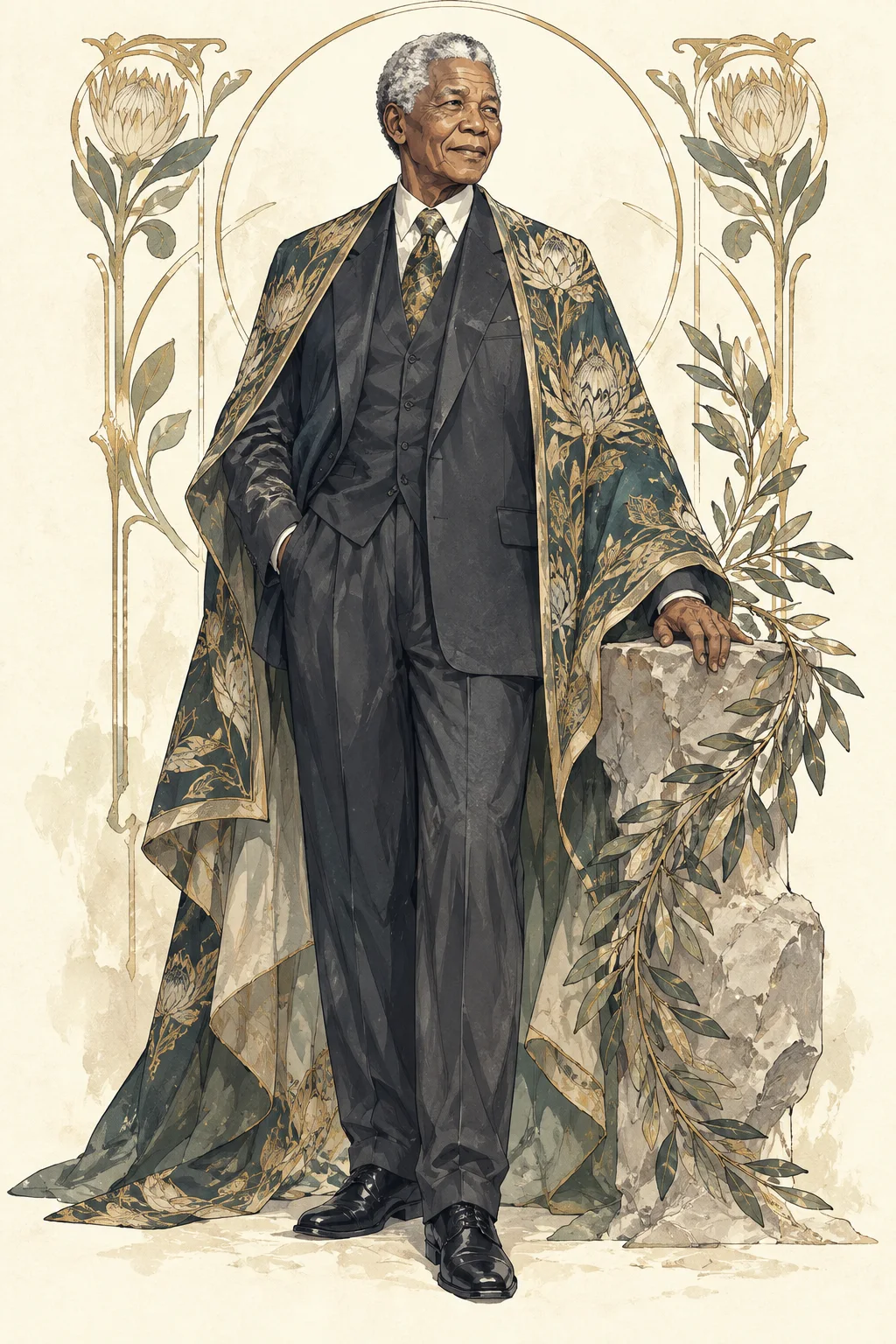 South Africa · PoliticianNelson MandelaThrough 27 years in prison he never yielded his morals, and at the Truth and Reconciliation Commission he bound justice and reconciliation together
 USA · Human rights activistEleanor RooseveltA conscience who upheld her duty to human dignity all her life and supported the Universal Declaration of Human Rights
 USA · Soldier · PoliticianGeorge MarshallHe quietly took up his duty to the nation and supported Europe's recovery through practical work
 USA · ActivistHarriet TubmanA life-risking fulfiller of duty who carried out rescue missions without losing a single person
 Middle East · MonarchSaladinAn arbiter of faith and honor who never lost his magnanimity even toward his enemies
 USA · ActivistRosa ParksWith one quiet act of refusing to give up her seat, she drew the line of dignity
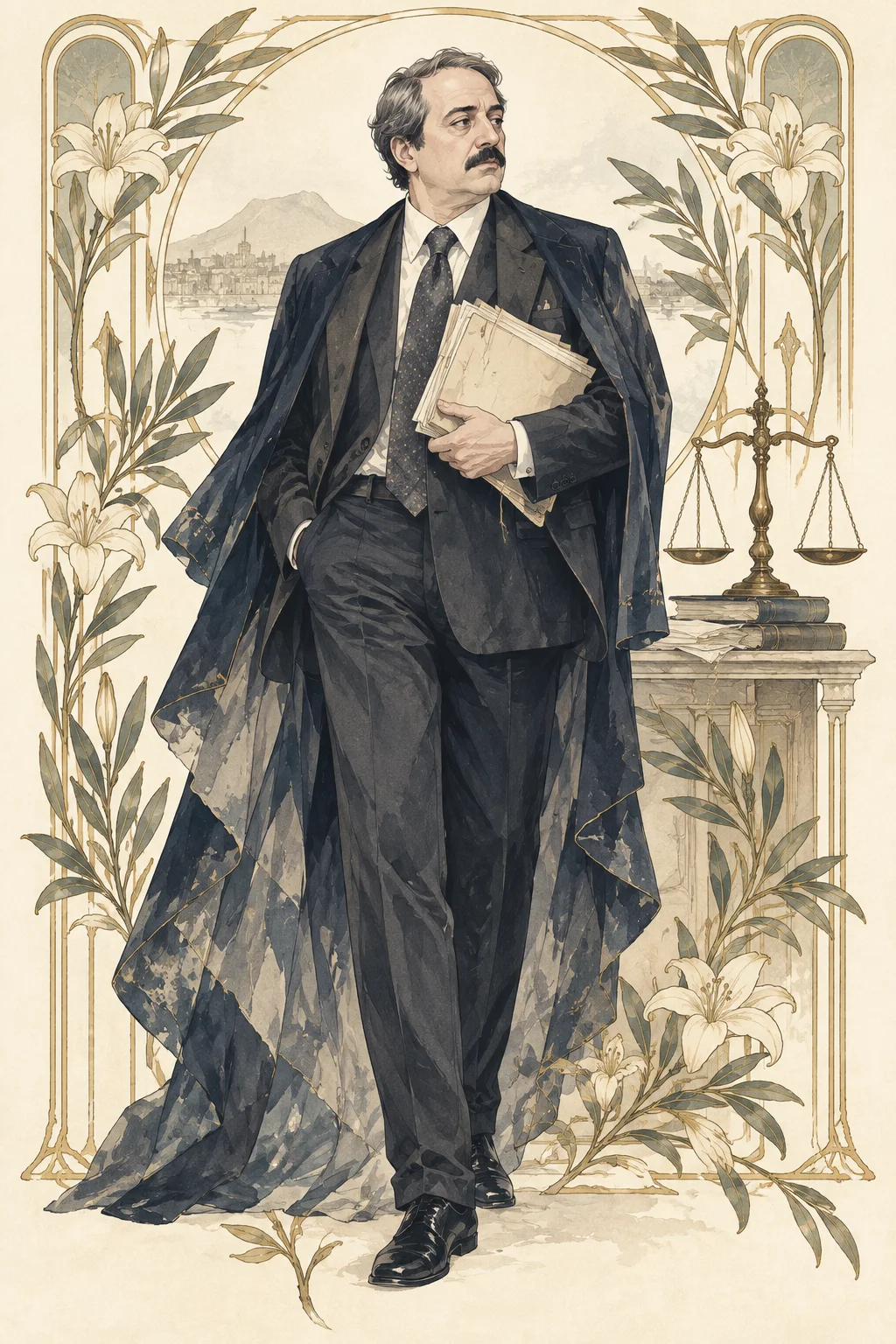 Italy · ProsecutorGiovanni Falcone"Applying the law is the most revolutionary act" — he refused to back down, prepared for death
 Philippines · PoliticianCorazon AquinoRising from a sense of duty to her husband, she defended her duty to democracy to the very end
 USA · SenatorMargaret Chase SmithWith her "Declaration of Conscience" she quietly thrust a No at McCarthyism
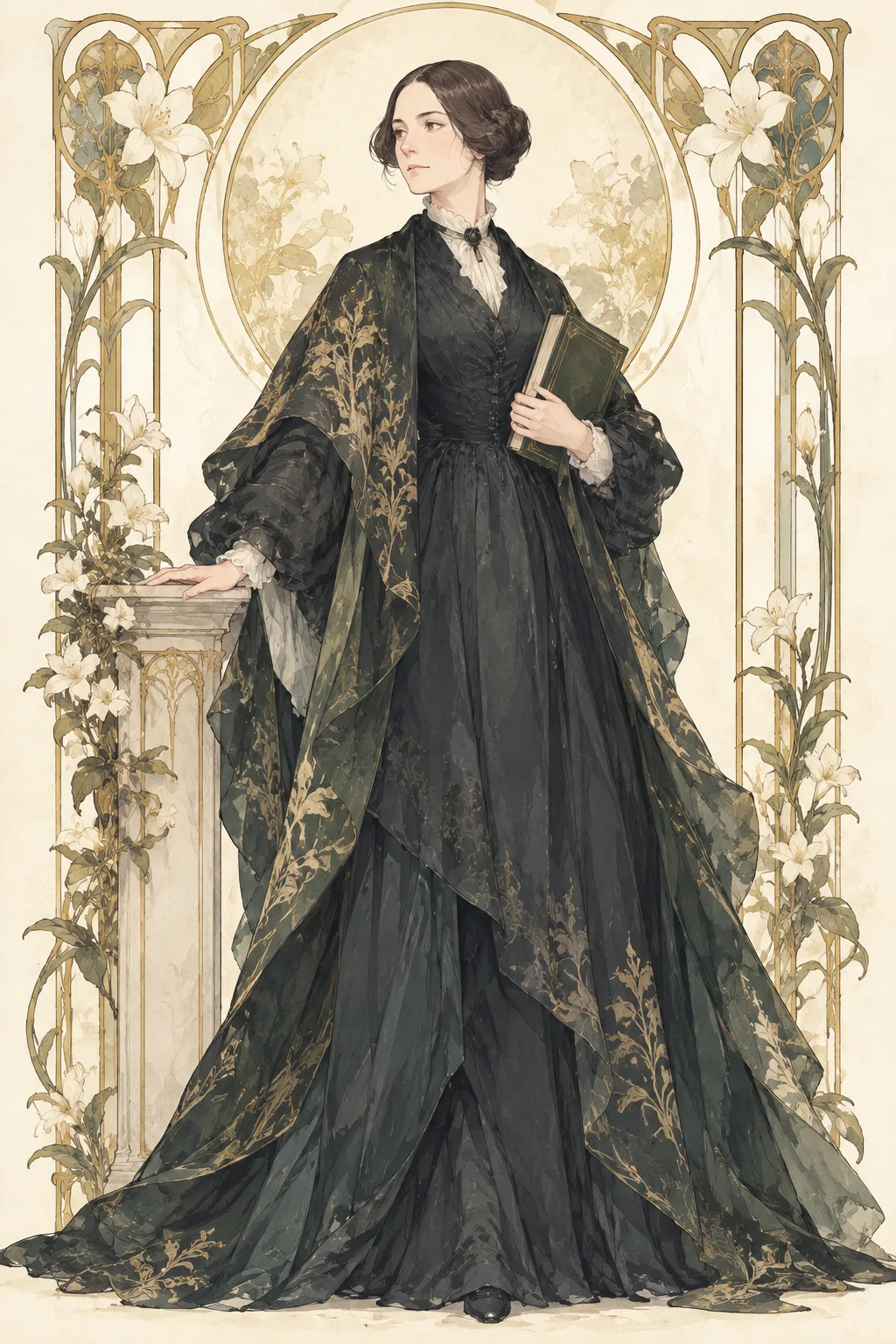 USA · ActivistLucy Stone"My name is my identity" — she would not yield her personal dignity
Type attributions are informed speculation based on public information, not confirmed fact.
Map of group memberships
The Judge is one of 32 types, and also belongs to several groups of kindred natures. Here are the four main ones first — open a card to step into its own gallery room.
 Quadra (Values)Gamma Quadra (γ)Market
 Bouquet (Temperament)Balanced-Stable temperamentBuilding a sure foundation
 Club (Interest)Social ClubPeople who weave life and ties together
 Motivation (Stimulus Group)Happiness Stimulus GroupSeeks comfort and stability
See all groupings (25 more)
 Communication StyleSincereGrowing deep bonds slowly
 Behavioral StyleHarmonizerOrdering relationships through trust
 Argumentation StyleGuardianDiscerning worth through morality
 Perception GroupOrderlinessSets rank and distributes by tradition
 Cognitive StyleHolographic-PanoramicReading the whole by grasping many facets at once
 Romance (View of Love)HunterReading the moment and catching the wave
 Stress ToleranceTrainedTurning blows into nourishment while keeping one’s frame
 Socialization GroupRadicalShaking the field with strong emotion
 Inflation RingInformation GeneratorVerifying results and weaving them into information
 Project GroupConcrete ResultsTurns plans into form at once
 Implementation GroupIdeal IntroductionShaking up daily life with ideals
 Square (Rest)GuildsmanThe artisan folk
 Business Square (Collaboration)VikingVoyagers who keep on challenging
 Octad (Cross-Value Group)JudgeVerifying and polishing results
 Reactor (Excitation Group)DistillRefining excitation inward
 MobilizationCatalysisMoving others as a catalyst
 Conditioning (Adjustment Group)TuningTunes fine oscillations
 LabyrinthAlexandriaDesigning ideals and appraising their enactment
 Block Group (Extinguishing Group)EnterpriseBinding people together and shaping them into form
 Social Progress Ring (SPR)BreakthroughThe ring of emergent lightning
 Supervision Ring (SVR)MandalaA cosmic map layering many viewpoints
 Social Order Ring (SOR)HermitA critic who sets distortions right
 Succession Ring (SR)RenaissanceThe return of the forgotten
 Benefit Ring (BR)RelicThe revival of a relic
 Master Ring (MR)PharosA lighthouse that illuminates the classics
Open the full, love and business editions

- The blueprint of your mind (8 blocks)
- Six ways to recover from stumbles
- A situation-by-situation guide (6 situations)
- The reasoning behind the celebrity picks

- What your heart longs for / What excites you / Your landmines
- Classic love scenarios
- Chemistry by partner (all 32 types)
- At home and as a parent / A practical playbook

- Natural strengths / Work better avoided
- Work style / Management
- Industry fit ◎○△ (23 industries)
- Suitable roles
Save $24.98 compared with buying the three separately