 Advisor
  Reformer
  Judge
Judge  Philosopher
  Inspector
  Pioneer
  Executive
  Hero
Hero COMPLETE COLLECTION
View the complete collection→Complete Type Collection
Read the Complete, Business and Love editions together for one type.
Individual total .97 → Collection .99The contemplative Strategist who quietly reads ahead and lays the groundwork
Converse with a representative perspective based on the public profile. It does not recreate a real person or everyone of this type.
The left term is more characteristic of this type; the right term is its counterpart. These are tendencies in receiving, evaluating and expressing information—not measures of ability or worth.
The Strategist is someone who quietly sees how things will unfold down the road. They sense, by intuition, the contradictions and distortions that aren't yet visible, and over time they build up in their mind the long-term current — "if this keeps going, here's where it will end up." Rather than flashy phenomena, they fix their gaze on the structural changes and turning tides beneath the surface. And they aren't swept along by trends or excitement. They examine every proposal with a skeptical eye, quietly asking again and again, "Is there really any meaning in this?" and "Isn't this a waste of time?" They deliberately avoid taking risks, choosing the path that "loses nothing fatal" over the one that goes for the win ── not the big gamble, but stacking up moves that cannot lose: that is this person's way of fighting. What they treasure above all is their own timeline and the freedom to think. They dislike matching other people's pace and hate being bound by forms and rules, bringing only fully matured designs into reality. They don't even swallow their accumulated knowledge whole — they test it within themselves and rewrite it into new hypotheses ── a mind that is quiet yet shrewdly flexible. They quietly step back from the circles of success and bustle that others chase. From behind the scenes they observe the situation and discern the future patterns that hold meaning for them. They don't easily believe in authority or grand causes, placing inner balance and freedom above all else ── yet beside a person of action who will move at the decisive moment, that quiet insight becomes a genuine force that moves reality.
The first thing the Strategist's behavior conveys is stillness. Rather than plunging straight into what's in front of them, they first observe the environment and the flow of people. In daily life they can look easygoing at a glance, but that is a choice made to avoid wasting energy ── they set themselves in motion only when the future meaning comes into view. The way they use money and effort is strategic too. While they dislike wasteful spending, they spare no expense on anything tied to "peace of mind" or "freedom of thought." They prefer a frugal, philosophical way of living, content as long as a minimum of comfort is maintained. And they protect themselves meticulously. A check before heading out, the placement of their tools ── not showy hygiene management, but a quiet, rational routine meant to "prevent accidents and confusion before they happen." Everything is arranged to protect their own contemplation and quiet.
The Strategist speaks only when necessary, and the rest of the time watches the other person from within silence. They aren't talkative, yet every word carries a predictive depth, striking sharply at the essence of a situation or the current of what lies ahead. Rather than guiding people with words, they use timing and silence to prompt the other person to realize things on their own. They don't try to control others. They respect individual freedom and choice, avoid a forceful tone that inflames emotions, and prefer polite, indirect expression. They make a quiet suggestion only when needed, and then wait. Their way of speaking is slow, at times conveying an almost hypnotic calm. They don't demand an immediate reaction, letting the dialogue grow over time. They are skeptical of outside activities and other people's plans, asking again, "Is there any meaning in this?" ── not an emotional rejection, but a quiet refusal of anything that doesn't fit their own sense of time.
At the Strategist's center are two forces combined. One is the power to quietly read long-term consequences (+Ni-p) ── the work of continually drawing a gentle curve of the future, "where will this current eventually head?", from the smallest clues of change. The other is the power to confirm it by working with the hands (-Te-c) ── the work of piling up small experiments and prototypes that solve "the trouble at hand," testing the design against reality. An intuition that foresees, and hands that test and fix ── together, 〈Choice & Stratagem〉. The name "Strategist" comes from exactly this: fixing on the long-term consequences, choosing the moves, and engineering a sure path. When this foresight and verification are quietly at work, the Strategist is living at their deepest.
It may come as a surprise, but the Strategist is actually quite good at both meticulously building systems of logic and freely picturing airy possibilities. The power to construct a coherent framework of reasoning, the power to open up branches of "what if it went another way" ── that latent capacity is considerable. They simply don't place much weight on it. More than pure logic puzzles or the endless spread of possibility for its own sake, their attention turns to "how will this unfold?" and "how should I lay the groundwork?" That is why the Strategist's thinking always has an exit in the form of a long-term outlook and a sure move.
What the far-seeing Strategist finds hard to generate on their own, yet longs for more deeply than anyone ── it is the breakthrough force to step forward at the decisive moment, seize the current with momentum, and protect and lead people (+Se-p), and the power to draw out others' true feelings and land a stiffened relationship into reconciliation (-Fi-c). While their foreseeing eye is second to none, when it comes to standing on the ground themselves to command the space, or loosening and binding people's emotions, they suddenly feel unsure. That is exactly why they feel deep trust and ease beside a partner who stands powerfully out front, warms the space, and brings people together as one ── the Strategist's foresight becomes a force that moves reality only when paired with a partner who acts.
The most fragile is the role of spreading passion through charisma and lifting people into elation (+Fe-p). When asked to "be more fired up" or to "raise the flag and rouse everyone," the Strategist, who has quietly watched the road ahead, doesn't know how to act and turns awkward. The other is continually attending, in fine detail, to the sensory comfort of a place (-Si-c) ── the work of constantly tuning temperature and atmosphere to keep things cozy is the area the Strategist is least suited to. This isn't so much a flaw as the flip side of the insightful eye. Fervent flag-waving and sensory caretaking can be left to those who are good at them.
The Strategist's love is cautious. Unswayed by surface charm or flashy words and gestures, they deeply observe, over time, the other person's thinking style and stance toward the future ── a love that, rather than love at first sight, discerns whether a long-term vision can be shared. What they seek is a partner with whom they can share deep contemplation without infringing on their own individualism. They struggle with strong emotional demands and interference, but with a partner they can simply be with even in silence, they become quietly and deeply bound as they accumulate a "sharing of time."
[Women] A woman who quietly discerns love as part of her life strategy. Unswayed by flashy words and gestures, she deeply observes the other person's thinking style and stance toward the future, valuing "whether she can resonate with the other's flow of time" over sharing emotions. She chooses marriage too by "with whom she can quietly coexist over the long term," prizing the quality of thought, compatibility of sensibility, and a relationship that protects each other's freedom over love itself. At home she avoids emotional storms, preferring a space of contemplation and ordered tidiness, and raises children on the premise of equal conversation once they have grown. The key to her relationships is a softness that doesn't lean too heavily on reason and distance, and that forgives the other's immaturity.
[Men] A solitary thinker who places weight on his own private vision of the future and his intuitive premonitions. Unswayed by his partner, he grows the relationship over time, and his emotional expression is extremely restrained. He has no interest in holding the initiative in romance, watching instead "how this relationship contributes to his own contemplation." He idealizes marriage as a loose alliance between two self-reliant people, avoiding codependence and domination. At home, rather than stepping forward, he acts as a quiet rear-guard supporter who gives his partner room to grow and reflect. Not rushing conclusions, respecting silence and time alone, able to have a philosophical dialogue in a chance moment ── a relationship with that kind of room is what this person finds most comfortable.
The partner who complements them most and puts them at ease, the partner who sparks their designs to life, the partner with whom they can sharpen their far-seeing eye ── for each situation, there is a perfect match.
 Orchestrator
 SEE-Q→DualityStands powerfully out front, warms the space, and brings people together as oneThe relationship names are noted by the role as seen from the Strategist (Master = the one being guided / Apprentice = the one teaching). Each partner's symbol is their home quadra. Detailed compatibility with all 32 types is in the Full Edition.
The combinations listed here are general guides between types. With someone you have connected with, you can read an individual compatibility reading drawn from both of your response data ($8.99 per pair / unlimited for Le Salon members). For a deeper look at how you love and where you fit in romance, see the Love Edition in Chapter ⅩⅢ.
View compatibility from your connections →To the Love Edition (Chapter ⅩⅢ) →
The Strategist's strength is the eye that foresees long-term consequences and the judgment that sees through to the essence. They quickly grasp the essence and background of a given task, discerning "what will ultimately matter" before they act. They sense future risks and signs of change that haven't yet surfaced, quietly sounding the alarm — "if we do this now, a problem will arise a few months down the line" ── a person who prevents a boss's runaway impulses and a project's waste before they happen. Even with modest self-assertion, when asked they organize the situation with lucid logic, and for illogical decisions they prompt a course correction indirectly, yet precisely.
Where they tend to stumble is the flip side of that caution and insight. Because their power to predict future crises is so high, their caution toward uncertainty can become excessive, and they may miss opportunities by "not moving until the possibility of failure disappears." Also, when their inner emotional balance breaks down, they can shut themselves away or grow ill-humored, affecting those around them with an "air that's hard to approach." To one-sided orders or instructions that appeal to emotion, they may comply on the surface while strongly resisting inside, silently keeping their distance. Yet that very skepticism and caution is also the source of the power to see through crises no one else notices and to choose the sure path ── knowing this, they can get along more easily both with themselves and with those around them.
The Strategist performs best in an environment where they can protect their own tempo and the flow of their designs and draw up long-term strategy. In settings that press for immediate quotas or quick responses they find it hard to bring out their power; it is in intellectual work — abstract, theoretical construction and design — that they show their true worth. They struggle with settings heavy on hierarchy and detailed instructions; their abilities come alive when they are given only the goal and then left to it. What they seek is a personal space free of interference and mental freedom.
Concretely, roles where long-term outlook and design come alive suit them. A long-term planner of national strategy or macroeconomics, a geopolitical analyst, a consultant who judges risk assessments and whether a project should proceed ── work where the power to read ahead speaks. Or research and criticism in philosophy, the history of ideas, and theories of civilization, and the realm of intellectual creativity that envisions the future ── it is precisely in settings where an eye that reads "long-term consequences" over near-term gain and loss comes alive that the Strategist brings out their power most richly.
Top-right of each cell = Dimension(the amount of information it can handle. The more dimensions, the more freely it works; 1 dimension works only pinpoint). Each cell = program (how it takes in) × creative (how it expresses). The function name and its sign are shown together.
The Strategist's mind runs on functions divided into eight "blocks." Within each block live two psychological functions paired together — a program, which governs how the world is received, and a creative, which governs how it is handled.
The combination of valued or unvalued with high or low dimensionality is what shapes a person's contours.
From Leading to Vulnerable, we explain one by one the two core functions dwelling in each of the eight blocks, from the perspectives of dimension (how deeply they can be used) and value (whether they are treasured). This is the chapter where the Strategist's contour rises in the finest detail.
Buy the Full Edition → $24.99Each block further divides into four finer positions (Core, Regulation, Assimilation, Balance), for 32 positions in all. Detailed commentary is in the Full Edition. When you take the assessment, "the intensity score of each of your own functions" and your "subtype" can be displayed and recorded on your member page (these are for self-understanding, not a judgment of superiority, inferiority, or aptitude).
+Ni-p-Te-c+Se-p-Fi-c-Fi-p+Se-cThe Strategist is not merely "one of the 32 types." They also belong at the same time to any number of groups where those of similar nature gather.
Group names and nicknames follow the association's current definitions (some are still being confirmed). Detailed commentary on each group is in the Full Edition.
The quadras, romance styles, stress tolerance, and socialization groups that appeared in this chapter each have their own detail page. See how the 32 types are grouped, systematically, in the “Group Reader” ── over 30 classification groups across roughly 250 pages.
The eye that sees the road ahead, the composure that refuses to join the fervor, the patience that waits until the moment ripens ── we portray the sixteen faces of the Strategist one by one, and then add hints for self-improvement to help them make free use of that insight.
Buy the Full Edition → $24.99After the public profile gives you the outline, choose the edition that matches what you want to understand next.
Read the Complete, Business and Love editions together for one type.
Individual total .97 → Collection .99Eight blocks, sixteen facets, development guidance and notable people, read as one full portrait.
Workplace strengths, relationships with managers and reports, supportive environments and fields.
Distance, expressions of care, patterns in intimacy and practical ways of relating.
Machiavelli, Fouché, Kuroda Kanbei, Zhang Liang, Sima Yi ── we introduce the military strategists and staff officers who read ahead from the shadows and seized the moment, along with the basis for each attribution.
Buy the Full Edition → $24.99The “why this type” of the figures featured here ── the concrete grounds in their leading and vulnerable functions, and readings of their quadra, temperament, and club ── can be explored in the Notable People Encyclopedia, which holds 325 figures.
Youryour working personality, strengths, how you get things done, how you relate to others, and compatibility, andsuitable occupations, summarized in a practical, usable form.
Yourhow you love, what your heart seeks, what stirs it, and where you miss each other, andcompatible partners, decoded through the psychological functions.
Beyond generalities between types. With someone you have connected with, you can read an individual compatibility reading drawn from both of your response data ($8.99 per pair / unlimited for Le Salon members at $10.99/month).
Let's look at this type of values from a single movie. It is not intended to determine the type of work or characters.
Bennett Miller|2011

The head of a baseball team with limited funds relies on statistics to recruit players with low ratings. I stick to the policy of only buying indicators that are effective for winning rates, which conflicts with the rules of thumb for scouts. His winning method was later widely imitated.
Bet on long-term rationality with +Ni and cut wasteful spending with -Te. The way to win with this type is to abandon popularity and appearance and follow the indicators.
The implication is +Se. Director SEE-Q's ``The Wolf of Wall Street'' shows how to use force to push through the space.
Through this book, you will be exposed to this type of way of looking at things. This is not a diagnosis to decide which books you should read, but a book selection to deepen your understanding.
charles ellis

He argues based on the results of institutional investors that investment management is not a game where you try to win, but a game where the outcome is decided by the fewest points conceded. Buying and selling that attempts to outperform the market is eroded by costs and taxes, and most do not reach the index. The action you need to take is to decide on a policy and maintain it for a long time at low cost.
Use +Ni for long-term development, and -Te to cut down on time and costs. After accepting the premise that the market will decide, he clearly states how to win by not making any moves.
The implication is +Se. SEE-Q The director's holy book ``Weapons of Influence'' verbalizes the use of force to push through the field.
In what ways do stumbling blocks appear when one's strengths become unbalanced? Symptoms are not judgments of shortcomings, but rather clues to reflect on your own condition.
+Ni excess and +Fe break

Even though my prediction was correct, the time passed without me taking the first step. There are all the reasons why you should move, and just as many reasons why you shouldn't. Conclusions become outdated without being shared with anyone.
+Ni increases accuracy and -Te seeks to reduce the number of steps, resulting in the amount of actions below the lower limit. The explanation that moves the emotions of the place is in the +Fe break, so it stops short of sharing.
I have a conclusion, but I have a plan in hand that I haven't handed over to anyone.
Read what to choose and what to let go of the decisions of history. We are dealing here with the structure of the decision, not the type of decision-maker himself.
Mikhail Kutuzov | 1812
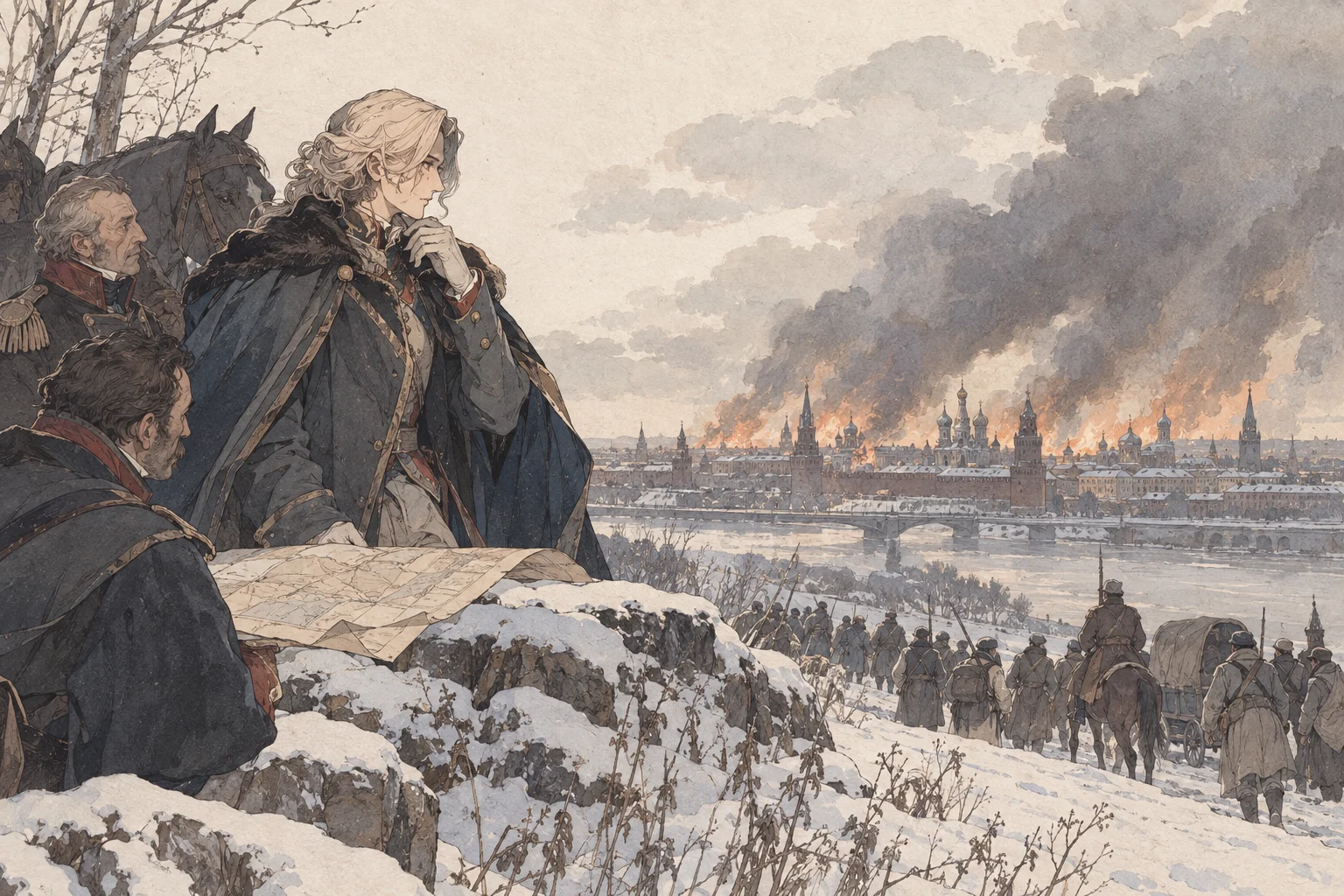
Judging that there was little chance of winning in a decisive battle, he chose to surrender the capital and maintain his army. Avoiding pursuit, they waited for the invading army, which had extended supplies, to self-destruct due to winter and starvation. He stuck to his decision not to fight despite domestic criticism.
Bet on the time side with +Ni, and cut out unnecessary engagements with -Te. The way to win in this style is to wait for the opponent to concede without trying to win.
The capital was burned, and the damage to the population and the general's own reputation did not recover until the battle was over.
Through competitive tactics, we will look at how this type moves to its strengths and how it is complemented by others. It does not determine your suitability for competition.
leave it with descending technique
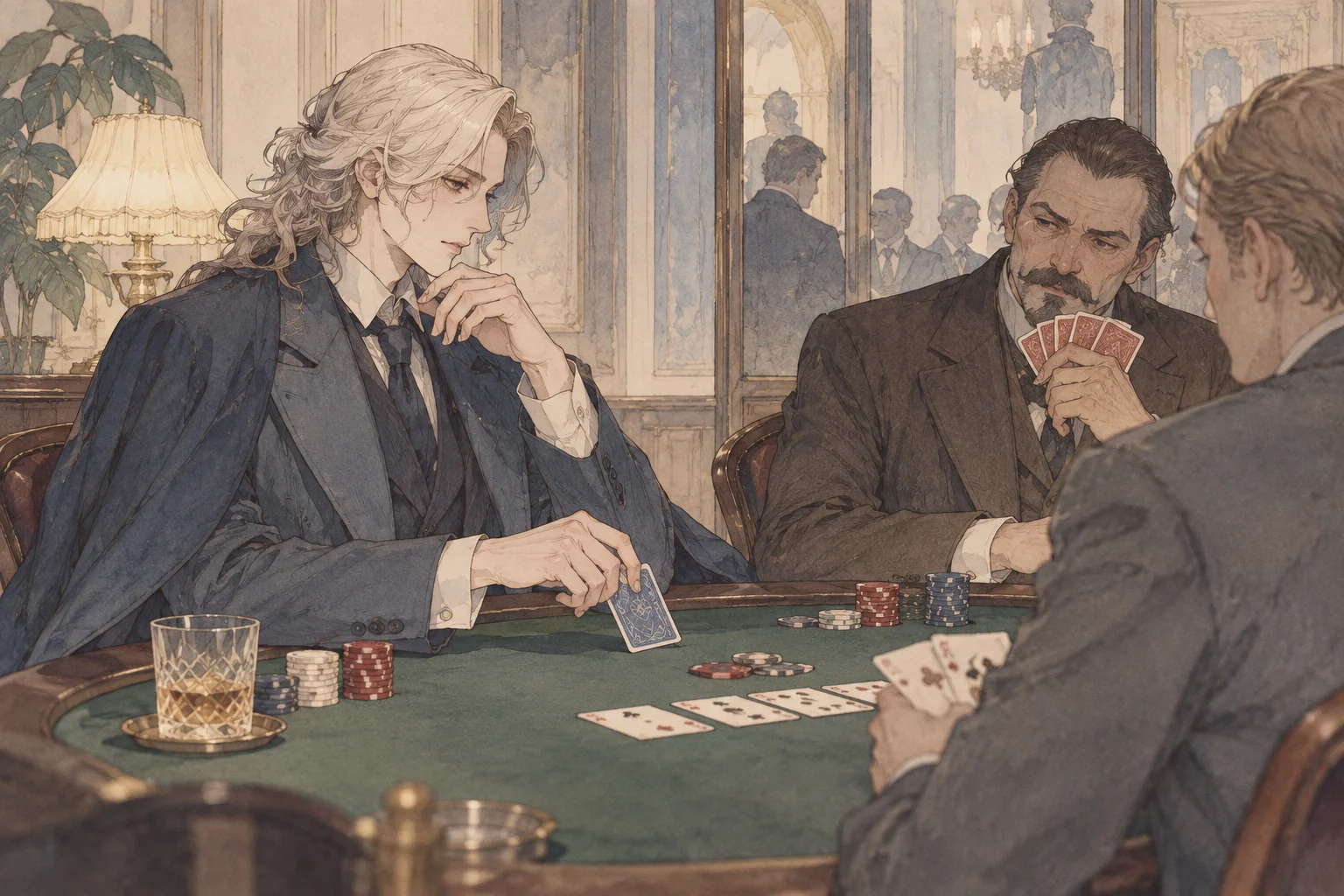
Throw away most of the hands you're dealt, and only put your money where the expected value is favorable. It is more profitable to reduce errors over a long number of trials than to perform flashy readings. The points your opponent loses become your share.
Bet on long-term distribution with +Ni and cut out unnecessary participation with -Te. This type of winning method is to reduce the number of points conceded without trying to win.
The implication is +Se. SEE-Q The director's boxing shows how to use force to push through the field.
Read how to organize people, resources, and judgment from real-life organizational examples. It does not determine the type of company, but rather an interpretation of the structure that appears in management.
United States | Current system in 1965

Using the funds we receive from our insurance business, we will only continue to carry out businesses that we understand for a long time. The company will not intervene in the management of the acquired company, and will keep its head office staff to just a few dozen people. When there's no good opportunity, just pile up cash and do nothing.
Bet on long-term compound interest with +Ni, and cut down on the number of moves and organization with -Te. We accept the premise that the market will decide, and we have established a system where we win by not making any moves.
The implication is +Se. SEE-Q The director's recruitment shows how to use the power to push through the field.