 Promoter
  Conqueror
  Guardian
  Empath
  Enforcer
  Commander
  Administrator
  Mentor
 COMPLETE COLLECTION
View the complete collection→Complete Type Collection
Read the Complete, Business and Love editions together for one type.
Individual total .97 → Collection .99The insightful Critic who sees through contradictions in the depths of silence
Converse with a representative perspective based on the public profile. It does not recreate a real person or everyone of this type.
The left term is more characteristic of this type; the right term is its counterpart. These are tendencies in receiving, evaluating and expressing information—not measures of ability or worth.
The Critic has a native sharpness for spotting the flaws in things. Where will this system break down, where does its logic stop holding together, where will it hit a wall further on ── unswayed by surface glamour, they quietly sense the contradictions and dangers lurking beneath. And they do not merely hunt for faults. "Well then, how can it be fixed?" ── they bring out the knowledge and skill they have accumulated and translate it into concrete improvements. Rather than voicing prophet-like anxieties, this is a person whose thinking turns toward making reality better. What they rely on is not emotion or momentum but verified facts and accumulated knowledge. They prize "why does it turn out this way?" above all, and trust recorded achievements, data, and precedent. So however sharp the Critic's remarks, there is always solid backing behind them. Their other face is that of a guardian of culture. In ideas not yet known to the world, and in creations that are clumsy yet meaningful, they find value sooner than others. Even if something is not perfect, so long as it holds cultural significance they quietly champion it ── an eye for the aesthetic in what is not mainstream gives depth to the Critic's intellect. What they seek is an orderly environment where their insight and critique can quietly come alive, and a sure store of knowledge. Chaos and clashes of emotion do not suit them; in a well-ordered setting, with a few people who understand one another, they prefer to exchange knowledge deeply. Their eye for seeing through contradictions is second to none, yet stepping onto the ground themselves to move people and seize the initiative is somehow hard for them ── it is precisely beside an action-driven partner who takes that on that the Critic's insight reaches the farthest.
The first thing the Critic's conduct conveys is composure. Never raising their voice, never rushing, they move things along matter-of-factly at a steady rhythm ── there is no waste in how they carry themselves. They grasp matters as a process of "predict, verify, adjust," taking in handy tools and methodologies to minimize their time and effort. In their living space, too, this stance does not change. They feel at ease in a logically ordered environment rather than a cluttered one. Cleaning and tidying they do not for the sake of "mood" but for "efficiency and comfort = performance," and they invest without hesitation in gadgets and handy tools ── not as luxuries, but as instruments for producing results. And they prize certainty. They do not move until they can be sure, and do not get deeply involved in what they cannot foresee. Cautious and calculating, yet once they judge "this is certain," they produce the greatest result with the least effort ── that investment-minded use of time is the Critic's rationality.
The Critic is someone who states their opinion on another's thoughts and actions without hesitation. Valuing facts and logic over emotion, they point out logically "where it is inefficient and where there is room for improvement." At times they will even try to reframe the very structure of the other person's thinking. Their manner of speaking is consistently calm, rarely turning rapid or ruffled by emotion. Yet the content is sharp, and against a background of accumulated knowledge they speak of the structure of culture, technology, and institutions ── to the listener this is intellectual stimulation, while at times it can also be taken as "too logical" or "long-winded." And the Critic deliberately probes contradictions. Pointing to the flaws in existing institutions and conventional wisdom, they press the other person toward a shift in thinking ── this is not mere criticism but a constructive question: "isn't there a better form?" Irony-tinged humor, too, is an expression of this person's intellect. But precisely because they are in the right, they are slow to notice that it rubs the other person's feelings the wrong way ── and that is a point where the Critic sometimes trips up.
At the Critic's center are two powers combined. One is the power to sense the flaws deep in things (-Ni-p) ── the faculty that, from the slightest signs, grasps intuitively, almost as imagery, "where this will break down ahead" and "where the contradiction lies." The other is the power to verify it with knowledge and skill (+Te-c) ── the faculty that quietly piles up measured data, precedent, and know-how, backing intuition with solid grounds. An intuition that sees through danger and a hand that verifies with knowledge ── together, "contemplation and critique." The name "Critic" ── one who senses contradiction, confirms it with knowledge, and points to improvement ── comes from here. When this insight and analysis are working to the full, the Critic is at their most alive.
It may come as a surprise, but the Critic can in fact handle quite well both the meticulous construction of logical systems and the free play of untethered hypotheses. The power to check the coherence of an argument, the power to expand a thought experiment with "suppose that" ── that latent power is, in truth, considerable. Yet they themselves place no weight on it. Rather than the pure logic puzzle itself, their attention turns to "how reality can be improved"; rather than the abstract thought experiment itself, to "whether it becomes usable knowledge." That is why the Critic's sharp analysis always has an exit toward improving reality.
What the contradiction-spotting Critic finds hard to generate on their own, yet longs for more deeply than anyone ── is the drive to step forward at the decisive moment on the ground, seize the initiative, and sweep people up into motion (-Se-p / +Fi-c). Their eye for seeing into the depths is second to none, but when it comes to going into the fray themselves to command the field, or moving people's feelings to bind them together, they suddenly feel forlorn. That is exactly why they feel deep trust and ease beside a partner who stands out front with strength, creates the flow, and takes it on with "leave the rest to me" ── the Critic's insight becomes a force that moves reality only when it stands beside someone of action.
What is most fragile is the role of raising emotions to fire up a room (-Fe-p). When asked for showy displays of feeling ── "be more passionate," "inspire everyone" ── the Critic, who has always viewed things coolly, doesn't know how to behave and turns awkward. The other is keeping up attentive care for people (+Si-c). Always being considerate and hospitable, continually propping up another's mood ── such ceaseless care is the domain the Critic is least suited to. This is less a flaw than the reverse side of the insightful eye. Ardent cheering and diligent caretaking may be left to those who are good at them.
The Critic's romance is cautious. Not swept along by emotion, they carefully observe a partner's thinking, practical ability, and past conduct, and move only after discerning "whether this person is worthy of trust" ── a love built by stacking up conviction rather than love at first sight. What they seek is a partner they can respect intellectually and create something with. They are poor at frequent emotional reassurance and at playing games, but with a partner who can share knowledge and interests, they open their heart quietly and deeply as their conversations accumulate.
[Women] A woman sensitive to intellectual interest, creativity, and expressiveness. From a partner's thinking, background, and expertise she discerns "can this person be trusted," and is drawn to someone logical and practically capable. In marriage, too, she holds up as her ideal "a relationship where the two can create something together," valuing not only stability of life but creative exchange. She wishes the home to be not an arena for clashes of emotion but a place to exchange knowledge and creation, and she runs the housework functionally, with information and tools. Not scoring a partner too harshly, and leaving room in the dialogue, is the key to keeping the relationship serene.
[Men] A cautious intellectual who views romance coolly and moves only after building up observation and analysis. He carefully discerns a partner's character and practical ability, and does not move until convinced they are worthy of trust. In marriage, more than an emotional ideal, he takes an interest in orderly household management and realistic planning for the future, treating life like a joint project. Poor with conflict and emotional outbursts, he feels at ease within tidy rules and routines. With children, too, he converses through reason, preferring an intellectual involvement laced with humor and analysis. Rather than frequent emotional reassurance, deepening understanding slowly through appropriate distance and clear dialogue is this person's way of loving.
The partner who complements them best and brings ease, the partner who sparks their thinking, the partner with whom they can sharpen their eye for knowledge ── for each occasion there is a fitting partner.
 Politician
 SEE-D→DualityStands out front with strength, creates the flow, and moves reality with "leave the rest to me"The relationship names are given as the role seen from the Critic's side (Master = the side that is guided / Apprentice = the side that teaches). The symbol by each partner is their quadra. Detailed compatibility with all 32 types is in the Full Edition.
The combinations listed here are general guides between types. With someone you have connected with, you can read an individual compatibility reading drawn from both of your response data ($8.99 per pair / unlimited for Le Salon members). For a deeper look at how you love and where you fit in romance, see the Love Edition in Chapter ⅩⅢ.
View compatibility from your connections →To the Love Edition (Chapter ⅩⅢ) →
The Critic's strength is a penetrating analytical power and a reliability that sees practical work through to the end. They remember what they have read and experienced down to the details, and use it to streamline procedures and documents. They notice schedule slippage and cost overruns early and can calmly sound the alarm ── "at this rate it will fall apart" ── quietly supporting a project's stability. Even as they react quickly to miscalculations and inefficiency, they don't blame others outright, softening the room with wry humor. To a struggling colleague, too, they are someone who can gently offer words that carry an intellectual reassurance.
Where they tend to stumble is the flip side of that sharpness and composure. When the critical spirit that thoroughly interrogates the meaning, grounds, and efficiency of things comes out too strongly, it can make those around them shrink back, or be misread as "cold and stubborn." The more they are in the right, the harder it is for them to notice that it rubs the other person's feelings the wrong way. And because they are sensitive to waste and inefficiency, they tend to feel strong inner stress in ambiguous situations, unplanned turns of events, and with people who act on emotion. Feelings stored up unprocessed can sometimes surge suddenly to the surface. Yet that very sharpness is also the source of the power to see through contradictions no one else notices and to improve reality ── simply knowing this makes it far easier to get along both with oneself and with those around you.
The Critic performs at their best in an environment where they can put their expertise and analytical power to work and where results take lasting form. Finding fulfillment in solving concrete problems rather than in an abstract future, they show their true worth in a workplace where roles are clearly divided and professional dialogue is possible. Conversely, an environment swayed by emotion, or one that forces groundless pep-talk idealism on them, is a major source of stress. What they seek is an orderly place where intellectual questioning and verification are respected.
Concretely, roles where knowledge and analysis come alive suit them: information archivist or literature-database management, structural design in IT, risk management, review of technical standards and regulations ── work where accumulation and verification are what count. Or the preservation of culture and the supervision of creative work, knowledge production at museums and academic institutions ── it is precisely in a place where an eye for seeing through contradictions and an aesthetic eye for culture both come alive that the Critic exercises their powers most richly.
Top-right of each cell = Dimension(the amount of information it can handle. The more dimensions, the more freely it works; 1 dimension works only pinpoint). Each cell = program (how it takes in) × creative (how it expresses). The function name and its sign are shown together.
The Critic's mind runs on functions divided into eight "blocks." In each block dwell two psychological functions paired together ── a program that governs how the world is taken in, and a creative that governs how it is handled.
The combination of valued or unvalued with high or low dimensionality is what shapes a person's contours.
From Leading to Vulnerable, we explain one by one the two core functions dwelling in each of the eight blocks, from the standpoint of dimension (how deeply they can be used) and value (whether they are held dear). This is the chapter where the Critic's contours emerge in the finest detail.
Buy the Full Edition → $24.99Each block further divides into four finer positions (Core, Regulation, Assimilation, Balance), for 32 positions in all. Detailed commentary is in the Full Edition. When you take the assessment, "the intensity score of each of your own functions" and your "subtype" can be displayed and recorded on your member page (these are for self-understanding, not a judgment of superiority, inferiority, or aptitude).
-Ni-p+Te-c-Se-p+Fi-cThe Critic is not merely "one of the 32 types." They belong at the same time to any number of groups that gather people of similar character.
Group names and nicknames follow the association's current definitions (some are still being confirmed). Detailed commentary on each group is in the Full Edition.
The quadras, romance styles, stress tolerance, and socialization groups that appeared in this chapter each have their own detail page. See how the 32 types are grouped, systematically, in the “Group Reader” ── over 30 classification groups across roughly 250 pages.
The eye that spots flaws, the joy of accumulating knowledge, the intellect that deliberately questions contradictions ── we paint the sixteen faces of the Critic one by one, and then add tips for self-improvement so they can put that insight freely to work.
Buy the Full Edition → $24.99After the public profile gives you the outline, choose the edition that matches what you want to understand next.
Read the Complete, Business and Love editions together for one type.
Individual total .97 → Collection .99Eight blocks, sixteen facets, development guidance and notable people, read as one full portrait.
Workplace strengths, relationships with managers and reports, supportive environments and fields.
Distance, expressions of care, patterns in intimacy and practical ways of relating.
Spengler, Pareto, Hobbes, Han Fei, Burckhardt, Kafka ── we introduce the critics who coolly saw through civilizations and institutions, along with the reasoning behind each attribution.
Buy the Full Edition → $24.99The “why this type” of the figures featured here ── the concrete grounds in their leading and vulnerable functions, and readings of their quadra, temperament, and club ── can be explored in the Notable People Encyclopedia, which holds 325 figures.
Youryour working personality, strengths, how you get things done, how you relate to others, and compatibility, andsuitable occupations, summarized in a practical, usable form.
Yourhow you love, what your heart seeks, what stirs it, and where you miss each other, andcompatible partners, decoded through the psychological functions.
Beyond generalities between types. With someone you have connected with, you can read an individual compatibility reading drawn from both of your response data ($8.99 per pair / unlimited for Le Salon members at $10.99/month).
Let's look at this type of values from a single movie. It is not intended to determine the type of work or characters.
Roman Polanski|1974

A private investigator investigates an affair and uncovers a huge fraud involving water rights. Even if we grasp the facts one by one, those in power will not be shaken. The curtain falls on the story without any relief from the truth being revealed.
Read the bad ending first with −Ni, then lay out the facts and uncover them with +Te. The entire story is covered by the gaze of Quadra, who feels that the world will end with them.
The implication is −Se. SEE-D Politician ``The Godfather'' shows the skill of turning criticism into real power.
Through this book, you will be exposed to this type of way of looking at things. This is not a diagnosis to decide which books you should read, but a book selection to deepen your understanding.
oswald spengler

Culture is viewed as an organism that develops, matures, and ages. Comparing forms of art and mathematics, he diagnoses that the West has ended its creative era and entered a stage of technology and metropolises. It is written with a sense of time towards an end rather than progress.
Read the end with −Ni, then line up the facts with +Te. They are at the intellectual forefront of Quadra, who feel that the world ends with them.
The implication is −Se. SEE-D The politician's holy book ``The Prince'' describes techniques for turning criticism into real power.
In what ways do stumbling blocks appear when one's strengths become unbalanced? Symptoms are not judgments of shortcomings, but rather clues to reflect on your own condition.
-Excess of Ni and break of -Fe

I'm correct in pointing out the error, but since I'm not on the side of making it, I don't have anything on hand. The more accurate the indication, the less people will approach you. In the end, there will be no one to share the truth with.
−Ni sees where it will collapse first, and +Te lays out the evidence. The circuit that rides on the emotions of the place is at the break of -Fe, and negation takes the form of a relationship.
The amount of negative things I wrote this month exceeds the amount of things I created.
Read what to choose and what to let go of the decisions of history. We are dealing here with the structure of the decision, not the type of decision-maker himself.
John Maynard Keynes | 1919
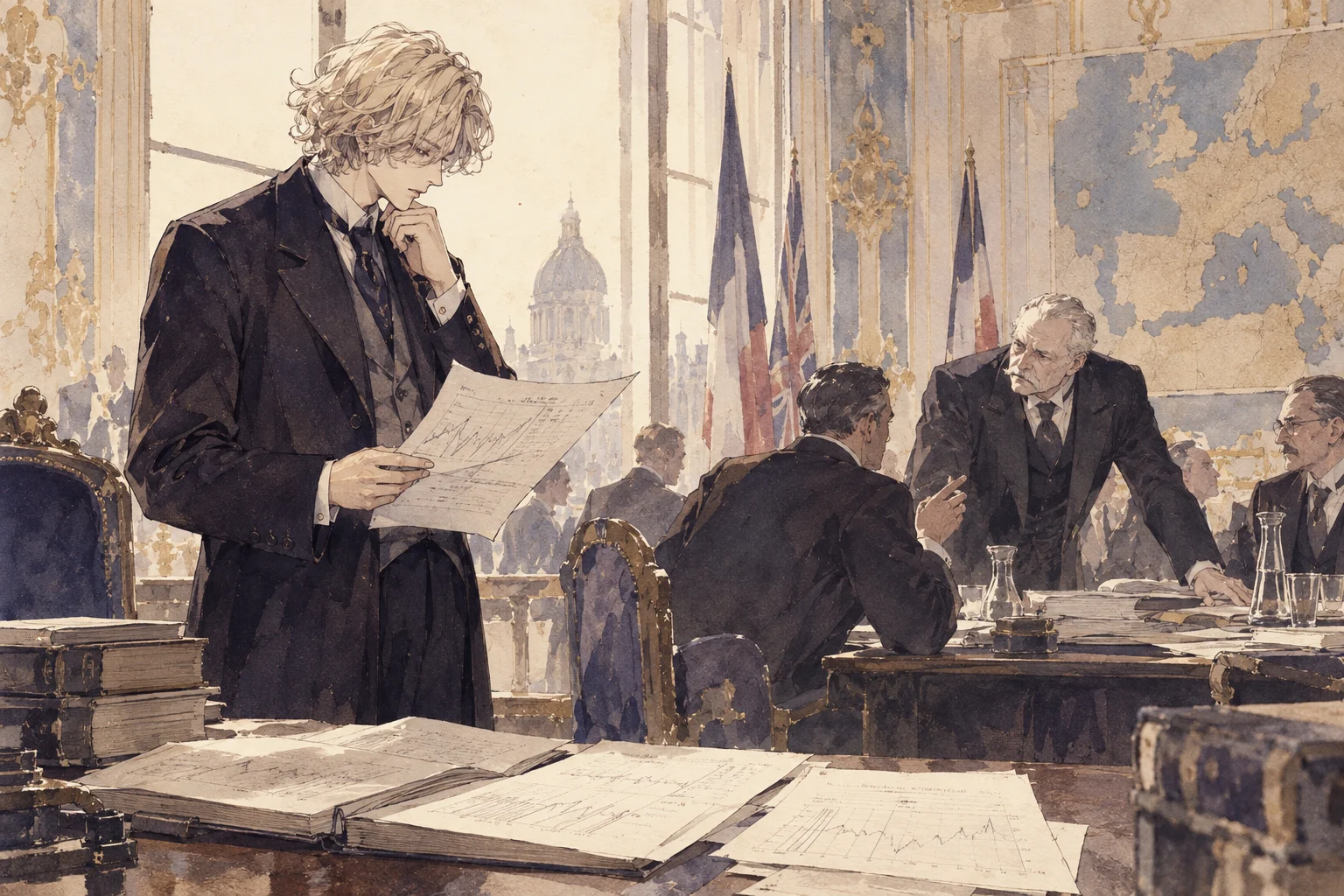
Opposed to the reparations design, he resigned from the delegation and published a book that numerically examined the contents of the treaty. He argued that demands that exceed the ability to pay would destroy the economy and lead to political instability. I didn't create anything, only the points I made remained.
First read what will collapse with -Ni, then line up the evidence with +Te and confront it. Quadra's way of working is based on the premise that if left untreated, things will get worse.
The point was correct, but the treaty remained unchanged, and it took more than ten years for it to have any influence.
Through competitive tactics, we will look at how this type moves to its strengths and how it is complemented by others. It does not determine your suitability for competition.
buying someone else's wrong opinion
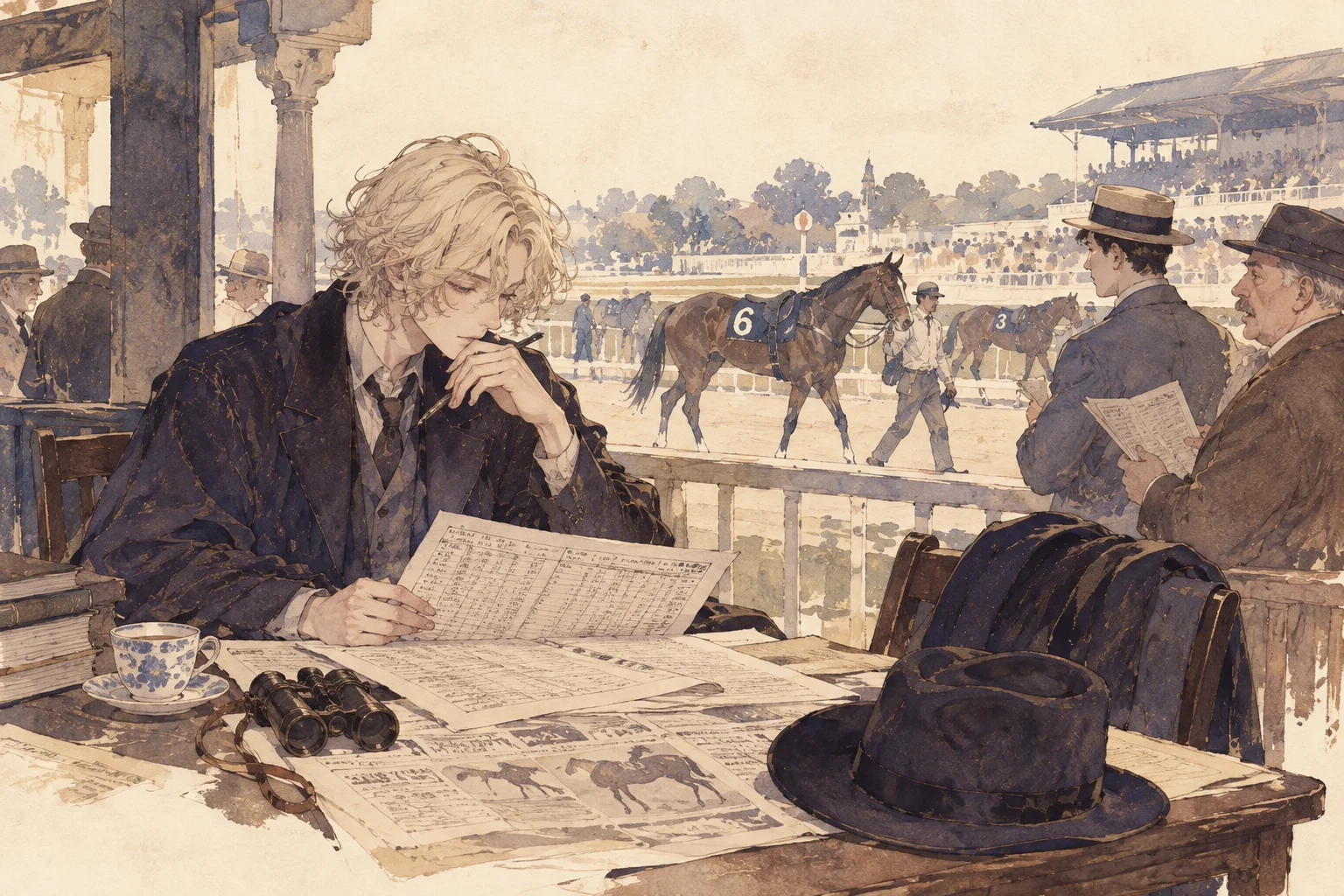
Rather than guessing which horse will win, look for horses that are undervalued relative to their popularity and buy them. It is not you who runs, but the profit comes from the biased judgment of others. If the reading is wrong, all the losses will be returned to you.
Read the side that collapses with −Ni first, then line up the numbers with +Te to judge. Quadra's winning method is based on the premise that if left unchecked, the world's reputation will be distorted.
The implication is −Se. SEE-D Politicians' wrestling shows their bodies that turn criticism into actual pressure.
Read how to organize people, resources, and judgment from real-life organizational examples. It does not determine the type of company, but rather an interpretation of the structure that appears in management.
United States | After 2000s

The company investigates the target company's disclosures and local conditions, publishes the overvalued parts in a report, and at the same time sells the stock short. There is nothing to make, and the revenue comes from the process of correcting the mistakes of others. If the reading is wrong, the loss will be yours.
Read first what will collapse with -Ni, then line up the facts with +Te and confront them. A commercialized version of Quadra, which is based on the premise that the world will get worse if left alone.
The implication is −Se. SEE-D Politician Samsun shows how to use his power to turn criticism into real power.