
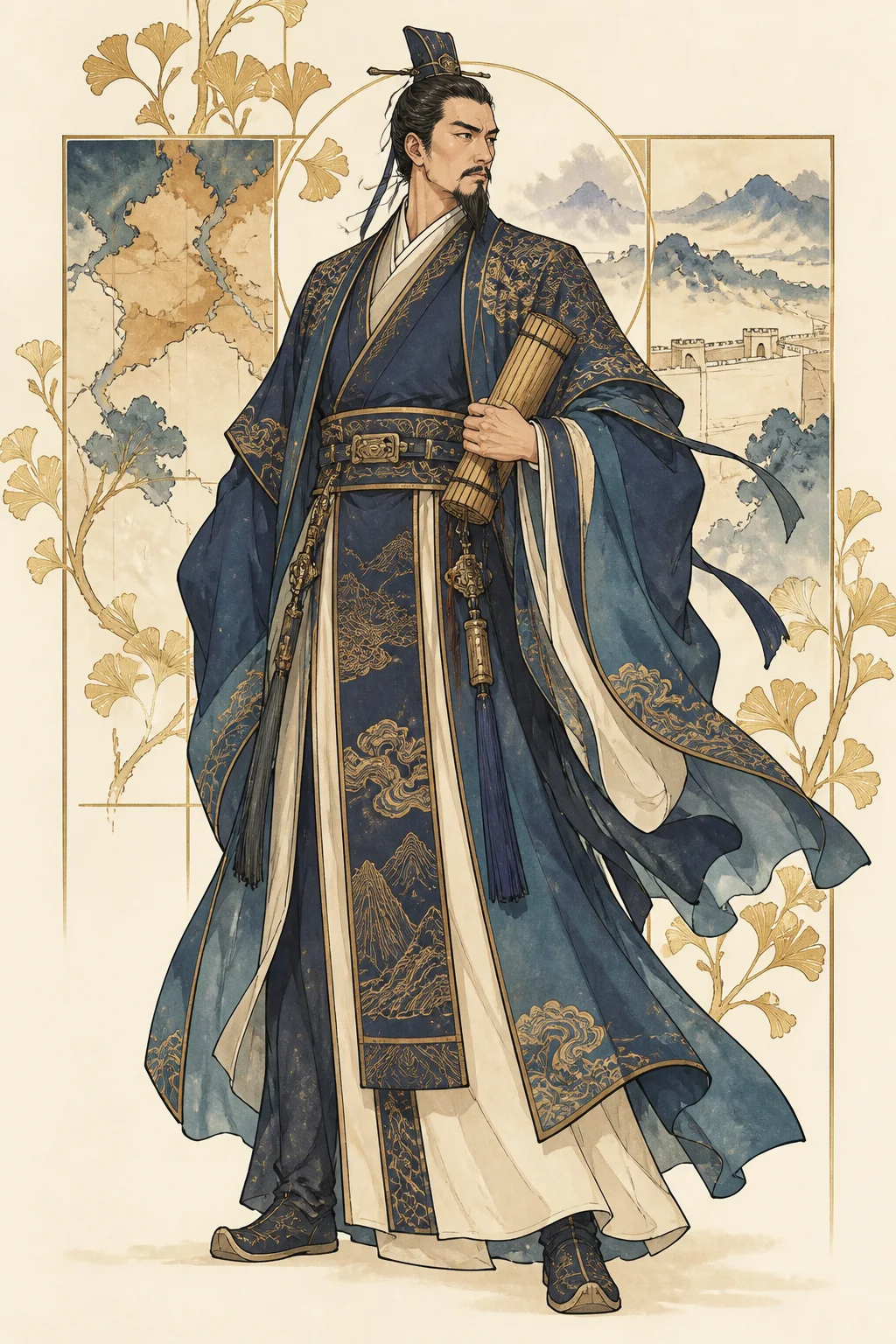
Celebrity Index LIE-Q "Commander" Shang Yang

Shang Yang

LIE-Q "Commander" Reformer · Chinese (Qin) · 4th c. BC

Reformer of the state of Qin, Warring States period China (c. 390–338 BC). Based on Legalist thought, his "transformation of the law" radically reformed Qin in military, agricultural, and legal terms, laying the foundations for the eventual unification of China under the First Emperor. The abolition of the aristocracy, the merit-rank system, and the standardisation of weights and measures — all his designs. Executed by the very laws he created: the paradigmatic case of institutional logic overriding its author.

Leading Function+Te-p (Practicality & Economy)

Speaking of the "kingly way" put Duke Xiao to sleep — instantly switching to the "hegemonic way" (pragmatic means) woke him up. Discarding a non-functional approach and switching to the functional one without hesitation — the core of +Te-p action.

Creative Function-Ni-c (Warning & Divergence)

"Qin will collapse as it is — conquered by a neighbouring state" as the starting point for all reform — the core of -Ni-c creative function. "My own laws will ultimately destroy me" — even this final paradox was foreseen as a structural reading that institutions outlast individuals.

Vulnerable Function 1+Si-p weak (Comfort & Wellbeing)

Weak +Si-p (Comfort & Wellbeing): "Straight as a bamboo bone and unbendable" (Duyvendak's translation) — consistent indifference to personal comfort or social flexibility. Punishing the Crown Prince's tutor and applying his own institutions to himself without mercy.

Vulnerable Function 2-Fe-c weak (Harmony & Emotion)

Weak -Fe-c (Harmony & Emotion): "He was strict without kindness" (Sima Qian's assessment) — unanimous ancient and later assessment that his attentiveness to collective emotional harmony and emotional consideration for others was fundamentally absent.

Quadra / Temperament / Club

Quadra: Anti-Alpha Quadra (Meritocracy) — "Abolishing the hereditary nobility and designing the twenty-rank system of military merit" — not democratisation but an update of aristocracy: replacing bloodline nobility with ability-and-military-merit elites.

Temperament: Linear-Assertive temperament: candid and forceful, speaking in numbers and facts. Unhesitating advance as the basic rhythm of his life.

Club: Researcher Club: researching legal systems, economic policy, agricultural reform, and military institutions as an integrated system before designing. The intellectual founder of Legalism — later assessments unanimously agree.

Worldview & Attitude

"People are moved by rewards and punishments" — a negative view of human nature. A worldview that sees structural dangers acutely and trusts institutional design as the only reliable corrective.

Attitude toward Change: Executing the Qin reforms as a realistic plan — the ancient institutional designer who built the foundations of the first Chinese empire. His own execution by the laws he created as the final act.