
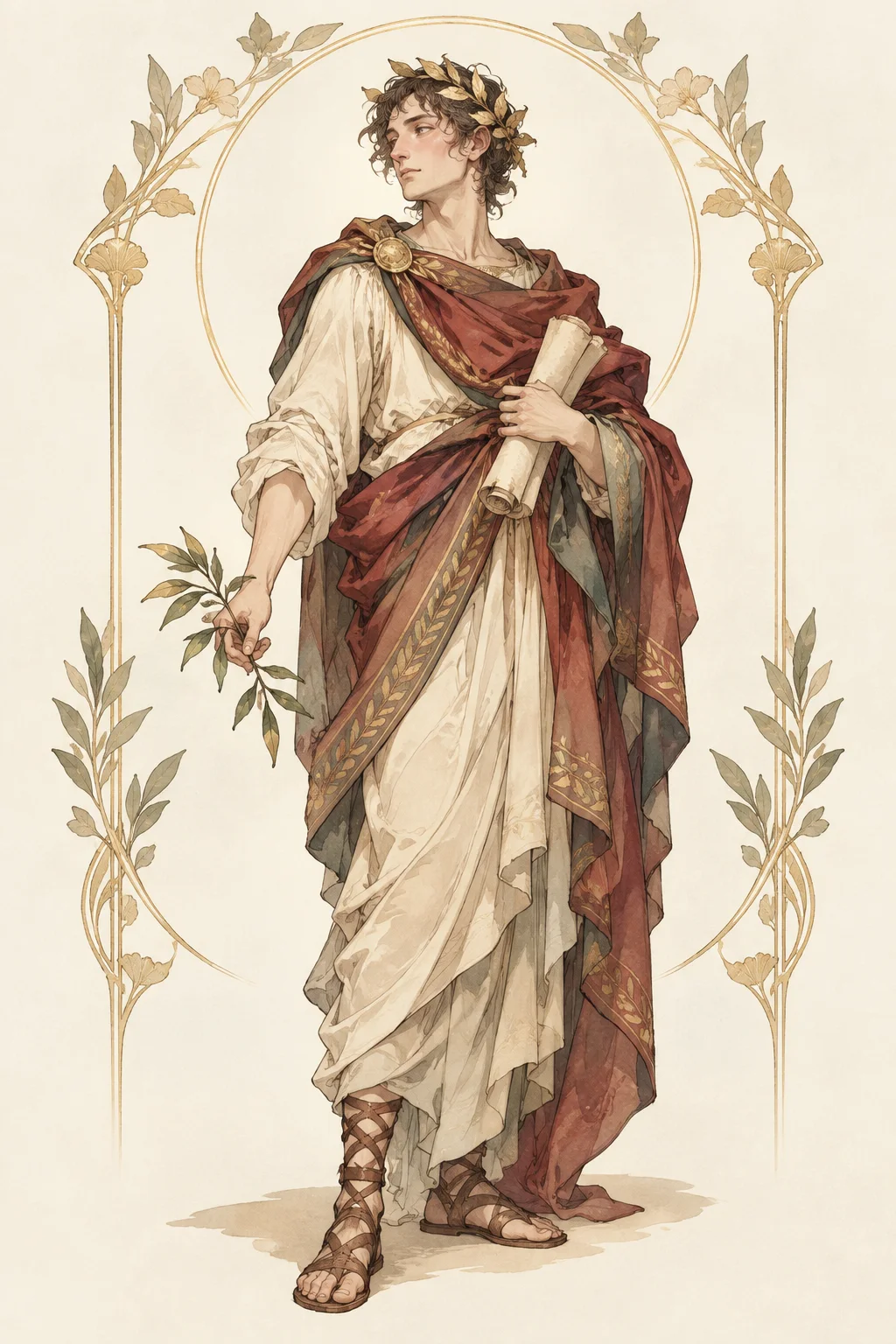
Celebrity Index IEI-Q "Dreamteller" Horace (Quintus Horatius Flaccus)

Horace (Quintus Horatius Flaccus)

IEI-Q "Dreamteller" Poet · Roman · 1st c. BC

Roman poet (65–8 BC). Creator of the phrase "carpe diem (seize the day)." Served as court poet of the Augustan age, composing the lyric Odes and Satires. His philosophical gaze at the joys of daily life and the brevity of existence reaches readers 2,000 years later — the pinnacle of Latin literature.

Leading Function-Ni-p (Crisis & Fantasy)

The philosophical structure of carpe diem begins with the -Ni-p intuition that "the crisis of death and impermanence exists as reality." "Alas, the fleeting years slip by" (Odes 2.14), "winter comes, snow piles up" (Odes 1.11) — collapse, death, and the turning wheel of fate are the sensed starting point of each poem; sensory pleasure is their conclusion. The core of -Ni-p action: grasping the crisis-reality intuitively and translating it into verse.

Creative Function+Fe-c (Elation & Revelation)

"Carpe diem," "nunc est bibendum," "aurea mediocritas" — words that have delivered quiet inner liberation and revelation to readers for 2,000 years, evidence of the +Fe-c creative function. Not the noisy excitement of a crowd but an inner awakening: "from the intuition of death, release yourself into joy now." The Odes continue to be read because the +Fe-c function of emotional release and insight operates across time.

Vulnerable Function 1-Te-p weak (Optimisation & Ingenuity)

Working as a treasury clerk while consistently prioritising poetry over practical duties — evidence of -Te-p weak (Optimisation & Ingenuity). His livelihood depended entirely on Maecenas' gift of the Sabine farm; there was no practical plan for self-sufficiency. Farm management was largely delegated to tenant farmers, and daily practical optimisation was consistently subordinated to poetry, dinners with friends, and inner reflection.

Vulnerable Function 2+Si-c weak (Diligence & Care)

Farm life not worked by his own hands but left to tenant farmers — evidence of +Si-c weak (Diligence & Care): a fundamental inability to sustain day-to-day practical management and physical labour. Contemporary assessment of "Horace the lazy" survives. The inability to maintain bodily diligence and daily caretaking expressed itself as a consistent pattern of dependence on powerful patrons (Maecenas, Augustus) for physical security.

Quadra / Temperament / Club

Quadra: Beta Quadra (Empire) — living within the Beta-inflected power structure of Augustan praise, military service under Brutus, and complete economic dependence on Maecenas. A sense of mission as "the Roman poet," consciousness of passing the glory of empire to posterity, resonates with Beta Quadra values. At the same time, "he who cannot live on little is always a slave" and the retreat to the farm reveal Alpha values, pointing to a complex position: a poet who held Alpha values while living within the Beta frame of poetic mission.

Temperament: Fleeing the battlefield at Philippi, quietly resisting the appointment as court poet, retiring to the farm — the embodiment of the Receptive-Adaptive temperament: going with the flow rather than confronting it head-on, while maintaining the inner world of poetry. A consistent pattern of adapting to the current of power (Brutus → Augustus) without resistance, while preserving creative life.

Club: The pure expression of the Humanitarian-Artistic Club: delivering the universal themes of human death, joy, and love through the art form of poetry, reaching readers 2,000 years later. Activity within the literary community of Maecenas' salon, poetic friendship with Virgil — the fusion of artistic mission and human solidarity as the core of creative life.

Worldview & Attitude

The world is complex and inherently good (positivism). Deep trust in human possibility and social transformation as the premise of action. The positivism of carpe diem: "the joy of this moment — friends, wine, nature — exists as good." Intuiting the crisis of death and impermanence, yet affirming the good that is present now: the stance of affirming only the beauty and joy that exist here and now runs through the entire collected poems.

Attitude toward Change: Embodying the possibility of transformation and functioning as a symbol of people's hope. A tendency to show the direction of change but entrust its execution to the times and successors. Carpe diem as a thought has continued to transform human action for 2,000 years. Left seeds of change across time through the form of poetry.