
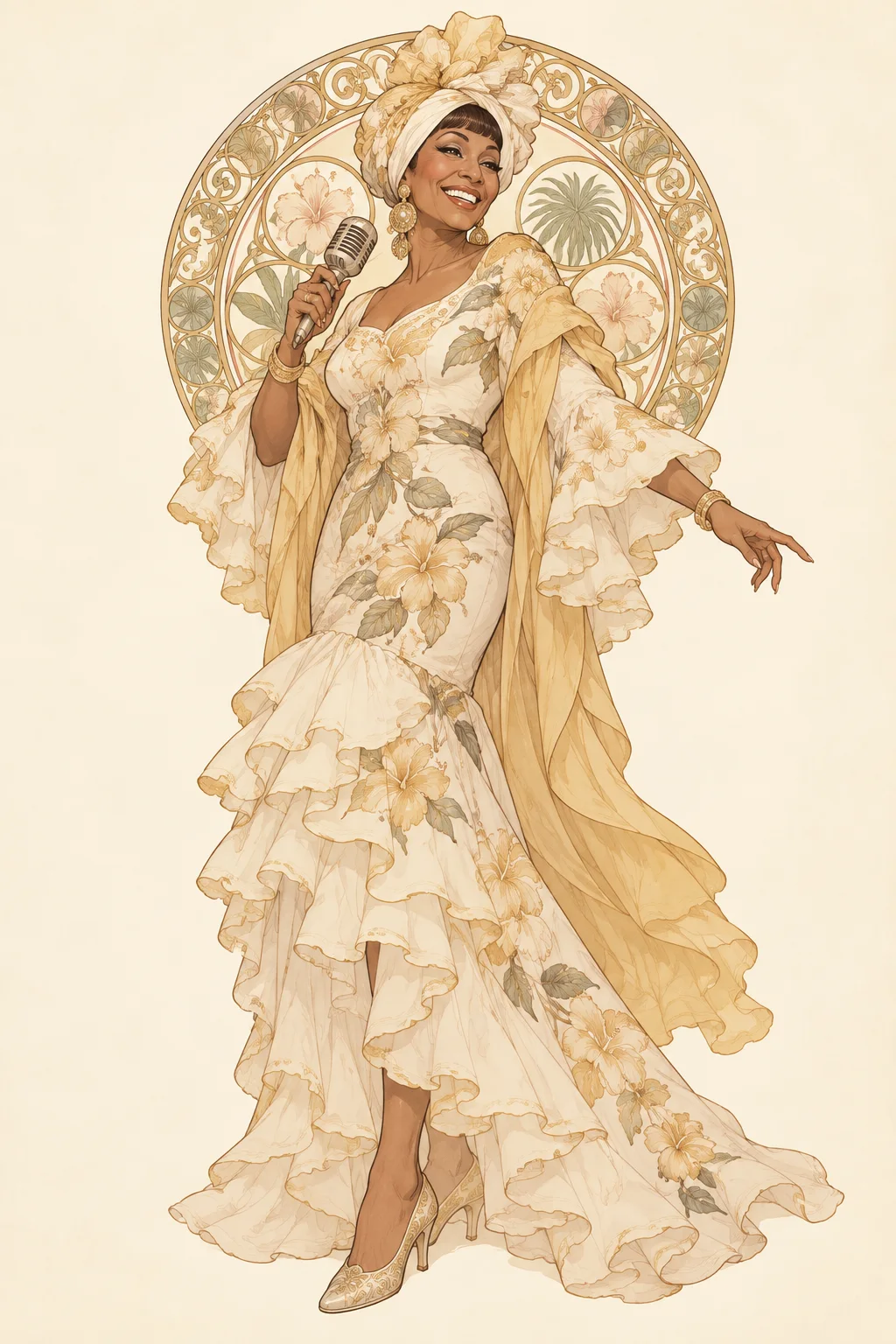
Celebrity Index SEI-Q "Performer" Celia Cruz

Celia Cruz

SEI-Q "Performer" Singer · Cuban · 20th c.

Cuban singer (1925–2003). After the Castro regime, she emigrated and reigned as the "Queen of Salsa" based in New York. Receiving the Grammy Lifetime Achievement Award, she continued performing into her late 70s. The supreme symbol of Cuban exile identity.

Leading Function-Si-p (Sensibility & Subtlety)

Stage costumes consistently in gold, silver, and red, using 50+ wigs. Even the catchphrase "¡Azúcar! (Sugar!)" calculated for voice tone, timing, and venue resonance.

Creative Function+Fe-c (Elation & Revelation)

The moment she shouted "¡Azúcar!" the entire venue exploded — Celia shouting out of spontaneous joy while simultaneously an incantation to uplift the audience. "If I'm not happy, the audience won't be happy."

Vulnerable Function 1-Te-p weak (Optimization & Ingenuity)

Weak -Te-p: her husband Pedro Knight handled all music direction, financial management, and scheduling — Celia stated "I can't do anything without Pedro." Complex copyright issues fully delegated.

Vulnerable Function 2+Ni-c weak (Future & Challenge)

Weak +Ni-c: dreaming of returning to Cuba throughout her life without possessing any political approaches or action plans for its realisation.

Quadra / Temperament / Club

Quadra: Anti-Gamma Quadra (Utopia) — against the Castro regime as γ power order, Celia became the symbol of the collective musical community of Cuban culture and salsa.

Temperament: Receptive-Adaptive temperament: exile, husband's illness, skin-colour discrimination, gruelling work into her 70s — overcoming through "the best stage today."

Club: Socialite Club: inviting audience members up to the stage, dancing with backstage staff, never refusing anyone at autograph sessions — "wrapping everyone as family."

Worldview & Attitude

"The political repression and cultural exile from Cuba exist" — the direct statement of present reality. The ないもの (a Cuba already freed) is not proclaimed.

Attitude toward Change: Functioning as a symbol of hope for post-exile Cuban cultural transformation.