
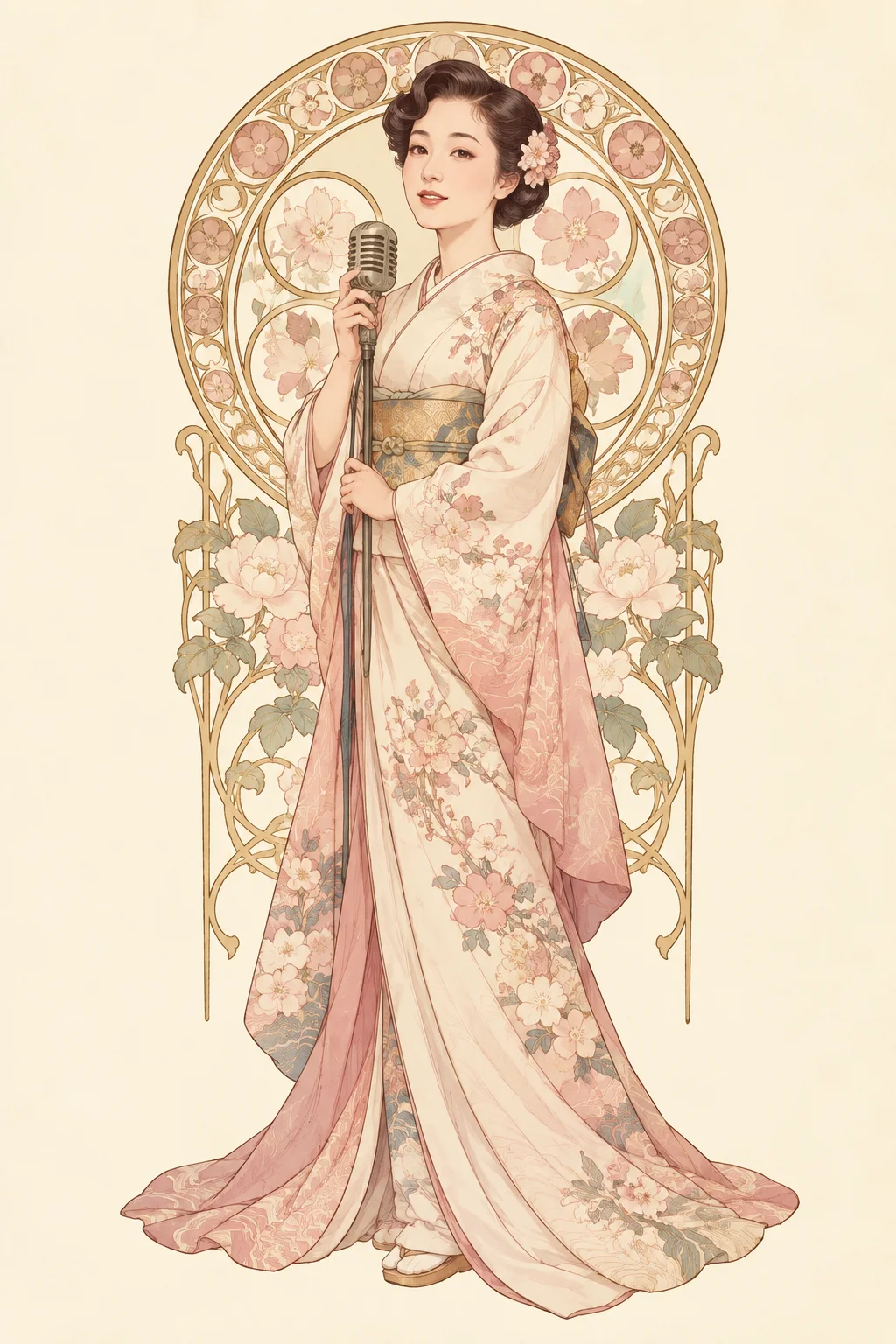
Misora Hibari
SEI-Q "Performer" Singer · Japanese · 20th c.Japan's national singer (1937–1989). Debuting at 8 and singing over 1,500 songs — "the Shōwa songstress." Her final concert performance through debilitating illness remains one of the most moving moments in Japanese popular culture.
Leading Function-Si-p (Sensibility & Subtlety)
From debut at 9, she personally checked everything — stage costume, hairstyle, microphone angle. In later years fighting serious illness: "If my costume shifts even slightly, I lose concentration."
Creative Function+Fe-c (Elation & Revelation)
The 1989 Fushichō Concert — standing before 150,000 people with a body swollen from illness and singing "Kawa no Nagare no Yōni" — a rare recording of singer and audience simultaneously reaching the emotional extreme.
Vulnerable Function 1-Te-p weak (Optimization & Ingenuity)
Weak -Te-p: entertainment production management, tax affairs, and copyright management all handled by her brother and office — "I have never calculated money." The 1992 inheritance dispute revealed financial problems.
Vulnerable Function 2+Ni-c weak (Future & Challenge)
Weak +Ni-c: even in "I don't know if I can sing next year," she concentrated solely on "singing this one song best right now" rather than long-term strategy.
Quadra / Temperament / Club
Quadra: Anti-Gamma Quadra (Utopia) — amid the postwar competition, inequality, and Zainichi discrimination, Misora Hibari functioned as the symbol of an emotional community of "Shōwa joy, sorrow, and warmth."
Temperament: Receptive-Adaptive temperament: overcoming discrimination, illness — "singing and showing a smile" as the consistent action pattern.
Club: Socialite Club: post-performance backstage greetings, fan handshakes at regional concerts, consolation concerts — the lifelong pattern of "plunging into the circle of people."
Worldview & Attitude
"The postwar hardship and social division of Japan exist" — the direct statement of present reality. The ないもの (a world healed) is not proclaimed.
Attitude toward Change: Functioning as a symbol of hope for Japan's postwar spiritual transformation — music as the means of communal restoration.
