
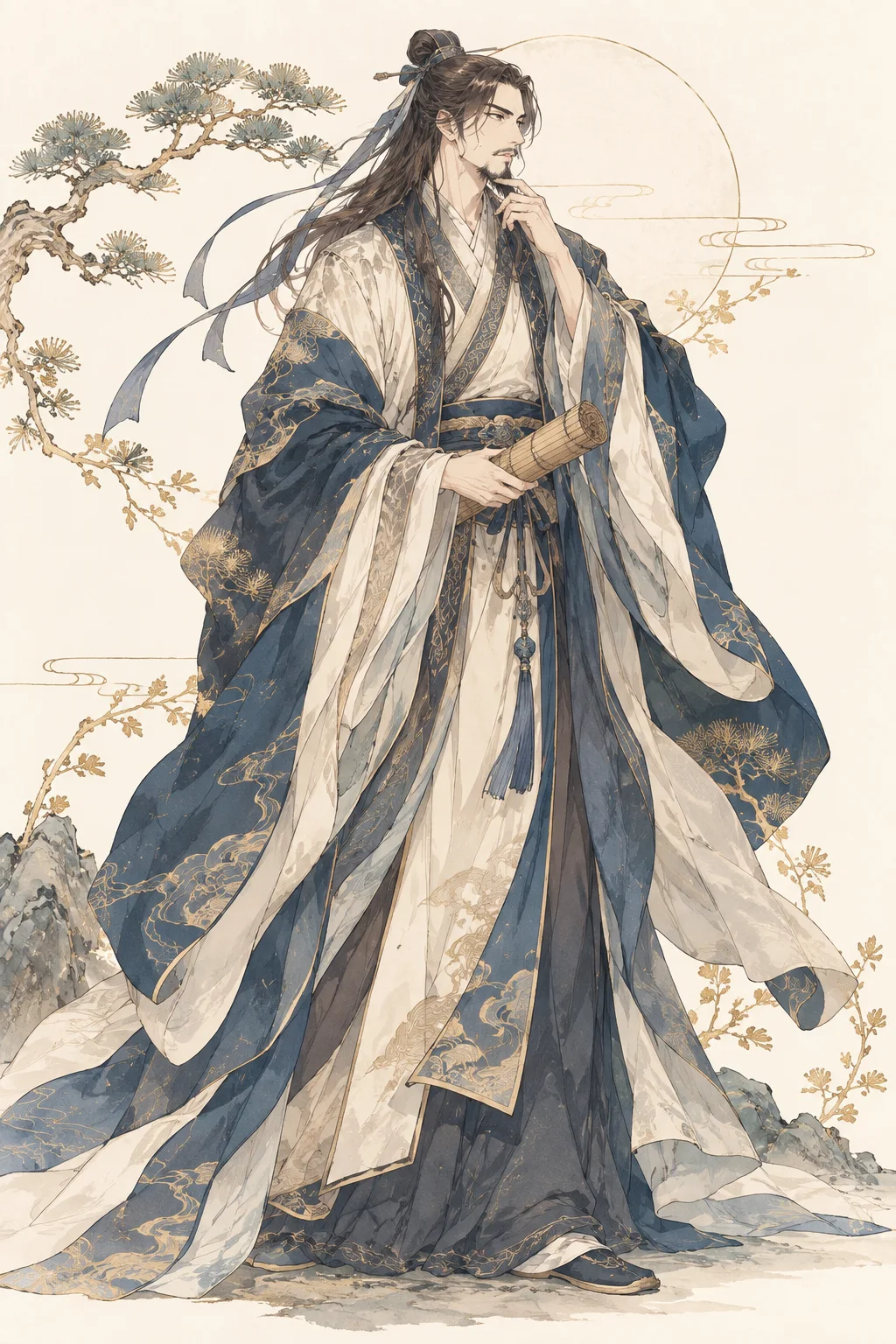
Zhang Liang (Zifang)
ILI-D "Strategist" Strategist · Chinese (Han) · 3rd–2nd c. BCHan dynasty strategist (c. 250–186 BC). Serving Liu Bang (later Emperor Gaozu of Han), he provided strategic support during the Chu-Han War — one of the "Three Heroes of the Early Han." His crisis management at the Hongmen Banquet and his strategic insight at the critical moments of the war made him legendary. He voluntarily retired after Liu Bang's victory — the ideal type of the strategist who knows when to leave.
Leading Function+Ni-p (Prediction & Evolution)
Early detection of the Qin Empire's collapse as a historical turning point and accurate strategic response as Liu Bang's adviser — the core of +Ni-p action. Recognition of the Battle of Gaixia as a long-term turning point; reading Xiang Yu's internal contradictions.
Creative Function-Te-c (Application & Experiment)
Practical analysis of strategic situations and diplomatic negotiations — the core of -Te-c creative function. Practical personnel deployment — granting military authority to Han Xin; practical management of diplomatic negotiation as evidence.
Vulnerable Function 1+Fe-p weak (Mission & Prestige)
Weak +Fe-p: the consistent pattern of long-range prediction focus pushing emotional human connection to the background.
Vulnerable Function 2-Si-c weak (Relief & Resolution)
Weak -Si-c: long-range strategic prediction focus consistently pushing sensory human care to the background.
Quadra / Temperament / Club
Quadra: Gamma Quadra (Market) — concentration on efficient strategic judgement in the power market. The γ pragmatism of prioritising long-term value over personal loyalty appearing in the choice between Xiang Yu and Liu Bang.
Temperament: Receptive-Adaptive temperament: switching roles — strategist, diplomat, hermit — in response to the situation. Consistently choosing efficient shadow contribution over frontal domination.
Club: Researcher Club: the core of Zhang Liang's Researcher Club activity was systematically integrating Sun Tzu's Art of War, Korean politics, and Chu-Han War intelligence into military and diplomatic recommendations for Liu Bang.
Worldview & Attitude
"The flow of the realm cannot be read by force alone" — strategic realism. A worldview that sees structural dangers and trusts intelligence-based strategy as the response.
Attitude toward Change: Executing the founding of the Han Empire as a realistic plan — followed by retirement, the "waiting" posture of the sage-strategist who withdraws from power once his mission is accomplished.
