
ILI-D – Strategist –
The contemplative Strategist who quietly reads ahead and lays the groundwork
You are someone who quietly sees the long-term consequences of things.
You aren't swept along by trends or excitement, and you quietly lay down sure groundwork, move after move.
What you treasure above all is your own timeline and the freedom to think.
- Quadra
- Gamma γ
- Bouquet
- Receptive-Adaptive temperament
- Club
- Research
Portrait — the Strategist

The Strategist is someone who quietly sees how things will unfold down the road. They sense by intuition the contradictions and distortions that aren't visible yet, and over time build up in their mind the long-term current: "if this keeps going, here's where it will end up." Rather than flashy phenomena, they fix their gaze on the structural changes and turning tides beneath.
And they aren't swept along by trends or excitement. They examine every proposal with a skeptical eye, quietly asking again, "is there really any meaning in this?" and "isn't this a waste of time?" They deliberately avoid taking risks, choosing the path that "loses nothing fatal" over the one that goes for the win. Not the big gamble, but stacking up moves that can't lose: that is how this person fights.
What they treasure above all is their own timeline and the freedom to think. They don't like matching other people's pace, hate being bound by formalities and rules, and bring only fully matured plans into reality. They don't even swallow the knowledge they've built up whole; they test it within themselves and rewrite it into new hypotheses. A mind that is quiet, yet shrewdly flexible.
They quietly step back from the circles of success and bustle that others chase. From behind the scenes they observe the situation and discern the future patterns that hold meaning for them. They don't easily believe in authority or grand causes, and put inner balance and freedom first. Yet beside someone with drive who will move at the decisive moment, that quiet insight truly becomes a power that moves reality.
Not winning, but not losing.
Does this sound like you?
- When everyone is getting excited, you quietly keep your distance, alone.
- Rather than a big gamble, you choose the path that "loses nothing fatal."
- You know quality drops when you're rushed, so you don't move until the moment is ripe.
- You speak only when necessary, and usually observe from within silence.
- You don't swallow even the knowledge you've built up whole; you test it again within yourself.
- You have quiet particularities about checking things before going out and how your tools are arranged.
- With one-sided orders, you may comply on the surface but strongly resist inside.
- You sometimes miss opportunities by "not moving until the chance of failure is zero."
- When your emotional balance breaks down, you shut yourself away and give off a sullen air.
- You connect deeply only with people who value equality and freedom.

How you move

The Strategist's behavior is supported by a caution that conserves energy and a patience that waits for the moment to ripen.
The first thing the Strategist's behavior conveys is stillness. Rather than plunging straight into what's in front of them, they first observe the environment and the flow of people. In daily life they can look easygoing at a glance, but that is a choice made to avoid wasting energy — they set themselves in motion only when the future meaning comes into view. The way they use money and effort is strategic too. While they dislike wasteful spending, they spare no expense on anything tied to "peace of mind" or "freedom of thought." They prefer a frugal, philosophical way of living, content as long as a minimum of comfort is maintained. And they protect themselves meticulously. A check before heading out, the placement of their tools — not showy hygiene management, but a quiet, rational routine meant to "prevent accidents and confusion before they happen." Everything is arranged to protect their own contemplation and quiet.
Not appearances, but the long flow of consequences.
- Observes the environment and the flow of people before quietly starting to move
- Dislikes wasteful spending, but spares nothing for freedom of thought
- Keeps quiet, rational routines that prevent accidents and confusion before they happen
Given a place where you can keep your own tempo, your foresight reaches surprisingly far.
How you speak and listen

The Strategist's dialogue is marked by observation within silence and a predictive remark offered only when needed.
The Strategist speaks only when necessary, and the rest of the time watches the other person from within silence. They aren't talkative, yet every word carries a predictive depth, striking sharply at the essence of a situation or the current of what lies ahead. Rather than guiding people with words, they use timing and silence to prompt the other person to realize things on their own. They don't try to control others. They respect individual freedom and choice, avoid a forceful tone that inflames emotions, and prefer polite, indirect expression. They make a quiet suggestion only when needed, and then wait. Their way of speaking is slow, at times conveying an almost hypnotic calm. They don't demand an immediate reaction, letting the dialogue grow over time. They are skeptical of outside activities and other people's plans, asking again, "Is there any meaning in this?" — not an emotional rejection, but a quiet refusal of anything that doesn't fit their own sense of time.
Observation within silence, and a single word only when needed.
What lies at the core — drive and tender spots
See ahead, then confirm. This single line.
The one unstoppable engine within the heart

At the Strategist's center lie an intuition that sees far ahead and an eye that verifies by working with the hands.
At the Strategist's center are two forces combined. One is the power to quietly read long-term consequences (+Ni-p) — the work of continually drawing a gentle curve of the future, "where will this current eventually head?", from the smallest clues of change. The other is the power to confirm it by working with the hands (-Te-c) — the work of piling up small experiments and prototypes that solve "the trouble at hand," testing the design against reality. An intuition that foresees, and hands that test and fix — together, 〈Choice & Stratagem〉. The name "Strategist" comes from exactly this: fixing on the long-term consequences, choosing the moves, and engineering a sure path. When this foresight and verification are quietly at work, the Strategist is living at their deepest.
What they can do, yet do not prize

It may come as a surprise, but the Strategist is actually quite good at both meticulously building systems of logic and freely picturing airy possibilities. The power to construct a coherent framework of reasoning, the power to open up branches of "what if it went another way" — that latent capacity is considerable. They simply don't place much weight on it. More than pure logic puzzles or the endless spread of possibility for its own sake, their attention turns to "how will this unfold?" and "how should I lay the groundwork?" That is why the Strategist's thinking always has an exit in the form of a long-term outlook and a sure move.
What the heart secretly craves
What they secretly seek is the power to stand out front on the ground and break through, and to open people's true feelings and bring them to reconciliation.
What the far-seeing Strategist finds hard to generate on their own, yet longs for more deeply than anyone — it is the breakthrough force to step forward at the decisive moment, seize the current with momentum, and protect and lead people (+Se-p), and the power to draw out others' true feelings and land a stiffened relationship into reconciliation (-Fi-c). While their foreseeing eye is second to none, when it comes to standing on the ground themselves to command the space, or loosening and binding people's emotions, they suddenly feel unsure. That is exactly why they feel deep trust and ease beside a partner who stands powerfully out front, warms the space, and brings people together as one — the Strategist's foresight becomes a force that moves reality only when paired with a partner who acts.
The most fragile place
The Strategist is most fragile at fervently waving the flag to rally people, and at arranging sensory comfort.
The most fragile is the role of spreading passion through charisma and lifting people into elation (+Fe-p). When asked to "be more fired up" or to "raise the flag and rouse everyone," the Strategist, who has quietly watched the road ahead, doesn't know how to act and turns awkward. The other is continually attending, in fine detail, to the sensory comfort of a place (-Si-c) — the work of constantly tuning temperature and atmosphere to keep things cozy is the area the Strategist is least suited to. This isn't so much a flaw as the flip side of the insightful eye. Fervent flag-waving and sensory caretaking can be left to those who are good at them.

- Core: quietly reading long-term consequences, and confirming them by working with your hands
- What drives you: stacking up sure moves and losing nothing fatal
- Where you're fragile: waving the flag with passion, arranging sensory comfort
Strengths, and where you stumble
Someone who stands powerfully out front and warms the room.
Strengths — Test, seize, break through

The Strategist's strength is the eye that foresees long-term consequences and the judgment that sees through to the essence. They quickly grasp the essence and background of a given task, discerning "what will ultimately matter" before they act. They sense future risks and signs of change that haven't yet surfaced, quietly sounding the alarm — "if we do this now, a problem will arise a few months down the line" — a person who prevents a boss's runaway impulses and a project's waste before they happen. Even with modest self-assertion, when asked they organize the situation with lucid logic, and for illogical decisions they prompt a course correction indirectly, yet precisely.
Where they tend to stumble

Where they tend to stumble is the flip side of that caution and insight.
Where they tend to stumble is the flip side of that caution and insight. Because their power to predict future crises is so high, their caution toward uncertainty can become excessive, and they may miss opportunities by "not moving until the possibility of failure disappears." Also, when their inner emotional balance breaks down, they can shut themselves away or grow ill-humored, affecting those around them with an "air that's hard to approach." To one-sided orders or instructions that appeal to emotion, they may comply on the surface while strongly resisting inside, silently keeping their distance. Yet that very skepticism and caution is also the source of the power to see through crises no one else notices and to choose the sure path — knowing this, they can get along more easily both with themselves and with those around them.
When you meet someone with drive, your foresight doesn't end as pie in the sky; it becomes a real power that moves reality.
- Hand the power to stand out front and move the room to someone who's good at it: "I'll leave the rest to you"
- Knowing not all uncertainty can be erased, try stepping out, even half a step
- While discomfort is still small, put it into words to someone you trust and let it go
Where you thrive
You shine where you're given only the goal and then left to it.
Environments Where They Thrive
The Strategist performs best in an environment where they can protect their own tempo and the flow of their designs and draw up long-term strategy. In settings that press for immediate quotas or quick responses they find it hard to bring out their power; it is in intellectual work — abstract, theoretical construction and design — that they show their true worth. They struggle with settings heavy on hierarchy and detailed instructions; their abilities come alive when they are given only the goal and then left to it. What they seek is a personal space free of interference and mental freedom.
As a field commander
Concretely, roles where long-term outlook and design come alive suit them. A long-term planner of national strategy or macroeconomics, a geopolitical analyst, a consultant who judges risk assessments and whether a project should proceed — work where the power to read ahead speaks. Or research and criticism in philosophy, the history of ideas, and theories of civilization, and the realm of intellectual creativity that envisions the future — it is precisely in settings where an eye that reads "long-term consequences" over near-term gain and loss comes alive that the Strategist brings out their power most richly.
Dialogue — ask Veronika

One free dialogue · Le Salon members can explore several perspectives. Not a real person: a representative perspective based on the public profile.
Relationships and love
Can you share time? Can you stay equals?
Love — Honoring freedom, opening the future together
The Strategist's love is the bond of comrades who don't infringe on each other's freedom and can quietly gaze at the same future together.
The Strategist's love is cautious. Unswayed by surface charm or flashy words and gestures, they deeply observe, over time, the other person's thinking style and stance toward the future — a love that, rather than love at first sight, discerns whether a long-term vision can be shared. What they seek is a partner with whom they can share deep contemplation without infringing on their own individualism. They struggle with strong emotional demands and interference, but with a partner they can simply be with even in silence, they become quietly and deeply bound as they accumulate a "sharing of time."
[Women] A woman who quietly discerns love as part of her life strategy. Unswayed by flashy words and gestures, she deeply observes the other person's thinking style and stance toward the future, valuing "whether she can resonate with the other's flow of time" over sharing emotions. She chooses marriage too by "with whom she can quietly coexist over the long term," prizing the quality of thought, compatibility of sensibility, and a relationship that protects each other's freedom over love itself. At home she avoids emotional storms, preferring a space of contemplation and ordered tidiness, and raises children on the premise of equal conversation once they have grown. The key to her relationships is a softness that doesn't lean too heavily on reason and distance, and that forgives the other's immaturity.
[Men] A solitary thinker who places weight on his own private vision of the future and his intuitive premonitions. Unswayed by his partner, he grows the relationship over time, and his emotional expression is extremely restrained. He has no interest in holding the initiative in romance, watching instead "how this relationship contributes to his own contemplation." He idealizes marriage as a loose alliance between two self-reliant people, avoiding codependence and domination. At home, rather than stepping forward, he acts as a quiet rear-guard supporter who gives his partner room to grow and reflect. Not rushing conclusions, respecting silence and time alone, able to have a philosophical dialogue in a chance moment — a relationship with that kind of room is what this person finds most comfortable.
How You Love — Love Through Quiet Planning
Yours is a love that reads a partner's future with temporal intuition (Ni) and gives it shape with practical logic (Te). Rather than stringing together sweet words, you try to hand the person you love something real and useful. When they're at a loss, before comforting their feelings you've already quietly prepared the concrete fix — the plan, the steps, the information: “here's how to solve this.” That is your most sincere expression of love. You may look cool on the surface, but you're acting with their next several years in view. It isn't showy — yet the length of that gaze is exactly the depth of your love.
Compatibility — recommended partners
 Orchestrator
 SEE-QA natural orchestrator who reads the room and guides people toward reconciliationDualityStands powerfully out front, warms the space, and brings people together as one Advisor
 IEE-QOne who quietly draws near and listens to the heartIllusionaryMore indirect than duality, yet warm empathy and trust flow between them Reformer
 SLE-QAn executor who breaks through by force and rewrites conventionSemi-dualityNostalgic and dependable, giving the security of belonging Judge
Judge ESI-QThe quiet arbiter who discerns right from wrongActivationWith sincerity and hands-on presence, they spark your conscience and action Philosopher
 EII-QOne who, in the stillness, keeps questioning the meaning of the worldBenefactorYou naturally want to give them the depth of your gaze toward people Inspector
 LSI-QThe logician who strips away pretense and sees through to the truthBeneficiaryWith this person, you naturally receive an ordered sense of security Pioneer
 LIE-DCarving the way through results — the realist's frontierMirrorSame direction, different method. You sharpen each other's far-seeing eye Executive
 LSE-DSet it in order, get it moving, see it throughSupervisor (mirror)You can't help wanting to pass on your long-term outlook, like a master Hero
Hero EIE-DIt is this conviction that changes the worldSupervisee (mirror)From this person, you can't help receiving and learning passion and driveSee the other relationships (22 more types)
The upper bands are easier to be with; the lower bands tend to wear you down. Tap a relation name to read about the pair.
 Craftsman
 SLI-DThe artisan who sets the world in order in the palm of his handBusinessA partner you can easily work alongside, adapting to the situation together. Prophet
 IEI-DAn eye that gazes upon a destiny no one has yet noticedKindredA partner whose conversation flows easily, someone who likes to express things in the same direction as you. It can wear you out once it turns competitive. Seeker
 ILE-QAn intellectual adventurer who unravels the worldCompassA partner who gives you a sense of being accepted, along with a hint of which direction to move in. Peacemaker
 SEI-DA bridge between sensation and compassionIdealA partner who naturally embodies what you aspire to be, easy to admire. Getting too close tires you out. Enthusiast
 ESE-DThe cheerful flame that sets the world ablaze with feelingCorrectionA partner whose feedback becomes a chance to take stock of yourself. Analyst
 LII-QFrom the quiet of the desk, reassembling the worldTranscendenceA partner who makes you want to surpass yourself when you're together, pushing each other to grow. Commander
 LIE-QBuild, prepare, hold the line — the command center of orderCodependencyA partner who wears you down little by little, caught in a cycle of bottling things up and overcompensating. Guardian
 ESI-DA silent shield that protects people, with rightness at its backRelaxationA partner who puts you at ease, though you tend to end up waiting on them with quiet expectation.
SEE-DA born leader who reads hearts and rallies the currentDetachedA partner who's hard to feel drawn to, leading to a rather flat, low-key relationship. Critic
 ILI-QThe insightful Critic who sees through contradictions in the depths of silenceAdaptiveA partner you settle into by simply playing your roles, an easy, unremarkable relationship. Mentor
 EIE-QA passionate standard-bearer who speaks of ideals and binds hearts togetherPlayerA partner around whom you constantly feel watched, prone to leaving you burned out. Enforcer
 LSI-DThe steel operator who carries out the mission through discipline and responsibilityTense BeneficiaryA partner who leaves you worrying and overthinking, prone to closing your heart off. Conqueror
 SLE-DA dependable field general who only burns brighter the harder things getDistrustA partner you can't quite bring yourself to trust, which makes it hard to show your own strength. Dreamer
 IEI-QA teller of fantasies who colors the world with dreams and passionDutyA partner who leaves you understanding what to do yet unable to act on it, while your need to be recognized grows stronger. Administrator
 LSE-QThe hands-on command post that keeps the field running and moves people and workSupervisorA relationship where you tend to unsettle the other person without ever realizing it. Empath
 EII-DSensing what lies beneath feeling, and becoming someone's quiet supportTense BenefactorA partner around whom you tend to try too hard, unable to shake off the tension. Promoter
 IEE-DMoving the world through fascination — an evangelist of ideasTediumA partner who leaves you feeling sluggish, prone to putting things off and keeping your distance. The Artist
 SLI-QGiving form to the “just-rightness” of nature and daily lifeFormalA relationship where formality and appearances pile up, and it's hard to ever fully relax. Harmonizer
 ESE-QTheir smile and their voice soften the space around themConflictThe partner most likely to strike your weakest point, the one relationship that drains you the most. The Architect
 LII-DThe architecture of logic, quietly built up piece by pieceQuasi-IdentityA partner who looks similar to you yet never quite clicks, leaving you spinning your wheels and worn out. Visionary
 ILE-DThe architect of ideas who reinvents the world through paradox and theoryDistanceA partner who makes you want to keep your distance and close your heart off. Performer
 SEI-QA gentle conveyor who gives form to sensation and feelingRoleA relationship where "you should" comes first, making it hard to just be yourself.Compatibility is not decided by type alone; maturity, subtype and circumstances all change it.
With someone you are connected to, you can read a personal Relationship Reading drawn from both of your answers ($8.99 per pair, unlimited for Le Salon members).
See compatibility with your connections →Explore Le Salon →
What You Truly Long For
What you secretly crave, deep in your heart, is the power of pressure and execution. Precisely because you can read so far ahead that you become unable to move…
In the Love Edition: What your heart longs for / What excites you / Where you clash and your landmines / Classic love scenarios / Chemistry by partner, all 32 types named / At home and as a parent / A practical playbook / Secrets to lasting love / A manual for your partner
Work and ways of working

Your Working Style — Insightful Visionary
You naturally excel in two main ways: reading ahead and seeing through to the essence and flow of things, and running systems efficiently to deliver results.
Your interest turns to talking through ideas and theories. Day to day, you're easygoing and unhurried; you go with the flow and don't force things.
With people, you keep your emotions low-key and maintain distance by following rules and procedures. When you act, you think about efficiency and method.
An eye that reads ahead, and a hand that runs things efficiently.
- Decide first on the material you'll judge by and the deadline, and make a provisional decision by then
- Before pointing out problems, acknowledge one sound part of the other person's plan
- In meetings, don't stop at simply listing the holes in the logic

Careers That Fit
Your power to read ahead, and to judge risk assessments and whether a project should go ahead, comes directly into play.
Your eye for "long consequences," rather than near-term gains and losses, comes directly into play.
Your careful way of laying down moves that "lose nothing fatal" becomes a strength as it is.
Your Strengths, and Work Better Avoided
Your core is the combination of "an eye that reads ahead" and "a hand that runs things efficiently." These two do more than voice predictions…
In the Business Edition: Natural strengths / work better avoided, Stress tolerance and socialization group, Work style, Motivation and recharging, How to work with and manage this person, Compatibility and team-building, Industry fit ◎○△ across 23 industries with rationale, Suitable roles
Blueprint of the mind
Your mind runs on eight blocks. Each block carries two functions — how you take in the world, and how you express yourself — and together they set both the range you're skilled in and how much you actually value using it. We've kept the technical notation small and explained everything in plain language.
See ahead, then confirm.
Leading Your centerI Know
+Ni-pPrediction & EvolutionTemporal intuition-Te-cApplication & ExperimentPractical logicFrom the slightest change, you keep drawing in your mind the curve of the future: "where will this current head in the end?"
You confirm that vision by working with your hands. You pile up small prototypes and experiments, and test it against reality.
See ahead, then test and fix. This single line is your strategy for engineering a sure path.
Mirror — Picked up by watching
At the entry point sits the work of trimming waste and seeing the opti…
In the Full Portrait: all 8 blocks of the blueprint / 6 ways back / situational guide / the reasoning behind the exemplars
Going deeper — ways back and situational guide
On the flip side of that same core, these are the situations where you tend to stumble. After that, six ways to get back on your feet.
By "not moving until the chance of failure disappears," you sometimes let opportunities slip.
When your inner emotional balance breaks down, you may shut yourself away too much or become sullen.
With one-sided orders, you may comply on the surface but strongly resist inside, and silently keep your distance.
Someone who stands powerfully out front gives your foresight real force.
Way to Recover 1 — Borrow the Power to Stand Out Front
Your eye for reading ahead is a gift. But to make your vision real, you need the power to stand out front and move the room…
In the Full Portrait: 6 ways back / situational guide (home, work, friends, under stress, shopping, days off)
People thought to share this type
Different fields, different eras — yet every one of them resonates on the same note: seeing the long consequences, never joining the frenzy, and quietly engineering the path to victory.
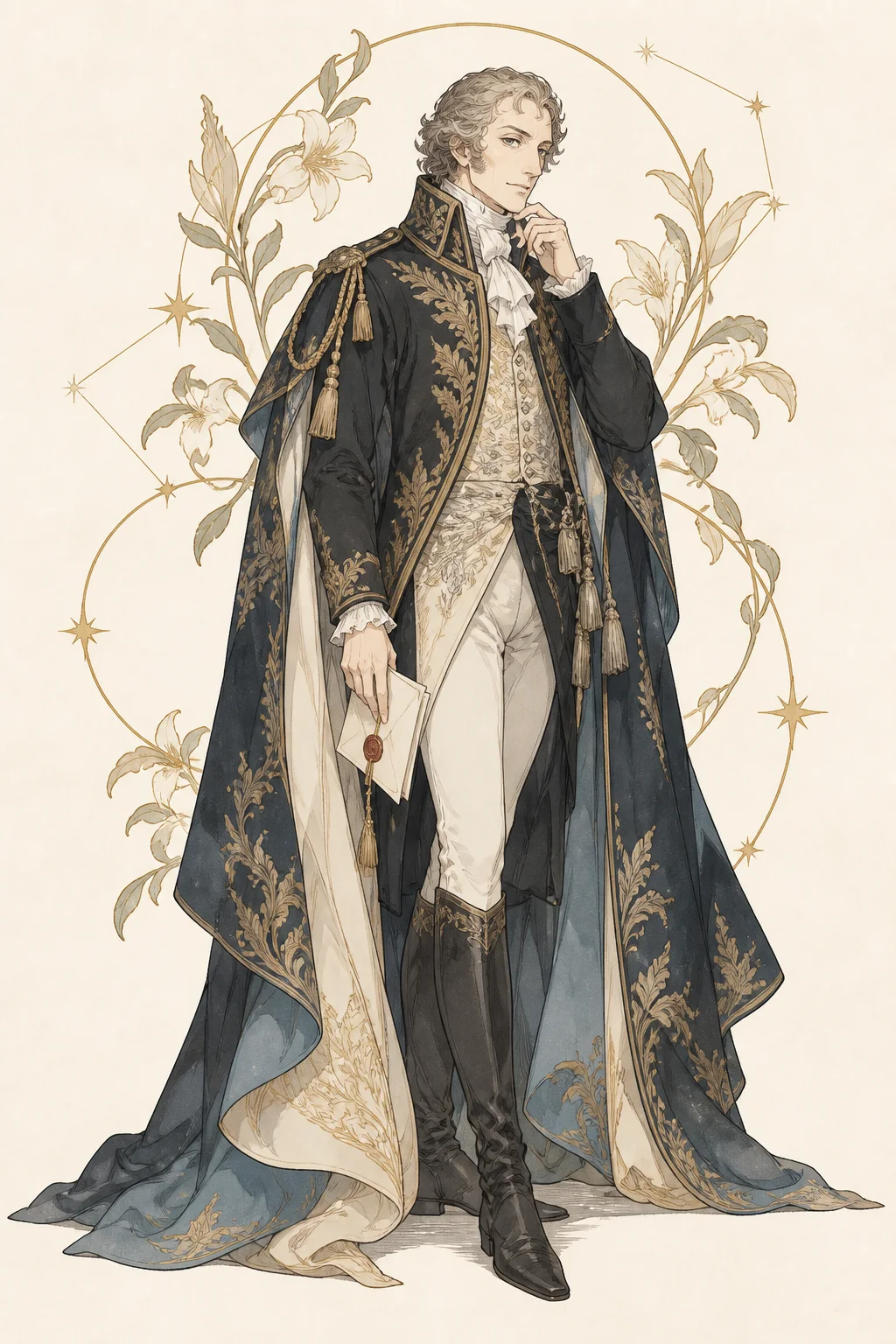 France · Politician & Master of IntelligenceJoseph FouchéA master of turncoat survival who outlasted every regime — he moved from the shadows through intelligence and the grasp of people’s hearts
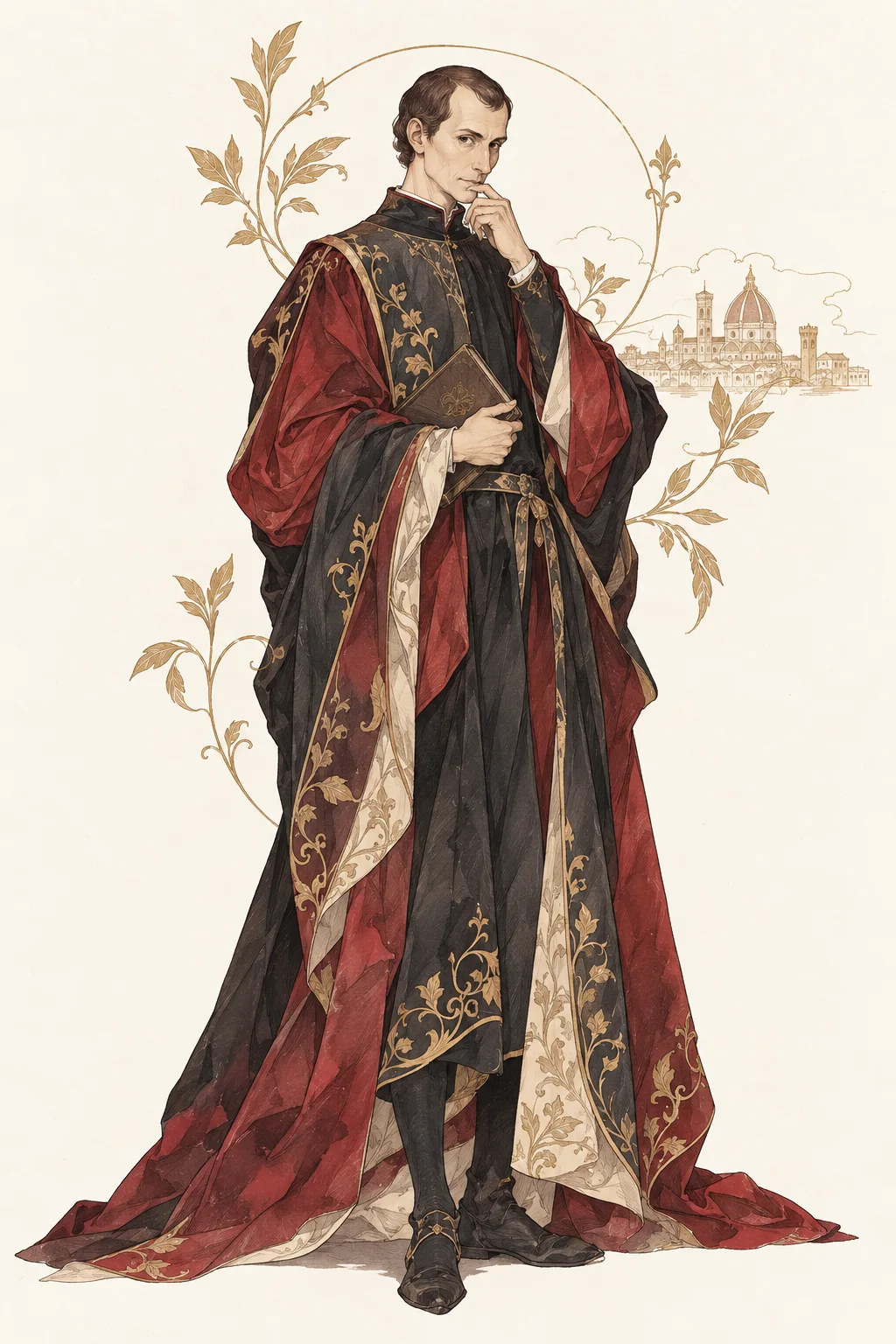 Italy · Thinker & DiplomatNiccolò Machiavelli“The Prince” — he expounded realpolitik with cold clarity and became the origin of the word “Machiavellianism”
 France · Monk & Diplomatic AdvisorThe Grey Eminence (Père Joseph)As Richelieu’s right hand, he moved France’s diplomacy from the shadows for thirty years
 Japan · Warlord & Military StrategistKuroda KanbeiThe peerless brilliant general who counseled the Great Return from Chūgoku — he read ahead and mastered the moment
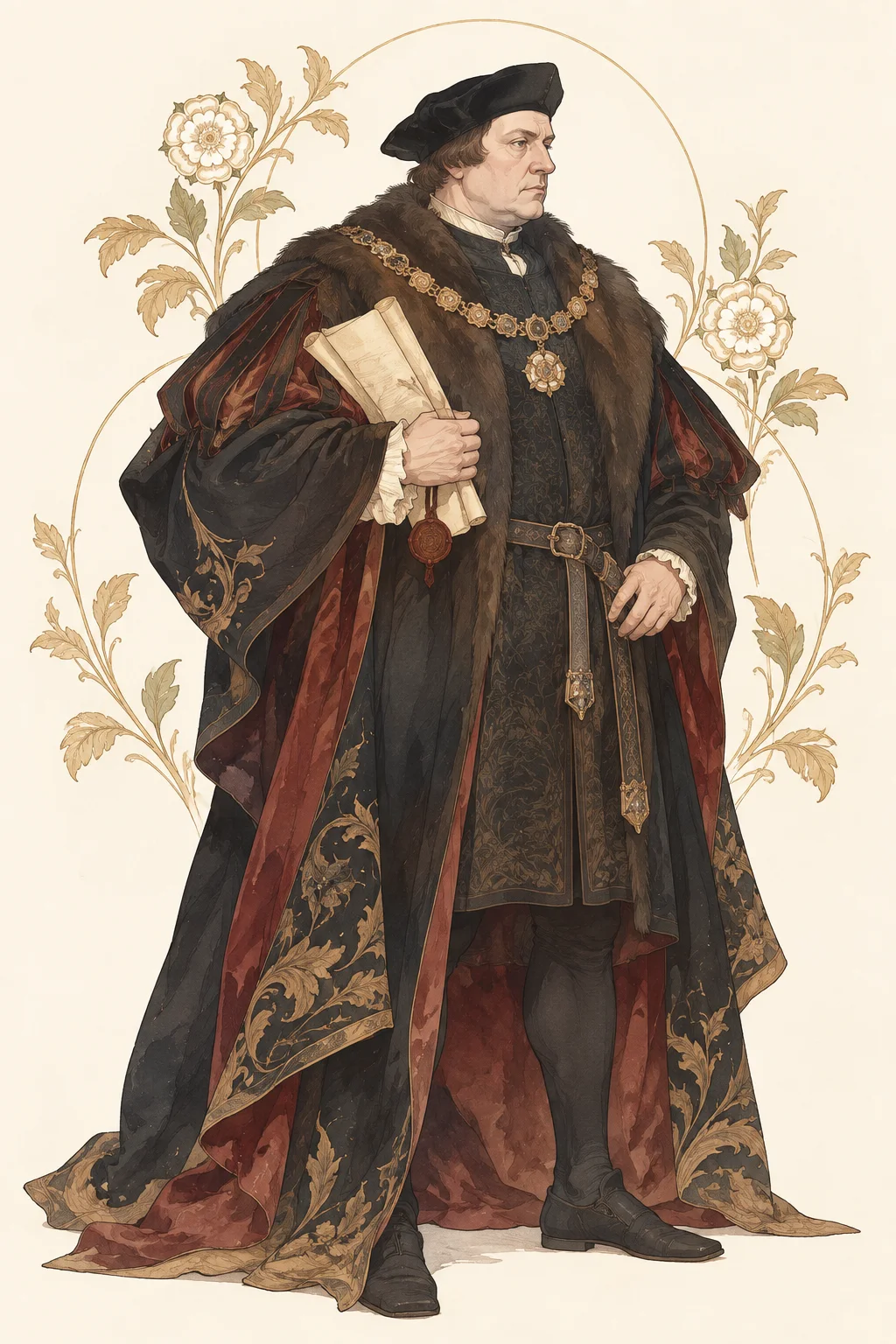 England · Statesman & LawyerThomas CromwellChief minister to Henry VIII — he carefully led the Reformation and the sovereignty of Parliament
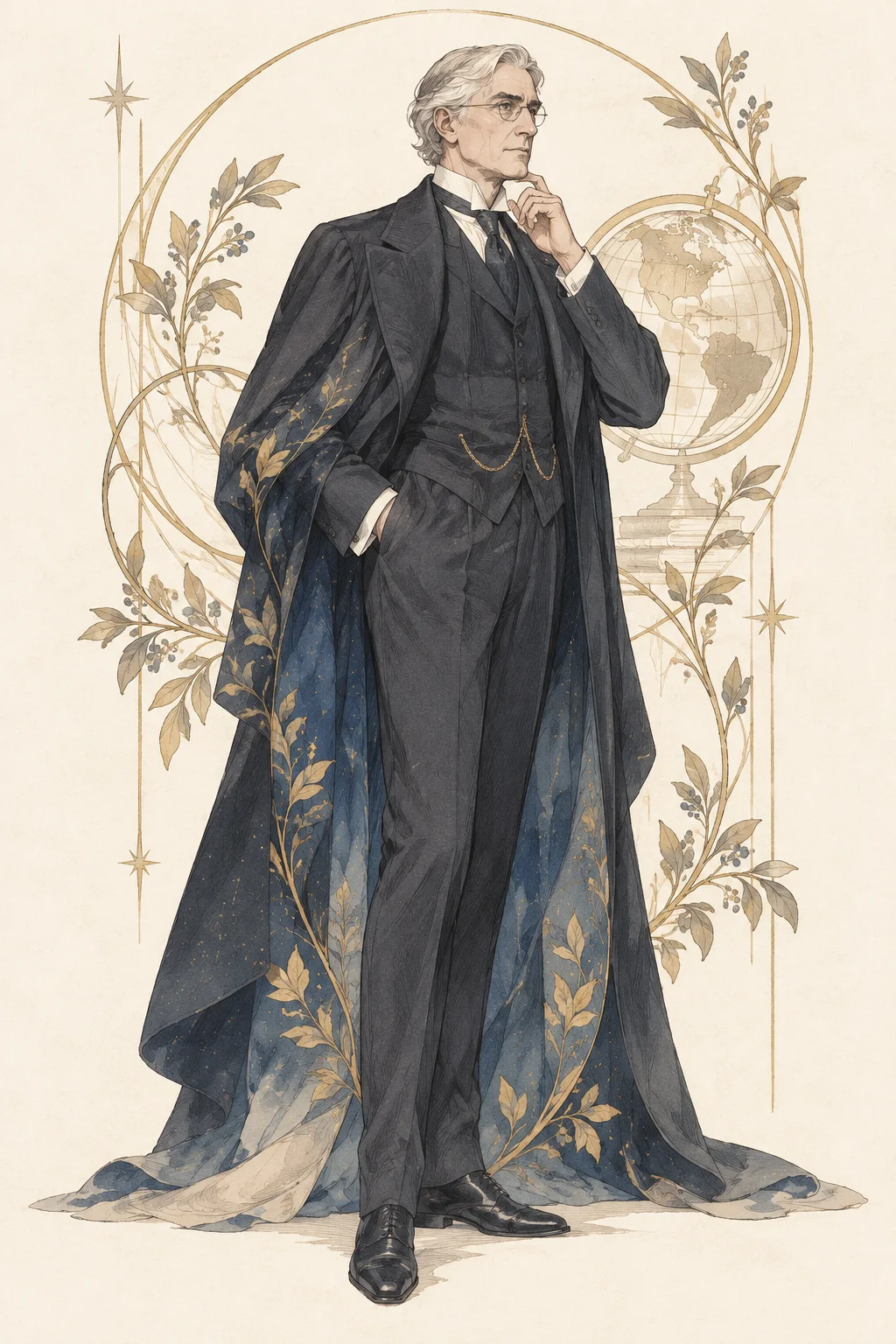 United States · Financier & Presidential AdvisorBernard BaruchA counselor who built a fortune as a speculator and bore charge of economic mobilization in two world wars
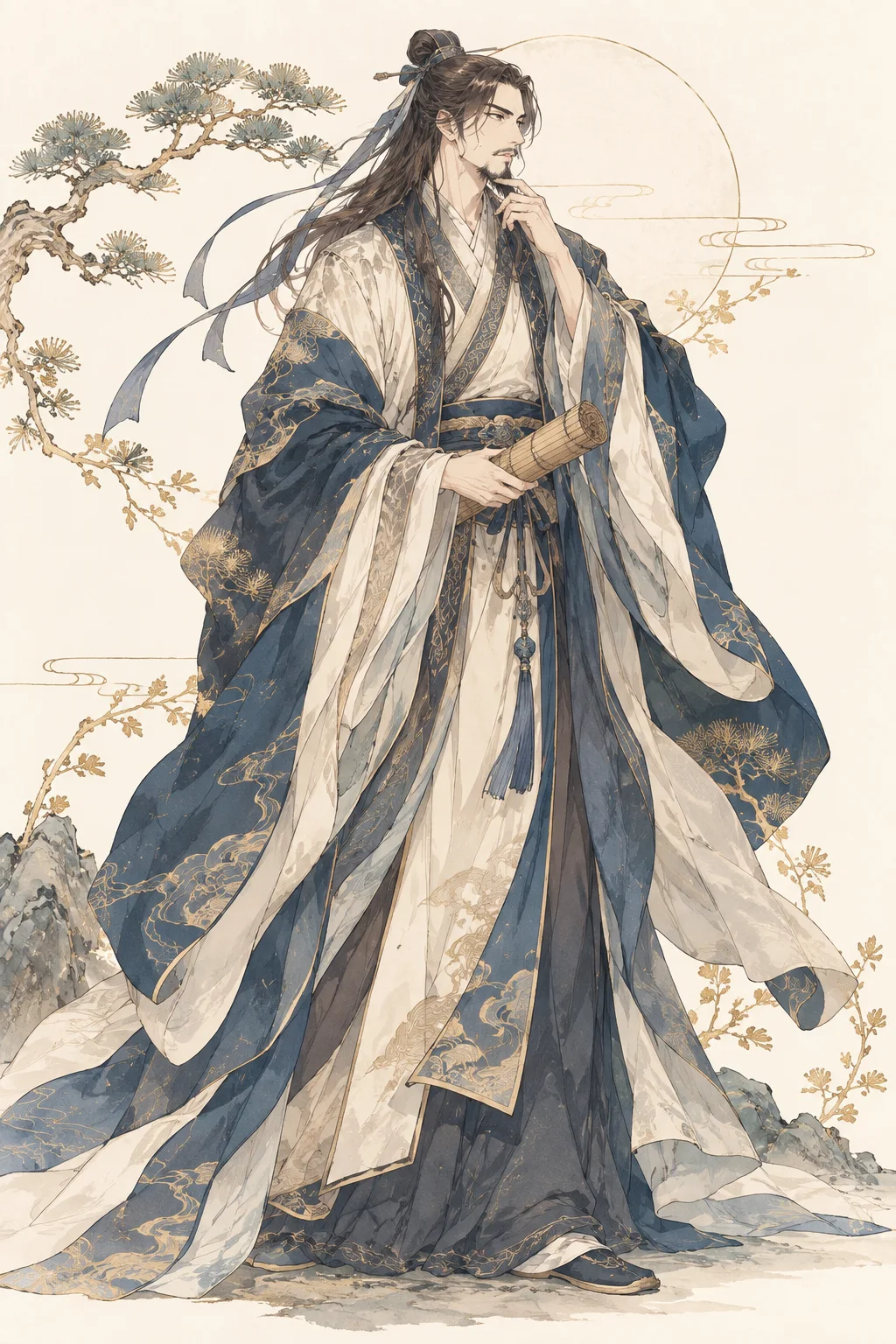 China · Military StrategistZhang LiangOne of the Three Heroes of Han — he supported the Chu–Han contention on the strategic side and led the winning of the realm
 India · Thinker & Chief MinisterKautilya“Arthashastra” — he supported, from the shadows, the founding of the Maurya dynasty
 China · Warlord & StatesmanSima YiEnduring in patient self-restraint — he waited for his chance over decades and at last seized power
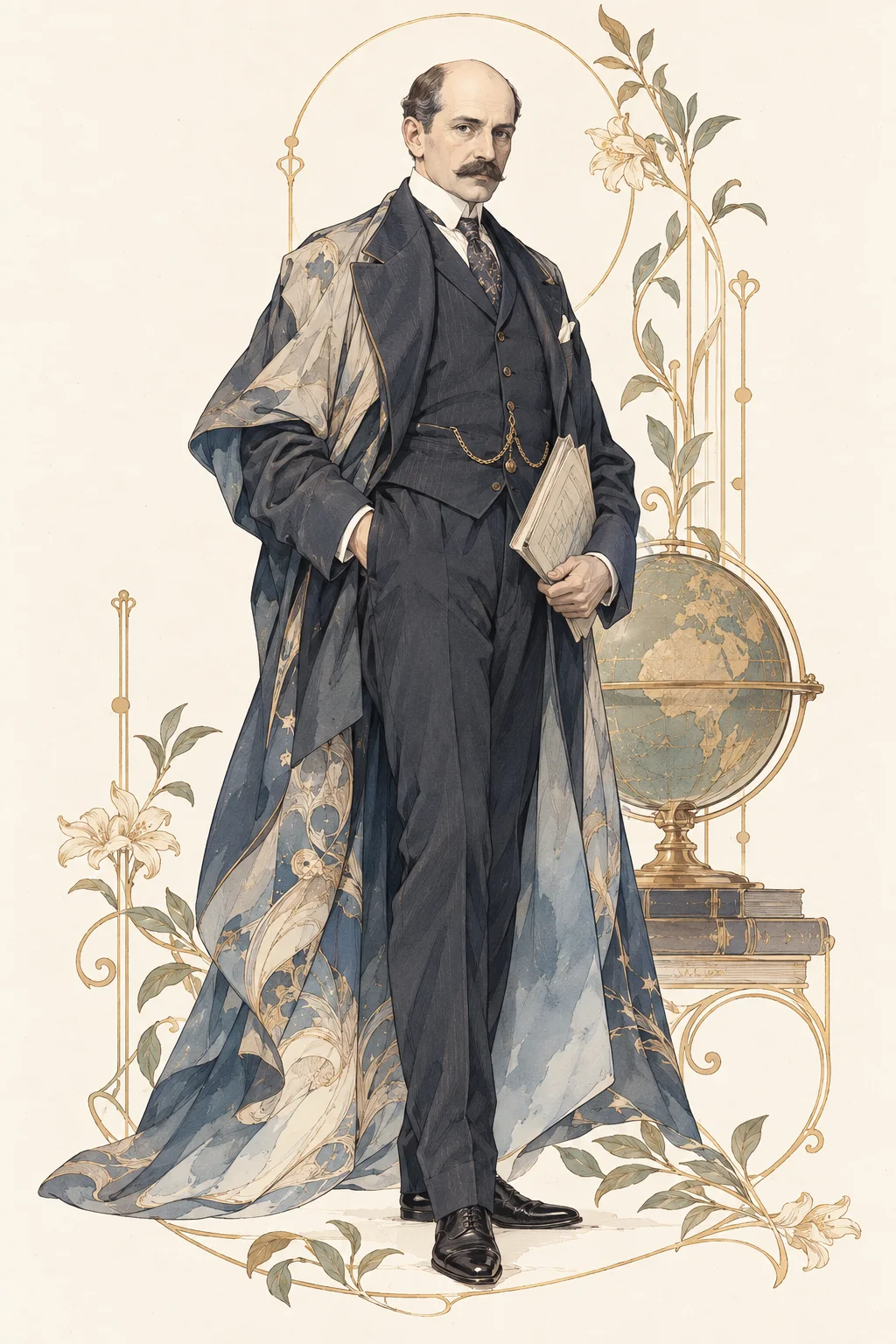 Germany / United States · BankerPaul WarburgThe quiet architect of financial reform, who carefully designed the Federal Reserve System
Type attributions are informed speculation based on public information, not confirmed fact.
Map of group memberships
The Strategist is one of 32 types, and also belongs to several groups of kindred natures. Here are the four main ones first — open a card to step into its own gallery room.
 Quadra (Values)Gamma Quadra (γ)Market
 Bouquet (Temperament)Receptive-Adaptive temperamentDiscerning the flow and responding to it
 Club (Interest)Research ClubSeekers of knowledge
 Motivation (Stimulus Group)Self-esteem stimulus groupSeeking inner worth
See all groupings (25 more)
 Communication StyleCold-BloodedExchanges information coolly
 Behavioral StyleMethodologistLands results through efficiency
 Argumentation StyleReconstructorDoubting premises and rearranging them
 Perception GroupAssociativenessGrasping the world through a web of associations
 Cognitive StyleDialectical-AlgorithmicBranching and integrating opposites
 Romance (View of Love)IronistLightly teasing heavy fate
 Stress ToleranceFrozenSticking fast, unable to break free
 Socialization GroupRealistPlans things out steadily
 Inflation RingInformation AccumulatorStoring information and leaving experience behind
 Project GroupIdeational processIntegrating observation into theory
 Implementation GroupTechnical InventionInventing, and implementing technology widely
 Square (Rest)DaredevilBold and dauntless
 Business Square (Collaboration)MaverickThe heterodox
 Octad (Cross-Value Group)HeraldProclaims values and delivers them to the world
 Reactor (Excitation Group)DistillRefining excitation inward
 MobilizationCrystallizationCrystallizes regular structure
 Conditioning (Adjustment Group)TuningTunes fine oscillations
 LabyrinthEmporiumCommercial adventure and the warmth of community
 Block Group (Extinguishing Group)StageSetting the scene to dazzle and reading the path to victory
 Social Progress Ring (SPR)ChronicleThe governing ring of the great river
 Supervision Ring (SVR)SymphonyA symphony that integrates opposition
 Social Order Ring (SOR)AtlasThe pillars that support the great river
 Succession Ring (SR)HeritageThe people’s gradual succession
 Benefit Ring (BR)LoreThe people's private wisdom
 Master Ring (MR)MelosA melody in which all resound together
Open the full, love and business editions

- The blueprint of your mind (8 blocks)
- Six ways to recover from stumbles
- A situation-by-situation guide (6 situations)
- The reasoning behind the celebrity picks

- What your heart longs for / What excites you / Your landmines
- Classic love scenarios
- Chemistry by partner (all 32 types)
- At home and as a parent / A practical playbook

- Natural strengths / Work better avoided
- Work style / Management
- Industry fit ◎○△ (23 industries)
- Suitable roles
Save $24.98 compared with buying the three separately