
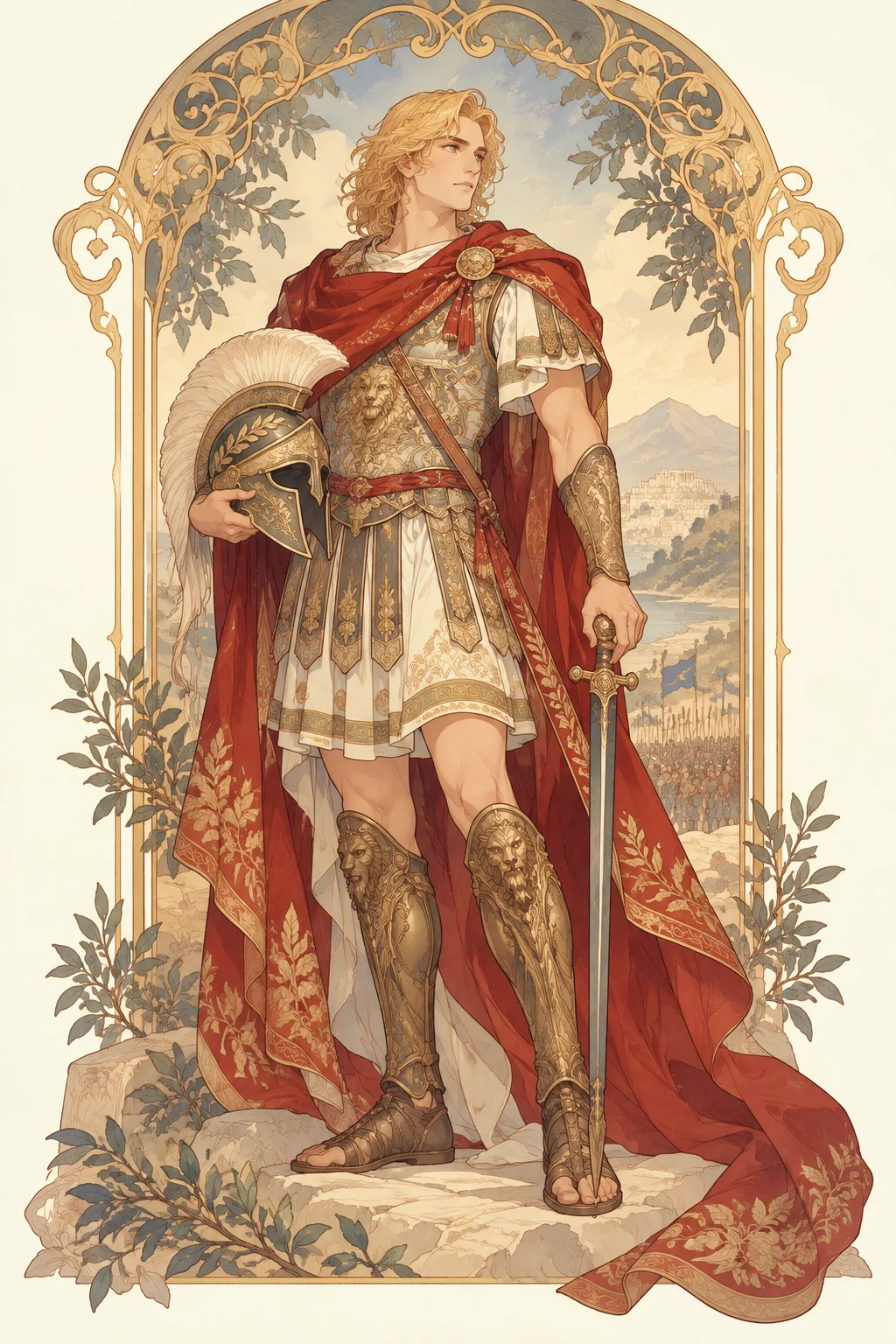
Alexander the Great (SEE-Q)
SEE-Q "Orchestrator" King · Macedonian · 4th c. BCKing of Macedon (356–323 BC). Educated by Aristotle, he ascended at 20 and in the great expedition that followed conquered the Persian Empire, Egypt, Central Asia, and northwestern India — the greatest individual military achievement in history. He founded Alexandria and dozens of other cities, spreading Greek culture across Asia. His legacy shaped world history for centuries after his early death at 32.
Leading Function+Se-p (Achievement & Protection)
The impulse to conquer all of the known world — the core of +Se-p action. Personal presence at the front of cavalry at Gaugamela and Granicus as the commanding drive for heroic achievement.
Creative Function-Fi-c (Sincerity & Reconciliation)
Appealing to the authentic emotions of conquered peoples — the core of -Fi-c creative function. The clever emotional appeal of adopting Persian culture; founding Alexandria as an emotional bond with the region.
Vulnerable Function 1+Ti-p weak (Organization & Law)
Weak +Ti-p: documented difficulty with the administrative management of the Persian Empire. Difficulty with post-conquest administrative management; the succession problem as the consequence of weakness in legal system inheritance.
Vulnerable Function 2-Ne-c weak (Common Sense & Peace)
An expression of -Ne-c weak (Common Sense & Peace): by concentrating on current conquests (+Se-p), the signal of "the natural equilibrium point of the succession system needed to maintain the empire" — already recognised as necessary by the surrounding generals — was exceeded. That signal was overridden by the prioritisation of current conquest.
Quadra / Temperament / Club
Quadra: Gamma Quadra (Market) — combining military charisma, self-deification, and cultural integration to dominate the Eurasian power market.
Temperament: Flexible-Maneuvering temperament: instantly switching entirely different roles — conqueror, cultural integrator, Persian king, son of a god — in response to each conquered territory's context.
Club: Socialite Club: standing at the centre of entirely different social networks — Macedonian nobility, Persian court, Egyptian priests, Indian princes — at each conquest, and building the imperial governance base through personal attraction and dialogue.
Worldview & Attitude
"The individual can change the world through power and charisma" — optimistic heroic vision. A worldview that trusts in the transformative power of personal excellence.
Attitude toward Change: Executing Hellenistic culture as a realistic transformation plan — the directional act; execution left to successors.
