
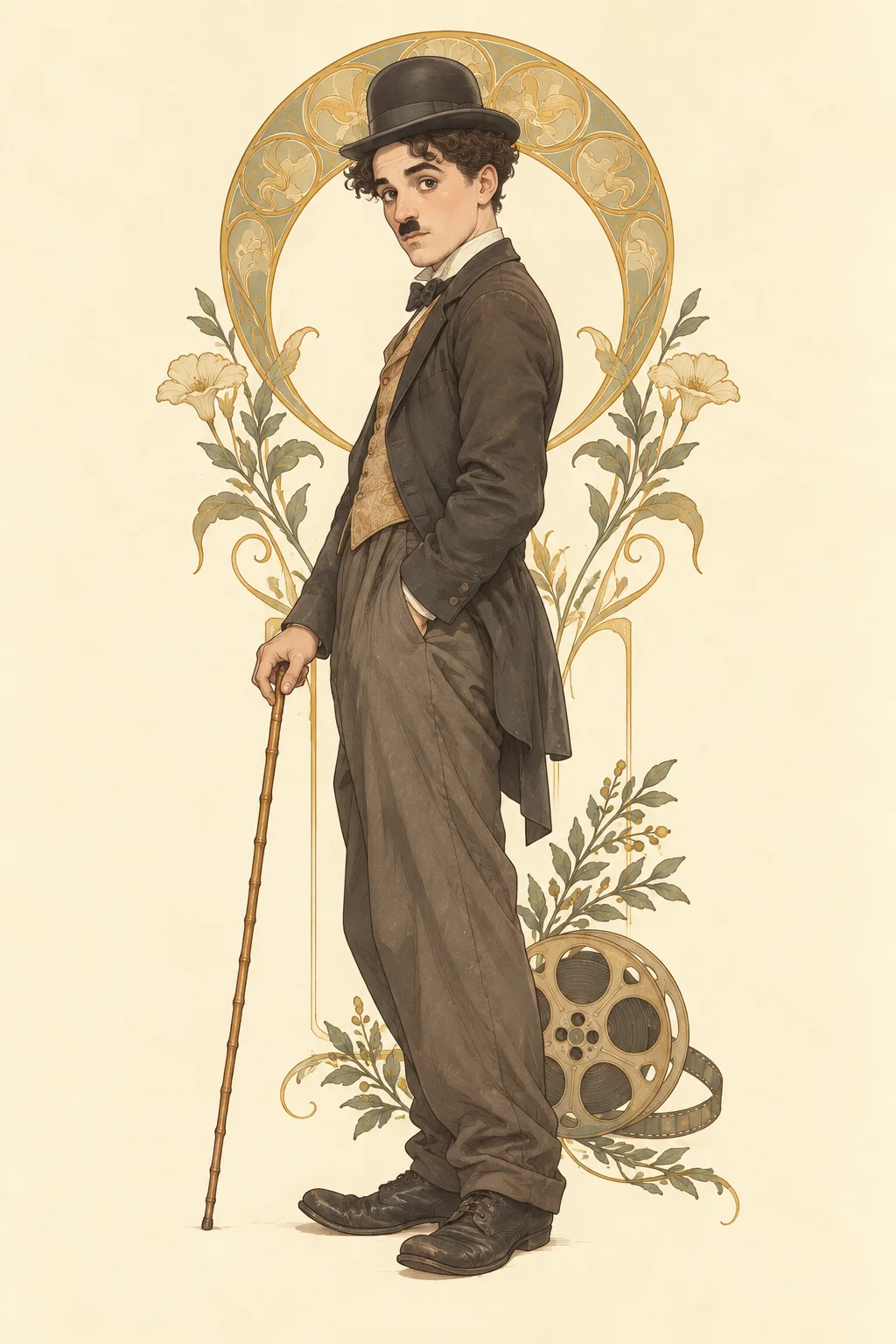
Celebrity Index SEI-D "Peacemaker" Charlie Chaplin

Charlie Chaplin

SEI-D "Peacemaker" Film Director / Actor · British/American · 20th c.

British-born King of Comedy and film director. In the silent film era he made the world laugh with the character Charlie, and in The Great Dictator he parodied Hitler and argued against fascism. Modern Times critiqued industrial society. He was expelled from the US for his political activities, but this revolutionary of cinema history changed the medium forever.

Leading Function+Si-p (Comfort & Wellbeing)

A thorough attachment to the beauty of film details and to sensory comfort — extensively documented in production records — is the core of +Si-p action. Obsession with costume texture, set details, and shooting angles; dozens of retakes driven by sensitivity to sensory beauty.

Creative Function-Fe-c (Harmony & Emotion)

Comedy as a quiet means of harmonising the room — transforming rather than amplifying emotion — is the core of -Fe-c action. The essence of Chaplin's films: transforming tragic situations into laughter through deep attunement to emotional harmony.

Vulnerable Function 1+Te-p weak (Practicality & Economy)

Weak +Te-p (Practicality & Economy): financial management and distribution business entirely delegated to aides; all decisions made by feel rather than by numbers. Financial chaos at United Artists, indifference to distribution contract details.

Vulnerable Function 2-Ni-c weak (Warning & Divergence)

Weak -Ni-c (Warning & Divergence): reactive rather than anticipatory response to the McCarthyism crisis, effectively losing America. Failing to read the long-term severity of the political threat until too late.

Quadra / Temperament / Club

Quadra: Alpha Quadra (Genesis) — a warm gaze at the weak and the common person; a democratic humanist worldview embodying the Alpha creative posture. The Tramp as the eternal everyman — a democratic Alpha statement about individual dignity.

Temperament: Receptive-Adaptive temperament: continuing to create by flexibly adapting to the era, censorship, and political pressure. Responding to the shift from silent to sound film, political pressure, and McCarthyism through continued creation rather than confrontation.

Club: Socialite Club: placing human relationships with crew and cast at the heart of creative work. Long-term collaborative relationships with Chaplin's regular crew; personal bonds with repeatedly cast actors as the foundation of production.

Worldview & Attitude

"The weak can ultimately prevail" — the optimism embodied in the Tramp character. A focus on the humble joys of everyday life rather than the dangers of a world hostile to the powerless.

Attitude toward Change: The Great Dictator as a symbol of anti-fascist hope — transformation through film rather than direct political action. The medium of cinema as his mode of pointing cultural direction.