
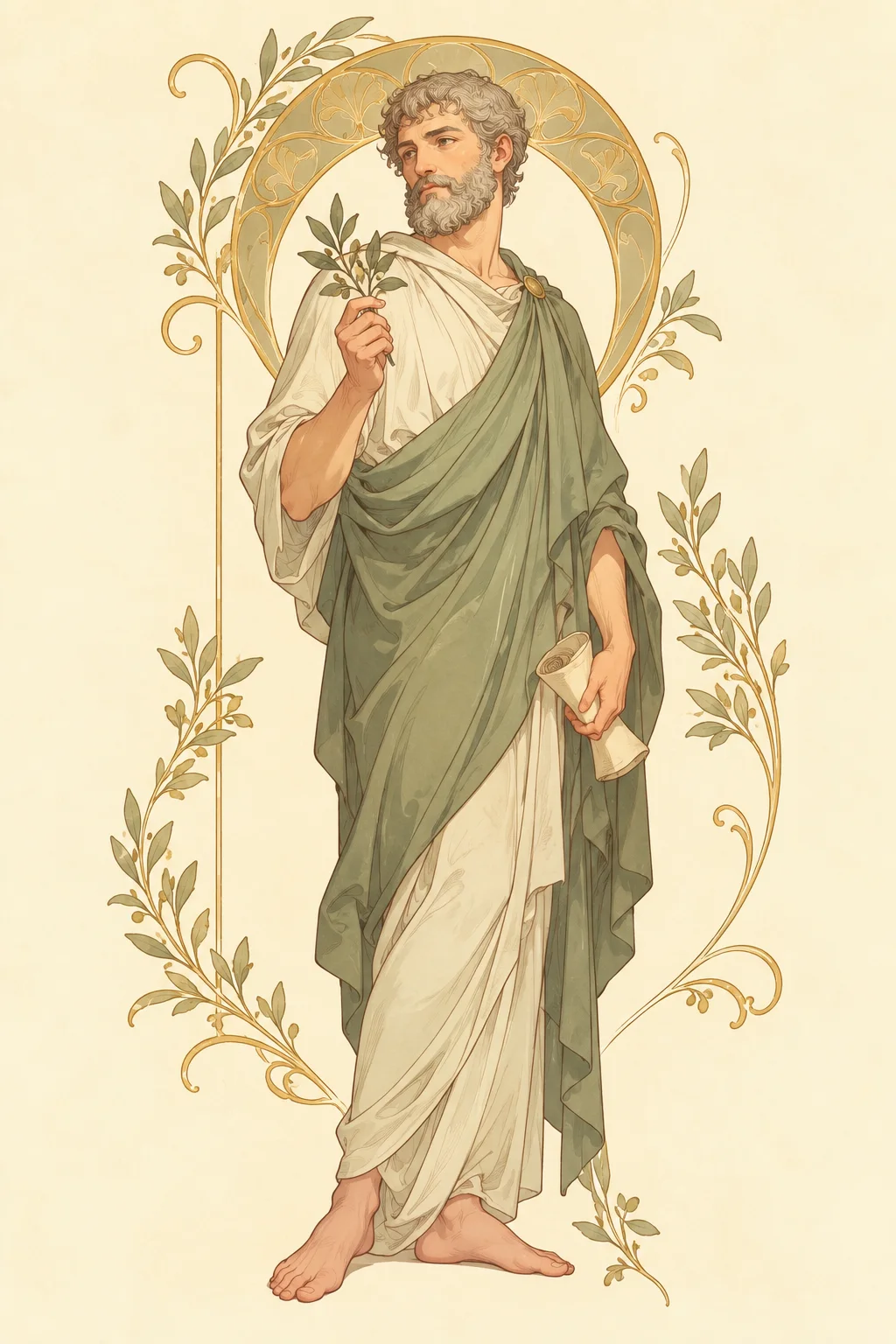
Epicurus
SEI-D "Peacemaker" Philosopher · Greek · 4th–3rd c. BCAncient Greek philosopher and founder of Epicureanism. Though known as a hedonist, his teaching was not one of lavish indulgence but of true happiness attained through friendship, knowledge, and mental tranquillity (ataraxia). He established a community called the Garden of Epicurus on the outskirts of Athens, welcoming women and slaves alike — a progressive thinker ahead of his time.
Leading Function+Si-p (Comfort & Wellbeing)
Placing sensory pleasure — food, rest, conversation with friends — at the philosophical core is clearly documented as +Si-p action. Affection for simple yet sensorially refined food (olives, cheese, water); the quiet, comfortable life at the Garden of Epicurus in Athens as his central practice.
Creative Function-Fe-c (Harmony & Emotion)
Continuously radiating gentle security within a small community and fundamentally rejecting conflict — the core of -Fe-c action. Maintaining stable long-term relationships within the closed Garden community as the embodiment of his creative function.
Vulnerable Function 1+Te-p weak (Practicality & Economy)
Weak +Te-p (Practicality & Economy): philosophically rejecting interest in economics, efficiency, and politics; ideologically negating practical accumulation. Avoidance of political participation, rejection of commercial activity, indifference to wealth — all encoded as philosophical stances.
Vulnerable Function 2-Ni-c weak (Warning & Divergence)
Weak -Ni-c (Warning & Divergence): prioritising present tranquillity over future branching and risk calculation — a consistently held philosophical position. The carpe-diem philosophy of present-prioritisation reframes the weakness in long-term branching awareness as a philosophical value.
Quadra / Temperament / Club
Quadra: Alpha Quadra (Genesis) — philosophising everyday pleasure, happiness, and friendship as Alpha values is the quintessential Alpha worldview. Epicurean philosophy understood as the union of Alpha's sensory joy and intellectual inquiry. The equal inclusion of women, slaves, and foreigners in the Garden as democratic Alpha openness.
Temperament: Receptive-Adaptive temperament: teaching and practising a life lived in accord with natural flow. In the politically turbulent Athens of his era, choosing adaptation — avoiding political conflict, following natural rhythms — as the consistent posture.
Club: Socialite Club: placing human relationships in a small community at the centre of life. The founding and sustaining of the Garden of Epicurus as the core activity of a lifetime. The philosophy that friendship is the highest good as a theoretical articulation of the Socialite Club value.
Worldview & Attitude
"True happiness lies in simple living and friendship." Focusing on personal sensory joy and the safety of human connection rather than the dangers of the wider world.
Attitude toward Change: Founding the Garden as an alternative community — a form of practised transformation. Yet this was a retreat from the transformation of the larger society rather than a challenge to it.
