
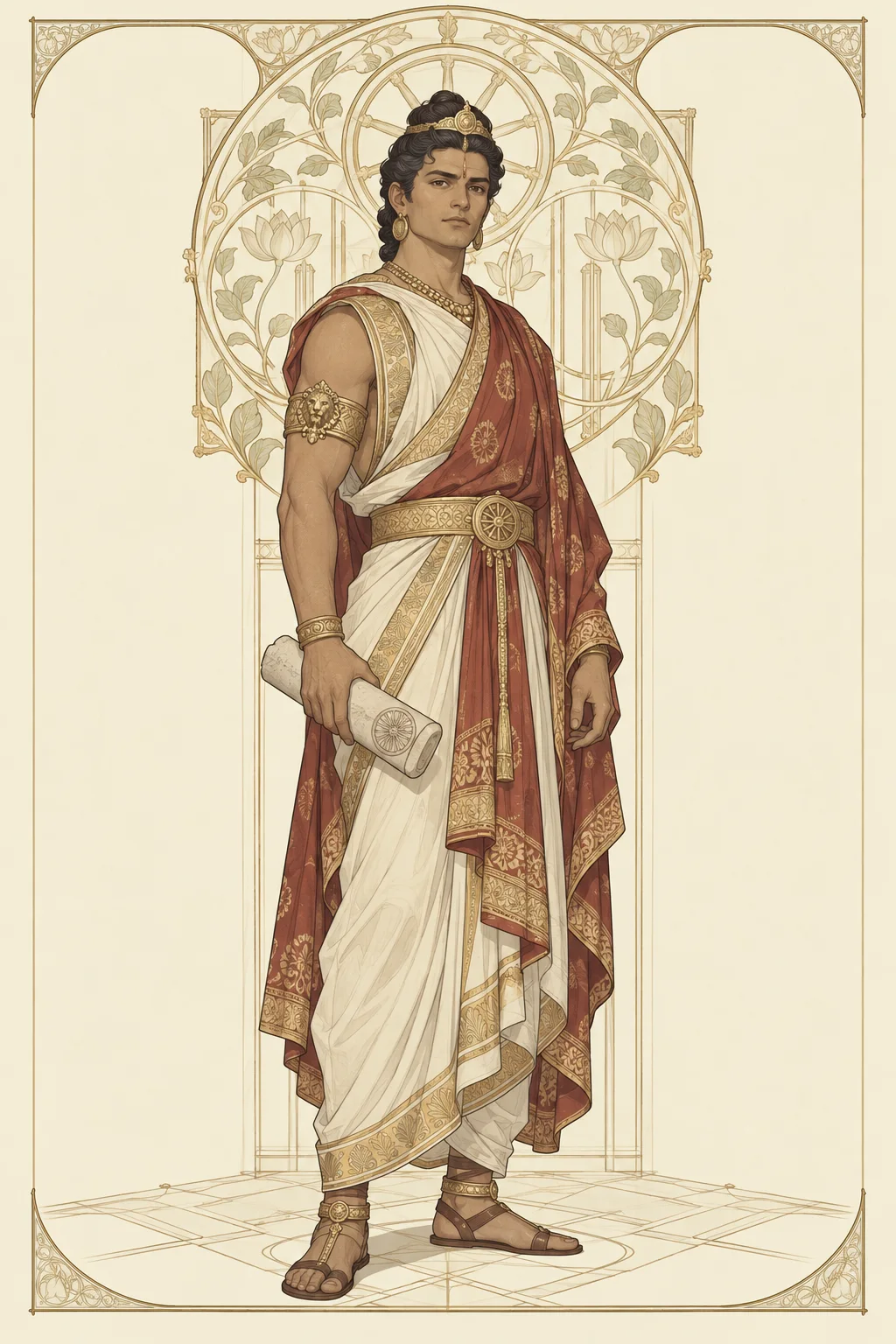
Ashoka

LII-D "Architect" Emperor · Indian · 3rd c. BC

Emperor of the Maurya dynasty (c. 268–232 BC). Shocked by the Kalinga War, he converted to Buddhism and practised governance based on "Dharma." His Rock and Pillar Edicts are one of the earliest examples of a ruler publicly expressing remorse and committing to non-violence.

Leading Function+Ti-p(組織と法律)

Dharma Mahamatras — creating a new position to supervise welfare, religious tolerance, and justice: unprecedented institutional design. The 14 Rock Edicts — "I care for all living beings as my own children."

Creative Function-Ne-c(良識と平和)

"Changing the drum of conquest to the drum of Dharma" — institutionally replacing violent order with rational order. "No religion shall disparage another" — institutionalising religious tolerance.

Vulnerable Function 1+Se-p弱(偉業と庇護)

Weak +Se-p: the Kalinga War — after killing 100,000, the 13th Edict records "deep remorse." The collapse of the +Se-p vulnerability function.

Vulnerable Function 2-Fi-c弱(本心と和解)

Weak -Fi-c: unable to convert emotional collapse after Kalinga into anything but institutional expression through Dharma edicts.

Quadra / Temperament / Club

Quadra: Anti-Gamma Quadra (Utopia) — "All people are my children" — the perfect expression of the -γ inclusive communal vision.

Temperament: Balanced-Stable temperament: edicts still read 2,000 years later. Never deviating from "the path of Dharma" until his later years.

Club: Researcher Club: constructing an international network through Buddhism. Sponsoring the Third Buddhist Council — pure Researcher Club-type support.

Worldview & Attitude

"The suffering caused by war and absence of moral governance exist" — the direct statement of present reality. The ないもの (a world governed by Dharma) is not proclaimed.

Attitude toward Change: Executing governance by Buddhism as a realistic plan — a practitioner of failure-resistant Dharma institutionalisation.