
LSI-Q – Inspector –
The logician who strips away pretense and sees through to the truth
You are someone who sees through, with sharp logic, the contradictions hidden beneath plausible-sounding claims.
You strip away exaggeration and falsehood, and seek to leave only what is surely true.
What you long for most is a cause worth staking yourself on, and the heat that comes with it.
- Quadra
- Phi Φ
- Bouquet
- Balanced-Stable temperament
- Club
- Practical Management
Portrait — the Inspector

The Inspector is someone who keeps checking, quietly but relentlessly, whether the matter before them truly holds together as reasoning. Is there any deception in this explanation, any hole in this premise, what is being left out behind those bold words — in the very places where most people let things slide on atmosphere alone, they alone catch the sense that something is off and pin down the exact point: "here is the contradiction." At flashy hype and slick sales pitches, they first knit their brow. They dislike exaggeration, see through lies, and peel away the ornament — what remains is only the surest part, the part that has withstood scrutiny. Such is this born verifier of logic.
Their gaze often looks cold. Undressed by sentiment, they set down only the facts, plainly — yet deep within there is a core that goes on burning quietly. What they truly seek is a cause worthy of staking their rigor upon, and a heat that lets them believe in its rightness. While their power to discern what is false is second to none, kindling on their own the heat that rouses people or the larger story of where to head is something they find a little hard. It is precisely beside someone who shows them, with warmth, that "this road is indeed worth staking on" that the Inspector puts their sharp logic to its most powerful use.
Not atmosphere, but whether it truly holds together.
Does this sound like you?
- The instant something in someone's account fails to add up, you notice.
- At a slick sales pitch, you first step back and check.
- Once you've determined "this is a cover-up," you come to a clear halt and won't give way.
- Putting your own feelings into words on the spot isn't really your strong suit.
- You observe without missing the finest differences, and patiently build up facts and records.
- An abrupt schedule change or an ad-hoc revision is a strong source of stress.
- You can face criticism head-on, yet being rejected wounds you deeply inside.
- Once you've determined "this is right," it's hard to accept another method.
- Your dress is plain and functional; disliking waste, you choose things that last.
- You hold a quiet heat within.

How you move

The Inspector’s behavior is upheld by a quiet composure and a sharp verifying eye that lets no deception slip past.
The first thing the Inspector’s behavior conveys is a quiet composure. They do not raise their voice, do not lay their feelings bare, and hold to the same steady tone — a settled, grounded presence with few ups and downs. Yet inside that quietness, a sharp verification is always at work. The instant something in someone’s account fails to add up, they notice; at slick sales pitches and overblown hype, they first step back and check, “is that really so?” Never swept along by mood or momentum, they judge with their own head, in the light of fact and logic.
And once they have determined that “something here is wrong” or “this is a cover-up,” their manner changes completely. Usually reserved, yet faced with what does not add up, with exaggeration, or with compromise that slides in by default, they come to a clear halt and will not give way. With the facts as their shield, they will if need be point out head-on, “that is a contradiction” — a strength of core that, against their mild appearance, can take those around them a little by surprise. They do not fear criticism or rebuttal; what they truly hate, rather, is “to go on while wrong, to go on while false.”
Not atmosphere, but fact and logic.
- Notices instantly when someone's account fails to add up
- At a slick sales pitch, first steps back and checks
- Once decided, comes to a clear halt and won't give way
Given a place where claims are properly verified, your meticulousness is relied on more than anyone's.
How you speak and listen

In dialogue they speak plainly with facts, prizing soundness of reasoning over emotion.
The Inspector’s way of speaking is unadorned. Avoiding flattery and emotional embellishment, they lay out fact and logic plainly. They narrow to the essentials, dislike vague phrasing, and quietly ask, “in the end, is it correct?” — it can sound cold, but that is the flip side of a sincerity that refuses to deceive the other person. In debate they pinpoint the holes in an argument and the slippages in its premises, yet more than winning or losing they only wish to confirm “what is true.” On the other hand, putting their own feelings into words on the spot does not come easily; the heat they hold within often shows, in few words, through action and through the shape of their work.
Not flattery, but fact and logic.
What lies at the core — drive and tender spots
Not atmosphere, but discerning true from false.
The one unstoppable engine within the heart

At the Inspector’s center are a sharp logic that sees through contradiction and deception in a single stroke, and the drive to land it in reality.
At the Inspector’s center are two powers joined together. One is the power to see through hidden contradiction in a single stroke (-Ti-p) — from the faintest sense that something is off, it flashes “there is a hole here,” instantly traces cause and effect, and pinpoints the breakdown in logic or the discrepancy with fact. Not to build up a tidy system and be satisfied, but to collate “true or false,” pare away exaggeration and superfluous hypotheses, and leave only the core that withstands scrutiny — an eye for diagnosis and truth-checking that permits no deception is the Inspector’s signature. When information grows too cluttered, the power to expel excess premises, slim down the point at issue, and reset the discussion also lies here.
The other is the power to land that awareness in the real setting (+Se-c) — it instantly grasps a thing left behind, a shaky step in a procedure, a small misalignment on the spot, and fixes it at once through action. It does not let the verification of logic end as armchair correctness. A grounded capacity to act that ties what they have noticed to the here-and-now reality — it is because of this that the Inspector’s “power to see through” becomes not mere theory but a power that truly makes things sure.
What they can do, yet do not prize

In fact, the Inspector is more skilled than anyone at observing detail and patiently building up data.
It may come as a surprise, but the Inspector has an outstanding power for observing without missing the finest differences and patiently building up facts and records (-Si-p / +Te-c). Noticing a slight difference in texture, measuring data precisely, accumulating know-how and evidence in a systematic way — that meticulousness and staying power are the real thing. Yet they place no value in this in itself. It is, after all, only the backing for verifying true from false. They do not make “merely collecting” or “merely being precise” an end in itself; they always set it beyond the question, “for the sake of verifying what?”
What the heart secretly craves
What the Inspector finds hard to kindle on their own, and yet longs for more deeply than anyone, is heat and a cause.
What the Inspector finds hard to generate for themselves, yet in their heart of hearts thirsts for most — is the burning emotion that rouses people (-Fe-p) and the great challenge and story worth staking on (+Ni-c). For the Inspector, who has lived supported by cool verification, an ideal that sets the chest afire, a cause one can feel “I would stake my life on this,” does not easily well up from within. That is exactly why, toward the one who lights that fire — who speaks of ideals with passion and points out the great road to be taken — the Inspector feels deep trust and a quiet peace. When they gain that heat, the Inspector’s sharp logic at last turns into a power that moves something.
The most fragile place
The Inspector’s weakness shows in envisioning alternative possibilities and in moving people through feeling.
The Inspector’s most fragile part is twofold. One is that, once they have determined “this is a contradiction” or “this is right,” they find it hard to picture, in a supple way, other possibilities or alternative readings (-Ne-p) — a branching “but couldn’t it also be seen this way?” feels, on the contrary, as if it shakes their footing, and so they cling firmly to a single conclusion. At times they look too coldly on a breakdown that has not yet happened and tilt toward pessimism. The other is that the soft maneuvering of reading people’s feelings and winning them over by appealing to sentiment does not come easily (+Fi-c) — believing that stating the truth plainly ought to get it across, they tend to grow careless about choosing words that move the other person’s heart. This is less a fault to be blamed than the reverse side of a sharp logic. The imagination to picture another road, and the power to bind people with heat, may be supplied by those who are good at them.

- Core: a sharp logic that sees through contradiction, and the drive to land it in reality
- What drives you: the sense that you can determine the truth of this claim for yourself
- Where you're fragile: picturing other possibilities, moving people through feeling
Strengths, and where you stumble
Someone who gives you a cause worth staking yourself on, and its heat.
Strengths — seeing through, verifying, cutting away

The Inspector’s strength is the verifying power to see through deception and confirm true from false. Swiftly pinning down the holes in a claim and the contradictions in a premise that everyone else lets slide on atmosphere, judging on fact and logic rather than being swept along by emotion or momentum — they are a sure brake, able to stop at overblown hype and slick sales pitches and ask, “is that true?” Permitting no vagueness or compromise-by-default, they carry a responsibility they have taken on through to the end and do not break a promise. And once they have determined “this is where it breaks down,” they have the resolve to cut the contradiction in a single stroke and boldly rebuild a stagnant system — usually quiet, yet dependable when it counts, a grounded verifier. That consistent sincerity becomes the source of long trust.
Where they tend to stumble

What trips them up is the flip side of that strictness and single-mindedness.
What trips them up is the flip side of that strictness and single-mindedness. Because their attachment to “what is right” runs strong, once they reach a conclusion it becomes hard for them to accept, in a supple way, another approach or a new possibility — to those around them they can appear “inflexible” or “stubborn.” They are also poor at reading people’s feelings and enlarging their side by appealing to sentiment, and by stating the plain truth flatly they can make the other person dig in. Overdoing the search for flaws, they may grow too pessimistic about a breakdown that has not yet happened. While they can face criticism head-on, when they themselves are rejected they are, inwardly, surprisingly deeply hurt, and tend to hold it in without letting it show. Yet that very single-mindedness and roughness is inseparable from the power that permits no deception and seeks the truth — just knowing this spares them from blaming themselves, and makes their relationships with those around them far easier.
Toward someone who speaks of ideals with passion, you feel deep trust and ease. That's where your room to grow lies.
- Before reaching a conclusion, look for one other view
- Don't store up small frustrations — tell someone you trust
- Take time to acknowledge "this part really is good"
Where you thrive
A place where you can openly ask "is that really correct?"
Environments Where They Thrive
The Inspector performs at their best where accuracy and soundness of reasoning are rewarded and where claims are properly verified. More than an environment in which things are decided by vagueness or momentum alone, a place where one can openly ask “is that really correct?” — there, their meticulousness and fairness come marvelously alive. Conversely, a setting where exaggeration and salesmanship pass unchecked, an air in which deception is overlooked, a field where conclusions move on emotion and relationships alone, are a great source of stress. What they seek is not cozy collusion but “ground on which what is true can be verified by fact,” and the sense that their own verification actually makes things sure. “I can determine the truth of this claim for myself” — when that is in view, the Inspector gives their all more than anyone.
As a verifier of truth
Concretely, roles that verify facts and see through deception suit them well: work that confirms the truth of claims and data and pinpoints the flaws, such as auditing, quality assurance, investigation, and analysis; work that rigorously builds up facts and unravels the contradictions in received wisdom, such as research, history, and criticism; the exposure of wrongdoing and fact-checking — it is precisely through an eye that pares away exaggeration and sees through lies that the Inspector’s logic and sincerity come most richly alive.
Dialogue — ask Klaus

One free dialogue · Le Salon members can explore several perspectives. Not a real person: a representative perspective based on the public profile.
Relationships and love
A sincere, unshakable bond shown through action rather than words.
Love — holding to sincerity, bound by trust
The Inspector’s love is a sincere, unshakable bond shown through action rather than words.
The Inspector’s romance is unadorned. More than sweet words or showy display, it is by keeping a promise, staying consistent, being someone to rely on when it counts — by such sure action that they show love, and receive it. What they seek is not fickle passion but a sincere partnership connected by trust over the long run. It takes time before they open their heart, but once they have determined “this person can be trusted,” they devote themselves single-mindedly and deeply. Disliking cozy collusion and deception, they seek a single thread of principle even within the relationship — that plain honesty is the shape of the Inspector’s love.
〔Women〕 She is a woman of composure and inner strength. Unswayed by fashion or vanity, she chooses things by her own standard, and to what does not add up she can say “no” quietly but clearly. Her dress is solid and tasteful, never gaudy, prizing function and quality — a trim cleanliness through which a sure intelligence shows. In love, more than glib kindness, she opens her heart to a partner who builds up sincere action and trust. Wary of over-familiarity and frivolity, she quietly watches whether a person’s words and deeds match. At home she is a pillar who treasures promises and sincerity. Though expressing feeling in a grand way does not come easily to her, her sense of responsibility and loyalty to family is firmer than anyone’s, and with an unshakable strength in the crucial moment she protects those dear to her to the end.
〔Men〕 He is a reticent, dependable man. Even without saying much, he steadily gets done what must be done and carries a responsibility he has taken on through to the end — the type who shows his trustworthiness by the way he applies himself to the work. His eye for observation is sharp, and he does not miss the contradictions and deceptions in what people say and do. His dress is plain and functional; disliking waste, he chooses sure things that last. In love he prizes sincerity over gamesmanship, and toward the partner on whom he has once set his heart he is single-minded and faithful. Expressing emotion fluently does not come easily, and he can seem awkward, but for that very reason a promise he has put into words he always keeps. In truth, deep within that quietness, he burns hotter than anyone for the sake of his family.
How You Love — Love Bound by Trust
The Inspector’s way of loving begins with quietly judging whether a partner’s words and deeds line up, and building trust one level at a time. Being a Pioneer type, you are good at reading the moment and moving—stepping in swiftly when needed and never meddling where you shouldn’t—and the sureness of that sense of distance is proof of your sincerity. Even if your expressions of affection are restrained, you show it through action: sensing a partner’s troubles and clearing them in advance, always fulfilling a promise you were asked to keep. You may say little out loud, yet you stand silently in the position most to be relied on the moment your partner is truly in trouble—that is this person’s proof of love. To someone you have trusted, you answer with unshakable loyalty.
Compatibility — recommended partners
 Hero
Hero EIE-DIt is this conviction that changes the worldDualityThey speak of burning ideals and the road to take, and light a fire in cooled logic. Pioneer
 LIE-DCarving the way through results — the realist's frontierIllusionaryMore indirect than the dual, yet a conviction toward the future they challenge and toward action flows between them. Enthusiast
 ESE-DThe cheerful flame that sets the world ablaze with feelingSemi-dualityThey give a bright, warm space, and a tautened heart suddenly loosens. Prophet
 IEI-DAn eye that gazes upon a destiny no one has yet noticedActivationWith quiet conviction they see through to the future, and beside them a grounded exhilaration wells up. Strategist
 ILI-DThe contemplative Strategist who quietly reads ahead and lays the groundworkBenefactorFor this person’s sake, you naturally want to give the power of sure, practical work. Peacemaker
 SEI-DA bridge between sensation and compassionBeneficiaryWith this person, you naturally receive comfort and ease. Reformer
 SLE-QAn executor who breaks through by force and rewrites conventionMirrorThe destination is the same, the way of attacking differs. They hone force and principle against each other. Orchestrator
 SEE-QA natural orchestrator who reads the room and guides people toward reconciliationSupervisor (mirror)You find yourself, like a mentor, wanting to teach principle and reason. Seeker
 ILE-QAn intellectual adventurer who unravels the worldSupervisee (mirror)From this person, you can’t help receiving new ideas and learning.See the other relationships (22 more types)
The upper bands are easier to be with; the lower bands tend to wear you down. Tap a relation name to read about the pair.
 Analyst
 LII-QFrom the quiet of the desk, reassembling the worldKindredA partner whose conversation flows easily, someone who likes to express things in the same direction as you. It can wear you out once it turns competitive. Judge
Judge ESI-QThe quiet arbiter who discerns right from wrongBusinessA partner you can easily work alongside, adapting to the situation together. Mentor
 EIE-QA passionate standard-bearer who speaks of ideals and binds hearts togetherDetachedA partner who's hard to feel drawn to, leading to a rather flat, low-key relationship. Enforcer
 LSI-DThe steel operator who carries out the mission through discipline and responsibilityAdaptiveA partner you settle into by simply playing your roles, an easy, unremarkable relationship. Conqueror
 SLE-DA dependable field general who only burns brighter the harder things getCodependencyA partner who wears you down little by little, caught in a cycle of bottling things up and overcompensating. Dreamer
 IEI-QA teller of fantasies who colors the world with dreams and passionRelaxationA partner who puts you at ease, though you tend to end up waiting on them with quiet expectation. Advisor
 IEE-QOne who quietly draws near and listens to the heartCorrectionA partner whose feedback becomes a chance to take stock of yourself. Craftsman
 SLI-DThe artisan who sets the world in order in the palm of his handTranscendenceA partner who makes you want to surpass yourself when you're together, pushing each other to grow. Executive
 LSE-DSet it in order, get it moving, see it throughCompassA partner who gives you a sense of being accepted, along with a hint of which direction to move in. Philosopher
 EII-QOne who, in the stillness, keeps questioning the meaning of the worldIdealA partner who naturally embodies what you aspire to be, easy to admire. Getting too close tires you out. Commander
 LIE-QBuild, prepare, hold the line — the command center of orderTediumA partner who leaves you feeling sluggish, prone to putting things off and keeping your distance. Guardian
 ESI-DA silent shield that protects people, with rightness at its backFormalA relationship where formality and appearances pile up, and it's hard to ever fully relax.
SEE-DA born leader who reads hearts and rallies the currentSupervisorA relationship where you tend to unsettle the other person without ever realizing it. Critic
 ILI-QThe insightful Critic who sees through contradictions in the depths of silenceTense BenefactorA partner around whom you tend to try too hard, unable to shake off the tension. Harmonizer
 ESE-QTheir smile and their voice soften the space around themDistrustA partner you can't quite bring yourself to trust, which makes it hard to show your own strength. The Architect
 LII-DThe architecture of logic, quietly built up piece by pieceDutyA partner who leaves you understanding what to do yet unable to act on it, while your need to be recognized grows stronger. Visionary
 ILE-DThe architect of ideas who reinvents the world through paradox and theoryPlayerA partner around whom you constantly feel watched, prone to leaving you burned out. Performer
 SEI-QA gentle conveyor who gives form to sensation and feelingTense BeneficiaryA partner who leaves you worrying and overthinking, prone to closing your heart off. Administrator
 LSE-QThe hands-on command post that keeps the field running and moves people and workDistanceA partner who makes you want to keep your distance and close your heart off. Empath
 EII-DSensing what lies beneath feeling, and becoming someone's quiet supportRoleA relationship where "you should" comes first, making it hard to just be yourself. Promoter
 IEE-DMoving the world through fascination — an evangelist of ideasConflictThe partner most likely to strike your weakest point, the one relationship that drains you the most. The Artist
 SLI-QGiving form to the “just-rightness” of nature and daily lifeQuasi-IdentityA partner who looks similar to you yet never quite clicks, leaving you spinning your wheels and worn out.Compatibility is not decided by type alone; maturity, subtype and circumstances all change it.
With someone you are connected to, you can read a personal Relationship Reading drawn from both of your answers ($8.99 per pair, unlimited for Le Salon members).
See compatibility with your connections →Explore Le Salon →
What You Truly Long For
Behind that sharp observing eye and reticent bearing, what you secretly crave is the emotional power that warms and lights up a room. You're not good at showing feeling in a big way yourself, and clumsy at softening a room with small talk or voicing emotion lightly — so…
In the Love Edition: What your heart longs for / What excites you / Where you clash and your landmines / Classic love scenarios / Chemistry by partner, all 32 types named / At home and as a parent / A practical playbook / Secrets to lasting love / A manual for your partner
Work and ways of working

Your Working Style — System-Building
You naturally excel in two main ways: laying out a clear line of reasoning and properly organizing and analyzing things, and not leaving what you've noticed on paper but correcting it in line with the actual conditions on the ground.
Your interest gravitates toward getting hands-on, practical work done. Day to day, you are calm and unshaken and keep a steady pace. A quiet, comfortable everyday life is your greatest driving force.
With people, you keep your emotions restrained and hold your distance by following rules and procedures. Your way of thinking layers many viewpoints to grasp the whole picture.
A sharp logic that sees through contradiction, and the drive to land it in reality.
- Before reaching a conclusion, look for one other view
- Add a few words of empathy to a sound argument
- Don't store up small frustrations — put them into words a little at a time
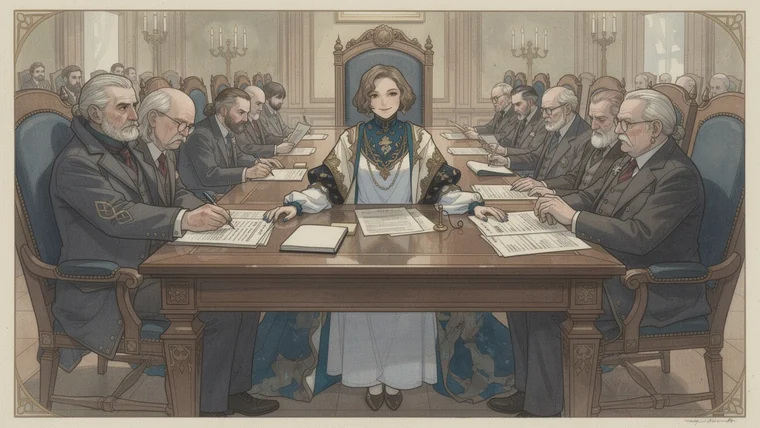
Careers That Fit
Your verifying power to see through deception and your commitment to judging on fact come into direct play.
Your power to observe without missing the finest differences and to verify meticulously becomes a strength just as it is.
You can show your commitment to never overlooking what doesn't add up and leaving only what is surely true.
Your Strengths, and Work Better Avoided
Your core is the combination of "Structure & Truth" — the power to see through contradictions and falsehoods in logic and examine the whole system — and "Reality & Discretion" — the power to not leave that on paper but correct it in line with the actual conditions on the ground. In work such as reviewing code or contracts, auditing, and quality verification…
In the Business Edition: Natural strengths / work better avoided, Stress tolerance and socialization group, Work style, Motivation and recharging, How to work with and manage this person, Compatibility and team-building, Industry fit ◎○△ across 23 industries with rationale, Suitable roles
Blueprint of the mind
Your mind runs on eight blocks. Each block carries two functions — how you take in the world, and how you express yourself — and together they set both the range you're skilled in and how much you actually value using it. We've kept the technical notation small and explained everything in plain language.
See through contradiction, and land it in reality.
Leading Your centerI Know
-Ti-pStructure & TruthStructural logic+Se-cReality & DiscretionVolitional sensingAt your center is the power to see through hidden contradiction in a single stroke. From the faintest sense of unease, it flashes on you — "there is a hole here" — and you instantly trace cause and effect to pin it down.
It is the power of diagnosis and truth-checking, which strips away exaggeration and superfluous hypotheses and leaves only the core that withstands scrutiny.
Onto this overlaps the power to land those insights in reality. You grasp a small slip in the moment and correct it at once through action. The sureness of "I can see through contradiction and verify true from false" sits at your center.
Mirror — Picked up by watching
At the entry point sits the working that quietly reads force and the i…
In the Full Portrait: all 8 blocks of the blueprint / 6 ways back / situational guide / the reasoning behind the exemplars
Going deeper — ways back and situational guide
On the flip side of that same core, these are the situations where you tend to stumble. After that, six ways to get back on your feet.
Once you reach a conclusion, it becomes hard to accept, in a supple way, another approach or a new possibility.
You're poor at reading people's feelings and winning them over, and by stating the plain truth flatly you can make the other person dig in.
While you can face criticism head-on, when you yourself are rejected, you tend to hold it in without letting it show.
Someone who speaks with heat gives your logic a direction.
Way to Recover 1 — See Another Path, Too, as a Seed of Growth
Clinging to conclusions reached so far tends to slow your response when flexibility is called for. If you take a new idea or a different view not as "temporary chaos" but as "a chance to evolve"…
In the Full Portrait: 6 ways back / situational guide (home, work, friends, under stress, shopping, days off)
People thought to share this type
Different fields, different eras — yet every one of them resonates on the same note: they saw through deception and verified the truth.
 Germany · TheologianMartin LutherExposed the church's deceptions and the fiction of indulgences in 95 theses, and reexamined the true meaning of faith
 Germany/UK · EconomistKarl MarxDissected the contradictions hidden behind the appearance of capitalism and exposed its fiction
 England · SociologistHarriet MartineauA pioneer of modern sociology who rejected received opinion and systematically observed the facts
 Tunisia · HistorianIbn KhaldunRejected the surface appearance of dynastic rise and fall, and coldly unraveled the laws behind it
 Greece · HistorianThucydidesThe father of empirical historiography, who rejected myth and exaggeration and recorded the history of war with facts and causation alone
 India · JuristB. R. AmbedkarExposed the injustice and pretense of the caste system, and argued for equality on the basis of fact
 Argentina · JuristJuan Bautista AlberdiRejected empty rhetoric and conceived the framework of a nation grounded in reality
 Bohemia · TheologianJan HusRefusing to yield to the church's corruption and deception, he held to his principles and denounced falsehood
 Korea · ScholarJeong Yak-yong (Dasan)A great scholar who empirically examined the contradictions and empty theories of the system and advocated reforms rooted in reality
Type attributions are informed speculation based on public information, not confirmed fact.
Map of group memberships
The Inspector is one of 32 types, and also belongs to several groups of kindred natures. Here are the four main ones first — open a card to step into its own gallery room.
 Quadra (Values)Phi Quadra (Φ)Revolution
 Bouquet (Temperament)Balanced-Stable temperamentSteady and persistent, holding firm without wavering
 Club (Interest)Practical Management ClubPeople who face reality and get things done through practical work
 Motivation (Stimulus Group)Happiness Stimulus GroupSeeking calm fulfillment and security
See all groupings (25 more)
 Communication StyleCold-BloodedSpeaking with facts, without mixing in emotion
 Behavioral StyleConceptualistOrdering the world through structure
 Argumentation StyleArchitectBuilds through argument and consistency
 Perception GroupOrderlinessSets rank and distributes by tradition
 Cognitive StyleHolographic-PanoramicLayering many facets to survey the whole picture at a glance
 Romance (View of Love)HunterReading the moment and catching the wave
 Stress ToleranceTrainedStanding firm and unshaken through preparation and repetition
 Socialization GroupSubverterRearranging the mechanism
 Inflation RingInformation GeneratorGenerating and supplying information
 Project GroupConcrete ResultsTurns plans into form at once
 Implementation GroupTechnology IntroductionSending promising technology into production
 Square (Rest)RomanticLiving for passion and ideals
 Business Square (Collaboration)VikingBoldly forging ahead and taking back what is theirs
 Octad (Cross-Value Group)JudgeVerifying and polishing results
 Reactor (Excitation Group)DistillRefining excitation inward
 MobilizationCorrosionEating away at the old and bringing it down
 Conditioning (Adjustment Group)Warm-upWarming the room and setting it in motion
 LabyrinthChartresTraditional charity and revolutionary oversight
 Block Group (Extinguishing Group)MaturationRefining deeply, over time
 Social Progress Ring (SPR)ReflectionA ring that mirrors the past and questions it anew
 Supervision Ring (SVR)TheoriaA vantage that sees the whole at once
 Social Order Ring (SOR)DianaThe critic who becomes a mirror
 Succession Ring (SR)HeritageThe people’s gradual succession
 Benefit Ring (BR)LoreThe people's private wisdom
 Master Ring (MR)AtelierThe creation of the individual workshop
Open the full, love and business editions

- The blueprint of your mind (8 blocks)
- Six ways to recover from stumbles
- A situation-by-situation guide (6 situations)
- The reasoning behind the celebrity picks

- What your heart longs for / What excites you / Your landmines
- Classic love scenarios
- Chemistry by partner (all 32 types)
- At home and as a parent / A practical playbook

- Natural strengths / Work better avoided
- Work style / Management
- Industry fit ◎○△ (23 industries)
- Suitable roles

Save $24.98 compared with buying the three separately