
ILE-Q – Seeker –
An intellectual adventurer who unravels the world
To you, the world always looks full of half-open doors.
You ask "is that really so?" and "isn't there another way to put it together?", building hypotheses and tearing them down.
Absorbed in thought, you leave both meals and rest behind.
- Quadra
- Alpha α
- Bouquet
- Flexible-Maneuvering temperament
- Club
- Research
Portrait — the Seeker

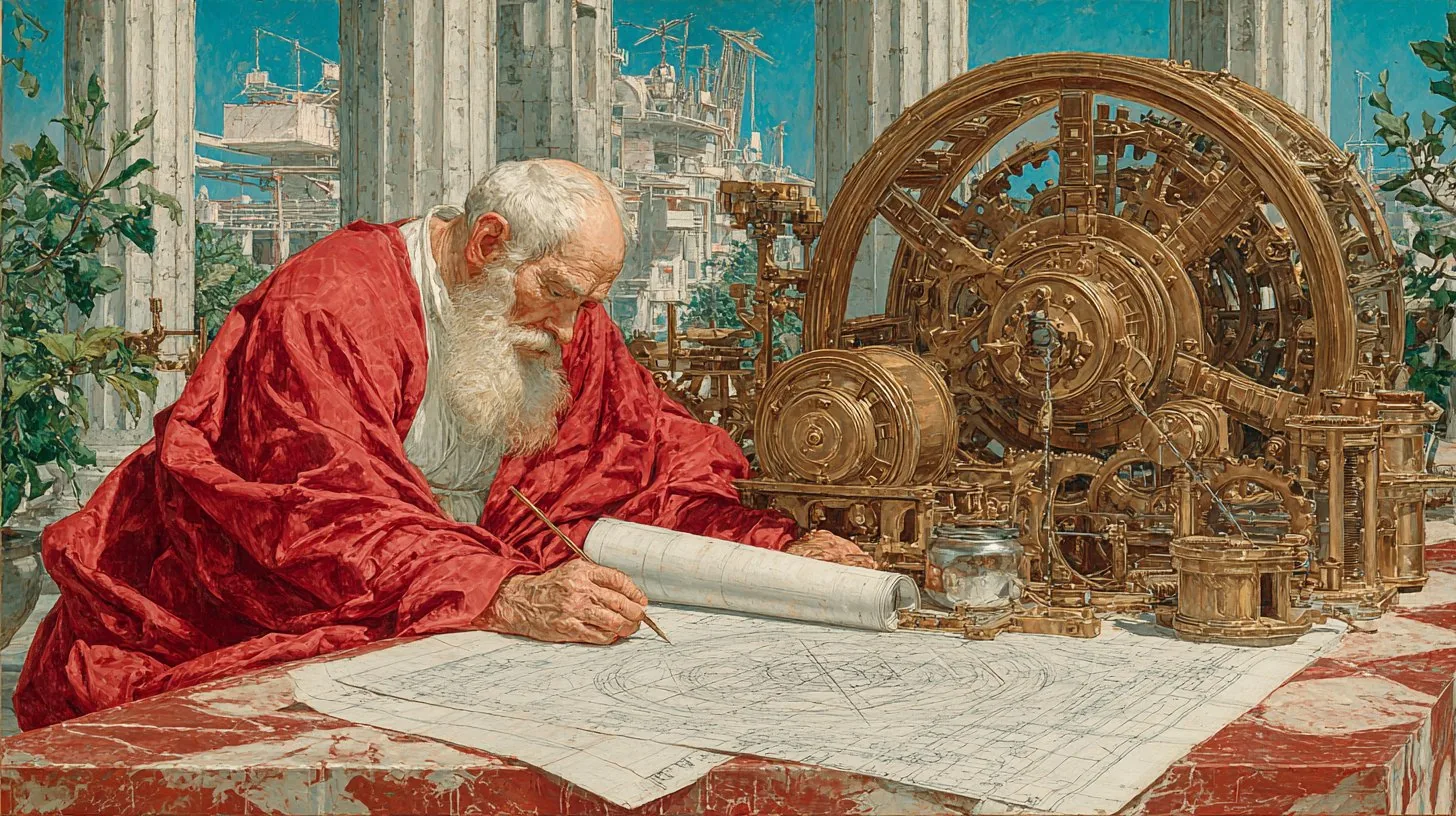
Their mind moves so fast that a bystander can hardly keep up. They grasp the essence halfway through an explanation, bridge far-flung fields with leaps of association, and build a fresh interpretation on the spot. And their reasoning never sets hard. Even a system they built yesterday, they'll tear down and reassemble without regret the moment they see a better way to build it today. For this person, doubting and creating are the same motion.
Their conduct is free and unguarded. They measure people by how interesting they are rather than by title or formality, start debating with anyone as an equal, and try things out on the spot the instant an idea strikes. They simply can't bear rule-bound places and monotonous repetition; in hours when inspiration doesn't come, they gaze at the ceiling, and when it does, they dive in, forgetting food and sleep. Curiosity, not a timetable, is this person's calendar.
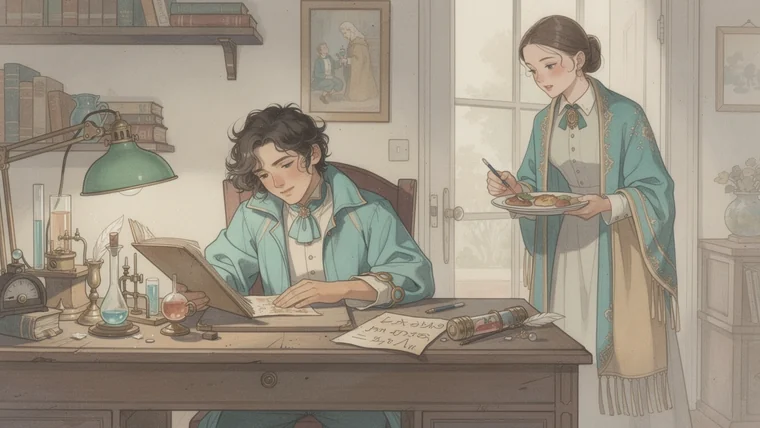
And what this intellectual adventurer secretly relies on is earthly warmth. Someone who gently tends the life of this person, who, absorbed in thought, leaves meals and rest behind, and who softens a tense room: only with that restful home base can the Seeker's expeditions go on.
Not "I've got it," but "no one knows this yet."
Does this sound like you?
- The moment you spot an interesting seed, your questions come in rapid fire and you start testing on the spot.
- When the fire of interest goes out, your enthusiasm cools like an ebbing tide.
- You don't bother about clothes, and things stay wherever you last used them.
- You tend to start conversations with a question: "why does it turn out that way?" "Is that really true?"
- Even when pressed by authority, you won't give an inch if it doesn't make sense.
- You decide on your own that someone you've only just met is "one of us."
- You're bad at putting affection into words, and convey it indirectly through invitations or introductions.
- Rather than following a fixed timetable, you dive in all at once when inspiration comes.
- When you hit a wall, you don't explode; you get stuck fast and can't move.
- When you fail, the first thing you do is reconstruct the reasons.

How you move

The Seeker’s behavior shows most clearly in their instant responsiveness to possibility and their nimbleness in reassembling things.
The way they move the moment they spot an interesting sprout is this person at their finest. Their eyes change color, questions come in rapid fire, and they begin testing on the spot. New tools, new reasoning, new games — the more unknown a thing is, the quicker their hands, and while everyone else is still waiting to see, they have already finished a first lap.
On the other hand, they also pull back quickly once the fire of interest goes out. For a task whose possibilities they feel they have exhausted, or work that only needs finishing off, their enthusiasm cools like an ebbing tide. This is not shallowness of commitment — it is because this person’s fuel is made of the unknown.
Their daily life is heedless. They pay no mind to their clothes, eat whatever is at hand, leave things where they last used them, and fail to notice their own exhaustion until the very limit. Only when the clutter starts to hinder their thinking does tidying begin — all of their attention is poured into the exploration inside their head.
Not appearances, but the scent of the unknown.
- Finding an interesting seed, fires off questions and starts testing on the spot
- When the fire of interest goes out, enthusiasm cools like an ebbing tide
- Doesn't bother about clothes or surroundings; all attention goes into the exploration inside their head
Observed Behavior

Their appetite for knowledge is like a small child’s. In a field that has sparked their interest, they swallow it whole from first principles, self-taught; and even if they forget the textbook’s answer, they will reinvent it on the spot from their own line of reasoning. They trust being able to derive over being able to memorize.
Toward regular obligations and fine-grained control they show clear hostility. Having their inspiration bound by a timetable, formality for formality’s sake, surveillance and reporting — these are, to this person, an abuse of thought. Yet given freedom and discretion, they work harder than anyone.
A knack for making ends meet is a hidden talent. Devising ways to live cheerfully on scant means, a nose for sniffing out bargains, an eye for the vital point of a cost — they take no pride in it, but the logistics of this person’s expeditions are, unexpectedly, rather shrewd.
And when they hit a wall, this person does not explode — they stall, as if stuck fast. They freeze amid accumulated discontent and fatigue and become unable to move — a stagnation unimaginable from their usual lightness, and this person’s distress signal.
Given a place where you have discretion, your discoveries reach surprisingly far.
How you speak and listen

The Seeker’s dialogue is made of questions, hypotheses, and unclouded debate.
This person’s conversation begins with a question. “Why does it turn out that way?” “Is that really true?” “What if it were the reverse?” — not to test the other person, but because they want to think together. If an interesting answer comes back they lean in; if pressed by authority, they smile and do not yield an inch. Not title, but only the soundness of the logic, is the currency of this person’s debate.
Their associations leap in every direction, and the topic rolls from physics to myth, from economics to a joke. When the listener is about to be left behind, they build a bridge with an unexpected metaphor and get a laugh — for this person, debate is less a contest than the finest kind of play.
That said, they are, without any malice, dull to the subtleties of feeling. A too-blunt remark freezes the room, they misjudge the distance to the other person, and later they are bewildered by an awkwardness whose cause they cannot name. Even the way they convey goodwill is roundabout — the more crucial the matter, the more it becomes a mere hint.
It begins with a question and rolls along freely.
What lies at the core — drive and tender spots
Open it, then reassemble it. This back-and-forth.
The one powerful engine at the heart
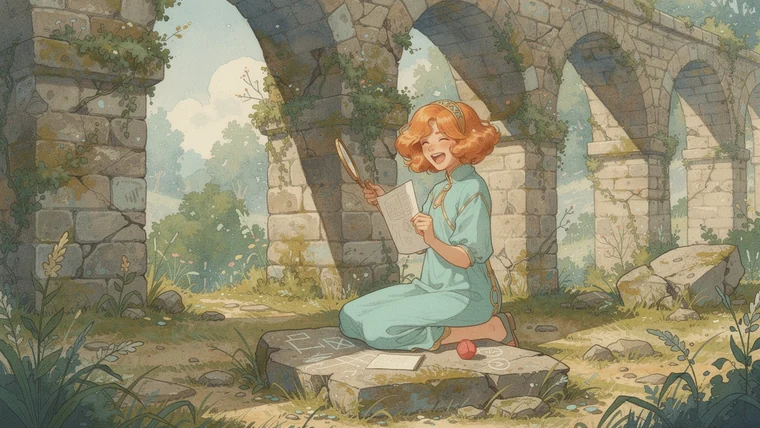
At the Seeker’s center are an eye that opens possibilities and a hand that reassembles systems.
At the Seeker’s center is one strong driving force: an eye that finds, beyond the reality before them, possibilities no one has yet tried, and opens them one after another. One discovery gives birth to ten questions, and ten questions light up a hundred doors — it is when caught up in this chain that this person is most alive.
This eye has a hand to match it: a hand that builds the opened possibilities into a coherent interpretation on the spot, and, if need be, reassembles them without hesitation. Any wild notion, passed through this person’s hands, becomes a working system. Yet that system never becomes a sanctuary; the moment a better way to build it comes into view, it is torn down by this person’s own hand — creating while doubting, doubting while creating. This back-and-forth is the very breathing of the Seeker’s thought.
This is not limited to scholarship. In a way of working, in a scheme for play, the moment they feel “there must be a more interesting way to put this together,” the same engine starts up. The unknown turns into the known, and that known becomes the door to a new unknown once again — the sight of that chain is precisely the scene in which the Seeker is most deeply fulfilled.
What they can do, yet do not prize

Surprisingly, the Seeker has a considerable hand for the practical business of making ends meet. Devising ways to keep things running on scarce resources, an eye for the vital point of gains and losses, a sense for spotting a risky bridge — the logistics of their expeditions are, in truth, anything but careless.
Yet the person themselves places no weight there. Rather than taking pride in a talent for earning or thrift, that power is quietly turned toward securing the fuel to keep exploring. To have the gift for practical affairs yet not become a person of practical affairs — that choice is what upholds this person’s freedom.
What the heart secretly craves
What they secretly crave is the ease of daily life and the warmth of the room.
What the Seeker, soaring the sky of possibility, finds hard to generate for themselves and yet craves more deeply than anyone — it is the comfort of body and daily life, and the warm ease of a circle of people. The more they sink into thought, the sloppier their meals become, the more their rest is cut short, and an innocent remark stiffens the room. That is exactly why they are deeply drawn to, and fulfilled by, someone who quietly tends that life and softens the frayed air.
This appears as “the need to belong, secure attachment, and the fulfillment of a deep craving.” Beside a partner who treats caregiving not as a duty but as a joy, this person lets down their guard for the first time and learns to relax — and it is precisely the dual Peacemaker (SEI-D), who is most gifted at that very power, who is their best complement. A partner who gives them, amid the days of expedition, a home base they can return to.
The most fragile place
Where the Seeker is most fragile is emotional distance with people and the cage of discipline.
What is most fragile is measuring the emotional distance to each individual. How far anyone has opened up, which single word touches the other person’s soft place — that invisible line is almost unreadable to this person. They decide, on their own, that someone they have only just met is a “comrade”; with a too-blunt assessment they crack a relationship that mattered; and they fail to notice the imbalance of being lenient with themselves and harsh with others. Their very lack of malice makes the wound deeper.
The other fragility is the cage of discipline and obligation. Fixed times, fixed procedures, repeated roll-calls — these in themselves tighten a vise on this person’s inspiration. They may burn with hostility toward an imposed obligation, and even pour precious energy into a war against “the enemy that obstructs freedom.”
So the quality of the Seeker’s life changes greatly depending on who unties these two. A partner who reads people’s subtleties in advance and smooths the room, and who absorbs the friction of discipline in between — beside them, the Seeker can return, without wearing themselves out, to the exploration they excel at.

- Core: opening possibilities, building them into a coherent interpretation, and reassembling if need be
- What drives you: the conviction that the world can be figured out in a more interesting way
- Where you're fragile: emotional distance between people, the cage of discipline
Strengths, and where you stumble
Someone who makes your life and surroundings comfortable.
Strengths — open, and reassemble

The Seeker’s strength lies in the speed of the eye that finds possibilities and the suppleness of the hand that builds them into a working interpretation. They open door after door no one has tried, make it coherent on the spot, and, seeing a better way to build it, rebuild without hesitation. The speed of this “open, and reassemble” cycle brings fresh air into a stagnant setting and finds another entrance to a stalled question. Added to this, an absorptive power that does not choose its field, an unclouded frankness undaunted by authority, a gift of conversation that turns debate into play, and a hidden knack for making ends meet give this person’s adventures a surprisingly sure footing.
And beneath that speed runs a bright trust. The Seeker believes, at the root, that the world is something that can be unravelled and that people are beings who can come to understand one another. That is why this person’s questions do not become attacks, and their doubt does not sink into cynicism. “Complex, but kind” — that trust in the world is precisely what makes the Seeker’s inquiry discovery rather than destruction.
Where they tend to stumble

What they tend to stumble over is the underside of that speed and freedom.
Speed of understanding is a hair’s breadth from an inability to wait. They grow irritated at a slow explanation, jump to the conclusion, and leave the listener behind. Their interest, too, shifts quickly, and because their enthusiasm cools at the stage of finishing and operating, doors left open and half-done schemes tend to pile up behind them. When making a promise, they see only “what can be done” and not “how to do it,” so their follow-through grows shaky without any malice.
In the arena of human subtlety and discipline, their exhaustion runs deep. A too-blunt remark cracks a relationship, they misjudge the sense of distance, and they respond to imposed obligations with hostility. They pour their energy into a war against “the enemy that obstructs freedom,” and the inquiry that matters can even grow thin. And when they cross their limit, this person freezes as if stuck fast — a hard-to-see vital weakness beneath their lightness.
When you meet someone who keeps your days comfortable, your exploration doesn't end as pie in the sky; you can keep it going far.
- Guard your life with systems, like meals at set times and keys in a fixed place
- Take on a promise only after you've seen "how" to do it
- It's fine to rely on a partner who can read subtleties
Where you thrive
You shine brightest in "places where the answer isn't fixed."
Environments Where They Thrive
The Seeker shines most in an environment where questions are welcomed and discretion and freedom are granted. An untrodden problem, a phenomenon that has no name yet, an old framework awaiting reassembly — it is precisely in “a place where the answer is not fixed” that this person’s eye and hand come into their own. Conversely, in a place where procedures are fixed, surveillance and reporting are fine-grained, and obedience is prized over originality, this person’s intellect rapidly loses its light. Purpose rather than a timetable, discretion rather than orders — that is the Seeker’s condition.
What this person needs, first of all, is a “listener.” With someone who delights in tossing around a newborn hypothesis, their thinking stretches many times over. And then a companion who supports their daily life and their circle of people — someone who orders the meals and rest they leave behind, and turns the cleanup after an innocent remark into a laugh. With that home base, the Seeker can, in peace, go searching far afield.
As an intellectual adventurer
The eye that opens possibilities, the hand that reassembles systems, and the absorptive power to cross fields come alive in roles that break open the unknown. Research and discovery, invention and technology development, launching a new venture, unravelling the structure of a complex problem, education that opens questions while teaching, the work of a translator who connects fields — in all of these, this person’s quick understanding, free association, and the conviction that “the world can be solved in a more interesting way” become value directly.
On the other hand, they are ill-suited to the repetition of routine work, fine-grained progress management, the coordinator role of formality and behind-the-scenes maneuvering, and the caregiver role that handles the subtleties of feeling. In such posts, their gift for originality spins its wheels, and only their weak points — discipline and subtlety — keep being called upon. Entrust operations and coordination to systems or a companion, and concentrate yourself on exploration and launching, moving on to the next once it is on track — that nimble division of labor makes the most of this person.
Dialogue — ask Lily

One free dialogue · Le Salon members can explore several perspectives. Not a real person: a representative perspective based on the public profile.
Relationships and love
Can you be partners in debate? Can you delight in mysteries together?
Love — heart racing at the mysteries of the unknown
The Seeker’s love is a clumsy, single-hearted thing that begins as curiosity toward a mysterious partner.
The Seeker’s love begins with “this person is interesting.” Their heart is seized by a partner who harbors a mystery they cannot fully solve, and in their head they boldly picture a future with that person. Yet their words of courtship remain clumsy to the end, and their affection is offered roundabout, in the form of an interesting story or an invitation. They close the distance abruptly, too, sometimes deciding on their own that the other is a “special comrade” — with a partner who accepts them, that unclouded frankness and all, they become companions for a long journey.
[Women]A cheerful, frank, unconventional person. She dislikes gamesmanship and coyness; with someone she finds interesting, she speaks up first and nurtures the relationship as an equal partner in debate. She is poor at the care of daily life, but she believes in her partner’s possibilities more than anyone and supports their challenges with ideas and action. Beside a calm, caregiving partner who keeps her days comfortably in order, she finds deep peace.
[Men]A quirky, endearing person prone to lapsing into thought. He pays no mind to his appearance and cannot be counted on to arrange a date, but the speed with which he grasps the essence of a matter, and the imagination that delights in the couple’s future, are the real thing. Even his clumsiness of trying to settle even a proposal with a mere hint — beside a partner who takes that with a laugh and fills him with warm meals and rest, he opens his heart.
How You Love — A Future You Want to See Together
The Seeker's way of loving grows out of the intuition of possibilities (Ne) and structural logic (Ti). So for you, the person you love is not someone to woo but a fellow adventurer with whom to marvel at the world's mysteries. Your affection is offered not as sweet nothings but as “a future I want to see together.” When your partner shares a dream or a worry, before comforting them you're already expanding the idea — “well then, wouldn't it be interesting if…” That is proof you are genuinely fascinated by their life. Closing distance abruptly and unilaterally deciding they're “special” is also your own single-minded form of courtship. Guileless and innocent of games, your affection is utterly straightforward.
Compatibility — recommended partners
 Peacemaker
 SEI-DA bridge between sensation and compassionDualityThe need to belong, secure attachment, a sense of fulfillment, the fulfillment of a deep craving — the partner who complements you most, ordering the life you leave behind and softening a stiffened room. Craftsman
 SLI-DThe artisan who sets the world in order in the palm of his handSemi-dualityNostalgia, a sense of belonging, and interdependence — a partner in whose quiet, sure handiwork they feel a fondly settling connection Prophet
 IEI-DAn eye that gazes upon a destiny no one has yet noticedIllusionaryEmpathy, gratitude, a sense of trust, the need for safety — a partner, more indirect than your dual, beside whom you can rest in deep feeling. Enthusiast
 ESE-DThe cheerful flame that sets the world ablaze with feelingActivationActivation, elation, drive, and curiosity — the easiest partner to open up to, whose mere presence lights up the room and makes “I want to try that” well up Hero
Hero EIE-DIt is this conviction that changes the worldBenefactorYou can move for this person’s sake as a matter of course — a relationship in which you support them as a benefactor and are repaid with passion for the cause and with gratitude. Executive
 LSE-DSet it in order, get it moving, see it throughBeneficiaryFulfillment and trust — a relationship like a contented reassurance, received from a benefactor who supports you with steady work Analyst
 LII-QFrom the quiet of the desk, reassembling the worldMirrorYour breathing for ideas and verification matches — a partner who can each draw out the other’s intellectual strengths. Inspector
 LSI-QThe logician who strips away pretense and sees through to the truthSupervisor (mirror)They grant you an eye that verifies to the end, and persistence — a relationship in which, as your master, they hand you the art of scrutiny. Philosopher
 EII-QOne who, in the stillness, keeps questioning the meaning of the worldSupervisee (mirror)They inherit the quiet eye that gazes into people’s inner life — a relationship in which, as your apprentice, they answer with depth of ethics.See the other relationships (22 more types)
The upper bands are easier to be with; the lower bands tend to wear you down. Tap a relation name to read about the pair.
 Advisor
 IEE-QOne who quietly draws near and listens to the heartKindredA partner whose conversation flows easily, someone who likes to express things in the same direction as you. It can wear you out once it turns competitive. Reformer
 SLE-QAn executor who breaks through by force and rewrites conventionBusinessA partner you can easily work alongside, adapting to the situation together.
SEE-QA natural orchestrator who reads the room and guides people toward reconciliationIdealA partner who naturally embodies what you aspire to be, easy to admire. Getting too close tires you out. Strategist
 ILI-DThe contemplative Strategist who quietly reads ahead and lays the groundworkCompassA partner who gives you a sense of being accepted, along with a hint of which direction to move in. Pioneer
 LIE-DCarving the way through results — the realist's frontierTranscendenceA partner who makes you want to surpass yourself when you're together, pushing each other to grow. Judge
Judge ESI-QThe quiet arbiter who discerns right from wrongCorrectionA partner whose feedback becomes a chance to take stock of yourself. Harmonizer
 ESE-QTheir smile and their voice soften the space around themRelaxationA partner who puts you at ease, though you tend to end up waiting on them with quiet expectation. The Architect
 LII-DThe architecture of logic, quietly built up piece by pieceCodependencyA partner who wears you down little by little, caught in a cycle of bottling things up and overcompensating. Visionary
 ILE-DThe architect of ideas who reinvents the world through paradox and theoryAdaptiveA partner you settle into by simply playing your roles, an easy, unremarkable relationship. Performer
 SEI-QA gentle conveyor who gives form to sensation and feelingDetachedA partner who's hard to feel drawn to, leading to a rather flat, low-key relationship. Mentor
 EIE-QA passionate standard-bearer who speaks of ideals and binds hearts togetherTense BenefactorA partner around whom you tend to try too hard, unable to shake off the tension. Enforcer
 LSI-DThe steel operator who carries out the mission through discipline and responsibilitySupervisorA relationship where you tend to unsettle the other person without ever realizing it. Conqueror
 SLE-DA dependable field general who only burns brighter the harder things getFormalA relationship where formality and appearances pile up, and it's hard to ever fully relax. Dreamer
 IEI-QA teller of fantasies who colors the world with dreams and passionTediumA partner who leaves you feeling sluggish, prone to putting things off and keeping your distance. Administrator
 LSE-QThe hands-on command post that keeps the field running and moves people and workTense BeneficiaryA partner who leaves you worrying and overthinking, prone to closing your heart off. Empath
 EII-DSensing what lies beneath feeling, and becoming someone's quiet supportPlayerA partner around whom you constantly feel watched, prone to leaving you burned out. Promoter
 IEE-DMoving the world through fascination — an evangelist of ideasDutyA partner who leaves you understanding what to do yet unable to act on it, while your need to be recognized grows stronger. The Artist
 SLI-QGiving form to the “just-rightness” of nature and daily lifeDistrustA partner you can't quite bring yourself to trust, which makes it hard to show your own strength. Commander
 LIE-QBuild, prepare, hold the line — the command center of orderQuasi-IdentityA partner who looks similar to you yet never quite clicks, leaving you spinning your wheels and worn out. Guardian
 ESI-DA silent shield that protects people, with rightness at its backConflictThe partner most likely to strike your weakest point, the one relationship that drains you the most.
SEE-DA born leader who reads hearts and rallies the currentRoleA relationship where "you should" comes first, making it hard to just be yourself. Critic
 ILI-QThe insightful Critic who sees through contradictions in the depths of silenceDistanceA partner who makes you want to keep your distance and close your heart off.Compatibility is not decided by type alone; maturity, subtype and circumstances all change it.
With someone you are connected to, you can read a personal Relationship Reading drawn from both of your answers ($8.99 per pair, unlimited for Le Salon members).
See compatibility with your connections →Explore Le Salon →
What You Truly Long For
But what you truly want at the bottom of your heart is neither stimulation nor novelty. It's warmth that keeps your days comfortable: a hot meal, a tidy room, hands that let a tired body rest…
In the Love Edition: What your heart longs for / What excites you / Where you clash and your landmines / Classic love scenarios / Chemistry by partner, all 32 types named / At home and as a parent / A practical playbook / Secrets to lasting love / A manual for your partner
Work and ways of working

Your Working Style — Possibility-Pioneering
You naturally excel in two main ways: coming up with new ideas and possibilities one after another, and reasoning things through to organize and analyze them properly.
Your interest turns to talking through ideas and theories. Day to day, you're an improviser who runs on mood and inspiration.
Your habit of thought is logic first, thinking in ordered chains of "cause → effect." When you act, you build the logic and framework before moving.
An eye that opens possibilities, and a hand that reassembles systems.
- With instructions that don't make sense to you, ask about the background and purpose before starting
- Before objecting, acknowledge one reasonable point in the current plan
- Give harsh feedback one-on-one, not in the meeting

Careers That Fit
Your power to pose questions about untrodden problems and reassemble systems comes directly into play.
Your power to unravel the structure of complex problems and launch new systems comes into play.
Your conviction that "the world can be figured out in a more interesting way" becomes value directly.
Your Strengths, and Work Better Avoided
Your weapon multiplies the power to generate new ideas and possibilities one after another by the power to build them into well-reasoned theories and systems…
In the Business Edition: Natural strengths / work better avoided, Stress tolerance and socialization group, Work style, Motivation and recharging, How to work with and manage this person, Compatibility and team-building, Industry fit ◎○△ across 23 industries with rationale, Suitable roles
Blueprint of the mind
Your mind runs on eight blocks. Each block carries two functions — how you take in the world, and how you express yourself — and together they set both the range you're skilled in and how much you actually value using it. We've kept the technical notation small and explained everything in plain language.
Open it, then reassemble it.
Leading Your centerI Explore
+Ne-pCreation & InnovationIntuition of possibilities-Ti-cSystem & TransformationStructural logicYou seize the possibilities sleeping beyond the reality in front of you and open them outward. You head straight past "I've got it" toward "no one knows this yet."
You build what you've opened into a coherent interpretation and, if need be, reassemble it without hesitation. Even logic that's about to set hard, you tear down with your own hands and weave anew.
Open it, then reassemble it. This single line is what makes you an intellectual adventurer.
Mirror — Picked up by watching
You methodically check how things work. It's the work of verification:…
In the Full Portrait: all 8 blocks of the blueprint / 6 ways back / situational guide / the reasoning behind the exemplars
Going deeper — ways back and situational guide
On the flip side of that same core, these are the situations where you tend to stumble. After that, six ways to get back on your feet.
A too-blunt remark cracks a relationship, and you misjudge the sense of distance.
Your interests shift quickly, and your enthusiasm cools at the stage of finishing and running things.
When built-up frustration and fatigue cross your limit, you get stuck fast and can't move.
A partner who keeps things comfortable gives your exploration a place to come home to.
Way to Recover 1 — Guard Your Life with Systems
Your body wears down outside your attention. Admit that staying careful by willpower is impossible, and leave it to systems…
In the Full Portrait: 6 ways back / situational guide (home, work, friends, under stress, shopping, days off)
People thought to share this type
Different fields, different eras — yet every one of them resonates on the same note: opening unknown doors and showing how a system can be reassembled.
 Germany/US · PhysicistEinsteinWith a single thought experiment, reshuffled the common sense of space and time
 US · PhysicistFeynmanQuestioning as if at play, he unraveled the quantum world
 Greece · PhilosopherSocratesWith dialogue alone as his weapon, he led people to the knowledge of their own ignorance
 Italy · Universal geniusDa VinciFrom painting to anatomy, he kept crossing borders on the wings of curiosity
 US · MathematicianVon NeumannFrom game theory to the computer, he kept opening doors of knowledge
 US · AstronomerCarl SaganHe ignited the curiosity of millions with the grandeur of the cosmos
 France · Enlightenment thinkerVoltaireWith satire and questioning, he stood against intolerance and tyranny
 UK · Science-fiction writerDouglas AdamsHe laughed off the universe and bureaucracy alike with paradoxical humor
 Canada · Media theoristMcLuhan“The medium is the message” — he read the age before its time
 UK · MusicianJohn LennonThrough song he questioned common sense anew and set imagination loose upon the world
Type attributions are informed speculation based on public information, not confirmed fact.
Map of group memberships
The Seeker is one of 32 types, and also belongs to several groups of kindred natures. Here are the four main ones first — open a card to step into its own gallery room.
 Quadra (Values)Alpha Quadra (α)Genesis
 Bouquet (Temperament)Flexible-Maneuvering TemperamentSeizing opportunity and springing into motion
 Club (Interest)Research ClubSeekers of knowledge
 Motivation (Stimulus Group)Uniqueness Stimulus GroupSeeking novelty and pioneering spirit
See all groupings (25 more)
 Communication StyleBusiness-likeRelating through shared activity
 Behavioral StyleConceptualistOrdering the world through structure
 Argumentation StyleReconstructorDoubting premises and rearranging them
 Perception GroupAssociativenessGrasping the world through a web of associations
 Cognitive StyleCausal-DeterministicMechanistically from cause to effect
 Romance (View of Love)WandererHeart racing at the mysteries of the unknown
 Stress ToleranceFrozenSticking fast, unable to break free
 Socialization GroupIdealistBelieving, and letting the vision lead
 Inflation RingEnergy GeneratorIgniting information and stirring the field
 Project GroupIdeational processIntegrating observation into theory
 Implementation GroupTechnical InventionInventing, and implementing technology widely
 Square (Rest)NomadDrifting discoverers
 Business Square (Collaboration)BohemianFree spirits
 Octad (Cross-Value Group)QuestExploring the unknown, opening questions
 Reactor (Excitation Group)RadianceRadiating excitation outward
 MobilizationCatalysisMoving others as a catalyst
 Conditioning (Adjustment Group)TuningTunes fine oscillations
 LabyrinthKnossosThe mysteries of knowledge and silent power
 Block Group (Extinguishing Group)ForumWhere inquiry and warmth gather
 Social Progress Ring (SPR)ChronicleThe governing ring of the great river
 Supervision Ring (SVR)PyramidThe cornerstones of an accumulating civilization
 Social Order Ring (SOR)CrownThe king who sets an age in motion
 Succession Ring (SR)HeritageThe people’s gradual succession
 Benefit Ring (BR)FestaThe people’s public festival
 Master Ring (MR)AtelierThe creation of the individual workshop
Open the full, love and business editions

- The blueprint of your mind (8 blocks)
- Six ways to recover from stumbles
- A situation-by-situation guide (6 situations)
- The reasoning behind the celebrity picks
- What your heart longs for / What excites you / Your landmines
- Classic love scenarios
- Chemistry by partner (all 32 types)
- At home and as a parent / A practical playbook

- Natural strengths / Work better avoided
- Work style / Management
- Industry fit ◎○△ (23 industries)
- Suitable roles
Save $24.98 compared with buying the three separately